
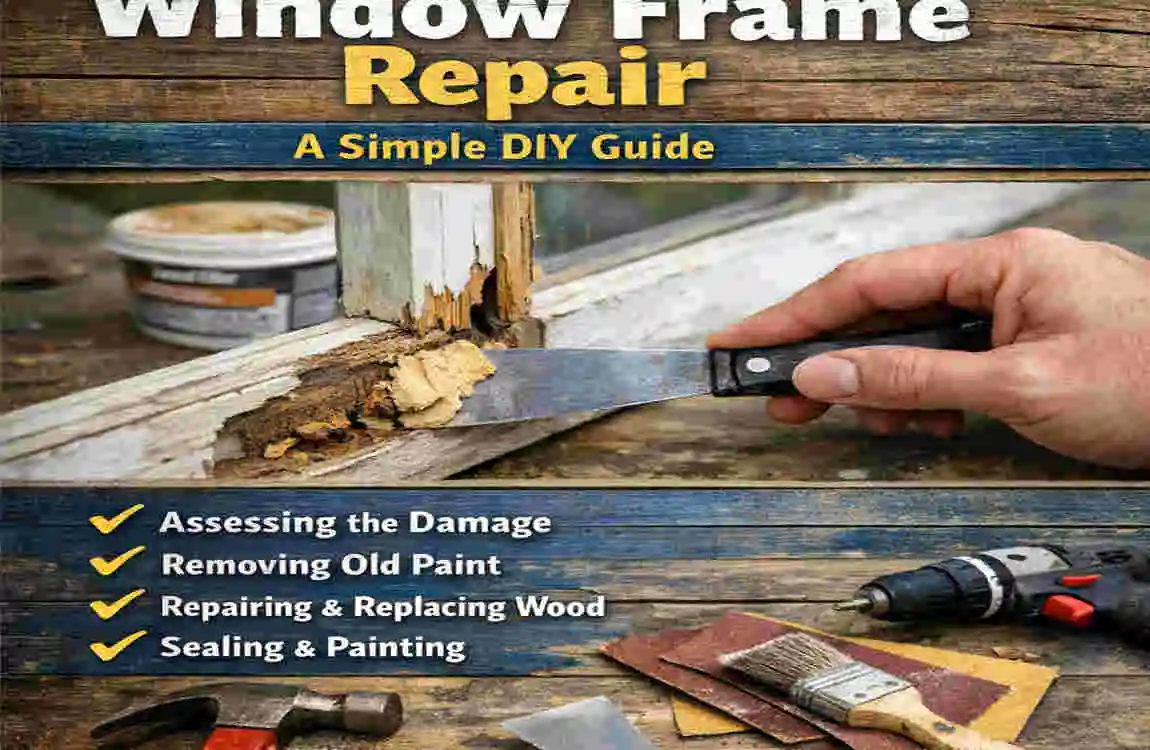
If you are asking how to repair an old wooden window frame, the good news is that many common problems can be fixed without replacing the whole window. With the right tools, a little patience, and proper prep work, you can restore strength, improve appearance, and help the frame last much longer.
Old wood windows often show signs of wear because they face rain, sun, cold, and daily use. Over time, paint peels, wood softens, and gaps begin to form. The key is to catch the damage early and repair it properly.
Understanding Old Wood Window Frame Damage
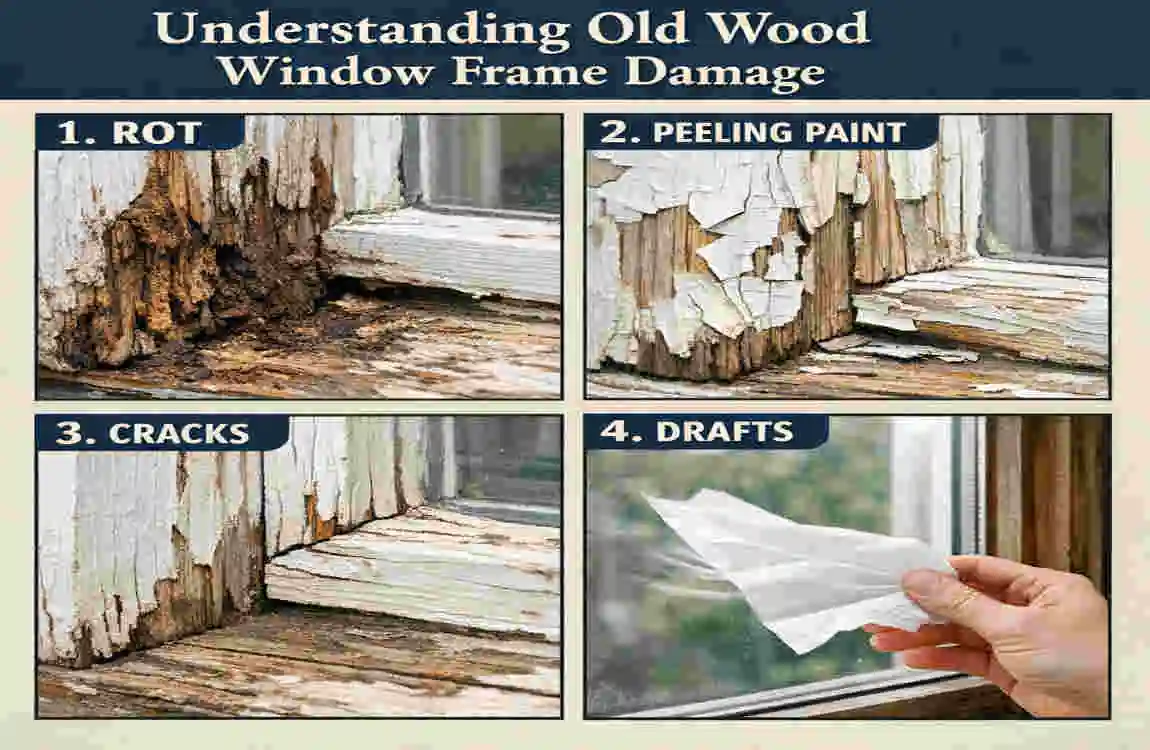
Why wood frames wear out
Wood is a strong material, but it does not stay perfect forever. When it sits in moisture for too long, it begins to weaken. Sunlight also dries it out over time, which can cause cracks and peeling paint.
A frame can look fine from a distance and still have hidden damage close up. That is why a careful inspection matters before you start any repair.
Common signs of damage
Look for these problems:
- Soft or crumbly wood
- Peeling paint
- Cracks or splits
- Loose joints
- Gaps around the frame
- Visible rot or dark stains
If the damage is small and local, repair is usually possible. If large sections are falling apart, replacement may be the better choice.
When to call a professional
You may want expert help if the frame is badly damaged, the glass is unstable, or the window is very old and has unknown layers of paint. If you feel unsure, a pro can tell you whether repair or replacement is safer.
Tools and Materials You Need
Before you begin, gather everything first. This makes the job smoother and helps you stay organized.
Basic tools
- Putty knife or scraper
- Sandpaper or sanding block
- Utility knife
- Screwdriver
- Hammer
- Chisel
Repair materials
- Wood filler or epoxy repair compound
- Exterior-grade primer
- Exterior paint
- Caulk and caulking gun
- Replacement wood pieces for heavy damage
Safety items
- Gloves
- Eye protection
- Dust mask
A little preparation saves time and helps the repair last longer.
How Do I Repair Old Wood Window Frame? Step-by-Step
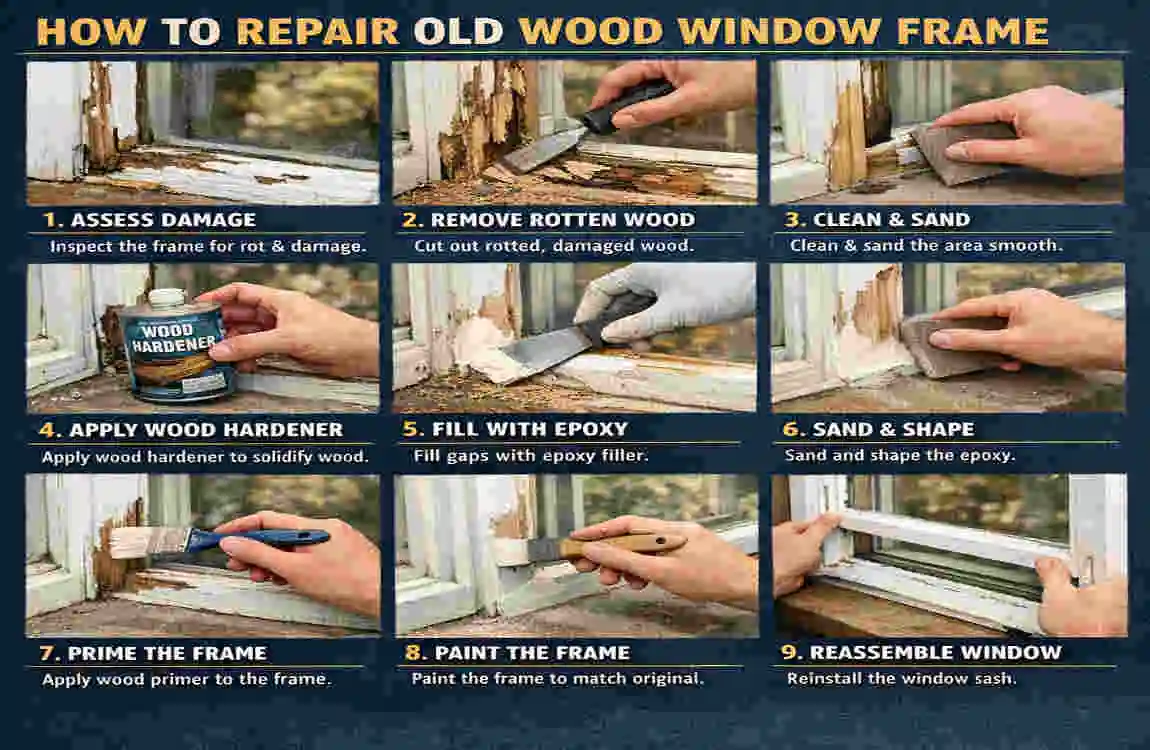
Inspect the frame
Start by checking the entire window frame. Press on the wood gently with your finger or a small tool. If it feels soft, the area may be rotten. Mark the damaged spots so you know where to work.
Remove loose paint and damaged wood.
Use a scraper, knife, or chisel to remove loose paint, flaking wood, and soft sections. Do not rush this step. The repair material needs a clean, solid surface to stick properly.
Clean and dry the area
Wipe away dust and dirt. If the wood is damp, let it dry completely before proceeding. Moisture trapped under filler or paint can ruin the repair later.
Fill minor damage
For small cracks, holes, and shallow rot, use wood filler or epoxy. Press it in firmly so it fills the space. Shape it roughly at first, then let it cure.
Replace badly damaged wood.
If part of the frame is badly rotten, filler alone will not solve the problem. Cut out the damaged section and replace it with a new piece of wood. This gives the frame real strength again.
Repairing Different Types of Wood Window Damage
Fixing small cracks and splits
Small cracks are usually the easiest to repair. Clean the crack, apply filler, let it dry, sand it smooth, and paint over it. If the crack is open, make sure the filler gets deep inside.
Repairing rotten wood
Rotten wood needs more care. First, remove every soft or crumbling piece. Then treat the area and rebuild it with epoxy or replacement wood. If you leave rot behind, it will keep spreading.
Fixing loose window joints
Loose joints can make the window feel weak or crooked. Tighten fasteners if possible. If needed, use wood adhesive or replace worn screws. A secure joint helps the whole frame stay stable.
Repairing gaps around the frame
Gaps around the frame can let in drafts and water. Use a good exterior caulk to seal them. Keep the bead smooth and even so that water can run away from the joint rather than collect there.
How to Prevent Future Wood Window Frame Damage
Keep moisture away
Water is the biggest enemy of wood windows. Make sure rainwater drains away from the frame. Also check that nearby gutters and downspouts are working well.
Maintain paint and caulk.
Paint is more than decoration. It acts like a shield. When paint starts peeling, the wood becomes exposed. Caulk can also shrink or crack over time, so inspect it regularly.
Clean and inspect often
Wipe the frame clean and look for early warning signs once or twice a year. Catching small issues early makes repairs easier and cheaper.
Helpful prevention habits
- Keep the frame dry
- Touch up damaged paint quickly
- Check for cracks after heavy rain
- Improve drainage around windows
- Inspect older windows every year
DIY Repair vs. Replacing an Old Wood Window Frame
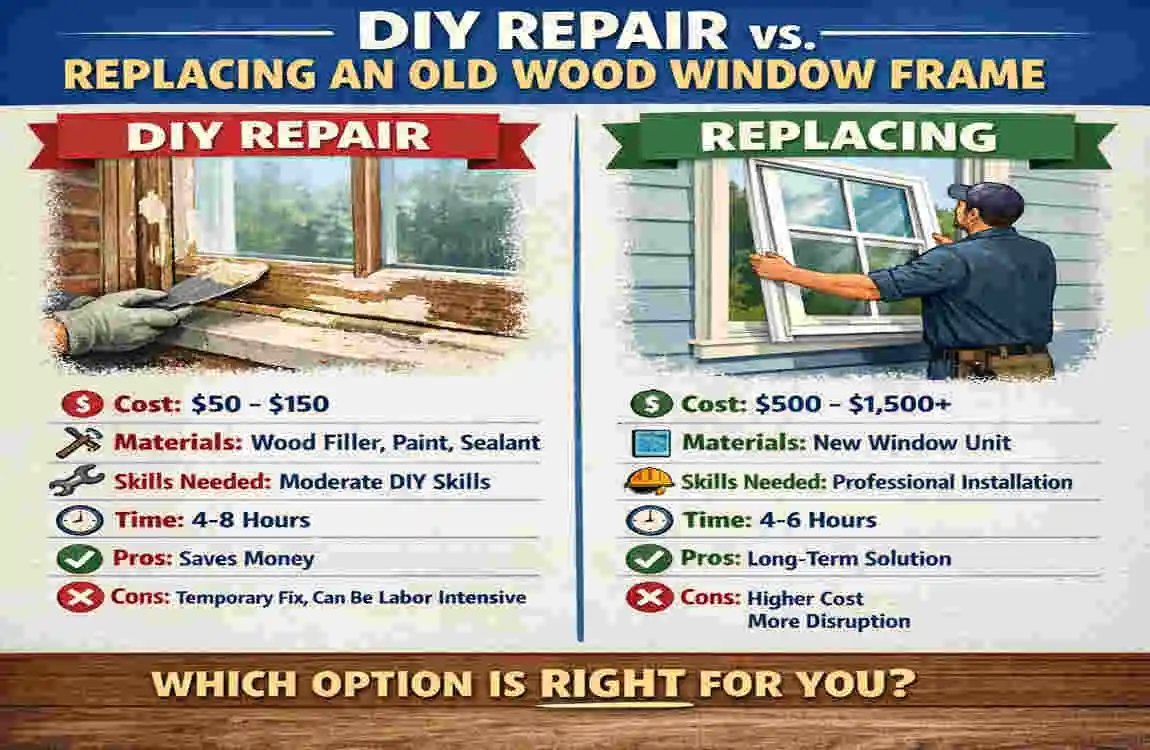
When DIY repair makes sense
DIY repair works well when the damage is small, local, and easy to reach. If the frame still has solid wood left, you can often save it with filler, caulk, sanding, and paint.
When replacement may be better
If the frame has widespread rot, major structural weakness, or repeated water damage, replacement may be more practical. Repairing severe damage can take more time and money than starting over.
Why many people keep wood windows
Old wood windows often have character and style that newer windows do not match. If the frame can be saved, repair may help preserve your home’s original look.
Frequently Asked Questions About Old Wood Window Frame Repair
How do I repair an old wood window frame?
Start by inspecting the damage, removing loose paint and rotten wood, filling or replacing the damaged area, sanding it smooth, then priming, painting, and sealing it.
Can rotten wood window frames be repaired?
Yes, small or moderate rot can often be repaired. But if the damage is extensive and spans a large area, replacement may be safer.
What is the best filler for old wood window frames?
For small repairs, use exterior-grade wood filler. For more serious damage, epoxy-based repair products usually work better because they are stronger.
How do you stop an old wooden window frame from rotting?
Keep water away, repair peeling paint quickly, seal gaps, and inspect the frame often. Moisture control is the most important step.
Can I repair an old wood window frame without replacing the window?
Yes. Many old window frames can be repaired without replacing the full unit, especially when the damage is caught early.
How long does a repaired wood window frame last?
That depends on the damage, the repair method, and how well you maintain it. A well-prepared repair with good paint and caulk can last for years.
Should I paint a repaired wood window frame?
Yes. Primer and exterior paint are essential because they protect the wood from moisture, sunlight, and future wear.
| Repair Step | What to Do | Helpful Tip |
|---|---|---|
| Inspect the Frame | Check for cracks, rot, loose joints, or peeling paint. | Press soft wood gently to find hidden rot. |
| Remove Damaged Wood | Scrape or cut away rotten sections carefully. | Keep surrounding solid wood intact. |
| Clean the Area | Remove dust, old paint, and debris. | A wire brush works well for stubborn areas. |
| Fill Small Damage | Apply exterior-grade wood filler or epoxy. | Use several thin layers for deeper repairs. |
| Sand Smooth | Sand the repaired area until it is level. | Start with medium-grit sandpaper and finish finer. |
| Prime the Wood | Apply a suitable wood primer to repaired areas. | Priming helps prevent moisture damage. |
