
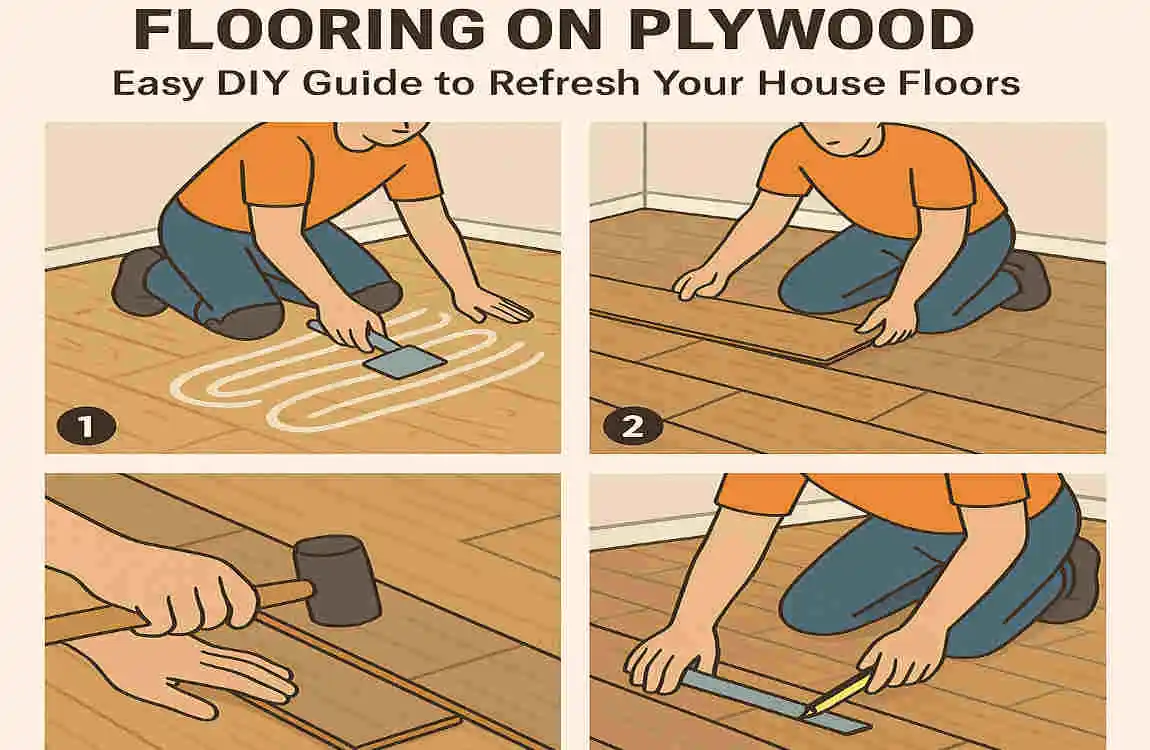
Are you tired of staring at your worn-out floors, wondering how to give your home a refreshing new look without breaking the bank? Installing laminate flooring on plywood is a cost-effective and straightforward way to transform your space. With its durability, affordability, and professional-looking results, laminate flooring has become a go-to option for DIY enthusiasts.
If you’re wondering how to install laminate flooring on plywood, you’re in the right place. This step-by-step guide will walk you through everything—tools, preparation, installation, and tips to avoid common mistakes. Whether you’re new to DIY or simply looking for guidance, this article has got you covered.
Why Choose Laminate Flooring on Plywood Subfloors?

Laminate flooring is one of the best choices for upgrading your home’s flooring, especially when you’re working with plywood subfloors. Here’s why:
Benefits of Laminate Flooring
Laminate flooring is a popular option for several reasons:
- Affordable: At just $2–$5 per square foot (including underlayment), laminate flooring is a fraction of the cost of hardwood or tile.
- Durable: Scratch-resistant and water-resistant varieties are available, making it an excellent choice for high-traffic areas.
- Stylish: It mimics the appearance of wood, stone, or tile, giving your space a high-end look for less.
- DIY-Friendly: Its click-lock design makes it easy to install without professional help.
Why Plywood Subfloors Work Well
Plywood is an ideal base for laminate because:
- It provides a flat, stable surface for installation.
- Most homes built after the 1980s already have plywood subfloors, so there’s no need for additional subflooring.
- As long as the plywood is dry, level, and damage-free, it’s ready for laminate installation.
Cost Breakdown for Laminate Flooring on Plywood
Here’s a quick look at the estimated costs:
Aspect Cost Estimate (per sq ft)
Laminate planks $1.50–$4
Underlayment $0.20–$0.50
Tools (reusable) $0.50 (amortized)
Total $2.20–$5
When compared to alternatives like hardwood (starting at $8/sq ft) or carpet (which requires ongoing cleaning), laminate flooring is a budget-friendly winner.
Tools and Materials Needed
Before you dive into your project, you’ll need to gather the right tools and materials. Having everything on hand will make the process smoother and more enjoyable.
Essential Tools
Here’s a list of tools you’ll need for the installation:
- Tape Measure: For accurate measurements.
- Circular Saw or Jigsaw: To cut the planks to size.
- Underlayment Cutter: For precise underlayment trimming.
- Spacers: To maintain expansion gaps.
- Tapping Block and Pull Bar: For securing planks.
- Mallet: To gently tap planks into place.
Materials Checklist
Don’t forget the necessary materials:
- Laminate Planks: Purchase 10% extra to account for cuts and mistakes.
- Underlayment: A moisture barrier underlayment designed for plywood is critical.
- Adhesives: If you’re not using a click-lock system, adhesive may be required.
Budget-Friendly Tips
- Consider renting tools, like saws, if you don’t already own them.
- A basic starter kit for tools and materials will cost around $200, making this a cost-effective project.
Don’t forget safety gear! Gloves, knee pads, and a dust mask will keep you comfortable and protected during the process.
Preparation: Assessing and Prepping Your Plywood Subfloor
Proper preparation is the key to a successful laminate flooring installation. Taking the time to inspect and prep your plywood subfloor will ensure a flawless result.
Inspect Your Plywood Subfloor
Start by closely examining your subfloor for the following:
- Flatness: Check for uneven spots using a 10-ft straightedge. Variances should be no more than 3/16″.
- Moisture Levels: Use a moisture meter to ensure the plywood has a moisture content below 12%.
- Damage: Look for cracks, warping, or soft spots and address them before installation.
Subfloor Preparation
Follow these steps to prepare your plywood subfloor:
- Remove Old Flooring: Take out any existing carpet, vinyl, or tile.
- Clean Thoroughly: Vacuum and sand the plywood to remove dirt and debris.
- Fill Gaps: Use a leveling compound to fill any gaps or low spots in the plywood.
- Acclimate the Planks: Allow the laminate planks to sit in the room for 48–72 hours to adjust to the temperature and humidity.
Common Issues and Solutions
- Warped Plywood: Sand it down or replace it entirely if it’s beyond repair.
- Excess Moisture: Use a dehumidifier to bring moisture levels within the acceptable range.
Pro Tip: Invest in a moisture test kit—it’s a small expense but can save you from big problems later.
Step-by-Step Guide: How to install Laminate Flooring on Plywood

Now that your subfloor is ready, it’s time to begin the installation. Follow these steps for a professional-looking result.
Planning Your Layout
- Dry-Lay the Planks: Lay out a few rows of planks without attaching them to determine the best pattern. Stagger seams by at least 12 inches for stability and aesthetics.
- Account for Transitions: plan how you’ll handle doorways, stair edges, and vents.
install Underlayment and Moisture Barrier
- Roll out the underlayment over the plywood, making sure to overlap and tape the seams.
- The moisture barrier is essential for protecting your laminate flooring from potential damage.
Lay the First Row
- Start in a corner, placing spacers between the planks and the wall to maintain a 1/4–1/2″ expansion gap.
- Use the click-lock system by angling the planks, dropping them into place, and tapping gently with a mallet.
install Middle Rows
- Continue laying planks row by row, staggering the seams.
- Use a circular saw to cut planks as needed, especially around obstacles like vents or pipes.
Finish with the Last Row
- Carefully measure and cut the final row to fit.
- Use a pull bar to lock the planks securely in place.
Add Trim and Transitions
- Attach quarter-round or baseboard trim to cover the expansion gaps.
- Install T-moldings or threshold strips at doorways for a seamless transition between rooms.
Common Mistakes and How to Avoid Them
Even simple DIY projects can have pitfalls. Here’s how to avoid common mistakes when installing laminate flooring on plywood:
Top Mistakes to Avoid
- Skipping Acclimation: This can cause gaps or buckling.
- Uneven Subfloor: Leads to clicking noises and uneven planks.
- Tight Fits: Without expansion gaps, the flooring may warp over time.
Troubleshooting Table
Mistake Symptom Fix
Gaps: Boards pulling apart. Ensure proper acclimation.
Clicking Noises Uneven subfloor Sand or fill low spots.
Warping: No expansion gaps. Add spacers during install.
Maintenance and Long-Term Care for Laminate on Plywood
To keep your laminate flooring looking great for years:
- Regular Cleaning: Sweep or vacuum daily to remove dirt and grit.
- Avoid Excess Water: Skip steam mops and wet cleaning methods.
- Protect High-Traffic Areas: Use rugs or mats to prevent wear.
With proper care, laminate flooring can last 10–25 years, making it a long-lasting investment.
