
Keeping your plumbing pipes clean matters more than many homeowners realize. When buildup starts collecting inside pipes, it can lead to slow drains, bad smells, and weak water flow. Over time, those small issues can turn into bigger plumbing problems.
If you want a simple way to handle basic maintenance, learning how to clean plumbing pipes at home is a good place to start. You do not always need a big repair or expensive service. In many cases, a few safe cleaning habits can help your plumbing work better and last longer.
Why Should You Clean Plumbing Pipes at Home?
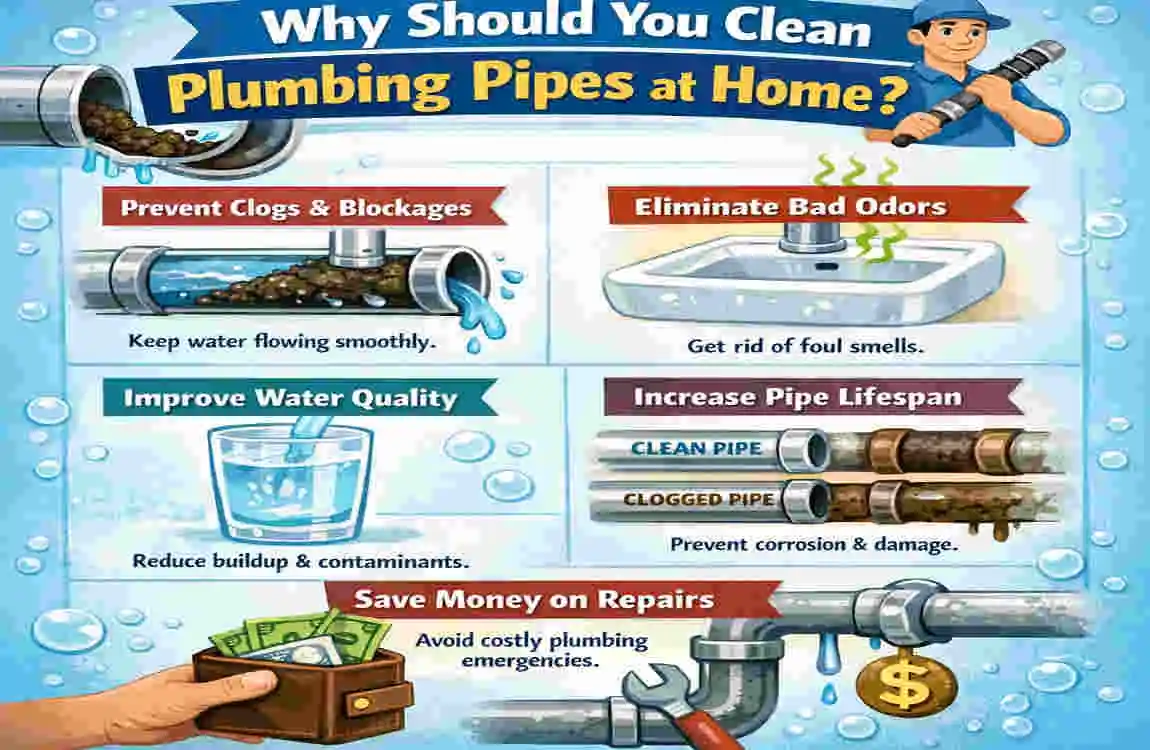
Remove Everyday Buildup
Pipes collect all kinds of debris over time. In kitchen drains, that often means grease, food bits, and soap residue. In bathroom drains, the usual culprits are hair, toothpaste, and soap scum.
Improve Drainage and Water Flow
When buildup builds up inside pipes, water does not move as freely. Cleaning the pipes helps keep things flowing the way they should.
Reduce Bad Odors
Dirty drains can start to smell unpleasant. Regular cleaning helps remove the residue that causes those odors.
Help Prevent Recurring Clogs
If you keep cleaning lightly before buildup gets out of control, you may avoid repeat clogs. This is one of the simplest ways to protect your plumbing.
Signs Your Plumbing Pipes Need Cleaning
Slow Drainage
If sinks, showers, or tubs are draining slowly, that is often one of the first warning signs.
Gurgling Sounds
Strange gurgling sounds from drains can mean water is trying to move through a partially blocked pipe.
Bad Smells
A foul smell coming from a drain often means debris is sitting inside the pipe.
Water Backing Up
If the water rises instead of going down, the pipe may be clogged.
Frequent Minor Clogs
If you keep reaching for the plunger, your pipes may need more than a quick fix.
How to Clean Plumbing Pipes at Home
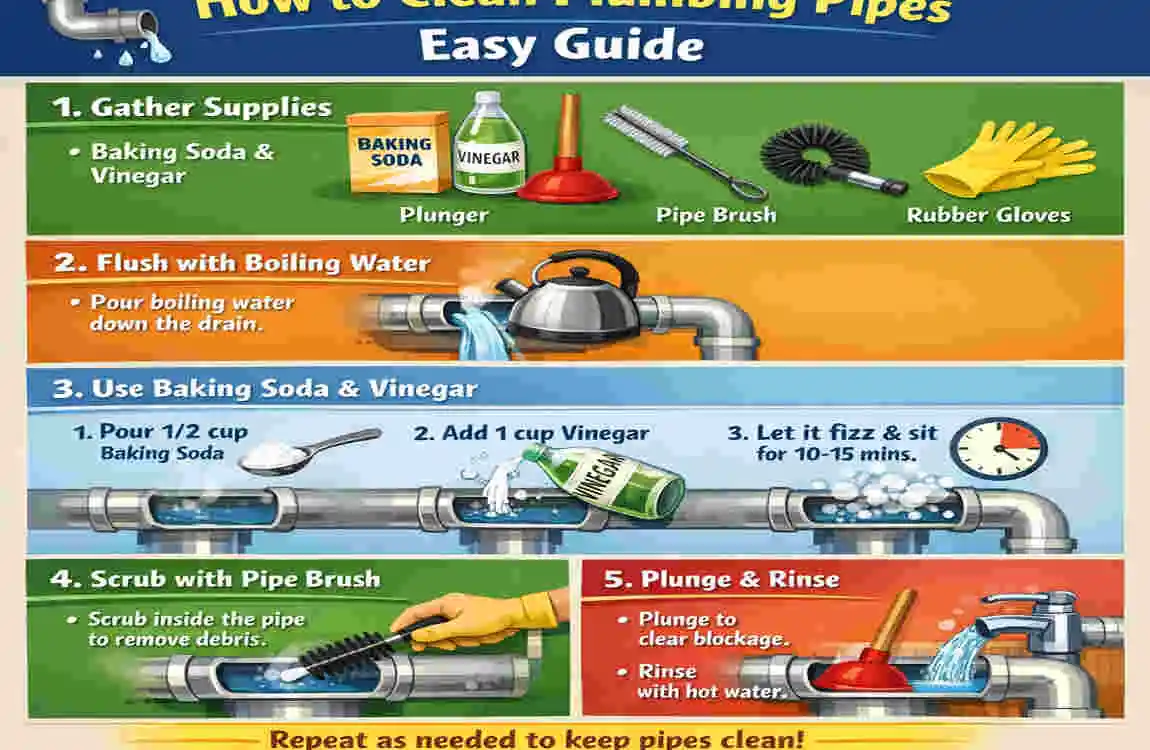
Flush Pipes With Hot Water
Hot water can help loosen grease and soap buildup. This works best for light cleaning and routine maintenance.
Pour warm to hot water slowly down the drain in stages. Let it work for a few minutes, then repeat if needed.
Be careful with very old or delicate plumbing materials. Extremely hot water is not always the best choice for every system.
Use Baking Soda and Vinegar
This is a common home method for mild buildup and odors.
Here is the simple process:
- Pour baking soda into the drain.
- Add vinegar.
- Let the mixture sit for a short time.
- Flush with warm water.
This method is helpful for light maintenance, but it will not fix a deep clog.
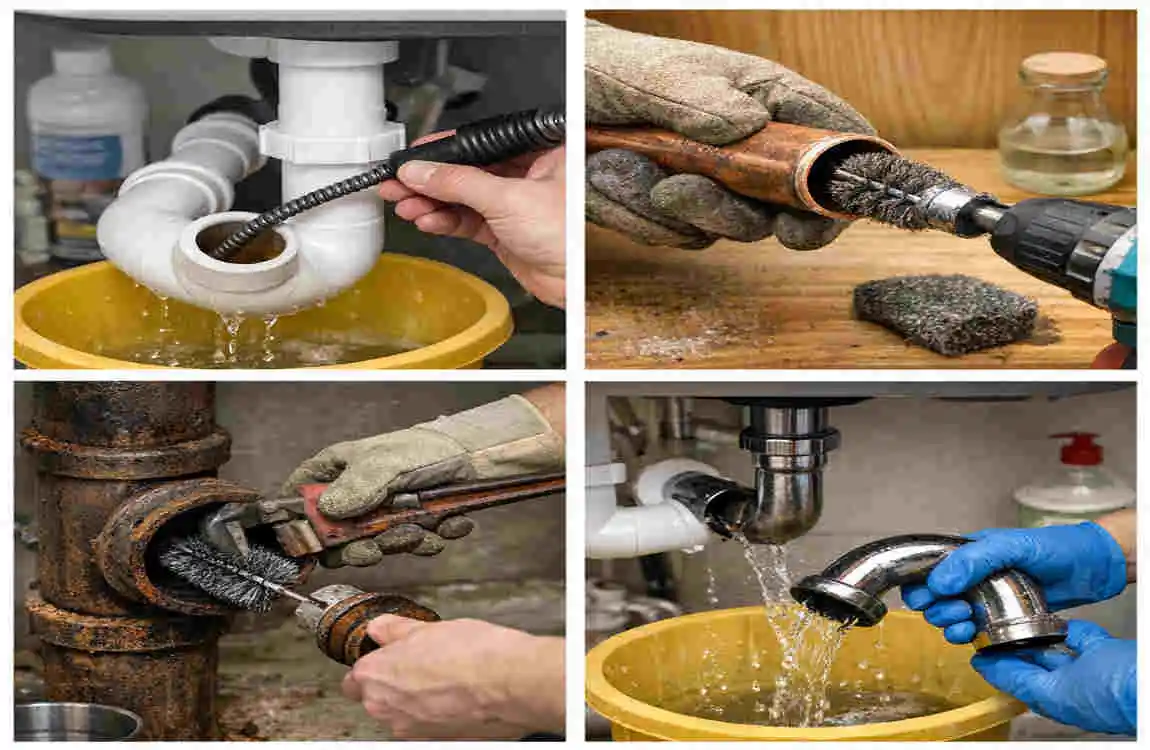
Clean the Drain Trap
A P-trap is the curved pipe under a sink. It often catches debris before it goes farther into the system.
Place a bucket under the trap before removing it. Then clean out any buildup inside, rinse the parts, and carefully put them back.
This is a good step when a sink drain keeps slowing down.
Use a Plumbing Snake
A plumbing snake can help remove deeper blockages. It works by reaching into the pipe and loosening stuck debris.
Insert it slowly, turn it carefully, and pull it back out once you feel resistance clear. Do not force it too hard, especially on older pipes.
Flush With Clean Water
After any cleaning method, flush the pipe with clean water. This helps wash away loosened debris and lets you check whether the drain is moving better.
How to Clean Different Plumbing Pipes
Kitchen Sink Pipes
Kitchen drains usually deal with grease, food waste, and dish soap buildup. As a result, they often need regular flushing.
Try to avoid pouring oil or cooking grease down the sink. Even a small amount can get stuck in the pipe and accumulate more debris over time.
Bathroom Sink Pipes
Bathroom sinks usually collect hair, toothpaste, soap residue, and buildup from skin products. This kind of residue can cause drainage to be slower than people expect.
Cleaning the stopper and drain opening often helps a lot here. A little regular care goes a long way.
Shower and Bathtub Drains
Hair is the biggest problem in showers and tubs. It can clump together and trap soap scum.
Using a drain cover helps catch hair before it goes down the pipe. Removing visible hair often prevents bigger clogs later.
Toilet Pipes
Toilets need different care. If the issue is a clog, a plunger or toilet auger is usually safer and more useful than random cleaning chemicals.
Never use harsh products unless the label clearly says they are safe for toilets.
Main Water Supply Pipes
Cleaning supply pipes is different from cleaning drains. If you have low water pressure or suspect pipe damage, it may not be a simple cleaning issue.
In that case, a plumber should inspect the system.
Should You Use Chemical Drain Cleaners?
Chemical drain cleaners can sometimes help with clogs, but they also come with risks. They are not the same as regular pipe cleaning.
These products can damage some pipe materials and may be dangerous if used incorrectly. If you do use one, follow the instructions exactly.
Never mix different drain cleaners. That can create a serious safety risk. If a clog does not clear easily, it is often safer to call a plumber.
Natural Ways to Maintain Clean Plumbing Pipes
Simple Maintenance Habits
You can keep pipes cleaner by building a few small habits into your routine:
- Run warm water through drains regularly
- Avoid pouring grease into sinks
- Use drain screens
- Remove visible hair and debris
- Clean sink strainers often
Stay Ahead of Bigger Problems
Regular maintenance is easier than fixing a major clog later. A little attention each week can help your pipes stay in better shape.
Common Mistakes to Avoid
Many plumbing problems worsen due to simple mistakes. Try to avoid these:
- Pouring grease or oil down the drain
- Using too much chemical cleaner
- Mixing cleaning chemicals
- Forcing a snake too hard
- Ignoring repeat clogs
- Using the wrong tool on fragile fixtures
- Assuming every plumbing issue is just a dirty pipe
When Should You Call a Professional Plumber?
Some problems are bigger than home cleaning can solve. Call a plumber if you notice:
- Repeated or severe blockages
- Sewage backup
- Leaks or broken pipes
- Very low water pressure
- Corroded or damaged pipes
- Bad smells that will not go away
- Problems in several fixtures at once
- DIY cleaning that does not work
If the same clog keeps returning, there may be a deeper issue inside the plumbing system.
How Often Should You Clean Plumbing Pipes?
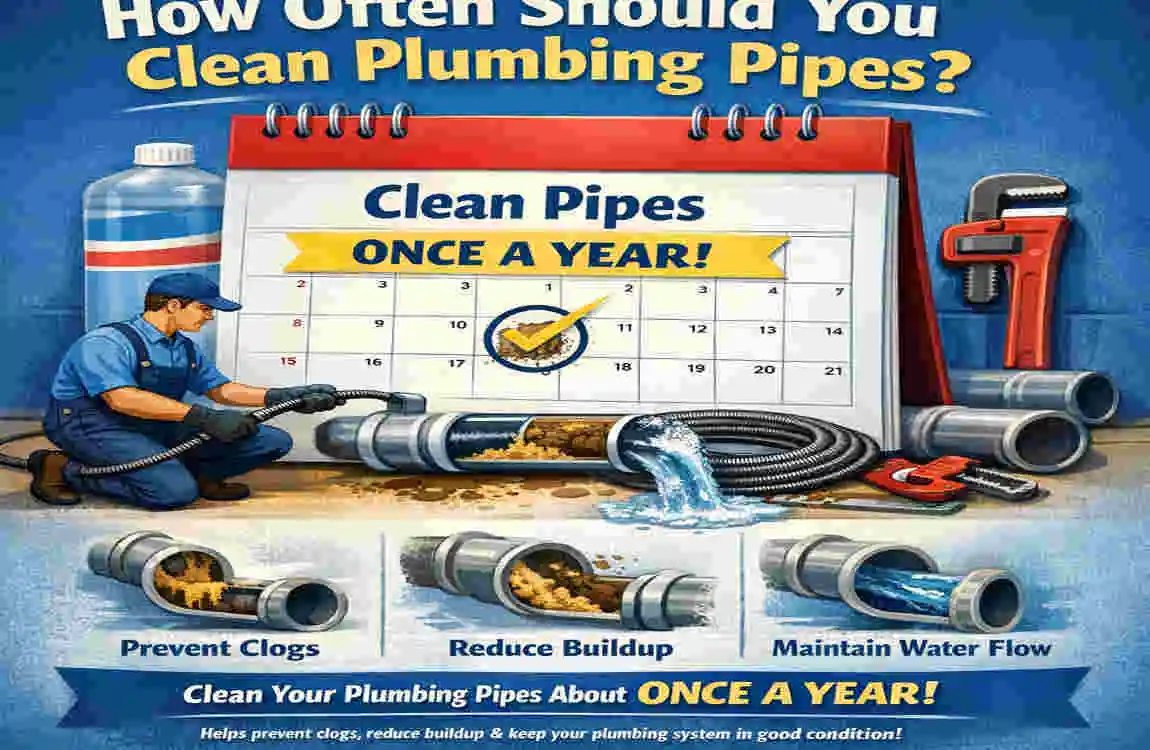
There is no single rule for every home. It depends on how many people live there, how often the drains are used, and how quickly buildup forms.
A good idea is to perform light maintenance regularly rather than waiting for a serious clog. That may mean weekly care for visible drain areas and monthly checks for leaks or slow drainage.
Simple Plumbing Pipe Cleaning Routine
Task Suggested Frequency
Remove visible drain debris Weekly
Clean drain strainers Weekly
Flush commonly used drains Regularly
Inspect for leaks Monthly
Clean accessible traps As needed
Professional inspection When problems persist
Benefits of Regular Pipe Cleaning
Keeping up with pipe cleaning gives you several clear benefits.
- Better drainage
- Fewer minor clogs
- Fresher-smelling drains
- Improved plumbing performance
- Earlier detection of leaks
- Possible savings on repair costs
FAQ
How do I clean plumbing pipes at home?
Start by removing visible debris, flushing the drain with water, and cleaning accessible traps. For light buildup, baking soda and vinegar may help.
What is the easiest way to clean a clogged pipe?
For a minor clog, try removing visible debris and using a plunger. A plumbing snake can help with deeper blockages.
Can baking soda and vinegar clean plumbing pipes?
Yes, but mostly for light residue and drain odors. They do not usually clear serious clogs.
How often should I clean my home plumbing pipes?
Regular light maintenance is better than waiting until a blockage occurs. Busy drains may need more attention than rarely used ones.
Is it safe to use chemical drain cleaners?
Some can work, but they can also damage pipes and create safety risks. Never mix different cleaners.
How can I prevent plumbing pipes from getting clogged?
Use drain screens, avoid grease and food waste, remove hair, and keep drains clean regularly.
When should I hire a plumber?
Call a plumber when clogs keep coming back, several fixtures are affected, pipes leak, or home cleaning does not solve the issue.
| Topic | Quick Information |
|---|---|
| How to Clean Plumbing Pipes at Home | A simple way to remove buildup, odors, and minor blockages from household pipes. |
| Start Safely | Turn off the water if needed and remove visible debris from drains. |
| Use Hot Water | Flush pipes with hot water to help loosen grease and light buildup. |
| Try Baking Soda & Vinegar | Pour baking soda followed by vinegar, let it sit briefly, then flush with water. |
| Use a Plunger | Helpful for loosening minor clogs in sinks, showers, and tubs. |
| Clean Pipe Traps | Remove and rinse the trap under a sink to clear trapped dirt and debris. |
| Prevent Future Clogs | Use drain screens and avoid putting grease, food scraps, or hair down drains. |
| When to Call a Plumber | Get professional help for recurring clogs, leaks, sewage odors, or slow drainage throughout the home. |
