
If you have ever looked at your floors and wondered how often you should mop them, the honest answer is: it depends on how much you use them and what kind of floors you have.
Some homes need mopping every few days. Other homes can go longer between cleanings. A busy kitchen with kids and pets needs more care than a quiet bedroom with very little foot traffic.
The good news is you don’t need to guess forever. Once you understand the main factors, you can build a simple floor-cleaning routine that fits your home and your lifestyle.
How Often Should You Mop Your Floors?
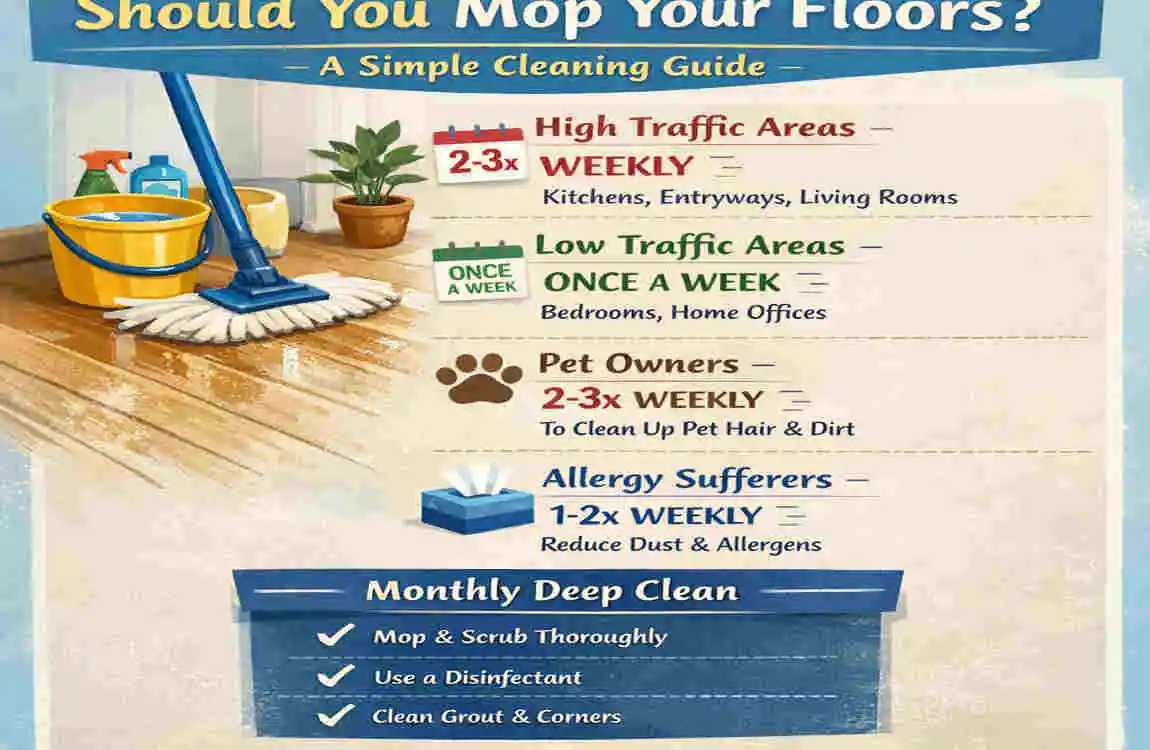
A simple general rule is this:
- High-traffic rooms may need mopping 2 to 3 times per week
- Medium-traffic rooms may need mopping once a week
- Low-traffic rooms may only need mopping every 1 to 2 weeks
That said, no single schedule works for every home. Your routine should change based on foot traffic, pets, children, floor type, and weather.
Routine Mopping vs Deep Cleaning
It also helps to understand the difference between routine mopping and deep cleaning.
Routine mopping is the regular cleaning you do to remove dirt, dust, and spills before they build up. It keeps your floors looking fresh.
Deep cleaning goes further. It may involve scrubbing corners, cleaning grout, or using more detailed care for problem spots. You do this less often, but it helps when the floor starts to look dull or sticky.
So when you ask how often you should mop your floors, think of it as part of a larger cleaning routine, not a one-time job.
Factors That Affect How Often You Should Mop
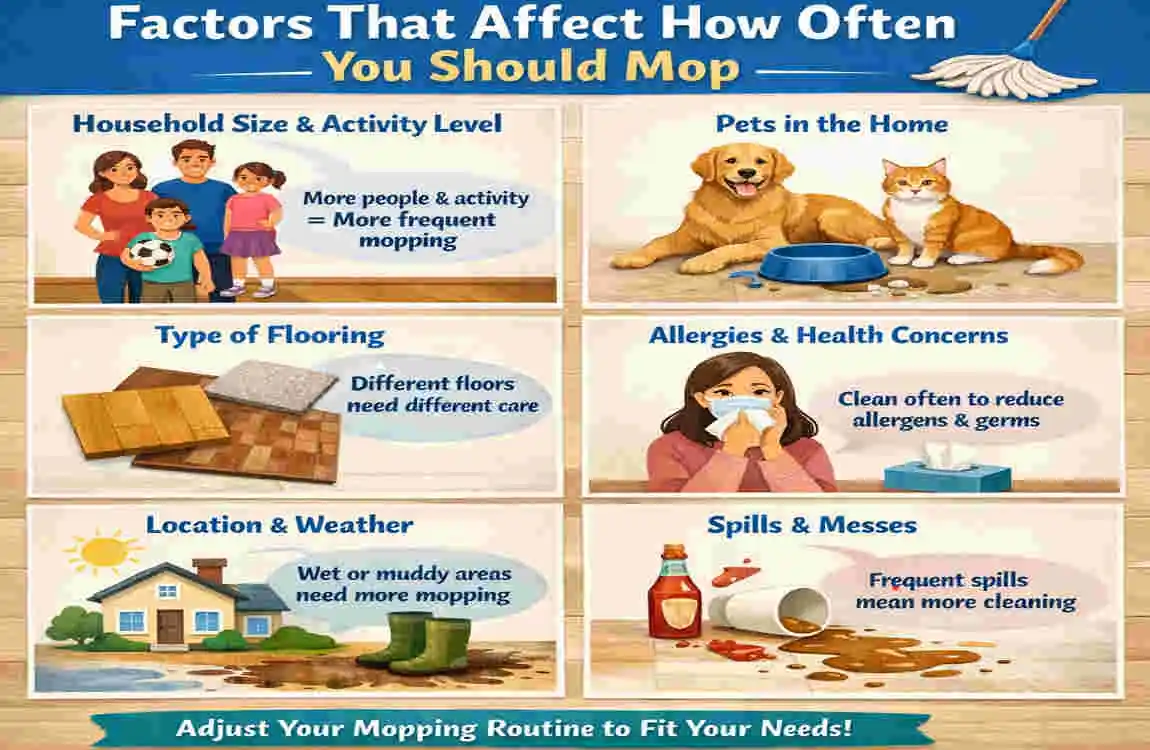
The right mopping schedule depends on what happens inside your home every day.
High-Traffic Areas
Some rooms collect dirt faster than others. Entryways, kitchens, hallways, and living rooms often need more frequent cleaning because people walk through them constantly.
These spaces pick up dust, crumbs, shoe marks, and outdoor dirt more quickly. If a room gets constant use, it will usually need more mopping.
Pets and Children
Pets and children can make floors dirty faster. Pets bring in hair, paw prints, mud, and sometimes food or water spills. Children often spill drinks, drop snacks, and track in dirt without meaning to.
If you have both pets and kids, you may need to mop more often than the average home.
Household Size
A larger household usually means more footsteps, more movement, and more mess. Even if everyone is careful, dirt builds up faster when more people live in the home.
A single person in a small apartment may only need to mop once a week or less in some rooms. A family home with several people may need much more frequent cleaning.
Weather and Outdoor Conditions
Weather plays a bigger role than many people realize. Rain, mud, snow, dust, and seasonal changes all affect how quickly your floors get dirty.
For example, during rainy weeks, entryways and hallways may need extra attention. In dry, dusty weather, the floor may collect a thin layer of grit more quickly.
Recommended Mopping Schedule by Room
Different rooms need different levels of care. Some areas get dirty fast because of food, water, and constant movement. Others stay cleaner much longer.
Area Suggested Mopping Frequency
Kitchen 2–3 times per week
Bathroom 2–3 times per week
Entryway 2–3 times per week or as needed
Living Room Once a week
Bedrooms Every 1–2 weeks
Low-Traffic Areas Every 1–2 weeks
Why Some Rooms Need More Frequent Cleaning
Kitchens and bathrooms usually need the most attention because they deal with spills, moisture, and daily activity. Entryways also collect dirt from outside, so they often need more frequent mopping.
Living rooms and bedrooms usually stay cleaner because they don’t get as much mess. Still, don’t ignore them completely.
Spot-Clean Spills Right Away
One very important habit is to clean spills as soon as they happen. Waiting too long can make the mess harder to remove and may leave stains or sticky spots.
If you spot a spill, wipe it up right away. That simple habit can reduce how often you need to mop the whole floor.
How Often Should You Mop Different Types of Floors?
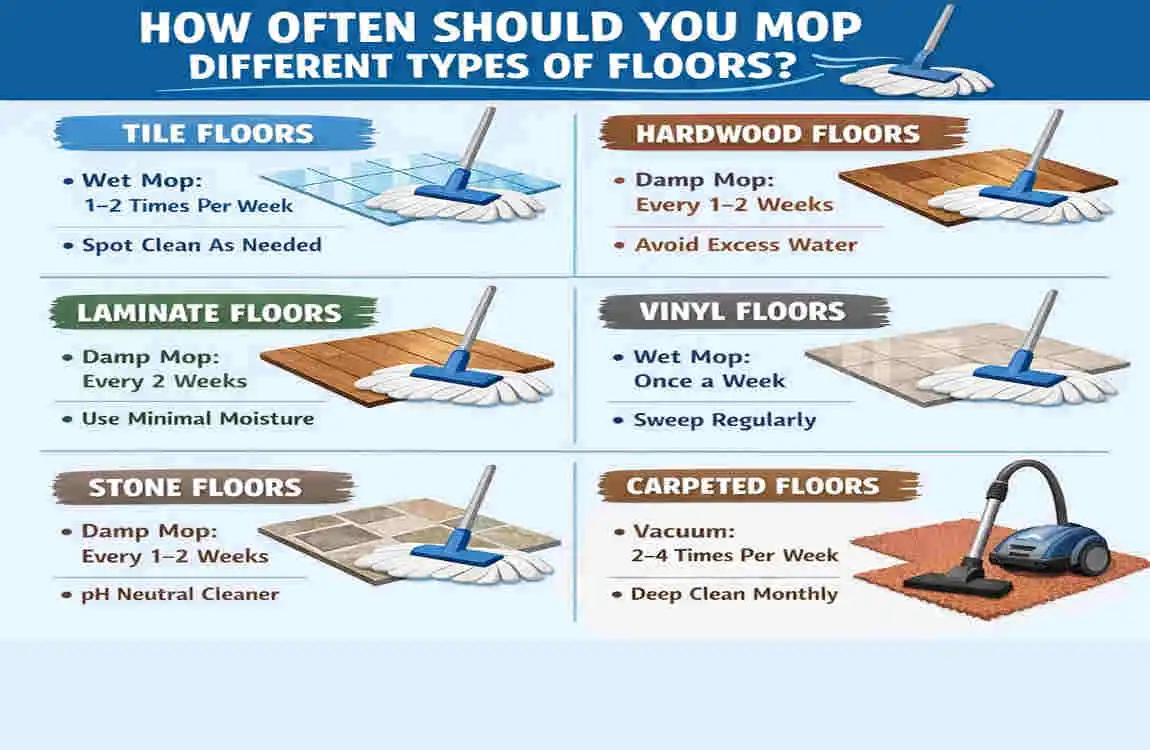
Not all floors behave the same way. Some can handle frequent cleaning, while others need a gentler touch.
Tile Floors
Tile floors are usually easy to mop because they handle moisture well. However, grout can collect dirt over time, so you may need to pay attention to the lines between the tiles.
Tile floors in kitchens and bathrooms often need more regular mopping because those rooms get wet and messy more often.
Vinyl and Luxury Vinyl Floors
Vinyl floors are also fairly easy to maintain. They usually do well with routine cleaning, but you should avoid using too much water.
Too much moisture can create problems, especially around edges or seams. A damp mop is usually better than a soaking wet one.
Laminate Floors
Laminate floors need more care because they do not like excess water. Damp mopping is usually the safest choice.
If you use too much liquid, the floor can swell or get damaged over time. Keep the mop lightly damp and dry the surface quickly.
Hardwood Floors
Hardwood floors need the most caution. Use minimal moisture and products made for wood surfaces. A mop that is too wet can harm the finish or the wood itself.
For hardwood, light and careful cleaning is usually better than frequent heavy mopping.
Concrete and Other Flooring
Concrete floors and some specialty floors can handle more wear, but they still need the right kind of cleaning. If you ignore them, dust, dirt, and spills can build up on the surface.
When possible, always follow the cleaning advice for your specific floor material.
How to Mop Your Floors Properly
Even if you mop regularly, technique matters. A good routine can make your floors cleaner and help them last longer.
Remove Dust and Debris First
Before mopping, sweep or vacuum the floor. This removes loose dirt, crumbs, and grit so you do not just push it around.
If you skip this step, your mop may spread the mess instead of lifting it.
Use the Right Amount of Water
Using too much water is one of the most common mistakes. A floor that stays too wet can become slippery, streaky, or even damaged.
Your mop should be damp, not dripping. That is especially important for laminate and hardwood.
Choose a Suitable Cleaner
Always use a cleaner that matches your floor type. Some products work well on tile but may not be safe for wood or laminate.
Using the wrong cleaner can leave residue, dull the finish, or harm the surface over time.
Use a Clean Mop
A dirty mop can spread grease and grime instead of cleaning the floor. That is why you should rinse it well and wash the mop head often.
A fresh mop gives you better results and keeps the floor looking cleaner for longer.
Let the Floor Dry Properly
After mopping, let the floor dry fully before walking on it too much. Good airflow helps the drying process.
If possible, open windows or use fans to speed it up and reduce streaks or slippery spots.
Signs Your Floors Need Mopping More Often
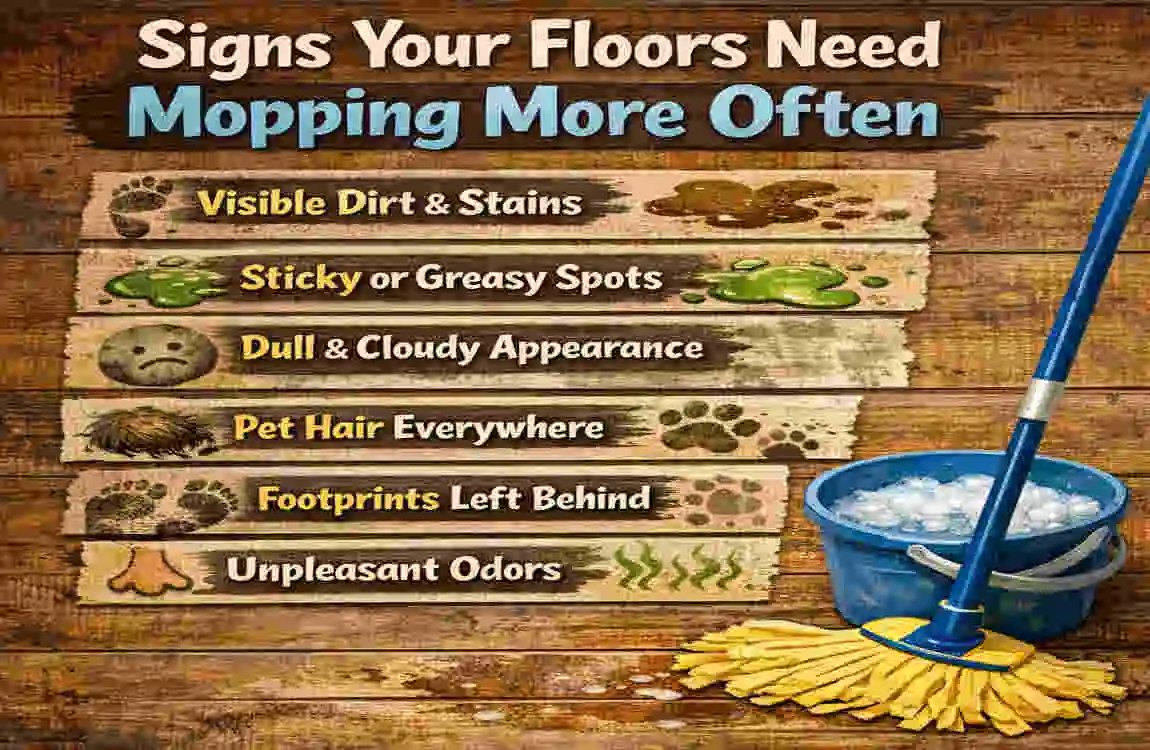
Sometimes your floor tells you when it needs extra attention. You have to notice the signs.
Visible Dirt and Footprints
If you can clearly see dirt, dust, or footprints, it is time to mop. Floors should not look dull or gritty for long.
Sticky Spots or Greasy Feel
If the floor feels sticky underfoot or seems greasy, that is a strong sign it needs cleaning. This is common in kitchens and dining areas.
Unpleasant Odors
A floor that smells stale or dirty may need a good mop. Odors can come from spills, pets, or moisture that has not been cleaned properly.
More Dirt After Outdoor Activity
If you have been walking through rain, mud, or dusty conditions, your floors may need more frequent cleaning for a while.
When Spot Cleaning Is Enough
Not every mark requires a full mop. Sometimes a small spill or one dirty footprint can be cleaned quickly by hand.
That is why daily spot cleaning can be a smart habit. It helps you stretch the time between deeper cleaning sessions.
Easy Floor-Mopping Routine
A simple routine makes floor care much easier to manage. You do not need to make it complicated.
Simple Weekly Cleaning Routine
Try this basic approach:
- Sweep or vacuum regularly
- Mop based on room traffic
- Clean spills immediately
- Deep clean when needed
- Wash and dry mop heads after use
This keeps the job manageable and helps you stay ahead of dirt instead of chasing it later.
Helpful Cleaning Habits
A few small habits can make a big difference:
- remove shoes at the door when possible
- use mats in entryways
- wipe up spills quickly
- keep pets clean after outdoor walks
- vacuum before mopping
These steps can reduce how often you need to mop and help floors stay cleaner between washings.
Frequently Asked Questions
How often should you mop your floors in a normal home?
In a normal home, many people mop high-traffic areas once or twice a week and lower-traffic rooms every one to two weeks. The right schedule depends on the room and how much you use it daily.
Is mopping once a week enough?
Yes, for many homes it is. Weekly mopping works well for moderate-traffic rooms. But kitchens, bathrooms, entryways, pets, and children may require more frequent cleaning.
Should you mop every day?
Most homes do not need daily mopping. Daily mopping may make sense in very busy spaces, but for ordinary households, spot cleaning is usually enough between regular mopping sessions.
How often should you mop if you have pets?
If you have pets, you may need to mop more often because of hair, paw prints, dirt, and occasional spills. Entryways and pet feeding areas may need extra attention.
Should you sweep before mopping?
Yes. Sweeping or vacuuming first removes loose dirt so the mop can clean the floor properly instead of spreading debris around.
Can you mop floors too often?
Yes, if you use too much water or the wrong cleaner. Over-mopping can leave residue, cause moisture problems, or wear down delicate floor finishes.
What is the best time of day to mop floors?
The best time is usually when the floor can dry without much foot traffic. Morning or early afternoon often works well because it allows time to ventilate and dry.
| Floor Area / Type | Recommended Mopping Frequency | Helpful Tip |
|---|---|---|
| Kitchen | 2–3 times a week | Clean spills immediately |
| Bathroom | 2–3 times a week | Use a suitable disinfecting cleaner |
| Living Room | Once a week | Vacuum or sweep before mopping |
| Bedrooms | Every 1–2 weeks | Mop more often if pets are present |
| High-Traffic Areas | 2–3 times a week | Focus on dirt and entry points |
| Homes with Pets/Kids | 2–4 times a week | Clean muddy or sticky spots quickly |
| Low-Traffic Rooms | Every 2–3 weeks | Dust and sweep between mopping days |
