
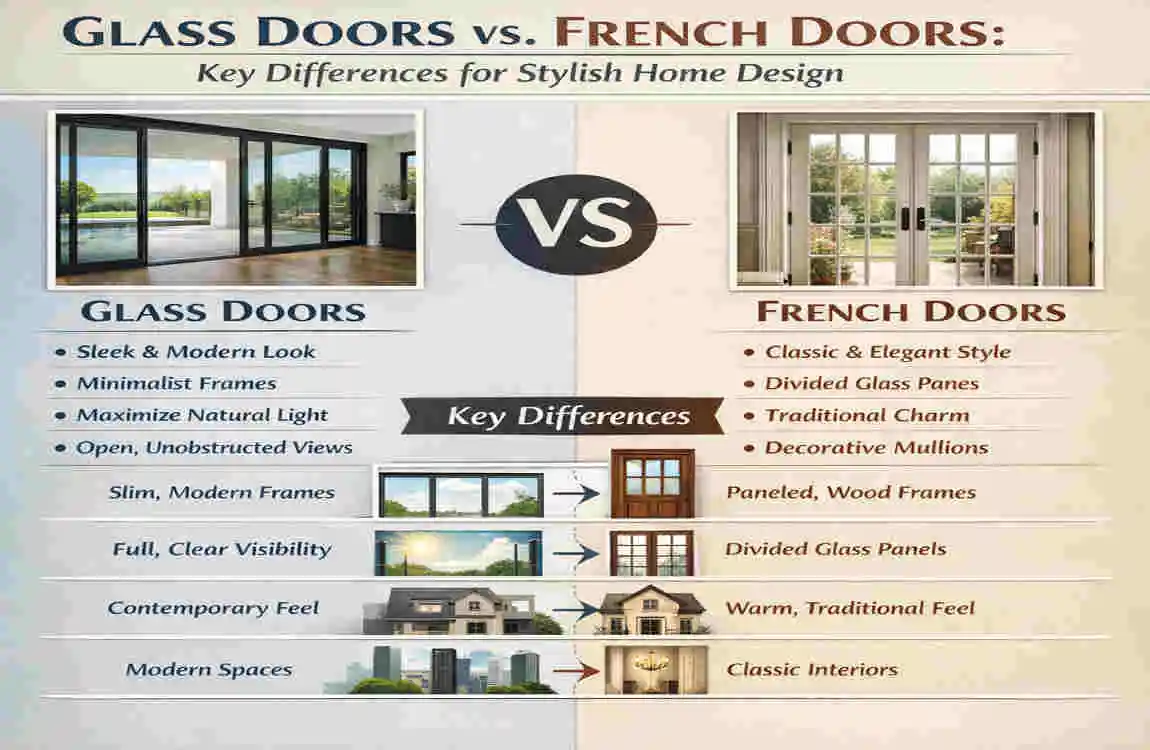
Choosing the right door can improve your home’s appearance, comfort, and functionality. Two of the most popular options are glass doors and French doors. While both allow natural light into your home, they differ in design, operation, cost, and maintenance.
What Is a Glass Door?
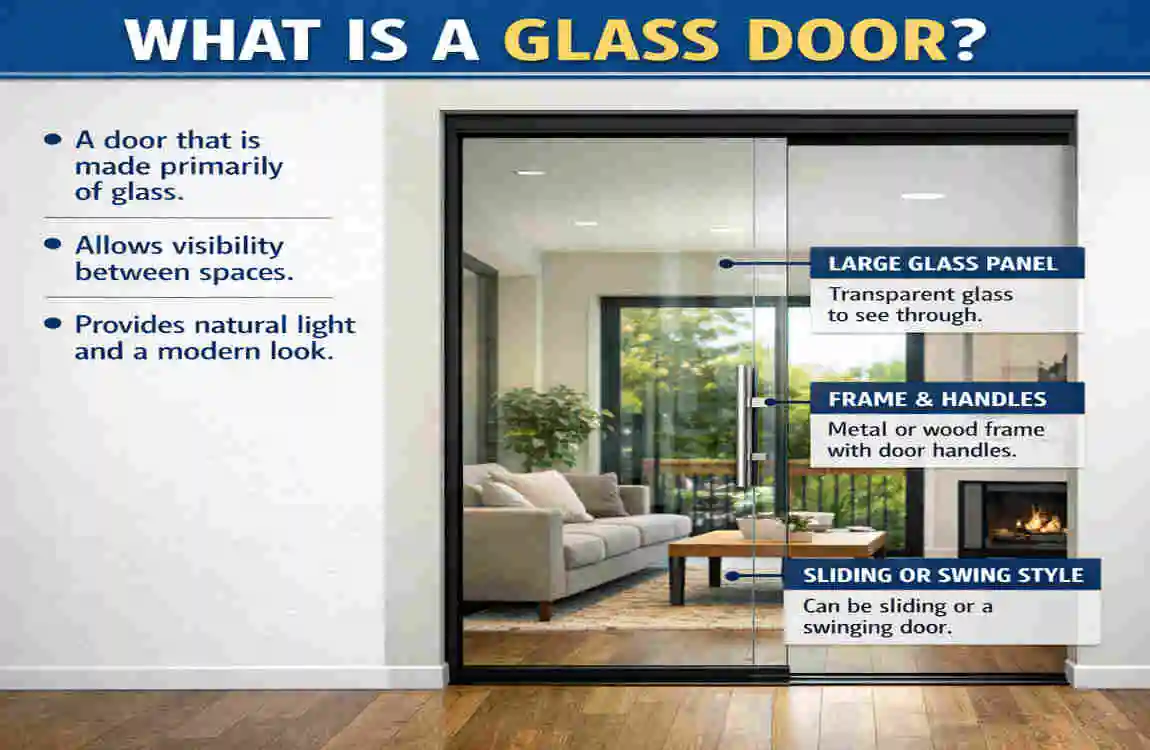
Definition of a Glass Door
A glass door is any door that includes a large glass panel or is made mostly of glass. These doors are commonly used for patios, balconies, offices, and modern homes because they let in plenty of sunlight and provide clear outdoor views.
Glass doors are usually made with tempered or insulated safety glass and can have frames made from aluminum, vinyl, wood, or fiberglass.
Common Types of Glass Doors
- Sliding Glass Doors – Slide horizontally to save space.
- Hinged Glass Doors – Open like a standard door.
- Frameless Glass Doors – Popular for modern interiors.
- Bi-Fold Glass Doors – Fold neatly to create a wide opening.
Benefits of Glass Doors
- Brings in more natural light.
- Creates a modern appearance.
- Saves space with sliding designs.
- Offers beautiful outdoor views.
- Easy to clean and maintain.
What Is a French Door?
Definition of French Doors
A French door usually consists of one or two hinged doors with multiple glass panels, each surrounded by a frame. Unlike sliding glass doors, French doors swing inward or outward.
They are commonly installed between living rooms, patios, gardens, and balconies because they create an elegant entrance.
Common Types of French Doors
- Interior French doors
- Exterior French doors
- Single French doors
- Double French doors
Advantages of French Doors
- Classic and elegant design.
- Wide opening for easy access.
- Better ventilation when both doors are open.
- Can increase home value.
- Suitable for traditional and modern homes.
What Is the Difference Between a Glass Door and a French Door?
Although both styles feature glass, they differ in several important ways.
Design Differences
Glass doors often have one large uninterrupted glass panel. French doors feature framed glass panels that create a more traditional appearance.
Opening Style
Glass doors may slide or swing open.
French doors always use hinges and swing open.
Number of Door Panels
Glass doors are commonly available as single sliding panels or paired sliding systems.
French doors usually include two matching doors, although single French doors are also available.
Materials Used
Both options come in:
- Wood
- Aluminum
- Vinyl
- Fiberglass
- Steel
French doors generally have thicker frames.
Privacy Level
Glass doors provide excellent views but offer less privacy unless frosted or tinted glass is used.
French doors offer slightly more privacy because of their divided frames and optional decorative glass.
Security Features
Modern glass doors include multi-point locks and tempered glass.
French doors often provide stronger locking systems and reinforced frames.
Energy Efficiency
Both door types can be highly energy efficient when equipped with:
- Double-pane glass
- Low-E coatings
- Weatherstripping
Cost Comparison
Glass doors generally cost less for basic models.
French doors often cost more because of their double-door design and installation requirements.
Maintenance Requirements
Glass doors mainly require glass cleaning and track maintenance.
French doors require occasional maintenance for hinges, frames, weatherstripping, and glass.
Comparison Table
FeatureGlass DoorFrench Door
Design Mostly glass Framed glass panels
Opening Style Sliding or hinged Hinged, usually double
Natural Light Excellent Excellent
Space Needed Sliding saves space Needs swing space
Cost Moderate Moderate to High
Maintenance Low Medium
Best For Patios, balconies Living rooms, gardens
Glass Door Pros and Cons
Pros
- Modern appearance
- Bright interiors
- Easy maintenance
- Space-saving options
- Excellent outdoor views
Cons
- Less privacy
- Glass shows fingerprints
- Premium models can be expensive
French Door Pros and Cons
Pros
- Timeless design
- Improves curb appeal
- Wide entryway
- Adds resale value
- Better airflow
Cons
- Needs more floor space
- Higher installation costs
- More maintenance than sliding doors
Which Door Is Best for Your Home?
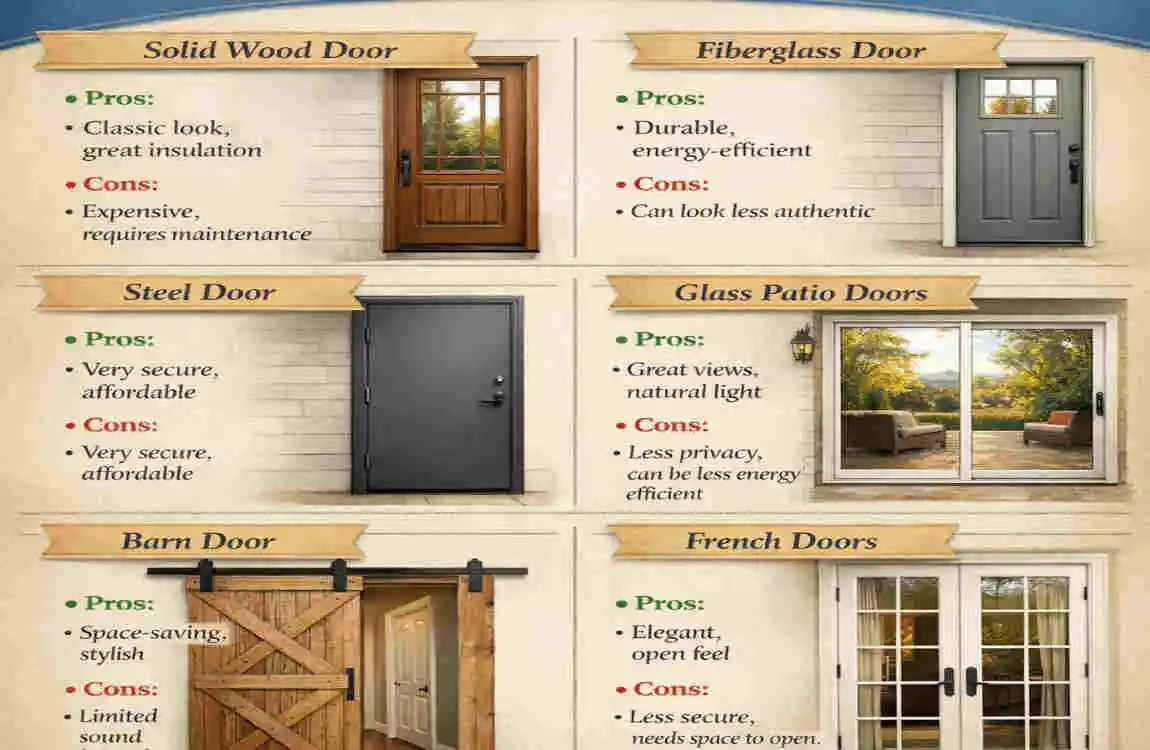
Choose a Glass Door If
Glass doors are ideal if you:
- Have limited space.
- Prefer modern home designs.
- Want uninterrupted outdoor views.
- Need easy patio access.
Choose French Doors If
French doors are a better choice if you:
- Prefer traditional architecture.
- Want a stylish entrance.
- Have enough room for swinging doors.
- Value classic home design.
Cost Comparison
Average Glass Door Prices
Type Estimated Cost
Basic $300–$700
Mid-Range $700–$1,500
Premium $1,500–$3,500+
Average French Door Prices
Material Estimated Cost
Wood $600–$2,500
Fiberglass $700–$2,000
Steel $500–$1,800
Installation Costs
Installation costs depend on:
- Door size
- Material
- Frame condition
- Labor rates
- New installation or replacement
Factors to Consider Before Buying
Home Style
Modern homes often look better with sleek glass doors, while traditional homes pair well with French doors.
Available Space
Sliding glass doors require very little clearance. French doors need enough room for the doors to swing open.
Budget
Glass doors are usually more affordable, while decorative French doors often cost more.
Energy Efficiency
Choose insulated glass and quality weather seals to reduce energy loss.
Climate
Homes in harsh weather conditions should choose durable materials and energy-efficient glass.
Security Needs
Look for reinforced frames, multi-point locks, and impact-resistant glass for better security.
Maintenance Tips
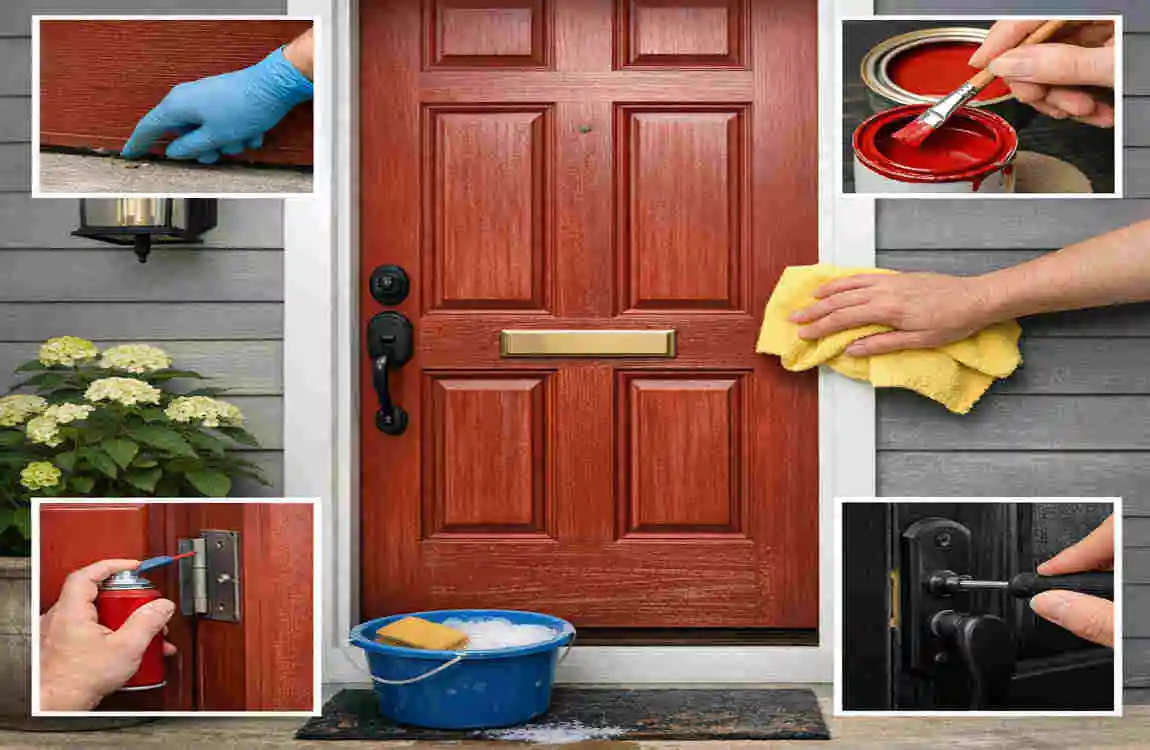
Caring for Glass Doors
- Clean glass regularly.
- Keep sliding tracks free from dirt.
- Lubricate rollers when needed.
- Inspect locks periodically.
Maintaining French Doors
- Clean frames and glass.
- Tighten loose hinges.
- Replace worn weatherstripping.
- Inspect seals regularly.
Common Mistakes to Avoid
Avoid these common mistakes when choosing a door:
- Selecting appearance over functionality.
- Ignoring energy efficiency ratings.
- Buying the wrong size.
- Forgetting long-term maintenance.
- Overlooking security features.
Careful planning helps you choose a door that performs well for many years.
Frequently Asked Questions
What is the difference between a glass door and a French door?
A glass door is mostly made of glass and may slide or swing, while a French door has framed glass panels and usually consists of one or two hinged doors.
Are French doors stronger than glass doors?
Both can be secure, but French doors often have stronger frames and multi-point locking systems.
Which is more energy efficient, glass doors or French doors?
Both are energy efficient when equipped with double-pane, insulated, Low-E glass.
Are French doors more expensive than glass doors?
Generally, yes. French doors usually cost more because of their design and installation.
Can a French door have full glass panels?
Yes. Many modern French doors feature large glass panels while keeping the traditional framed design.
Which door is better for a patio?
Sliding glass doors are ideal for small patios, while French doors create a wider and more elegant entrance.
| Feature | Glass Door | French Door |
|---|---|---|
| Definition | A door with one or more glass panels. | A pair of hinged doors with large glass panes. |
| Design | Available as single, sliding, or hinged doors. | Usually two doors that open from the center. |
| Glass Area | Can be partially or fully glazed. | Mostly full-length glass panels. |
| Opening Style | Sliding, swinging, folding, or pivot. | Hinged and opens inward or outward. |
| Natural Light | Provides good daylight depending on glass size. | Maximizes natural light with large glass panels. |
| Ventilation | Varies by door type. | Excellent ventilation when both doors are open. |
