
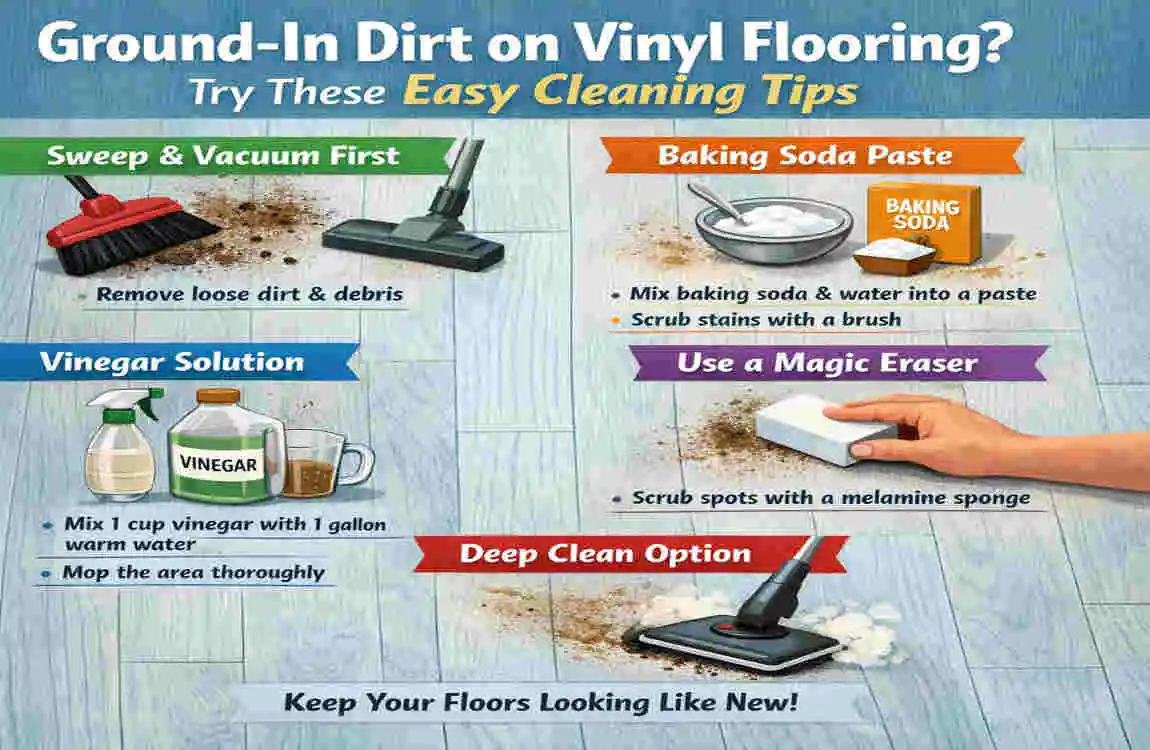
Vinyl flooring is popular because it is practical, easy to live with, and simple to maintain. But even a good floor can start to look dull when dirt gets pressed into the surface.
This happens more often in busy areas like kitchens, hallways, entrances, and utility rooms. These are the places where shoes, spills, and daily foot traffic work dirt deeper into the floor.
If you are looking for how to get ground-in dirt out of vinyl flooring UK, the good news is that many marks can be removed with gentle, simple cleaning methods. You do not need harsh chemicals in most cases.
The key is to clean carefully. Vinyl can be damaged by harsh products, rough scrubbing, or excessive water, so a gentle approach usually works best.
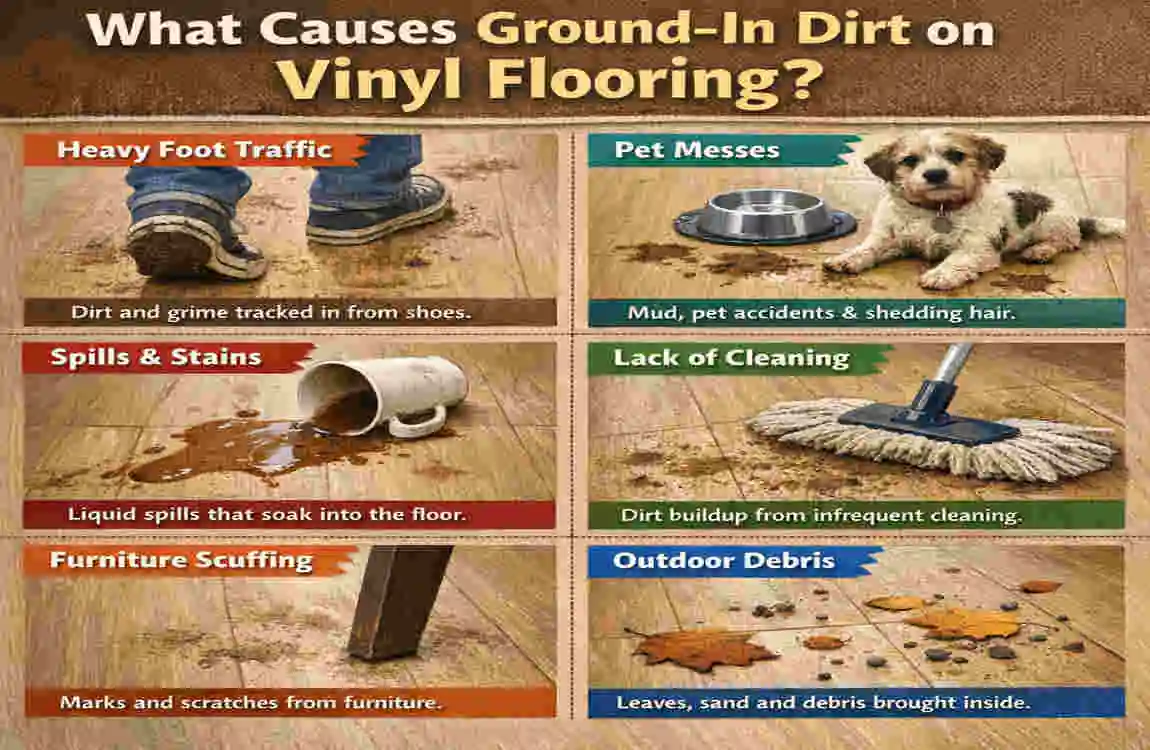
What Causes Ground-In Dirt on Vinyl Flooring?
Everyday Foot Traffic
One of the biggest causes is simply daily walking.
Shoes bring in dust, grit, mud, and tiny bits of outdoor debris. Over time, these particles get pressed into the floor, especially if the vinyl has a textured or patterned finish.
This is why floors near doors and busy walkways often look dirtier than the rest of the room.
Food and Household Spills
Spills also play a big part.
Grease, drinks, food crumbs, and muddy footprints can mix with dust and become sticky. Once that happens, the dirt clings to the surface and becomes harder to remove.
If spills are left for too long, they may look like permanent marks even when they are only built-up residue.
Poor or Infrequent Cleaning
Another common reason is simple build-up.
If a floor is only dry-swept, fine dirt may stay behind. If the wrong cleaner is used, it can leave a film that attracts even more grime.
That film can make the floor look cloudy, dull, or dirty even after mopping.
How to Get Ground-In Dirt Out of Vinyl Flooring UK
Start by Removing Loose Dirt
Before you mop or scrub anything, remove all loose dirt first.
Use a broom or vacuum cleaner to pick up dust, grit, and crumbs. Pay close attention to corners, edges, and the space under furniture.
This step matters because dragging gritty dirt across the floor can scratch the surface, making the problem worse.
Use Warm Water and Mild Washing-Up Liquid
For many vinyl floors, this is the safest first cleaning method.
Mix warm water with a small amount of mild washing-up liquid. Then use a microfibre mop that is well wrung out, not soaking wet.
Clean the dirty area in small sections. This helps remove grime without leaving too much moisture behind.
Treat Stubborn Dirt With a Soft Brush
If the dirt has settled into a textured vinyl surface, a soft brush can help.
Work gently in small areas. Use light pressure and short strokes so you do not damage the finish.
This method is useful for patterned floors, where dirt often hides in the grooves.
Try a Baking Soda Paste for Tough Marks
For more stubborn marks, a mild baking soda paste may help.
Mix a small amount of baking soda with water to form a soft paste. Apply it gently to the dirty area and let it sit briefly before wiping it away.
Do not scrub hard. Always test this method on a hidden spot first, because every floor reacts differently.
Rinse and Dry the Floor
After cleaning, wipe the area again with clean water to remove any leftover cleaner.
Then dry the floor with a clean microfibre cloth. This helps prevent streaks, residue, and dull patches.
A properly dried floor usually looks brighter and cleaner straight away.
Cleaning Methods to Avoid on Vinyl Flooring
Harsh Abrasive Cleaners
Avoid scouring powders and rough pads.
These products can scratch vinyl and remove the protective finish. Once the surface is damaged, dirt can settle even more easily.
Excessive Water
Vinyl does not like being soaked.
A mop that is dripping wet can leave too much water on the floor. Over time, this may affect the edges, seams, or backing of the flooring.
A damp mop is always a better choice than a wet one.
Strong Solvents and Unapproved Chemicals
Not every household cleaner is suitable for vinyl.
Strong chemicals may dull the surface, cause discoloration, or break down the protective layer. That is why it is important to check the flooring manufacturer’s instructions before trying a new product.
Steam Cleaning Without Checking Guidance
Steam cleaners may seem convenient, but they are not always safe for vinyl.
Heat and moisture can be a problem for some flooring types. If the manufacturer does not explicitly state that it is safe, it is better to avoid steam cleaning.
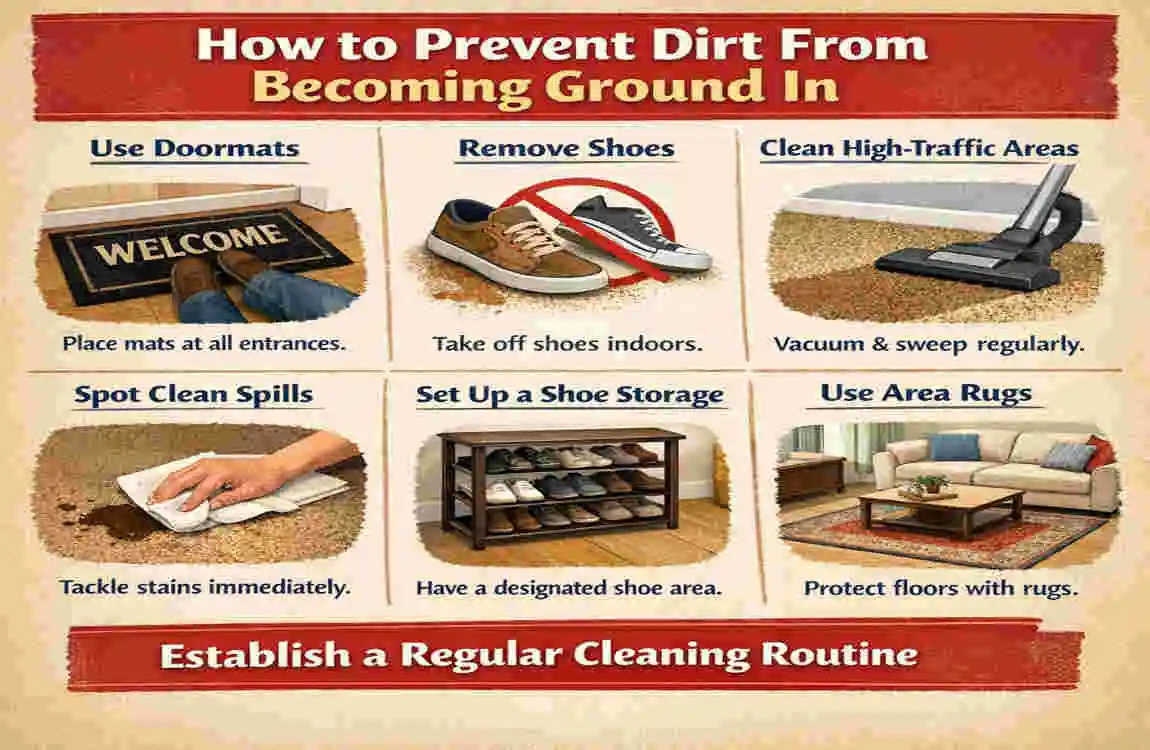
How to Prevent Dirt From Becoming Ground In
Create a Regular Cleaning Routine
A simple routine can save a lot of effort later.
Sweep or vacuum regularly so dirt does not build up. Then mop high-traffic areas before grime has time to settle into the floor.
This is especially helpful in entrances and kitchens, where dirt accumulates quickly.
Use Doormats
Doormats are one of the easiest ways to reduce ground-in dirt.
Place them at entry points so they catch grit before it reaches the floor. Clean the mats often so they do not become another source of dirt.
Remove Shoes Indoors
Taking off outdoor shoes can make a big difference.
It reduces the amount of soil, dust, and grit that gets carried across the vinyl. This is especially useful in homes with children or pets.
Clean Spills Quickly
The faster you clean a spill, the easier it is to manage.
Wipe up food, grease, drinks, and mud as soon as possible. Sticky residue can attract more dirt and make the floor look dirty again very quickly.
Protect High-Traffic Areas
If certain spots wear out faster, add washable rugs or suitable protective mats.
Just make sure the backing is safe for vinyl flooring. Some rug backings can trap moisture or leave marks, so choose carefully.
A Simple Weekly Vinyl Floor Cleaning Routine
A weekly routine helps keep vinyl looking fresh without much effort.
Clear the Area
Remove small furniture and loose items where practical.
This gives you better access to corners and busy areas where dirt tends to gather.
Sweep or Vacuum Thoroughly
Pick up all loose dust and grit first.
This prevents scratching and makes the mopping stage much more effective.
Prepare a Mild Cleaning Solution
Use warm water and a small amount of mild washing-up liquid or a vinyl-safe cleaner.
Do not overuse the product. More cleaner does not always mean a better result.
Mop With a Well-Wrung Microfibre Mop
Mop the floor in small sections.
Keep the mop damp, not wet, and rinse it often if the water becomes dirty.
Spot-Clean Stubborn Areas
If you see marks left behind, use a soft brush or baking soda paste on those spots.
Work gently and always test first if you are unsure.
Rinse Away Excess Cleaner
Go over the floor with clean water if needed.
This removes film and helps the surface look clearer.
Dry and Check the Floor
Dry the floor with a microfibre cloth or a clean towel.
Then check for any marks that still need attention.
Quick Guide: Cleaning Options for Vinyl Flooring
Cleaning Method Best For Things to Watch
Warm water + mild washing-up liquid: everyday dirt and light grime. Do not use too much water.
Soft-bristled brush Textured or patterned vinyl Avoid hard scrubbing
Baking soda paste Tough marks and stuck-on dirt Test first in a hidden area
Vinyl-safe floor cleaner Regular maintenance Follow product directions carefully
Steam cleaning Only if manufacturer approves Heat and moisture may damage some floors
When Ground-In Dirt Will Not Come Out
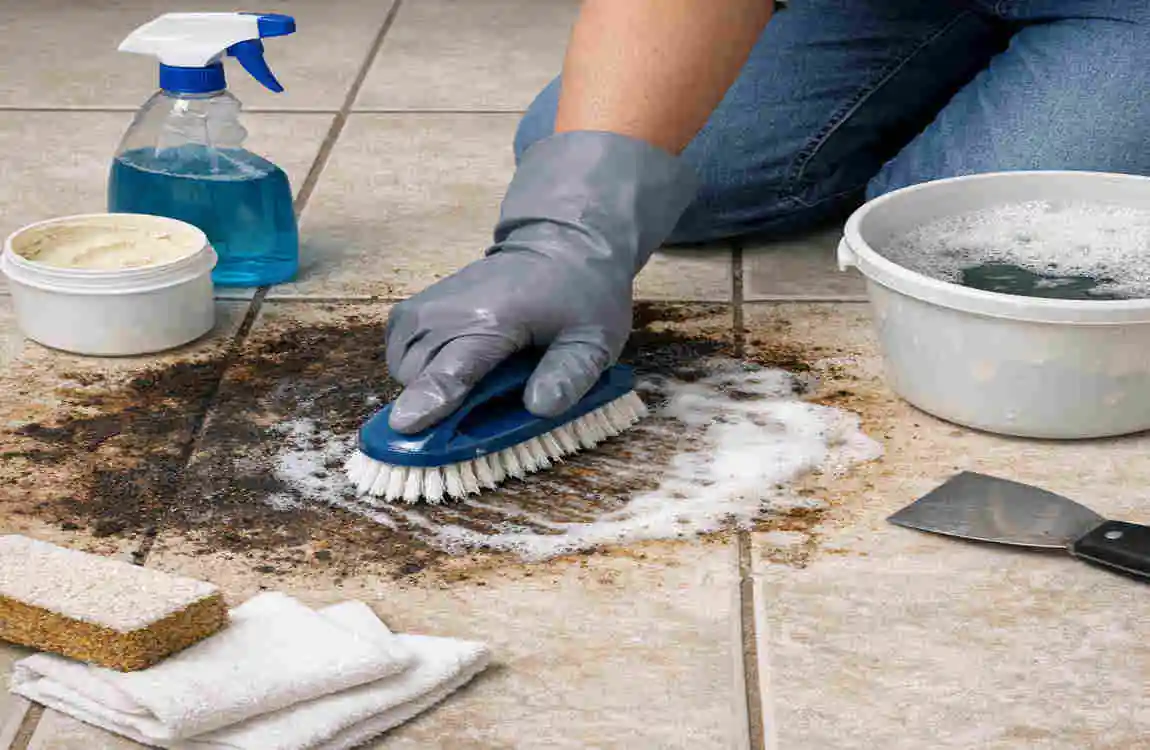
Sometimes the floor is not just dirty. It may be damaged or worn.
It May Be Permanent Staining
Some marks are not dirt at all. They can be stains, fading, or discoloration in the vinyl itself.
If the color has changed, cleaning may not fully fix it.
The Surface May Be Worn
Old vinyl can lose its top layer.
When that happens, dirt can settle in more easily, and the floor may stay dull no matter how much you clean it.
Scratches Can Hold Dirt
Deep scratches or worn patches can trap grime.
In that case, repeated scrubbing will not help much and may make the surface look worse.
Check the Manufacturer’s Instructions
If the floor still has care guidance from the maker, check it before trying stronger products.
That information can help you avoid damage and choose the safest cleaning method.
Consider Professional Help or Replacement
If the flooring is badly damaged, professional cleaning may help in some cases.
But if the floor is old, faded, or badly worn, replacement may be the more practical option.
Common Mistakes to Avoid
Some mistakes can make ground-in dirt harder to remove.
- Using too much water
- Scrubbing with rough pads
- Trying strong chemicals without checking first
- Leaving spills too long
- Skipping the dry sweep or vacuum step
These errors can damage the floor or push dirt deeper into the surface.
Frequently Asked Questions
How do you get ground-in dirt out of vinyl flooring in the UK?
Start by removing loose dirt with a vacuum or broom, then mop with warm water and a small amount of mild detergent. Use a soft brush for textured areas and rinse away any residue.
Can you use baking soda on vinyl flooring?
Yes, a small amount mixed with water may help with stubborn marks. Test it first on a hidden area and avoid hard scrubbing.
What is the best cleaner for dirty vinyl floors?
A mild, vinyl-safe floor cleaner or diluted washing-up liquid is usually a good choice. Always follow the manufacturer’s cleaning advice.
Can you use a steam mop on vinyl flooring?
Not always. Some vinyl floors can be damaged by Heat or moisture, so check the manufacturer’s guidance first.
How often should you clean vinyl flooring?
Sweep or vacuum regularly and mop as needed. Busy areas may need more frequent care.
Why does my vinyl floor still look dirty after mopping?
It may be due to cleaning residue, dirt trapped in texture, or permanent staining. Try rinsing with clean water and using less cleaner next time.
How can I keep vinyl flooring clean for longer?
Use doormats, remove shoes indoors, clean spills quickly, and vacuum or sweep often.
| Cleaning Method | Best For | How to Use |
|---|---|---|
| Warm Water & Dish Soap | Everyday dirt | Mop with a damp microfiber mop and mild soap solution. |
| Baking Soda Paste | Ground-in stains | Apply a small amount, gently scrub, then wipe clean. |
| White Vinegar Solution | Tough grime | Mix diluted vinegar with water and mop lightly. |
| Soft-Bristle Brush | Deep dirt in textured vinyl | Gently brush the dirty area without scratching the surface. |
| Drying | Preventing residue | Wipe the floor dry after cleaning to avoid streaks and moisture buildup. |
