
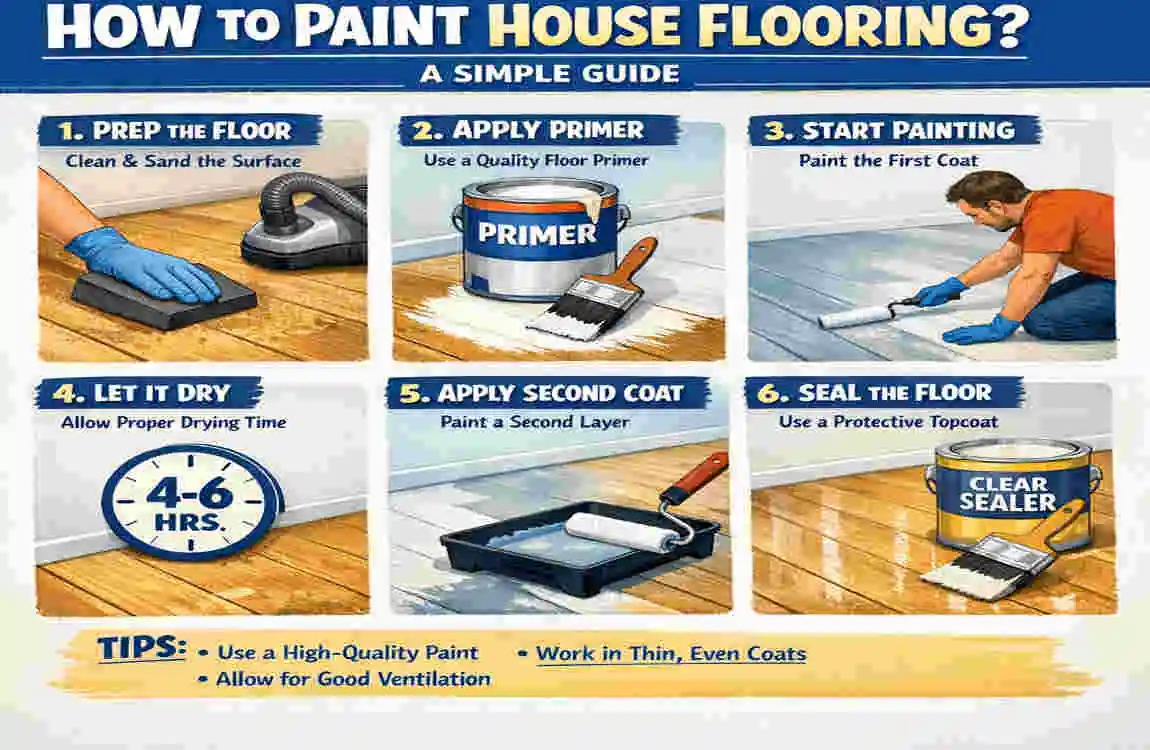
Can you paint house flooring? Yes, in many cases you can.
Painting a floor can be a smart and affordable way to give an old room a fresh look. Instead of replacing the whole floor, you can update the surface with the right prep work, primer, and floor paint.
This method works best when the floor is in good condition. If the surface is clean, dry, and stable, painting can turn a tired floor into something neat and stylish.
Can You Paint House Flooring?
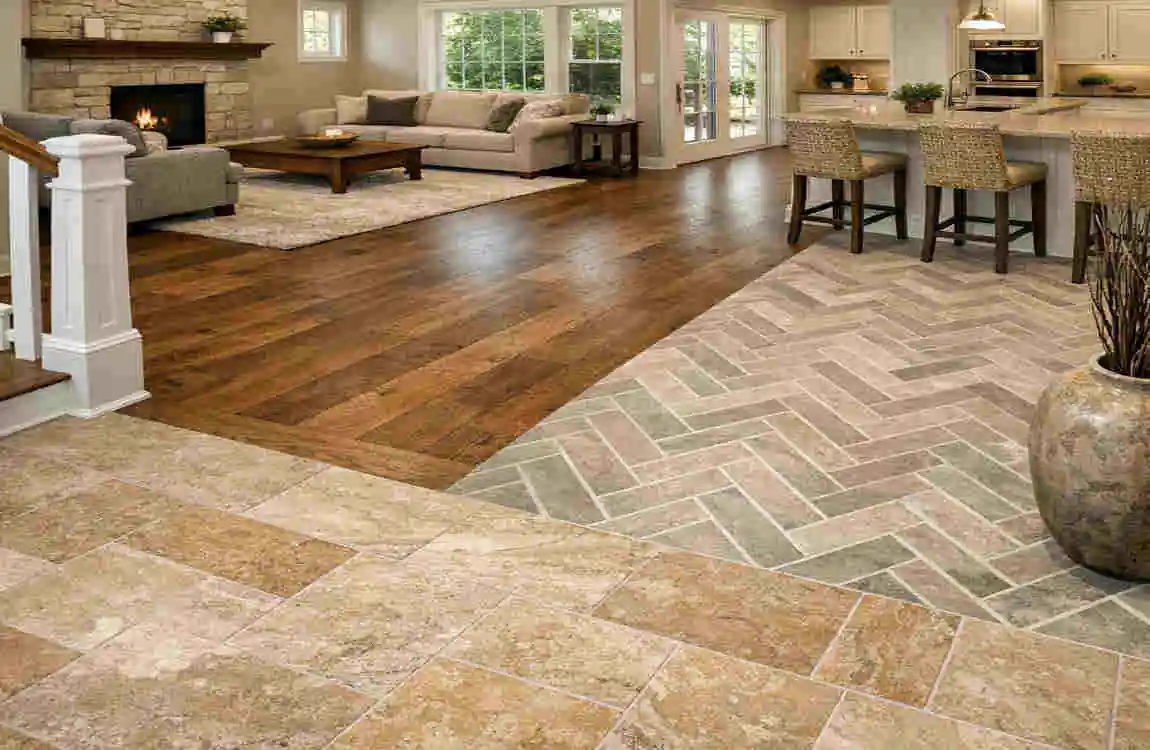
Yes, many types of flooring can be painted.
The most common options include wood, concrete, plywood, and some finished surfaces. But the floor must be ready for paint. That means no major damage, no loose pieces, and no moisture problems.
If the floor is cracked, warped, or peeling badly, painting may not last well. In that case, repair work should happen first.
Which Types of Flooring Can Be Painted?
Wood Flooring
Wood floors can be painted if they are properly cleaned and prepared.
You usually need to sand the surface lightly and apply a good primer. After that, floor paint can give the room a clean new finish.
Concrete Flooring
Concrete is one of the easiest surfaces to paint.
It works well in basements, utility rooms, and other indoor spaces. The key is to make sure the concrete is dry, clean, and free of grease or dust.
Plywood Flooring
Plywood can also be painted, especially in low-traffic areas.
It usually needs sanding and priming first. This helps the paint stick better and look smoother.
Tile and Vinyl Flooring
Some tile and vinyl floors can be painted, but they need special products.
Regular wall paint is not a good choice here. It may peel or wear off quickly when people walk on it.
Flooring Type: Can It Be Painted?Main Note
Wood Yes Needs sanding and primer
Concrete Yes Must be clean and dry
Plywood Yes Best for light-use areas
Tile Sometimes Needs special coating
Vinyl Sometimes Needs careful prep
What You Need to Paint a House Floor
Before you begin, gather the right tools and materials.
You will usually need:
- Floor cleaner
- Sandpaper or a sander
- Broom or vacuum
- Painter’s tape
- Floor primer
- Durable floor paint
- Paint roller and brush
- Paint tray
- Gloves
- Optional clear sealer
Using products made specifically for floors is important. Floor surfaces take more wear than walls, so standard paint often does not last as long.
How to Paint House Flooring
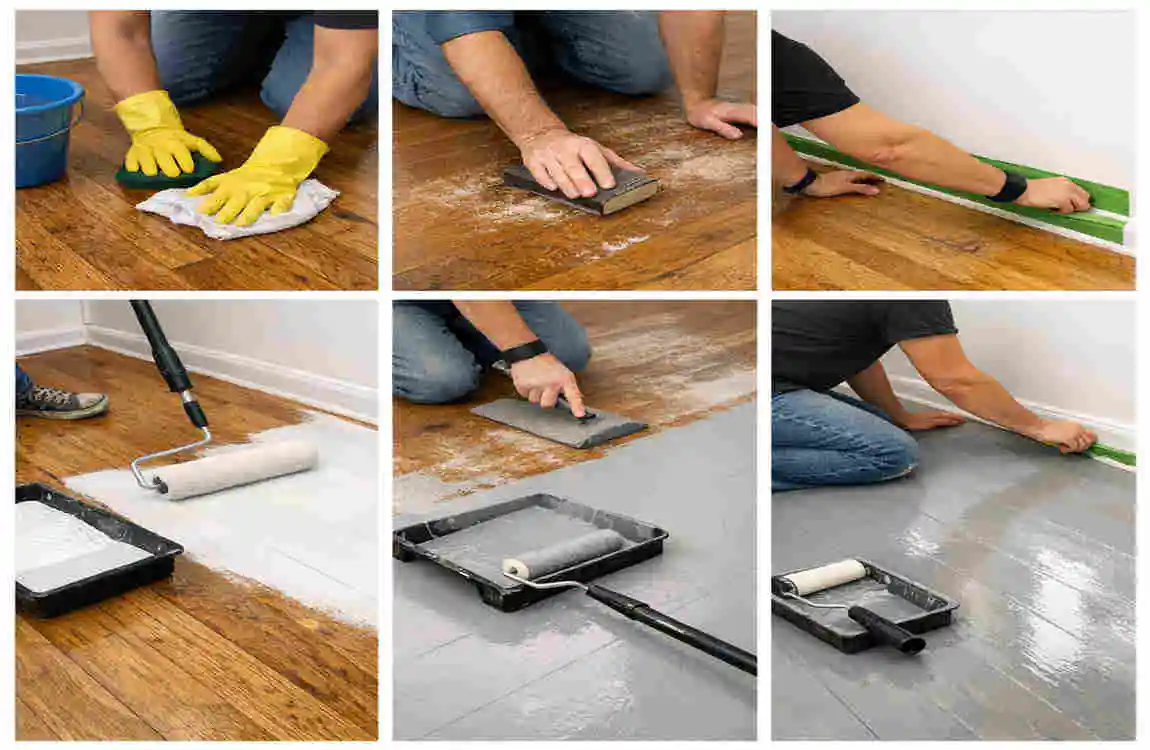
Clean the Floor
Start by removing furniture and thoroughly cleaning the surface.
Remove dust, dirt, grease, and loose material. The floor must be completely dry before you move to the next step.
Repair Any Damage
Fix cracks, holes, or loose boards.
If you paint over a damaged floor, the finish may fail later. A strong surface gives you a stronger result.
Sand the Surface
Light sanding helps the paint stick better.
This step is especially important for wood and some finished surfaces. After sanding, vacuum or wipe away all dust.
Apply Primer
Primer helps the paint bond to the floor.
Choose one that works with your floor type and paint type. It can also help the final color look more even.
Apply the Floor Paint
Use thin coats instead of thick ones.
Thin layers dry better and often last longer. Let each coat dry fully before adding the next one.
Add a Protective Finish
Some floors benefit from a clear sealer.
This can help protect against scratches, stains, and everyday wear. It is especially useful in busy rooms.
Tips for a Better Painted Floor
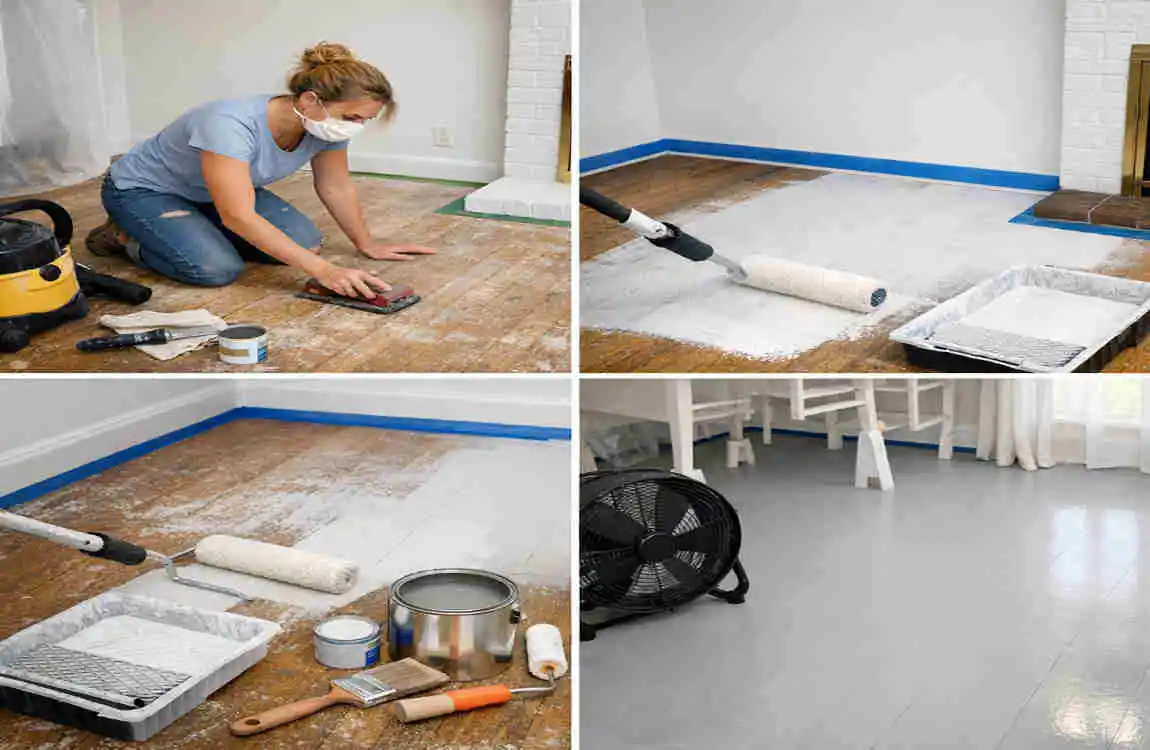
A few simple habits can make a big difference:
- Choose the right product for your floor type.
- Prepare the surface carefully before painting.
- Use thin, even coats for a smoother finish.
- Allow enough drying time between coats.
- Test a small hidden area first if you are unsure.
These steps help the paint last longer and look better.
Common Mistakes to Avoid
Some common mistakes can ruin the result.
Do not paint a dirty floor. Dust and grease can stop the paint from sticking properly.
Also, avoid using regular wall paint. It is not made for foot traffic and may wear out fast.
Another mistake is skipping primer when it is needed. Primer often makes the difference between a finish that lasts and one that peels.
Finally, do not rush the drying time. Even if the floor looks dry, it may still need time to cure fully.
Is Painting a Floor Better Than Replacing It?
Sometimes, yes.
Painting is often a good choice when the floor is sound but unattractive. It costs less than replacing the entire surface and can quickly improve a room’s appearance.
But painting is not always the right answer. If the floor is severely damaged, uneven, or moisture-affected, replacement may be the better option.
Frequently Asked Questions
Can you paint house flooring without sanding?
Sometimes, but sanding often helps the paint stick better. It depends on the floor type and the coating system.
What is the best paint for house flooring?
A durable floor paint made for foot traffic is usually the best choice. The right product depends on the floor material.
Can you paint wooden floors?
Yes. Wood floors can be painted after cleaning, sanding, and priming.
Can you paint concrete floors inside a house?
Yes. Interior concrete floors can be painted if they are dry and properly prepared.
How many coats of floor paint are needed?
Most projects need more than one thin coat. The exact number depends on the paint and the floor surface.
How long does painted flooring take to dry?
Drying time varies by product, room temperature, and humidity. Always follow the label instructions.
Can painted floors last a long time?
Yes, if the floor is prepared well and the right paint is used. Heavy traffic and poor prep can shorten the life of the finish.
| Topic | Key Information |
|---|---|
| Can you paint house flooring? | Yes, many floors can be painted if properly prepared. |
| Best flooring types | Wood, concrete, plywood, and some properly prepared tiles. |
| Preparation | Clean, repair, sand, and remove dust before painting. |
| Primer | Use a floor-appropriate primer for better paint adhesion. |
| Paint type | Choose durable floor paint, porch paint, or suitable epoxy depending on the surface. |
| Application | Apply thin, even coats with a roller or brush and allow proper drying time. |
| Protection | Add a suitable floor sealer or protective topcoat where recommended. |
| Maintenance | Clean gently and avoid harsh chemicals that can damage the painted finish. |
