

If you are wondering whether west-facing windows are good for plants, the simple answer is yes; for many plants, they are excellent. West-facing windows get strong afternoon and evening sun, which some plants love. But that same light can be too intense for plants that prefer softer conditions.
What Light Do West-Facing Windows Receive?

West-facing windows behave differently from east-, south-, or north-facing ones. They do not get gentle morning sun. Instead, they get stronger light later in the day.
Afternoon Sunlight and Heat
West-facing windows usually receive bright afternoon sun. This light often feels warmer and more intense than morning light. In summer, the window area can become hot quickly.
For many plants, this is a good thing. Bright light helps them grow, bloom, and stay compact. For others, too much heat can cause stress.
How West-Facing Light Changes Throughout the Day
In the morning, a west-facing window may only receive light indirectly or not much at all. As the day progresses, the light grows stronger. By late afternoon, it can be direct and intense.
That is why a plant near a west-facing window may do fine in spring but struggle in peak summer. The light is not steady all day. It changes with the season, time, and weather.
Difference Between Direct and Indirect Light
Direct light means the sun shines straight onto the plant. Indirect light means the plant gets bright light without direct sun hitting it.
This difference matters a lot. A cactus may love direct west-facing sun. A fern may need bright indirect light instead. So when you think about a window, always think about how the light touches the plant, not just how bright the room looks.
Are West-Facing Windows Good for Plants?
Yes, west-facing windows can be very good for plants, but not all plants respond the same way.
Plants That Benefit From Strong Light
Plants that like strong light often grow well in west-facing windows. These plants usually need plenty of sun to stay healthy and compact.
They often include:
- Succulents
- Cacti
- Jade plants
- Some flowering houseplants
- Sun-loving tropical plants
These plants often grow better with bright afternoon light than with dim indoor light.
Plants That May Suffer From Too Much Sun
Some plants are more sensitive. They can get scorched or dry out too fast near a west-facing window.
These often include:
- Ferns
- Some prayer plants
- Calatheas
- Low-light foliage plants
- Plants with thin or delicate leaves
If you place these plants too close to strong afternoon sun, they may show browning, curling, or fading leaves.
How Seasonal Changes Affect Plant Growth
Season matters too. In winter, west-facing windows may be very helpful because the sun is softer and weaker. In summer, the same window can become much harsher.
That is why a plant may do well in one season and struggle in another. You may need to move it a little farther from the glass during hot months.
Best Plants for West-Facing Windows
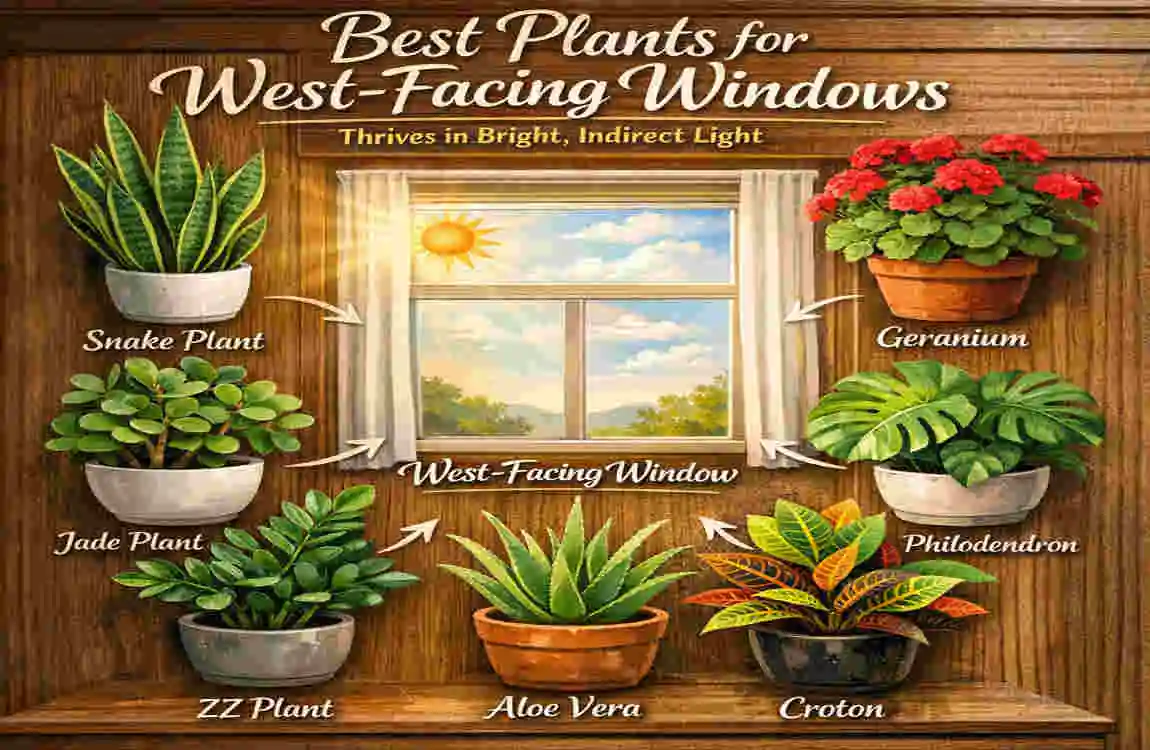
Some plants naturally enjoy bright, sunny spots. These are often the best match for west-facing windows.
Succulents and Cacti
Succulents and cacti are often the best choice for west-facing windows. They store water in their leaves or stems, allowing them to withstand stronger sunlight better than many other plants.
They usually prefer:
- Bright light
- Dry soil between watering
- Warm conditions
- Direct or nearly direct sun
If you want a low-maintenance option, these plants are a strong choice.
Flowering Houseplants
Some flowering plants need strong light to produce blooms. A west-facing window can support that well.
These plants often appreciate:
- Several hours of bright light
- Warm afternoon sun
- Good air circulation
If they are not flowering enough, the plant may need more light. In many cases, west-facing windows can help with that.
Tropical Plants That Enjoy Bright Light
Some tropical plants do well in bright indoor spaces, but they still need a little care. They may like the light, but they may not enjoy the heat right against the glass.
How to Protect Plants From Strong Afternoon Sun
Even sun-loving plants sometimes need a little help. The afternoon sun can get harsh, especially in summer.
Use Sheer Curtains
Sheer curtains can soften strong sunlight without completely blocking it. This is a simple way to reduce the heat while still keeping the window bright.
Move Plants Away From the Glass
If a plant looks stressed, move it a few feet away from the window. It can still receive bright light, but the sun will feel less intense.
Rotate Plants Regularly
Plants grow toward the light. If you leave them in one position too long, they may lean or grow unevenly. Rotating them helps them stay balanced.
Watch for Signs of Leaf Burn
Leaf burn is one of the clearest signs of too much sun. Look for:
- Brown patches
- Yellow fading
- Dry leaf edges
- Crispy spots
- Leaves curling upward
If you see these signs, the plant may need less direct exposure.
Common Problems With West-Facing Windows
West-facing windows are useful, but they can also create a few common plant problems.
Leaf Scorch and Yellow Leaves
Too much direct afternoon sun can scorch leaves. Some plants react by turning yellow first, then brown. This usually means the plant is getting more light than it can handle.
Overheating Near the Window
Windows can trap heat. A plant sitting right next to the glass may become hotter than the rest of the room, especially in summer.
Fast Soil Drying
Strong sun and heat make soil dry faster. That means you may need to water more often. If you forget, the plant can wilt quickly.
Uneven Plant Growth
Plants often grow toward the light source. If the light comes from only one side, the plant may become lopsided or stretched.
Tips for Growing Healthy Plants Near West-Facing Windows

A west-facing window can work very well if you manage the space wisely.
Choose Plants Based on Their Light Requirements
This is the most important step. Match the plant to the window. Sun lovers near the glass, shade lovers farther away.
Monitor Soil Moisture
Because west-facing windows can be hot, soil may dry faster than expected. Check the soil regularly instead of watering on a strict schedule.
Adjust Plant Placement During Summer
In summer, move sensitive plants farther from the window. In winter, you may bring them closer again if the light is weaker.
Clean Windows for Better Natural Light
Dust and dirt can reduce the amount of light coming through the glass. Clean windows help plants get the full benefit of natural light.
Use a Light Meter if Needed
If you are unsure how much light a plant is getting, a light meter can help. This is useful if you have many plants with different needs.
West-Facing Windows vs Other Window Directions
Each window direction gives plants a different kind of light. Knowing the difference helps you place your plants better.
East-Facing Windows
East-facing windows get soft morning light. This is often ideal for many indoor plants because it is bright but not too harsh.
South-Facing Windows
South-facing windows usually get the strongest all-day sunlight. These are often best for high-light plants, but they can be too intense for shade-loving ones.
North-Facing Windows
North-facing windows get the least direct sun. They are better for low-light plants or plants that dislike strong heat.
Choosing the Right Window for Your Plant
The best window depends on the plant’s natural needs. If a plant likes sun, west-facing windows can be great. If it prefers soft light, another window may work better.
FAQ Are West-Facing Windows Good for Plants?
Are west-facing windows good for plants?
Yes, they can be excellent for plants that enjoy bright, direct sunlight, especially in the afternoon.
What plants grow best in west-facing windows?
Succulents, cacti, jade plants, and many flowering plants can grow well in west-facing windows.
Can plants get too much sun in a west-facing window?
Yes. Strong afternoon sunlight can cause leaf burn, especially in sensitive plants.
Should plants sit directly on a west-facing windowsill?
It depends on the plant. Sun-loving plants may enjoy it, while sensitive plants should be placed farther away or behind a sheer curtain.
How far should plants be from a west-facing window?
Many plants can be placed a few feet away from the glass to receive bright but less intense light.
Do west-facing windows get hot?
Yes, they can get warm on sunny afternoons, especially in summer.
| Light Factor | Information for Plants |
|---|---|
| Afternoon Sun | West-facing windows receive strong sunlight, especially in the afternoon. |
| Best Plants | Succulents, cacti, aloe vera, jade plants, and many flowering plants can thrive. |
| Light Intensity | Light is bright and can become hot during summer months. |
| Potential Risk | Delicate or low-light plants may suffer from leaf scorch. |
| Best Placement | Place sun-loving plants near the window and sensitive plants slightly farther away. |
| Summer Care | Use sheer curtains if sunlight becomes too intense. |
| Water Needs | Check soil regularly because strong afternoon light may dry it out faster. |
