
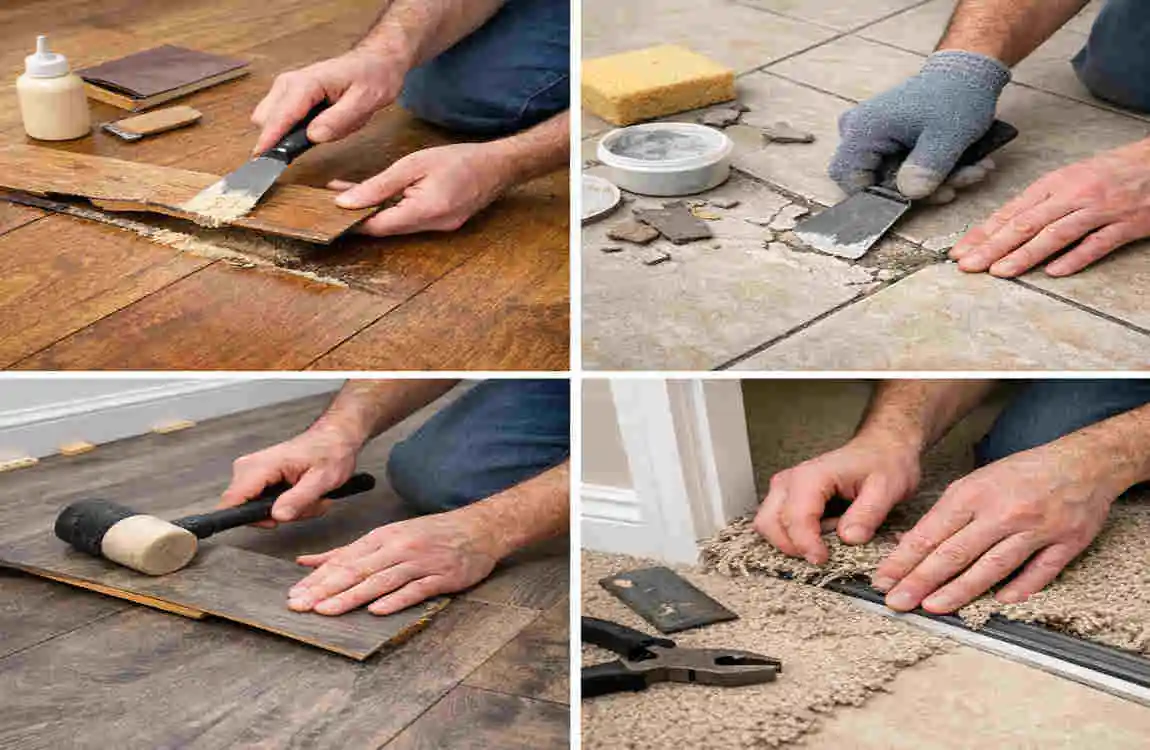
Flooring problems are very common in modern homes. Daily foot traffic, moving furniture, spills, humidity, and simple aging all take a toll over time. Even a strong floor can start to show wear with heavy use.
These problems do more than affect appearance. They can also make your home less comfortable, less safe, and less valuable. A loose tile, a squeaky board, or a soft spot may seem small at first, but it can grow into a costly repair if you ignore it.
That is why treating home flooring pain points and failures early matters so much. When you act quickly, you can often save money, avoid bigger damage, and keep your floors looking good for longer.
Understanding Common Home Flooring Failures
Why Do Home Floors Develop Problems Over Time?
Floors do not fail all at once. Most issues build up slowly.
A floor may wear down from age, daily use, moisture, or poor installation. Heavy furniture can also put pressure on weak spots. If the home experiences fluctuating humidity levels, wood and other materials may expand and contract, creating gaps or movement.
Regular maintenance matters too. If floors are not cleaned properly or checked often, small problems can turn into larger ones before you notice.
Signs Your Flooring Needs Repair
You can often spot floor problems early if you know what to look for.
Common warning signs include:
- Squeaking or creaking sounds
- Cracks, gaps, or uneven surfaces
- Water stains or swelling
- Loose tiles or peeling layers
- Soft spots or weak areas underfoot
If you notice one or more of these, it is usually time to inspect the floor more closely.
Treating Home Flooring Pain Points and Failures: Common Issues and Solutions
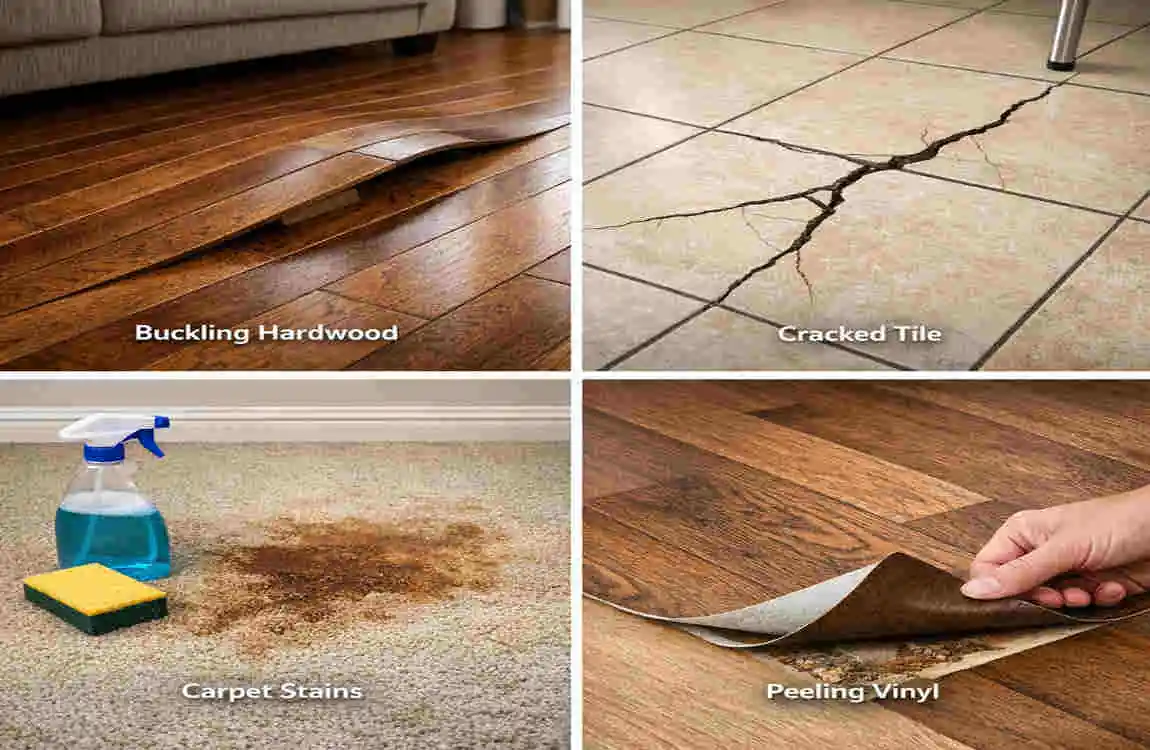
Fixing Scratches and Surface Damage
Scratches happen on hardwood, laminate, and vinyl floors all the time. Shoes, pet claws, toys, and furniture legs are common causes.
For small scratches, you may be able to use a repair kit, filler, or matching touch-up product. Hardwood may also be refinished if the damage is more serious. Laminate and vinyl usually need surface-level repair or board replacement.
To prevent future scratches, place felt pads under furniture and keep grit and dirt off the floor as much as possible.
Repairing Cracked or Broken Floor Tiles
Tile can crack for several reasons. A heavy object may fall on it, the subfloor may move, or the tile may not have been installed correctly.
The good news is that a damaged tile can usually be replaced without having to redo the whole floor. The old tile is removed carefully, the area is cleaned, and a new tile is set in place with fresh grout.
If you want tile to last longer, try to avoid impact damage and watch for movement in the floor below it.
Solving Squeaky and Noisy Floors
Squeaky floors are especially common in wooden floors. The sound usually comes from boards rubbing against each other or from movement in the subfloor.
In many cases, installers can fix this by tightening loose boards, adding screws, using shims, or reducing friction between floor layers. Some light lubrication methods can also help.
If the noise comes from a larger structural problem, you may need a professional to inspect it.
Smart Solutions for Water-Damaged Flooring
Identifying Moisture-Related Flooring Problems
Water damage is one of the biggest threats to any floor.
Watch for these warning signs:
- Warping
- Buckling
- Mold growth
- Discoloration
Even a small leak can cause serious damage if it sits for too long. Bathrooms, kitchens, laundry rooms, and basements need extra attention.
Repairing Water-Damaged Hardwood Floors
Hardwood can sometimes be saved if the damage is not too severe.
First, the area must dry completely. Then, damaged boards may be replaced. If the wood has only light damage, sanding and refinishing may restore the surface.
If the boards are swollen or rotted, replacement is often the better choice.
Fixing Laminate and Vinyl Flooring After Water Exposure
Laminate and vinyl react differently to water.
Laminate often swells when it gets wet, and that damage may be hard to reverse. Vinyl is usually more water-resistant, but it can still lift or bubble if moisture gets trapped underneath.
You may need to remove damaged sections and improve moisture protection before installing new material.
Addressing Uneven and Sagging Floors
Causes of Uneven Flooring
Uneven floors can happen for several reasons.
Common causes include foundation movement, subfloor damage, poor installation, and moisture problems. Sometimes the issue is small. Other times, it points to a larger structural concern.
If the floor feels soft or slopes noticeably, do not ignore it.
Smart Repair Methods for Uneven Floors
The repair method depends on the cause.
Some common solutions include:
- Floor leveling compounds for minor uneven spots
- Subfloor repairs where the support layer is damaged
- New underlayment to smooth the surface
- Professional inspection for major structural issues
If the problem keeps returning, the root cause may be below the surface.
Flooring Repair Techniques by Material Type
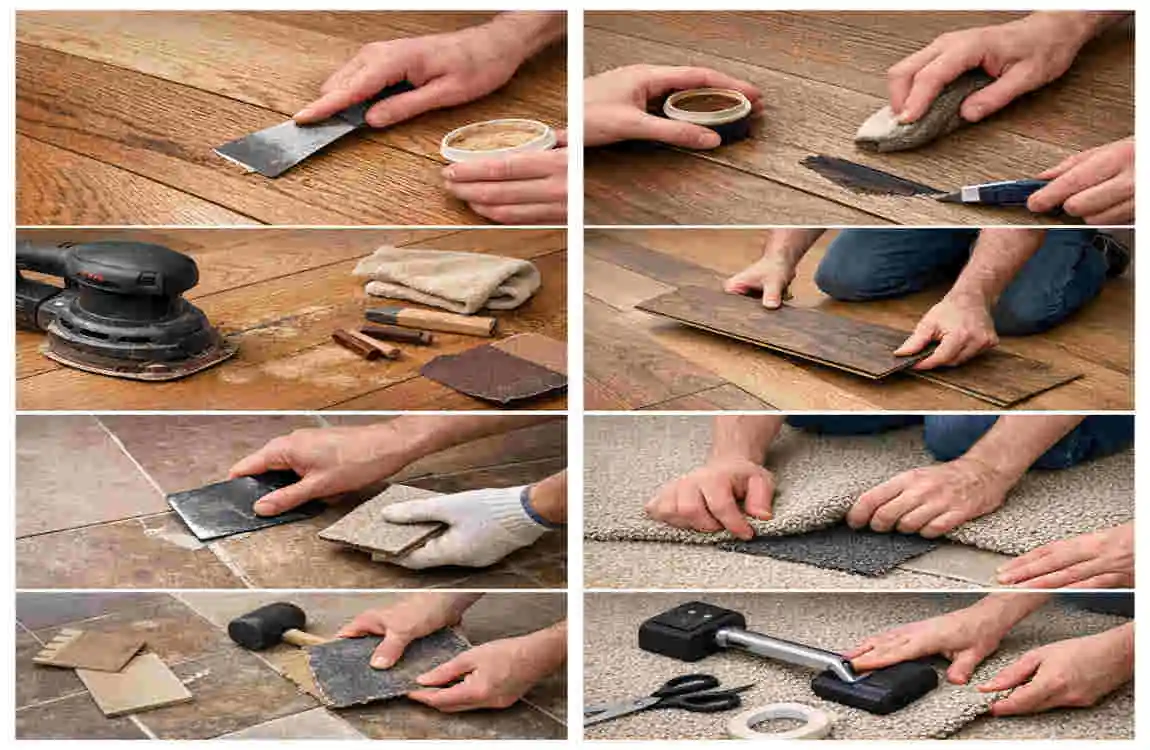
Hardwood Flooring Repairs
Hardwood floors often show gaps, wear, or damaged planks over time.
You may need to fill small gaps, refinish worn spots, or replace individual boards. If the floor still has a strong base, these repairs can make it look much better without replacing everything.
Laminate Flooring Repairs
Laminate can chip, swell, or separate at the edges.
In many cases, a damaged plank has to be replaced. Small chips may be hidden with a repair filler, but moisture damage usually means more serious repair work.
The best defense is to keep water away from the floor.
Vinyl Flooring Repairs
Vinyl is flexible, but it can still tear, lift, or bubble.
A tear may be patched, and bubbles can sometimes be fixed with adhesive and pressure. If the damage is large, replacing that section is usually the cleanest solution.
Tile Flooring Repairs
Tile floors need attention to both the tile and the grout.
Cracked grout can be removed and replaced. Broken tiles should be removed and reset carefully. Keeping grout sealed and clean also helps the floor last longer.
Quick Material Comparison Table
Flooring TypeCommon ProblemsBest Repair Method
Hardwood Scratches, gaps, squeaks Filling, refinishing, board replacement
Laminate Chips, swelling, lifting Plank replacement, moisture control
Vinyl Tears, bubbles, peeling Patch, adhesive repair, section replacement
Tile Cracks, loose tiles, grout damage Tile replacement, grout repair
Preventing Future Flooring Failures
Regular Cleaning and Maintenance Tips
Good cleaning habits can extend floor life.
Use the right cleaner for your floor type. Avoid using too much water. Sweep or vacuum often so dirt does not scratch the surface.
Protecting Floors From Daily Wear
Small habits can make a big difference.
Use rugs in high-traffic areas, add pads under furniture, and keep indoor humidity stable. These simple steps help reduce stress on your floors.
Scheduling Routine Flooring Inspections
Check your floors at least once or twice a year.
Look for movement, soft spots, stains, loose edges, or new sounds. Early inspection helps you fix problems before they get worse.
DIY Flooring Repairs vs Professional Services
Flooring Problems You Can Fix Yourself
You can often handle small scratches, minor grout issues, and simple board replacements on your own.
These repairs are usually manageable if the damage is small and you have the right tools.
When to Hire a Flooring Expert
Call a professional if you see structural damage, major water damage, foundation issues, or a repair that covers a large area.
A pro can identify the root cause and ensure the repair lasts.
Cost Factors for Flooring Repairs
Several things affect repair cost:
- Flooring material
- Damage severity
- Labor time
- Repair method
- Need for replacement parts
Small repairs usually cost less, but waiting too long can make the final bill much higher.
Smart Flooring Upgrades to Avoid Future Problems
Choosing Durable Flooring Materials
If you are replacing floors, choose a material that fits your lifestyle.
Water-resistant vinyl, scratch-resistant laminate, engineered hardwood, and quality tile are all popular choices for busy homes.
Modern Flooring Technologies
New flooring products often include better coatings, stronger wear layers, and improved underlayment systems. These upgrades can help floors last longer and resist common damage.
Eco-Friendly Flooring Repair Options
You can also think about sustainability.
Reusing materials, choosing low-maintenance products, and repairing instead of replacing when possible are all smart ways to reduce waste.
Common Mistakes During Flooring Repairs
Many homeowners make the same avoidable mistakes.
Some of the biggest ones are:
- Ignoring small signs of damage
- Using the wrong repair product
- Letting moisture stay trapped
- Skipping a professional inspection when needed
- Choosing cheap replacement materials
If you avoid these mistakes, your repair is more likely to last.
Benefits of Treating Home Flooring Pain Points and Failures Early

Fixing flooring problems early gives you several clear benefits.
It can prevent expensive replacements, improve home safety, protect property value, and keep your interior looking clean and cared for. It also helps your flooring last longer, which saves money over time.
The sooner you act, the easier the repair usually is.
Frequently Asked Questions
What are the most common home flooring problems?
The most common issues are scratches, cracks, squeaky boards, water damage, uneven surfaces, and loose tiles.
Can damaged flooring be repaired without replacement?
Yes, many small problems can be repaired without replacing the whole floor.
How can homeowners prevent flooring failures?
Regular cleaning, moisture control, furniture protection, and quick repairs help prevent bigger problems.
When should I replace my flooring rather than repair it?
Replacement is usually needed when the damage is severe, widespread, or structural.
What is the best flooring for avoiding future problems?
Water-resistant vinyl, durable laminate, engineered hardwood, and quality tile are strong choices.
| Smart Flooring Repairs: Solving Common Home Floor Failures | Quick Information |
|---|---|
| Loose Floorboards | Often caused by poor installation, moisture, or aging materials. Fix by securing boards with screws, nails, or suitable adhesives. |
| Squeaky Floors | Usually result from gaps between floorboards and subfloor movement. Repair by tightening boards or adding support underneath. |
| Cracked Tiles | Can happen due to impact, shifting foundations, or improper installation. Replace damaged tiles and repair the base surface. |
| Warped Wooden Floors | Commonly caused by humidity and water damage. Control moisture levels and replace severely damaged boards. |
| Floor Gaps | Wood floors may develop gaps due to seasonal expansion and contraction. Use wood filler or replace affected boards. |
| Scratches & Surface Damage | Minor scratches can be repaired with polish, fillers, or refinishing. Deep damage may require sanding and resealing. |
| Uneven Flooring | Often caused by subfloor problems or foundation movement. Level the surface before installing new flooring materials. |
| Peeling Vinyl or Laminate | Usually caused by moisture, poor adhesive, or wear. Replace damaged sections and improve moisture protection. |
| Water-Damaged Floors | Quick drying, moisture removal, and damaged material replacement help prevent mold and structural issues. |
| Preventive Flooring Care | Regular cleaning, moisture control, furniture protection, and timely repairs extend floor life. |
