
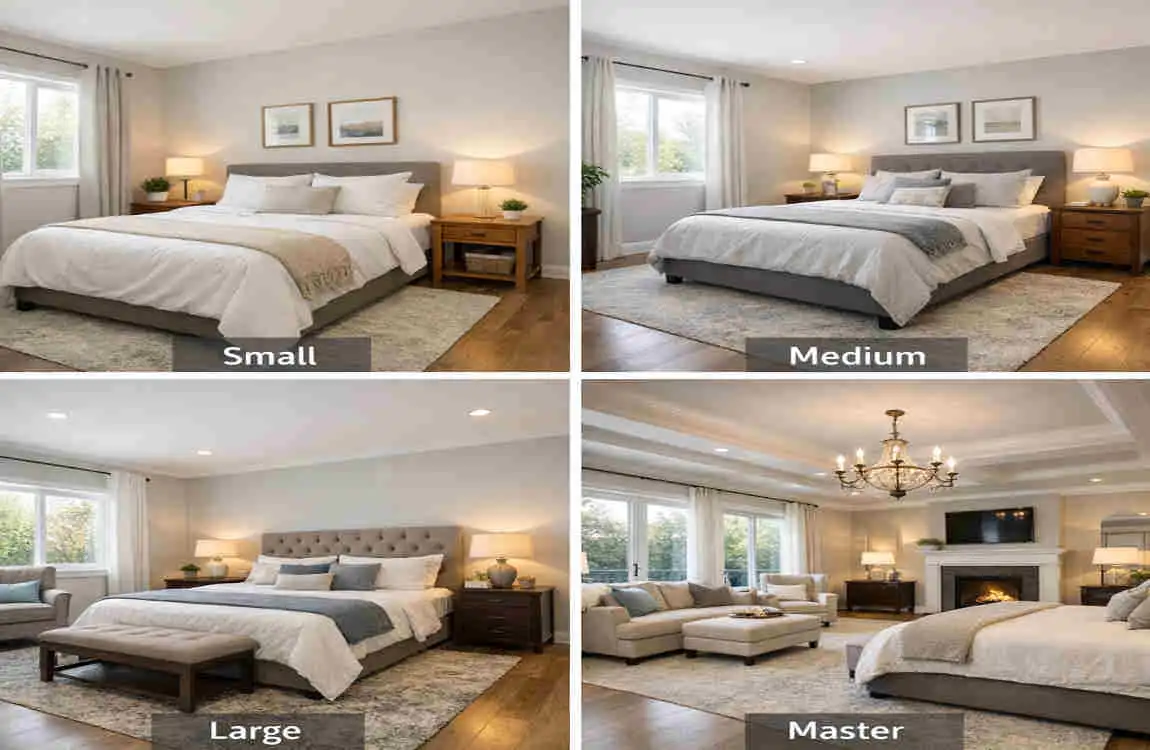
When you start planning a bedroom, one of the first questions is usually how many square feet a standard bedroom is. This matters because bedroom size affects comfort, furniture placement, storage, and even home value.
A bedroom that is too small can feel crowded. A bedroom that is too large may waste space and raise building or furnishing costs. That is why understanding standard bedroom size is so useful before you buy furniture, design a layout, or renovate a home.
How Many Square Feet Is a Standard Bedroom?
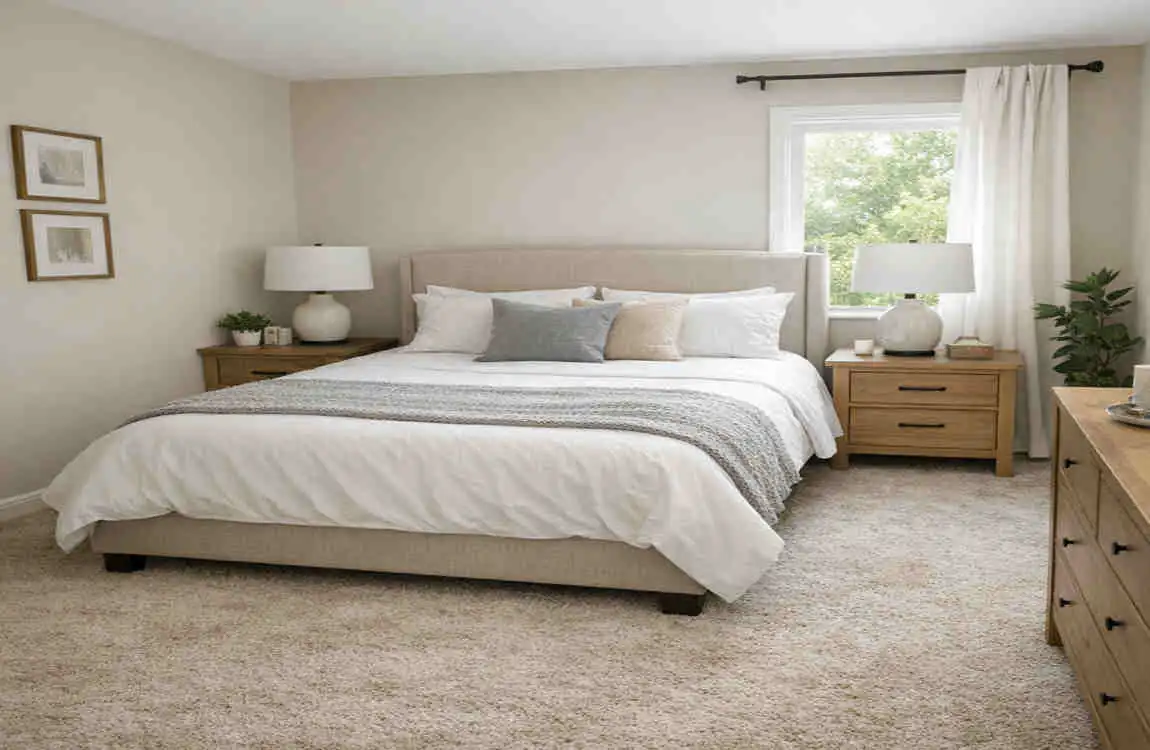
Average Standard Bedroom Size
A standard bedroom usually falls between 120 and 200 square feet. This range gives enough room for a bed, basic furniture, and easy walking space.
Here are some common room sizes:
- 10×10 ft = 100 sq ft
- 10×12 ft = 120 sq ft
- 11×12 ft = 132 sq ft
- 12×12 ft = 144 sq ft
A 10×12 bedroom is often seen as the most practical “standard” size for many homes.
Minimum Legal Bedroom Size
The legal minimum size can vary by location, but many building codes require at least 70 square feet for a bedroom. Some areas also require:
- A minimum ceiling height
- A proper window for light and ventilation
- A window or exit that can work as an emergency escape
So, a room may feel like a bedroom, but it still has to meet local rules to be considered legal.
Standard Bedroom Sizes by Type
Small Bedroom
A small bedroom is usually around 80 to 100 square feet. It works best for:
- Children
- A single sleeper
- A home office with a bed
- A guest room with limited furniture
This size can still be functional if you keep the layout simple.
Standard Guest Bedroom
A guest bedroom is often around 120 to 132 square feet. That gives enough space for:
- A full or queen bed
- One or two nightstands
- A small dresser
- Walking space on at least one side of the bed
This is a good balance between comfort and efficiency.
Primary Bedroom
A primary bedroom is usually larger, often 160 to 250 square feet or more. This extra space allows room for:
- A queen or king bed
- Bigger storage furniture
- Chairs or a reading corner
- A more open, relaxed layout
Children’s Bedroom
Children’s bedrooms are often 100 to 120 square feet. The room does not need to be huge, but it should leave space for:
- A bed
- Toys or study furniture
- Storage bins or shelves
- Clear floor space for play
Standard Bedroom Size Chart
Bedroom TypeCommon DimensionsApprox. Square Feet Best For
Small Bedroom 10×10 ft 100 sq ft Kids, Office
Standard Bedroom 10×12 ft 120 sq ft Single Person
Guest Bedroom 11×12 ft 132 sq ft Guests
Primary Bedroom 12×14 ft 168 sq ft Couples
Luxury Bedroom 14×16 ft 224 sq ft Large Homes
Factors That Affect Bedroom Size
House Size
The type of home matters a lot. For example:
- Apartments often have smaller bedrooms
- Condos may use compact layouts
- Single-family homes usually allow bigger bedrooms
Local Building Codes
Every area may have different bedroom rules. Some places care more about square footage, while others focus on windows, exits, and ceiling height.
Furniture Layout
A bedroom is not just about floor size. It is also about how well the furniture fits. A room may be large enough on paper but still feel tight if the layout is poor.
Closet Space
Closets take up space, but they also improve function. Built-in closets are often included in the total bedroom square footage.
Window Placement
Window location affects bed placement, wall space, and natural light. A bedroom with good window placement often feels larger and more comfortable.
Bedroom Furniture Space Requirements
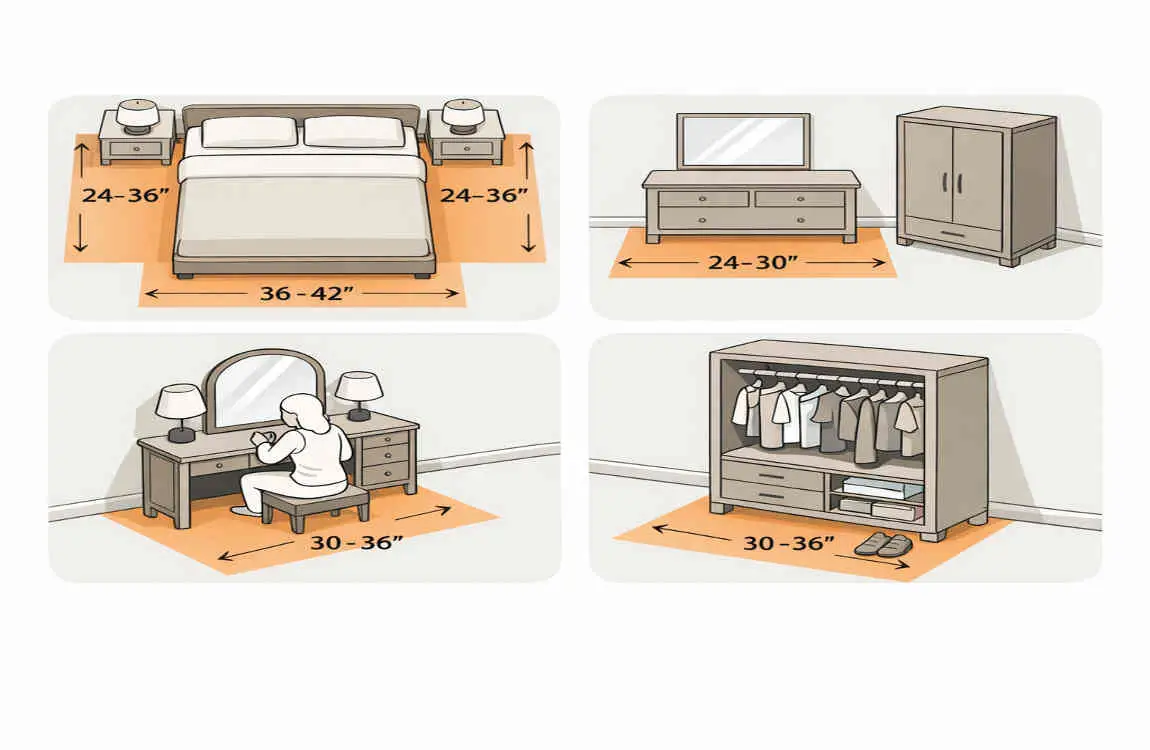
Bed Sizes and Floor Space
Different bed sizes need different amounts of room.
- Twin bed: good for small bedrooms
- Full bed: fits well in modest rooms
- Queen bed: works best in a standard bedroom
- King bed: usually needs a larger bedroom
Walking Clearance
You should leave enough space to move around the bed. A good rule is to keep at least 2 to 3 feet of walking space in main paths when possible.
Nightstands and Dressers
Nightstands need a small amount of space on each side of the bed. Dressers need a wall with enough clearance for the drawers to open fully.
Wardrobes
If the room does not have a closet, a wardrobe may be needed. That means you need extra wall and floor space.
Simple furniture planning tips
- Match bed size to room size
- Keep traffic paths open
- Avoid filling every wall
- Use storage that fits the room, not oversized pieces
Standard Bedroom Dimensions Around the World
United States
In the U.S., a standard bedroom is often around 120 to 200 square feet. Primary bedrooms are usually larger than guest or children’s rooms.
Canada
Canadian bedroom sizes are similar to U.S. homes, but the exact rules depend on the province and local code requirements.
United Kingdom
In the UK, bedrooms are often smaller in older homes and apartments. A small single bedroom may be common, while larger homes may have more generous primary bedrooms.
Australia
Australian homes often feature flexible layouts, and bedroom sizes can vary widely. Larger suburban homes may have spacious main bedrooms, while apartments are usually tighter.
How to Measure Bedroom Square Footage
Measuring Length
Measure one wall from end to end. This gives you the room length.
Measuring Width
Measure the wall that crosses the length. This gives you the room width.
Formula for Square Footage
Use this simple formula:
Length × Width = Square Footage
For example:
10 ft × 12 ft = 120 square feet
Irregular-Shaped Rooms
If the bedroom is not a perfect rectangle, break it into smaller sections. Measure each section, then add the numbers together.
Tips for Making a Small Bedroom Feel Larger
Light Colors
Light wall colours can make a room feel open and airy. Soft whites, pale grey, and light beige work well.
Multi-Functional Furniture
Use furniture that does more than one job. For example:
- A bed with storage underneath
- A desk that can also act as a vanity
- A foldable chair or table
Wall Storage
Shelves and wall hooks help free up floor space. This is especially helpful in smaller rooms.
Mirrors
Mirrors reflect light and make the room feel bigger. A large mirror can make a noticeable difference.
Better Lighting
Good lighting helps a room feel less cramped. Try using a mix of ceiling lights, lamps, and natural light.
Common Mistakes When Planning Bedroom Size
Many people make the same mistakes when choosing bedroom dimensions.
- Ignoring furniture size
- Forgetting closet space
- Leaving no walking paths
- Choosing an oversized bed
- Not planning storage early
If you avoid these mistakes, your bedroom will feel more balanced and practical.
Is a 10×10 Bedroom Large Enough?
Advantages
A 10×10 bedroom can work well if you want a simple, compact space. It is often enough for:
- A twin bed
- A small dresser
- A desk or chair
Limitations
The room can feel tight with a full or queen bed, especially if you also want large furniture. It may not be the best choice for two people.
Best Layout Ideas
To make a 10×10 room work better:
- Use a smaller bed
- Keep furniture minimal
- Place storage vertically
- Leave open floor space in the centre
Does a Larger Bedroom Increase Home Value?
Buyer Preferences
Many buyers like a spacious primary bedroom because it feels more comfortable and modern.
Resale Benefits
A well-sized bedroom can help a home feel more appealing, especially when the room has good light, storage, and layout.
Return on Investment
A bigger bedroom may add value, but only if the space is used well. A large room with a poor layout may not impress buyers as much as a smart, functional room.
Expert Tips for Choosing the Right Bedroom Size
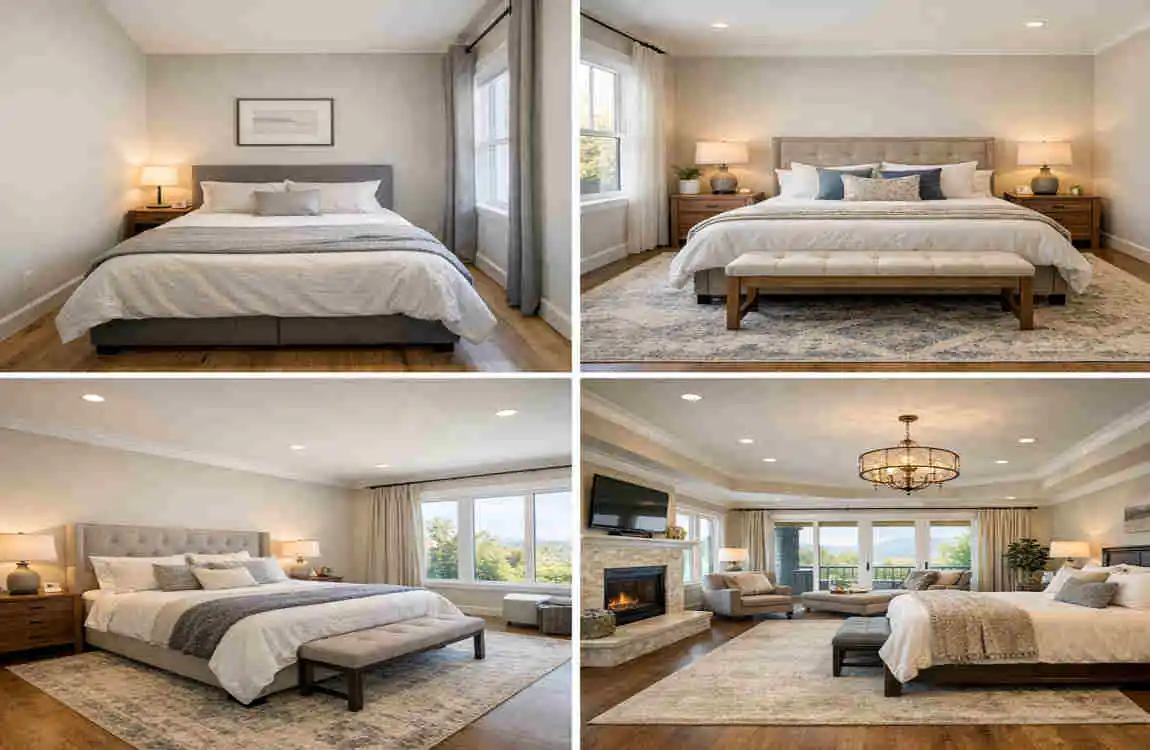
Here are a few simple tips to help you choose the right size:
- Match room size to bed size.
- Leave enough walking space.
- Plan storage before decorating.
- Think about future needs.
- Check local building rules.
These steps will help you avoid layout problems later.
Frequently Asked Questions
How many square feet is a standard bedroom?
A standard bedroom is typically 120–200 square feet, and 10×12 feet is a very common size.
What is the minimum size for a legal bedroom?
In many places, the minimum legal bedroom size is around 70 square feet, but local rules can vary.
Is a 10×10 bedroom considered standard?
Yes, it is often considered a small standard bedroom and works best for a single person or a child.
What size bed fits in a 120-square-foot bedroom?
A queen bed usually fits comfortably in a 120-square-foot bedroom with basic furniture.
Does closet space count toward bedroom square footage?
Yes, built-in closet space is usually included in the total bedroom size.
How do I calculate bedroom square footage?
Multiply length × width. For example, 10 × 12 = 120 square feet.
| Bedroom Type | Typical Square Footage | Common Dimensions | Best For |
|---|---|---|---|
| Small Bedroom | 70–100 sq ft | 7×10 ft to 10×10 ft | Child’s room, guest room, or home office |
| Standard Bedroom | 100–150 sq ft | 10×10 ft to 10×15 ft | Single occupant or guest bedroom |
| Primary (Master) Bedroom | 200–350+ sq ft | 14×14 ft to 16×20 ft | Homeowners needing extra space and furniture |
| Guest Bedroom | 100–140 sq ft | 10×10 ft to 10×14 ft | Comfortable space for visitors |
| Children’s Bedroom | 90–120 sq ft | 9×10 ft to 10×12 ft | Kids with basic furniture and storage |
