
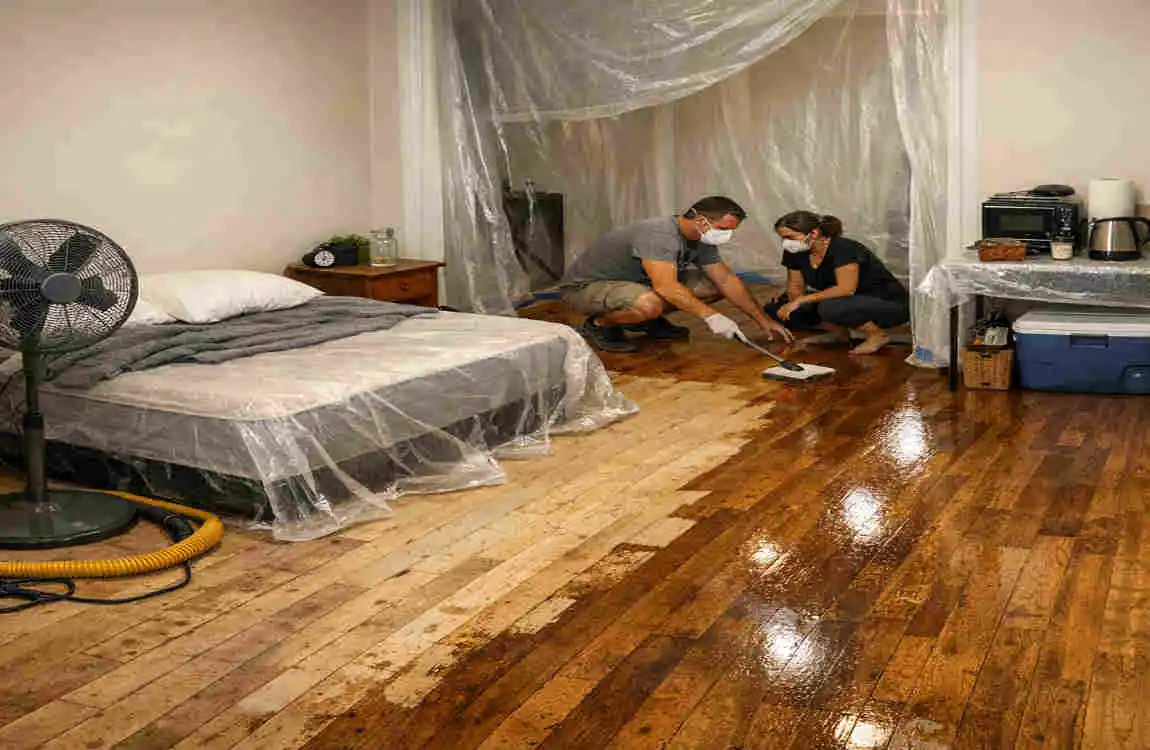
Yes, you can refinish floors while staying at home, but it takes careful planning. The process can be noisy, dusty, and a little disruptive, so the key is to break it into smaller steps and stay organized.
If you are wondering how to refinish floors while living in the house, the answer is simple: work room by room, protect the rest of your home, and give each coat enough time to dry. That way, you do not have to move out completely, and you can still keep daily life moving.
Many homeowners choose this route because it saves money and stress. Still, it is important to think about ventilation, safety, dust control, and timing before you begin.
How to Plan Floor Refinishing Room by Room
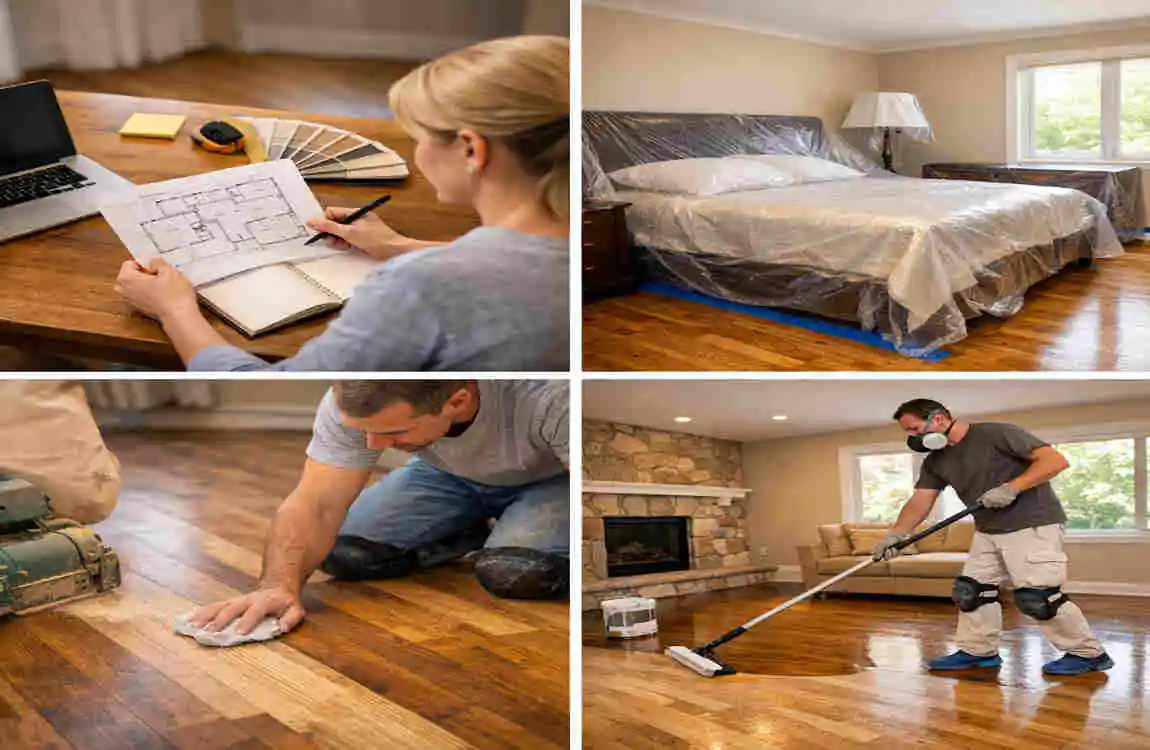
Create a Room-by-Room Schedule
The best way to handle the project is to divide it into small sections. Do not try to do the whole house at once. That usually causes more stress and makes daily living harder.
Start with rooms you can avoid for a few days. For example, a guest room, dining room, or spare room may be easier to manage first. Then move to the most important spaces when you better understand the project’s pace.
Move Furniture and Protect Belongings
Before work starts, move all furniture out of the room. This gives the flooring team space to work and keeps your items safe from dust and scratches.
If nearby rooms still have furniture, cover it with plastic sheets or clean cloths. Dust can travel farther than you expect, so protecting items early saves cleanup later.
Choose a Temporary Living Area
You will need one space that stays usable during the project. This could be a living room, a basement area, or a one-bedroom, depending on which floors are being refinished.
Try to keep daily essentials close by. That includes water, chargers, medicine, snacks, and basic cleaning supplies. When everything is easy to reach, the project feels much less chaotic.
How to Prepare Your Home Before Refinishing Floors
Clean and Clear the Work Area
A clean floor is easier to sand and finish. Remove rugs, small decorations, cords, and anything else that could get in the way.
You should also sweep or vacuum the area before work begins. Even small debris can affect the finish and make the final surface look uneven.
Protect Other Areas of the House
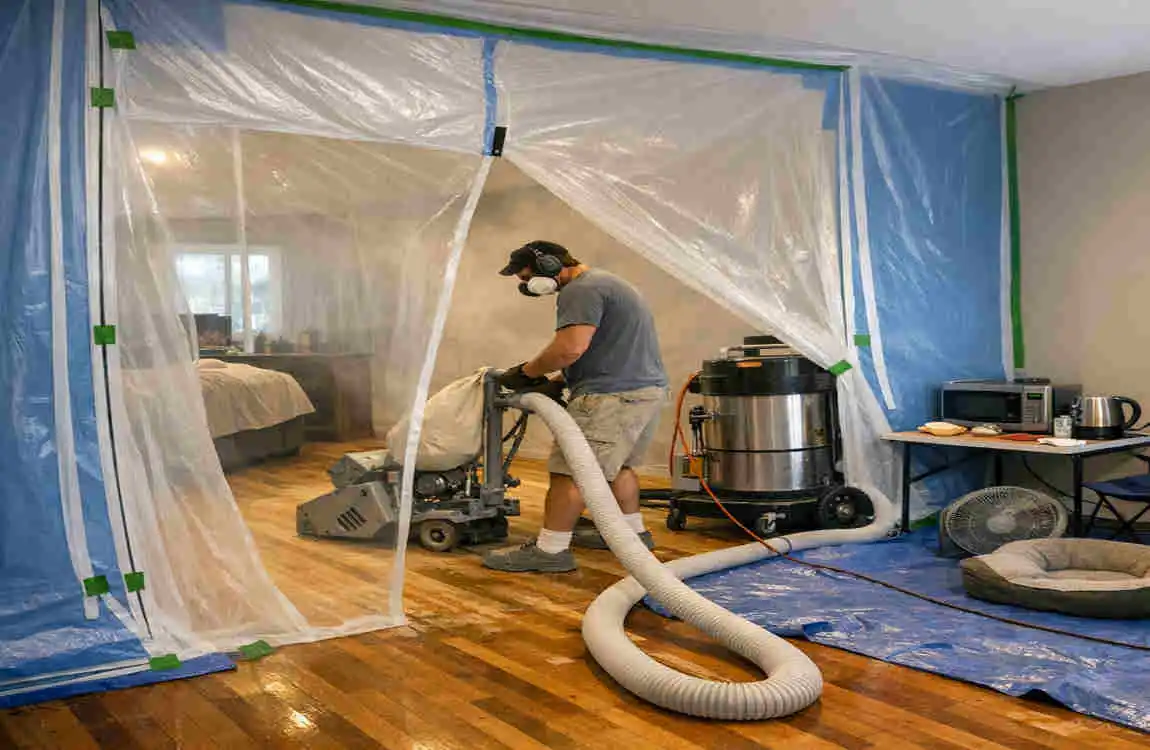
Dust control matters a lot. Close doors to the work zone and use barriers if needed. You can also cover vents to help stop dust from spreading to other rooms.
Pay attention to nearby surfaces like shelves, counters, and windowsills. A little protection now can save you hours of cleaning later.
Keep Important Items Accessible
While the floor work is happening, store important things where you can still reach them. Keep items like toiletries, clean clothes, and school or work supplies in a safe, easy-to-access place.
It also helps to prepare extra supplies in advance. That way, you do not have to keep walking through the work area while the floors are being sanded or finished.
How to Refinish Floors While Living in House Safely
Choose a Low-Odor Finish
If possible, choose a water-based finish. These products usually have less odor and dry faster than many traditional options. That makes them a better choice for an occupied home.
Still, always read the label and follow the product instructions. Different products can have different drying times and safety rules.
Improve Ventilation
Fresh air is very important during floor refinishing. Open windows when weather allows, and use fans to improve airflow.
Try to move air out of the work area, not across the whole house. You want to clear fumes and dust without pushing them into clean rooms.
Keep Children and Pets Away
Children and pets should stay far away from the work zone. Fresh finish can be sticky, and sanding equipment can be dangerous.
Create a clear boundary so no one accidentally walks on the floors before they are ready. This is one of the simplest ways to avoid damage and safety problems.
Quick Comparison of Common Finish Types
Finish TypeOdor LevelDrying SpeedBest For
Water-based finish Low Fast Homes that are occupied
Oil-based finish Stronger Slower Durability-focused projects
Hard wax oil Mild to moderate Medium Natural look and easy touch-ups
How to Manage Daily Life During Floor Refinishing
Plan Your Sleeping Arrangements
If the bedrooms are being refinished, think ahead about where everyone will sleep. You may need to use another room for a few nights.
A good idea is to refinish bedrooms one at a time. That way, one sleeping area can stay available while another is being worked on.
Create a Temporary Kitchen and Living Space
Cooking can be tricky during floor work, especially if the kitchen is included in the project. Set up a small temporary kitchen area with the basics you need.
Keep it simple. Use easy meals, paper plates if needed, and a small appliance setup so you do not have to move through the work zone all the time.
Manage Dust and Noise
Sanding creates noise, and that is normal. It may be loud during the day, so plan your schedule around it.
Dust cleanup should happen regularly, not just at the end. Wiping nearby surfaces and vacuuming non-work areas helps your home feel more livable while the job continues.
Drying Time, Curing, and Moving Back Into Rooms
Understand Drying vs. Curing
A floor may feel dry to the touch before it is fully ready. That is why drying and curing are not the same thing.
Drying means the surface is no longer wet. Curing means the finish has hardened completely. Always follow the manufacturer’s recommended curing time before putting the room back to normal use.
Know When You Can Walk on the Floor
Some floors can handle light walking after a short time, but others need longer. Even when walking is allowed, wear clean socks or soft shoes if the instructions permit it.
Avoid dragging items, placing rugs down too early, or moving furniture back before the finish is ready. These actions can cause dents, marks, or dull spots.
Move Furniture Back Carefully
When it is time to move things back in, take your time. Lift furniture rather than slide it whenever possible.
Use protective pads under chair and table legs to help prevent scratches. This small step can protect your hard work for a long time.
Common Mistakes to Avoid When Refinishing Floors While Living at Home
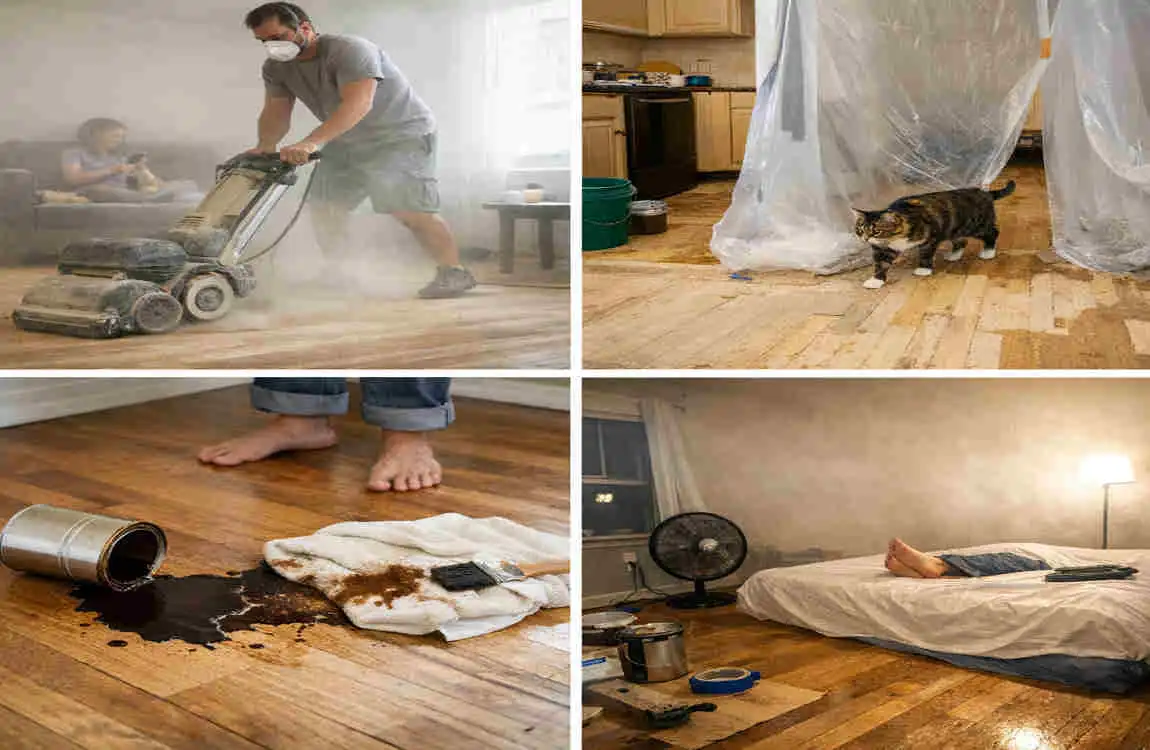
Here are some of the most common mistakes homeowners make:
- Trying to do the entire house at once
- Walking on the floor too soon
- Ignoring ventilation and airflow
- Letting dust spread into clean rooms
- Moving furniture back before curing is complete
- Using strong chemicals without proper safety steps
- Not planning where to sleep, cook, or store essentials
Avoiding these mistakes can make the project much smoother and safer.
Frequently Asked Questions
Can you stay in your house while refinishing floors?
Yes, in many cases you can. The best approach is to work room by room and keep your daily living space away from the active work area.
How do you refinish floors without leaving the house?
Create a clear schedule, protect nearby rooms, and allow each section to dry fully before using it again.
How long does it take to refinish floors in a house?
It depends on the size of the home, the condition of the floors, the number of coats, and the drying time between steps.
Can you sleep in a house while floors are being refinished?
Often yes, if the sleeping area is separate from the work zone and the product instructions allow it.
Is floor refinishing dusty?
Yes, sanding can create dust. However, dust-control tools and good cleanup habits can significantly reduce it.
What is the best finish for occupied homes?
Many homeowners prefer water-based finishes because they usually have less odor and dry faster.
When can furniture be placed back on refinished floors?
Wait until the floor has fully cured, not just dried. Always follow the finish manufacturer’s instructions before moving furniture back.
| Step | What to Do | Helpful Tip |
|---|---|---|
| Choose a Room | Refinish one room at a time | Keep a clean living area available |
| Move Furniture | Remove furniture and belongings | Protect items from dust |
| Control Dust | Use dust barriers and proper equipment | Keep doors and vents covered |
| Plan Flooring Access | Avoid walking on newly finished floors | Follow the drying time carefully |
| Improve Ventilation | Open windows and use fans if appropriate | Follow product safety instructions |
