
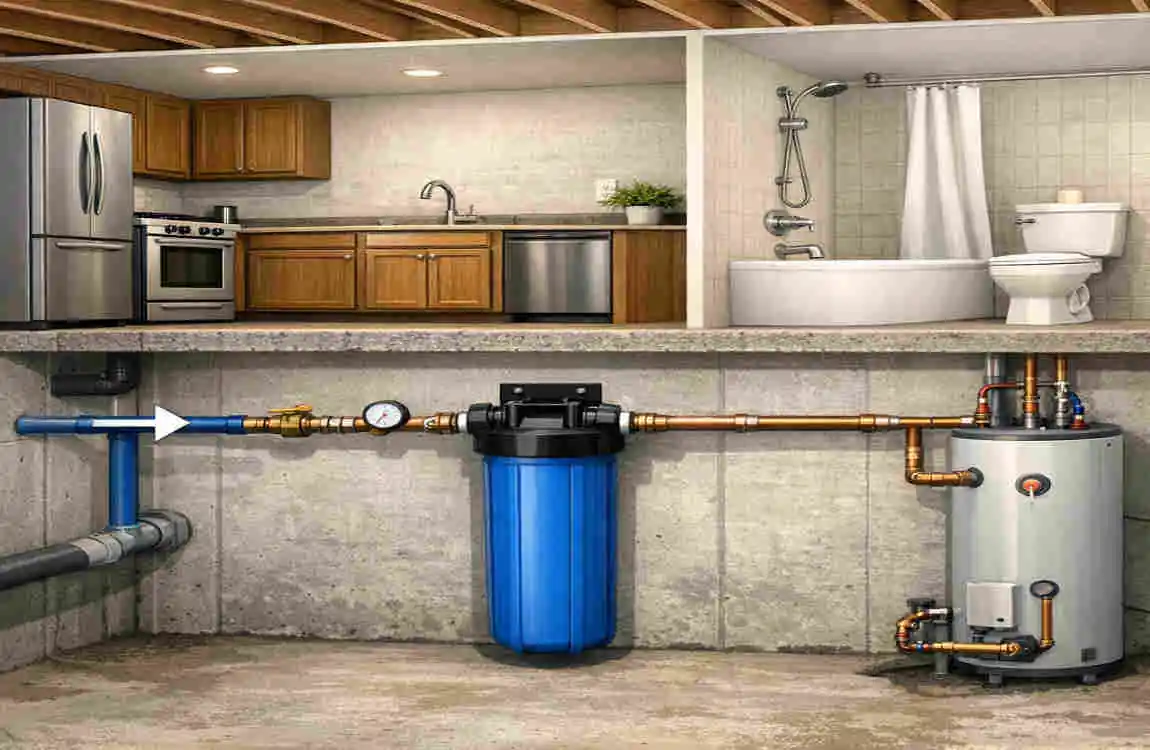
If you are planning a home water filtration system, the installation spot matters a lot. A filter placed in the wrong location can lead to weak water pressure, poor filtration, and more maintenance problems later. On the other hand, the right placement can protect your plumbing, improve water quality, and make filter changes much easier.
So, where should a whole house water filter be installed? The short answer is: on the main water line, before water enters the home’s plumbing system. But there are a few important details that depend on whether you use municipal water or well water.
What Is a Whole House Water Filter?
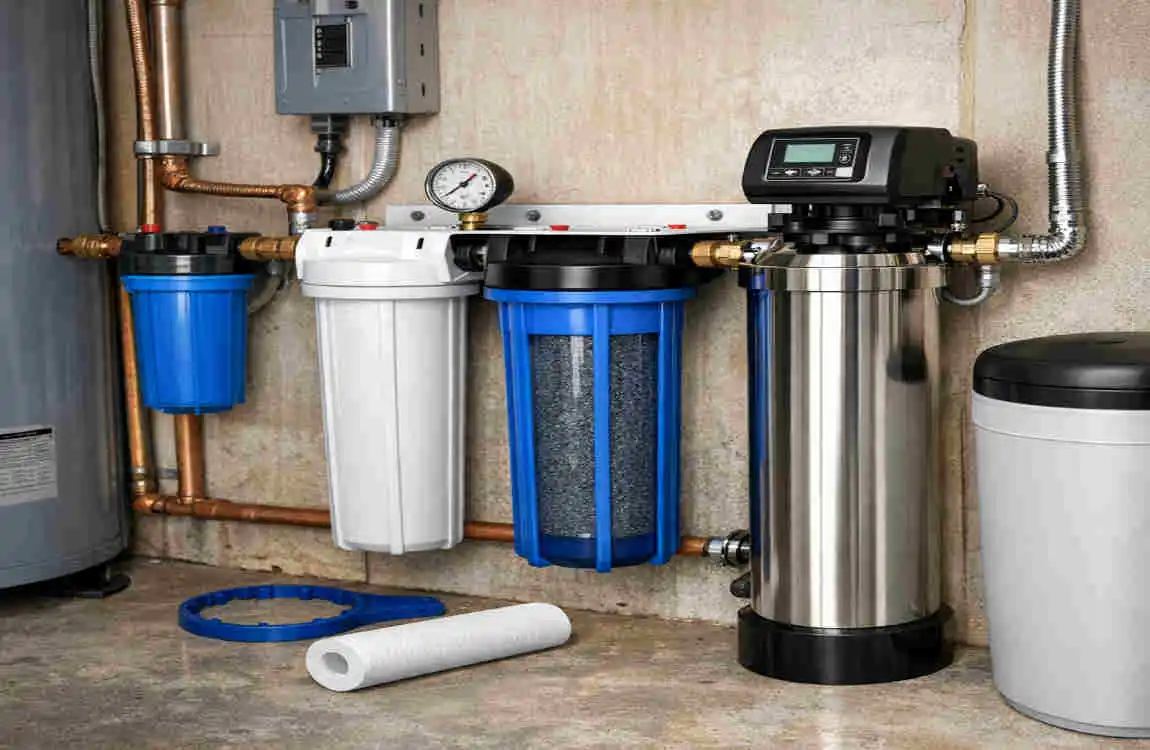
A whole house water filter cleans the water before it reaches your taps, showers, appliances, and fixtures. That means every part of your home gets filtered water, not just one sink or one faucet.
How It Works
The filter is installed on the main water supply line. This is the pipe that brings water into your house. As water passes through the system, it removes sediment, dirt, chlorine, and other unwanted particles.
This helps protect your plumbing and gives you cleaner water throughout the home. It is a simple idea, but it makes a big difference.
Main Benefits
A whole house water filter offers several useful benefits:
- Cleaner drinking water
- Better bathing water
- Less sediment buildup
- Longer appliance life
- Reduced chlorine smell and taste
For many households, this setup noticeably improves daily comfort.
Where Should a Whole House Water Filter Be Installed?
This is the main question and the most important part of the job. The best answer is usually right after the water meter or the main shut-off valve, before the water branches off to the rest of the home.
Best Installation Location
The ideal spot is on the main water line, so all incoming water gets filtered first. That way, the filter protects your whole home, including:
- Kitchen taps
- Bathroom taps
- Showers
- Washing machines
- Dishwashers
- Water heaters
If the filter is installed too late in the plumbing system, some water will bypass it. That means you will not get full protection.
Homes with Private Wells
If your home uses well water, the filter is usually installed after the pressure tank. This allows the pump and tank to do their job first, while the filter cleans the water before it reaches the home.
If you also use a water softener, the usual order is often:
Pressure tank → whole house filter → water softener → home plumbing
This setup helps each system work properly.
Homes with Municipal Water
If your home gets water from the city or town supply, the filter is often installed after the main shut-off valve and before the water splits into branch lines.
That gives you clean water across the whole house without affecting the utility’s side of the system.
Why Proper Placement Is Important
Installing the filter in the right place is not just about convenience. It affects how well the system works and how long it lasts.
Protects the Entire Plumbing System
When the filter is placed at the start of the water line, every pipe, faucet, and appliance gets cleaner water. This helps reduce wear and tear over time.
Improves Water Quality Throughout the Home
The goal is not just better drinking water. You want cleaner water in the shower, laundry room, and kitchen too. Proper placement makes that possible.
Prevents Sediment Damage
Sediment can collect inside pipes, appliances, and water heaters. Over time, that can cause clogs and reduce performance. A well-placed filter helps stop that from happening.
Increases Filter Efficiency
A filter works best when it handles all incoming water before it spreads through the house. That gives you better results and more even filtration.
Factors to Consider Before Installation
Before you install the system, take a moment to think about the space around it. A good location makes the filter easier to maintain and safer to use.
Accessibility
You should be able to reach the filter without trouble. This matters when it is time to replace cartridges, check fittings, or inspect for leaks.
Available Space
Whole house filters need room. Make sure there is enough space for the housing, pipe connections, and filter changes.
Drainage Availability
Some systems need a nearby drain for flushing or maintenance. Having drainage close by can make the setup more practical.
Temperature Protection
The filter should stay in a place that does not freeze. Cold temperatures can damage the housing or pipes.
Local Plumbing Codes
Always check local rules before installation. Some areas have specific plumbing requirements that must be followed.
Best Places to Install a Whole House Water Filter
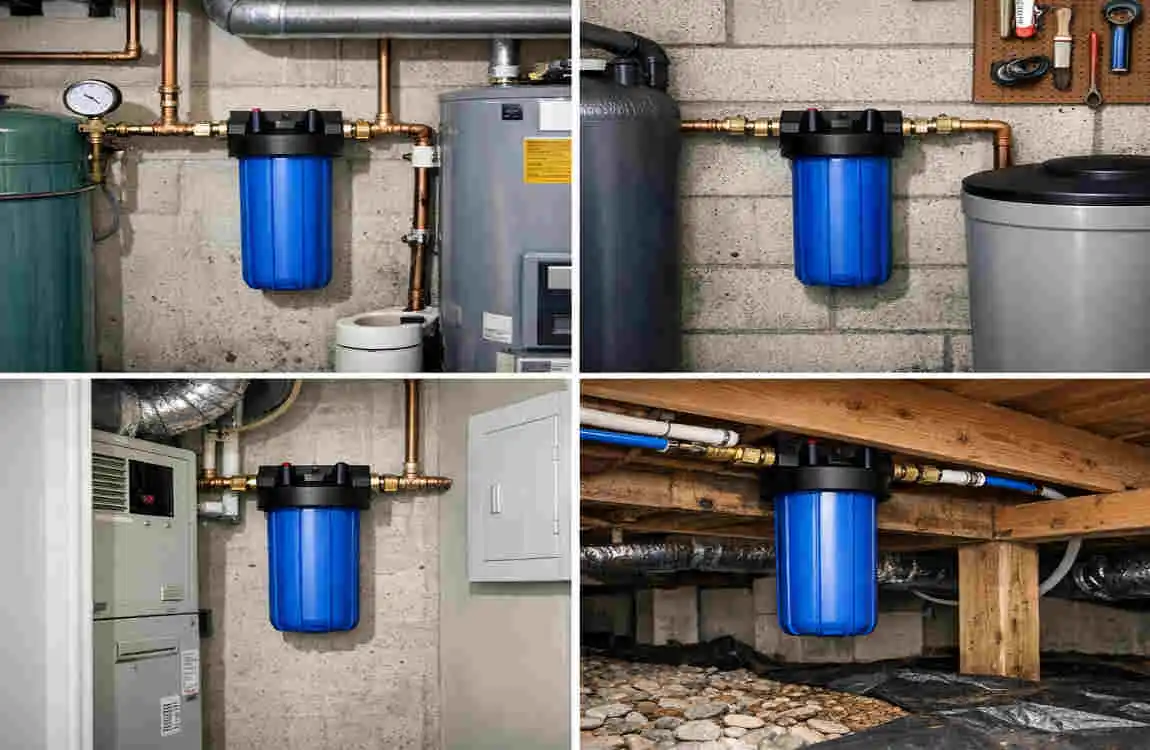
Here are the most common and practical installation locations.
Basement
A basement is often the best choice. It usually has enough space, easy access to the main water line, and protection from heat or freezing.
Utility Room
A utility room is another good option. It keeps the system indoors and easy to reach for regular maintenance.
Garage
A garage can work if it stays dry and above freezing. It is often used when the main water line enters through that area.
Mechanical Room
If your home has a mechanical room, this is often one of the best spots. It is usually built for access to plumbing and equipment.
Crawl Space
A crawl space can work, but only if it is protected and accessible. You do not want to install a system in a cramped, damp, hard-to-reach area.
Outdoor Enclosure
This is only suitable in warm climates. If you install a filter outdoors, it must be protected from sunlight, weather, and freezing.
Places You Should Avoid
Some areas are not good for filter installation.
- Direct sunlight
- Freezing locations
- Tight, inaccessible spaces
- Near electrical hazards
- Areas prone to flooding
A bad location can shorten the life of the filter and make repairs much harder.
Whole House Water Filter Installation Steps
Here is a simple overview of how the installation usually works.
Turn Off Water Supply
Before anything else, shut off the main water supply. This prevents leaks and keeps the job safe.
Select Installation Point
Choose a spot on the main water line that is easy to reach and has enough clearance.
Cut the Main Water Line
The pipe must be cut so the filter can be added into the line. This is one reason many homeowners hire a plumber.
Install Shut-Off Valves
Shut-off valves are very useful. They let you isolate the filter for repairs or cartridge changes without turning off all the water in the house.
Mount Filter Housing
The filter housing should be mounted securely to a wall or support. This helps stop movement and pipe strain.
Connect Plumbing
Next, connect the inlet and outlet pipes carefully. Make sure the flow direction matches the filter arrows.
Flush the Filter
Before normal use, flush the system to remove dust, carbon, or loose particles from the new filter.
Test for Leaks
Turn the water back on and check every joint. Even a small leak should be fixed right away.
Whole House Water Filter Placement Diagram
Here is the basic order most homes follow:
ComponentOrder
Water Meter First
Main Shut-Off Valve Second
Whole House Water Filter Third
Water Softener Fourth
Home Plumbing Last
This layout helps the filter clean water before it reaches the rest of the home.
Common Installation Mistakes
A few simple mistakes can create big problems later.
- Installing after branch lines
- Skipping shut-off valves
- Poor pipe support
- Incorrect filter direction
- Ignoring clearance for maintenance
If you avoid these mistakes, your system will be much easier to manage.
Whole House Filter vs Water Softener Placement
If your home has both a filter and a softener, placement order matters.
Component Recommended Order
Water Meter First
Shut-Off Valve Second
Whole House Water Filter Third
Water Softener Fourth
Home Plumbing Last
In many homes, the whole house water filter comes before the water softener. That way, sediment and debris are removed first, which helps protect the softener.
Maintenance Tips
A good installation is only part of the job. Regular care keeps the system working well.
Replace Filters on Schedule
Do not wait until water quality drops. Follow the manufacturer’s replacement schedule.
Monitor Water Pressure
If water pressure drops, the filter may be clogged.
Inspect for Leaks
Check fittings and housing often, especially after replacing cartridges.
Clean Filter Housing
If the system allows it, clean the housing during cartridge changes.
Keep Installation Area Dry
A dry area helps prevent rust, mold, and other problems.
Cost of Installing a Whole House Water Filter
The cost depends on whether you do it yourself or hire a professional.
Installation Type Estimated Cost
DIY Installation $100–$300
Professional Installation $300–$1,000
Premium Systems $1,000–$3,000+
If you are comfortable with plumbing work, DIY can save money. But if you are unsure, hiring a professional is often worth it.
Signs Your Filter Is Installed Incorrectly
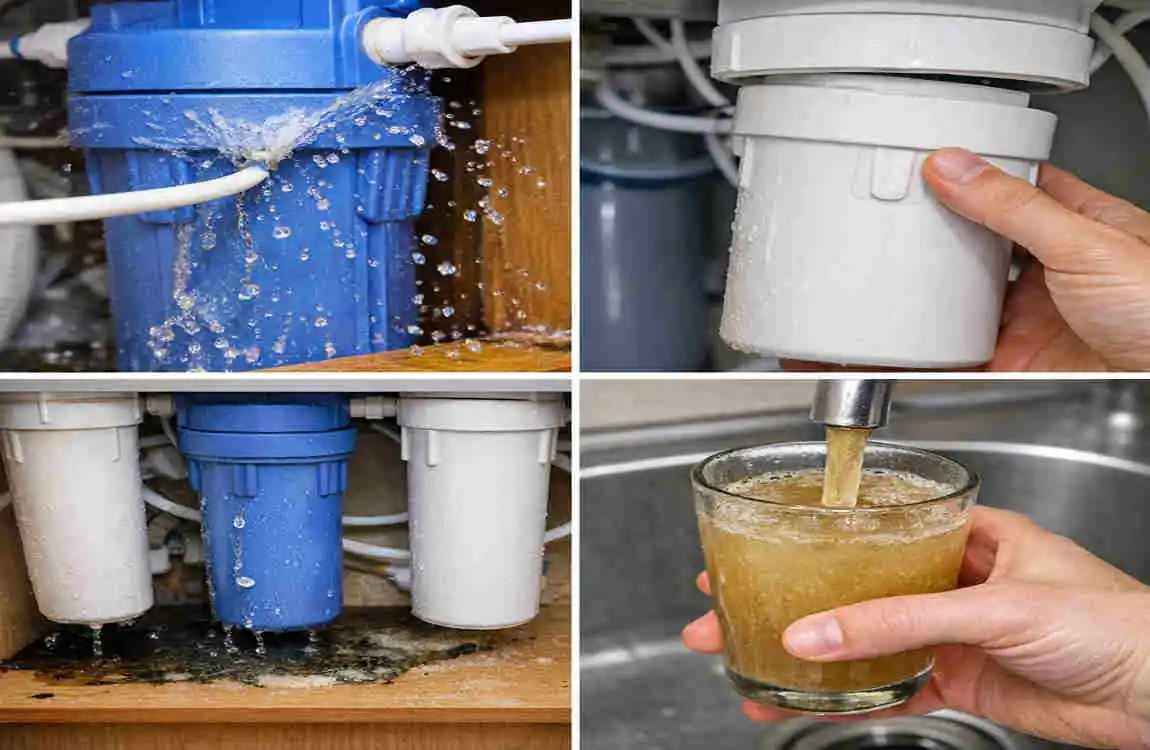
Watch for these warning signs:
- Low water pressure
- Uneven filtration
- Leaks around fittings
- Poor water quality
- Frequent filter clogging
If you notice these problems, the placement or installation may need to be checked.
Expert Tips for Best Performance
Here are a few practical tips to help your system work better.
- Install a sediment pre-filter if needed
- Leave enough space for filter changes
- Label shut-off valves clearly
- Use quality plumbing fittings
- Schedule regular maintenance
Small details like these make a big difference over time.
Frequently Asked Questions (FAQ)
Where should a whole house water filter be installed?
It should usually be installed on the main water line, before water enters the home’s plumbing system.
Should the filter be installed before or after the water softener?
In most cases, the whole house water filter is installed before the water softener.
Can I install a whole house water filter outside?
Yes, but only in warm climates and only if the system is properly protected from weather and sunlight.
Can I install the filter myself?
Yes, if you have plumbing experience. If not, professional installation is the safer choice.
How often should the filter cartridge be replaced?
That depends on the system and water quality, but many filters need to be changed every few months to a year.
Does a whole house water filter reduce water pressure?
It can if the filter is clogged or undersized. A properly installed system should not cause major pressure loss.
Do homes with well water need different filter placement?
Yes. Well water systems are often installed after the pressure tank and sometimes before the softener.
How much does professional installation cost?
Professional installation often costs between $300 and $1,000, depending on the system and plumbing setup.
Can a whole house water filter improve drinking water?
Yes, it can improve the quality of all water entering the home, including drinking water.
What is the best location for easy maintenance?
A basement, utility room, or mechanical room is often best because these spots usually offer easy access.
| Aspect | Information |
|---|---|
| Best Placement | Install the filter on the main water supply line where water enters the home. |
| Purpose | Filters water before it reaches all faucets, showers, and appliances. |
| Installation Point | Usually after the main shut-off valve and before the water heater. |
| Indoor Location | Basement, utility room, garage, or mechanical room. |
| Outdoor Location | Can be installed in a weatherproof enclosure if local climate allows. |
| Ideal Height | Mount at a comfortable height for easy cartridge replacement and maintenance. |
| Pre-Filter Option | A sediment pre-filter is recommended in areas with high dirt or sand content. |
| Drain Access | Some systems require a nearby drain for flushing or backwashing. |
| Maintenance Space | Leave enough clearance around the filter for servicing and replacing cartridges. |
| Benefits | Cleaner water throughout the home, longer appliance lifespan, and reduced sediment, chlorine, and contaminants. |
