
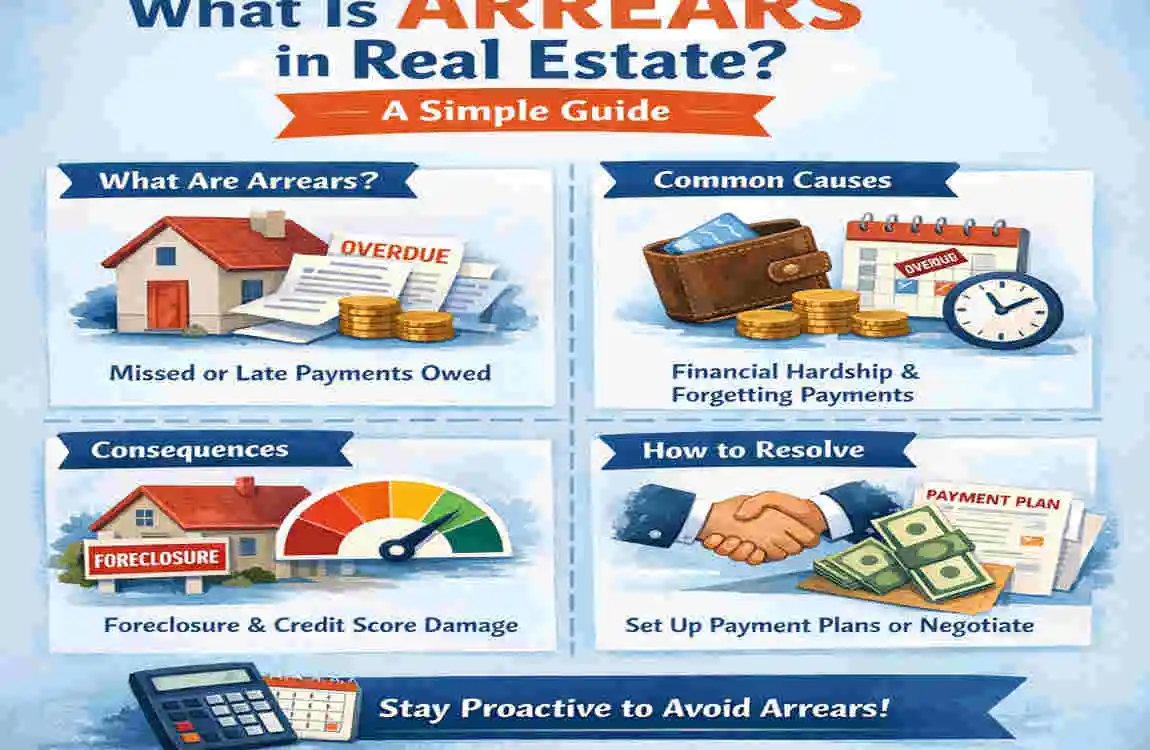
If you are new to property terms, you may wonder what arrears in real estate are and why people talk about them so often.
In simple words, arrears means a payment is overdue and has not been paid by the due date. In real estate, this can apply to rent, mortgage payments, property taxes, HOA fees, or service charges.
This matters because arrears can affect both property owners and occupants. If payments are missed for too long, the problem can grow into late fees, notices, credit issues, or even legal action.
What Is Arrears in Real Estate?
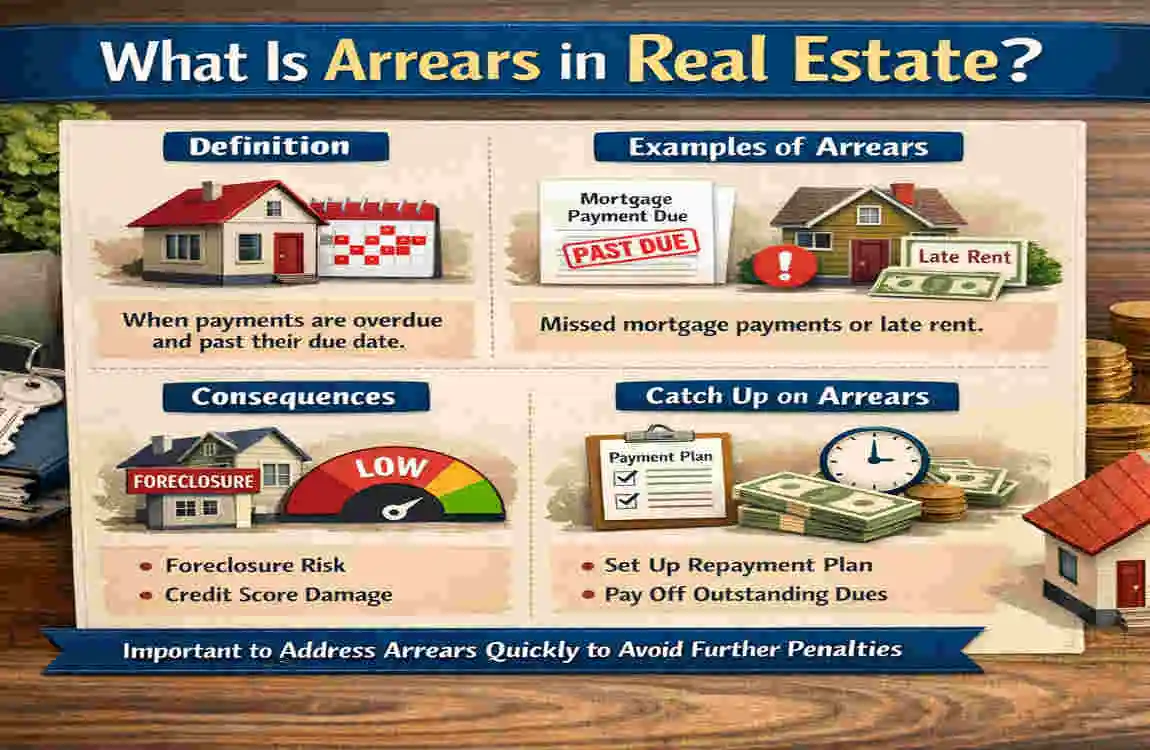
Simple definition of real estate arrears
Arrears means money that should have been paid already but is still unpaid.
For example, if rent was due on the first of the month and has not been paid, it is now in arrears. The same idea applies to mortgage payments, taxes, and other property-related bills.
Common types of property arrears
Here are the most common forms:
- Rent arrears
- Mortgage arrears
- Property tax arrears
- HOA or strata fee arrears
- Utility or service charge arrears
Arrears vs. late payment
People sometimes use these terms similarly, but arrears usually means the payment is still outstanding after the due date.
A payment can be late for a short time and still become arrears if it is not corrected quickly.
How Do Arrears Work in Real Estate?
How a payment falls into arrears
A property payment has a due date and a schedule. When that date passes without payment, the amount becomes overdue.
If the balance is not paid, it can keep building up. Late fees or interest may also be added, depending on the agreement.
Examples of real estate arrears
A few simple examples help make it clear:
- Tenant arrears: a tenant misses monthly rent
- Mortgage arrears: a homeowner misses one or more mortgage payments
- Tax arrears: property taxes are unpaid after the deadline
How arrears are usually recorded
Arrears are often tracked as:
- Outstanding balance
- Late fees or interest
- Payment history
- Notices from the landlord, lender, or authority
This record helps show what is owed and how long it has been unpaid.
Common Causes of Real Estate Arrears
Financial difficulties
One of the biggest reasons people fall into arrears is money trouble.
This may happen because of:
- Job loss
- Reduced income
- Unexpected medical costs
- Family emergencies
Payment and administrative problems
Sometimes the issue is not a lack of money, but a missed step.
For example:
- A due date was forgotten
- Bank details were entered incorrectly
- The bank delayed a payment
- A notice was not received on time
Property-related issues
In some cases, disagreements or unexpected costs can lead to missed payments.
This may happen with rent disputes, repair issues, tax bills, or changes in housing costs.
Why early action matters
The sooner arrears are addressed, the easier they are to manage.
Early action can help you:
- Avoid extra fees
- Prevent the debt from growing
- Protect your financial standing
- Reduce stress and conflict
What Happens When Property Payments Go Into Arrears?
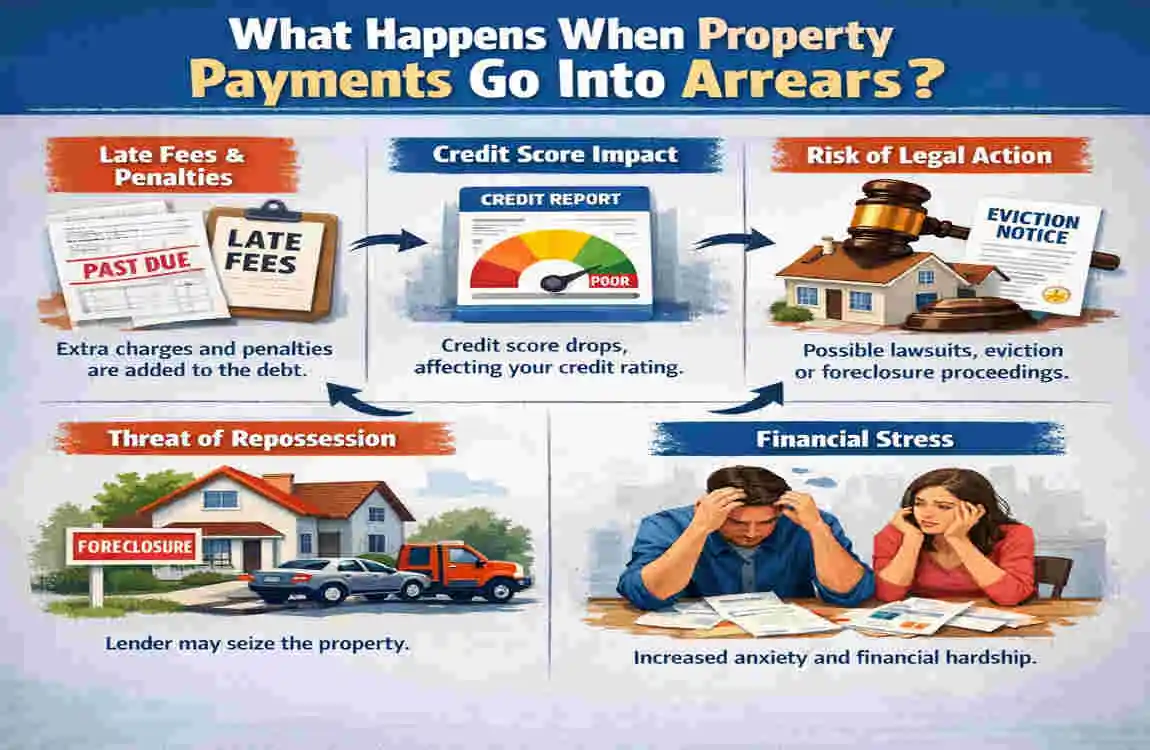
Late fees and interest
Many agreements allow extra charges once a payment is overdue. These charges can vary by contract and location.
That is why it is important to read the payment terms carefully.
Notices and payment demands
If arrears continue, the next step is often a notice.
This may come from:
- A landlord
- A mortgage lender
- A property manager
- A tax office
The notice usually asks for payment within a certain time.
Possible legal or financial consequences
If arrears are not resolved, the problem can become more serious.
Possible outcomes may include:
- Collection action
- Eviction procedures for unpaid rent
- Foreclosure in severe mortgage cases
- Tax liens or other enforcement steps
Impact on buying or selling property
Outstanding property debts can make a sale more difficult.
A buyer may want clear records, and a seller may need to settle arrears before closing. If you are buying or selling, it is smart to check for any unpaid amounts early.
How Can You Resolve Real Estate Arrears?
Review the outstanding balance.
First, confirm exactly what is owed.
Check:
- The original amount
- Late fees
- Interest charges
- Payment history
If something looks wrong, ask for a written breakdown.
Communicate with the relevant party.
Speak with the landlord, lender, property manager, or tax authority as soon as possible.
Be honest about the problem and keep records of every message or agreement.
Consider a payment plan.
Sometimes the other party may allow you to pay the arrears in smaller amounts over time.
If that happens, make sure the plan is clear and written down.
Make payments and prevent future arrears.
Once the balance is under control, try to avoid the same problem again.
Useful habits include:
- Setting up automatic payments
- Using reminders
- Building a small emergency fund
- Reviewing monthly property costs
Arrears for Buyers, Sellers, Landlords, and Tenants
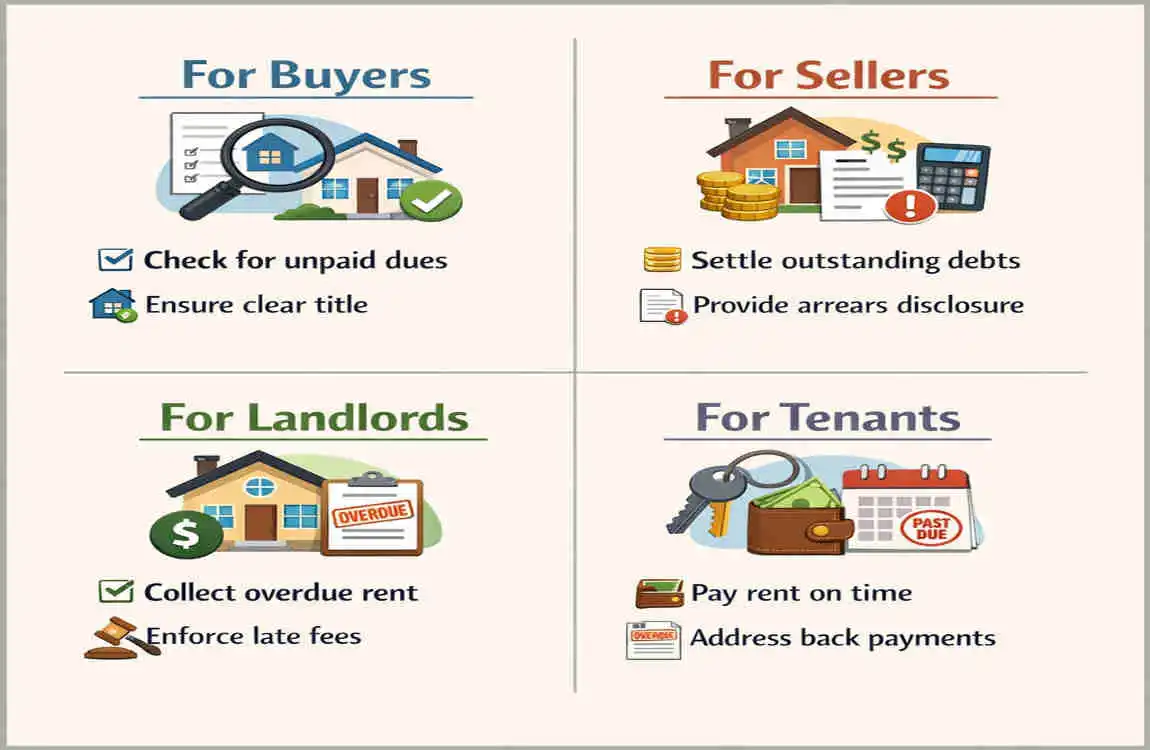
What buyers should know
If you are buying property, check whether there are any unpaid taxes, HOA fees, or other charges associated with the home.
These debts can sometimes affect the closing process.
What sellers should know
Sellers should try to clear outstanding balances before or during the sale process.
This helps avoid delays and unexpected problems at settlement.
What landlords should know
Landlords should keep good rent records and follow the correct notice process.
Clear communication helps reduce confusion and makes it easier to handle missed payments fairly.
What tenants should know
If you are renting, always try to pay by the agreed deadline.
If payment issues arise, contact the landlord early rather than waiting. That simple step can make a big difference.
FAQs About Real Estate Arrears
What is arrears in real estate?
It means a property-related payment is past due and still unpaid.
What are rent arrears?
Rent arrears are unpaid rent amounts that remain outstanding after the due date.
What are mortgage arrears?
Mortgage arrears are missed or overdue home loan payments. They can become serious if they are not fixed quickly.
Is being in arrears the same as being late?
They are closely related. A late payment may turn into arrears if it remains unpaid.
Can real estate arrears affect a property sale?
Yes. Unpaid property debts can complicate the sale and may need to be resolved before closing.
How can I avoid falling into arrears?
Use budgeting, automatic payments, reminders, and early communication if money becomes tight.
Can arrears be negotiated?
Sometimes yes. Payment plans or other arrangements may be possible, depending on the situation and applicable rules.
| Term | Simple Meaning | Real Estate Example |
|---|---|---|
| Arrears | Money that is overdue or unpaid | A tenant has not paid last month’s rent |
| Rent Arrears | Unpaid rent owed by a tenant | $1,000 rent remains unpaid after the due date |
| Mortgage Arrears | Missed or late mortgage payments | A homeowner misses two monthly mortgage payments |
| Property Tax Arrears | Unpaid property taxes | Annual property taxes remain unpaid after the deadline |
| Utility Arrears | Outstanding utility bills | Electricity or water charges have not been paid |
| Payment in Arrears | Payment made after the service or period ends | Rent is paid at the end of the month for that month |
