
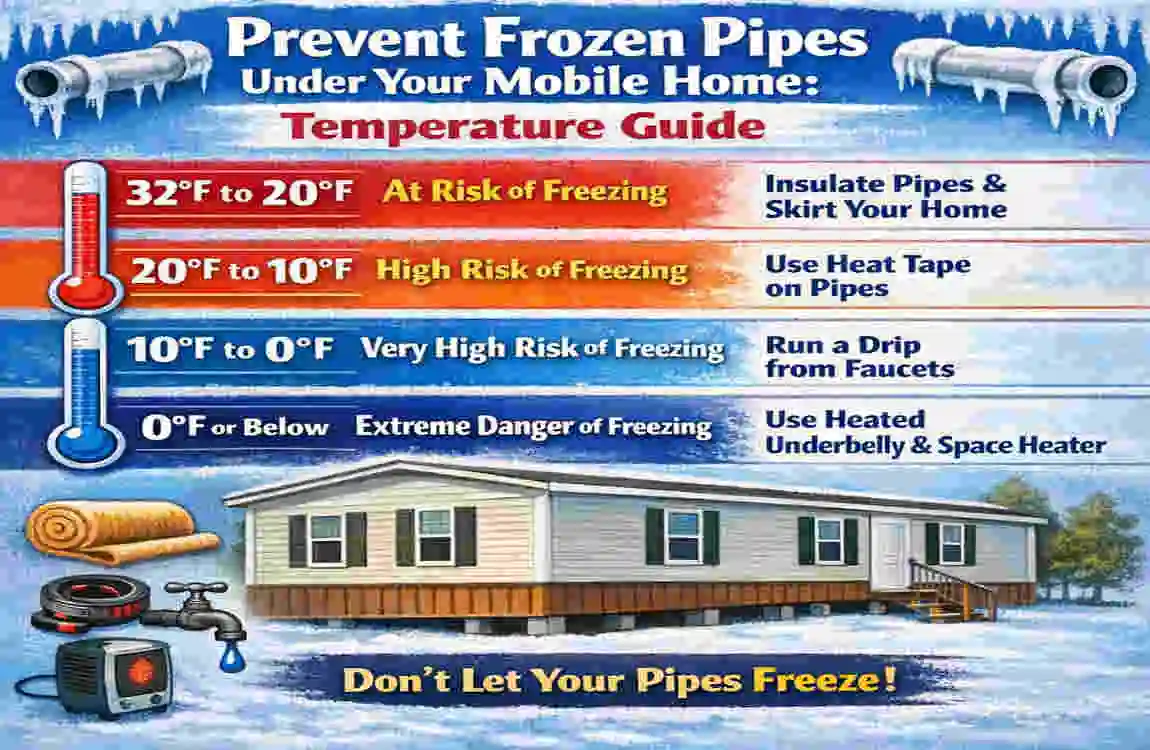
If you own a mobile home, winter weather can create a real plumbing problem. One of the biggest concerns is frozen pipes under the home, because those pipes are often more exposed to cold air than the plumbing in a standard house.
So, what temperature do pipes freeze at under a mobile home? A common danger point is around 20°F (-7°C), but that is only a general guide. Pipes may freeze sooner or later depending on insulation, wind, pipe material, airflow, and how long the cold lasts.
What Temperature Do Pipes Freeze Under a Mobile Home?
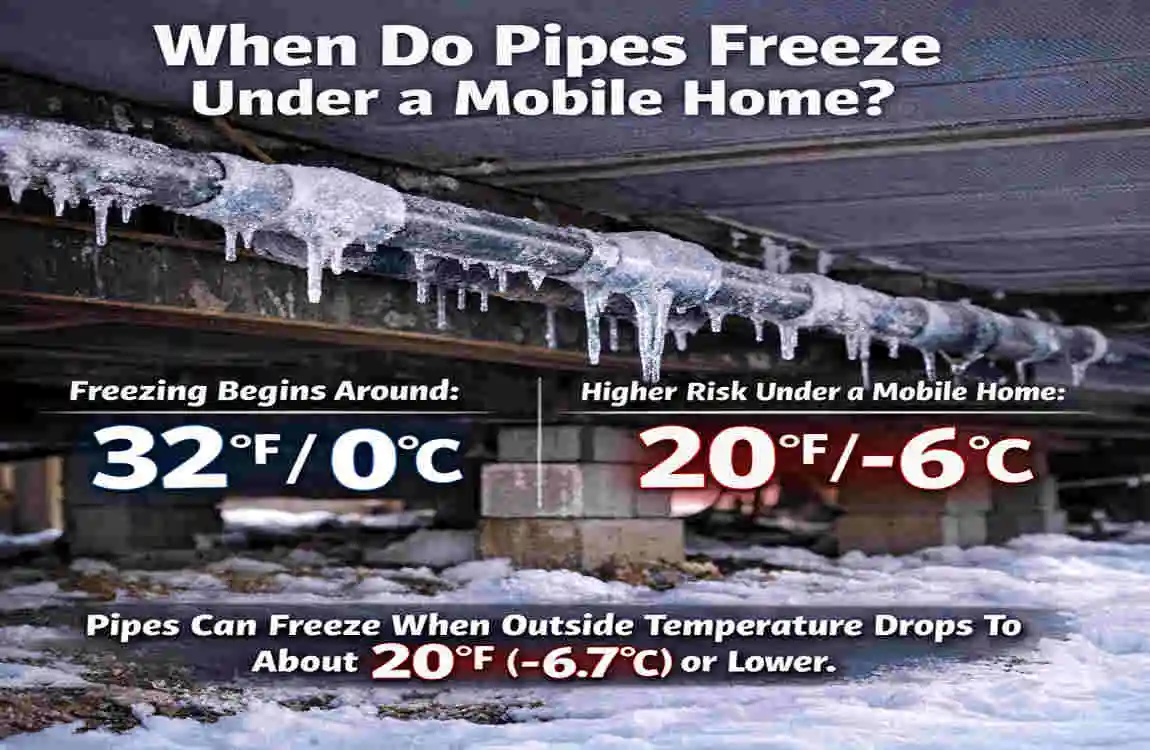
The short answer is that pipes under a mobile home can begin freezing when temperatures drop to around 20°F (-6.7°C), especially if the cold lasts for several hours.
When Do Mobile Home Pipes Start Freezing?
No single magic number applies to every home. Some pipes may be safe at 20°F if they are well insulated and protected. Other pipes may start freezing at higher temperatures if they are exposed to wind or poor insulation.
That is why the duration of the cold matters just as much as the temperature itself. A short cold spell may not cause trouble, but hours of steady freezing weather can.
Why Pipes Under Mobile Homes Freeze Faster
Pipes under a mobile home are often more vulnerable than pipes inside a house. They may sit in a crawl space or underneath the home where cold air can move freely.
Here are the main reasons they freeze faster:
- Exposed plumbing
- Cold air circulation beneath the home
- Poor or damaged insulation
- Unheated crawl spaces
- Wind exposure
- Gaps around plumbing openings
If your mobile home skirting is damaged or missing in places, cold air can move under the home even more easily. That makes freezing much more likely.
How Long Does It Take for Pipes to Freeze?
The answer depends on several things, including:
- outside temperature
- pipe size
- water flow
- insulation quality
- how windy it is
- how exposed the pipe is
A pipe may not freeze right away when the temperature drops. But after several hours of deep cold, ice can begin forming inside the pipe. Once that happens, water flow slows, and pressure inside the pipe can build.
That pressure is what often leads to a burst pipe later.
Signs That Your Mobile Home Pipes Are Freezing
Frozen pipes usually show warning signs before they burst. If you catch those signs early, you can take action fast.
Low or No Water Pressure
One of the first signs is weak water flow. If a faucet that normally works well starts trickling or suddenly slows down, ice may be forming inside the line.
This is especially important in winter. If only one faucet is affected, it may point to a frozen section in a particular pipe.
Frozen or Slow-Flowing Faucets
A frozen pipe may make one faucet stop working completely. Sometimes you may get only a small stream of water, or the water may stop after a few seconds.
If the problem appears during freezing weather, do not ignore it. That could mean ice is already blocking the line.
Strange Noises From Plumbing
You may hear unusual sounds in the plumbing before a pipe freezes completely. These sounds may include:
- banging
- popping
- ticking
- gurgling
- pressure sounds
These noises happen because ice blocks normal water flow and builds pressure in the pipe.
Visible Frost or Ice
Sometimes you can actually see frost around exposed plumbing under the home. That is a strong warning sign.
Check vulnerable areas such as:
- exposed pipe joints
- water lines near vents or openings
- pipes close to skirting gaps
- plumbing near outside walls
If you see frost, act quickly before the pipe freezes solid.
How to Prevent Frozen Pipes Under a Mobile Home
Prevention is always easier than repair. If you prepare before temperatures drop, you can reduce the risk of expensive damage.
Insulate Exposed Water Pipes
Pipe insulation is one of the best defenses against freezing. Foam pipe sleeves and other insulation products help slow heat loss and protect the water line.
Focus on the most exposed parts first. Even small gaps in insulation can leave a pipe vulnerable.
Protect the Mobile Home Skirting
Skirting helps block cold air from moving freely under the home. If it is loose, cracked, or missing, cold air can reach the pipes much faster.
Make sure the skirting is in good shape before winter. A properly installed skirt does not stop freezing on its own, but it helps a lot.
Seal Drafts and Openings
Look for gaps around:
- plumbing penetrations
- floor openings
- vent areas
- skirting edges
Sealing these openings reduces cold-air movement and helps keep the crawl space less exposed to freezing temperatures.
Use Approved Heat Tape
Heat tape can help protect vulnerable pipes when used correctly. It is especially useful for exposed sections in very cold areas.
However, you must follow the manufacturer’s directions carefully. Electrical safety matters here. Do not use damaged heat tape or install it in a way that creates a fire risk.
Keep Water Moving During Extreme Cold
In some cases, letting a small amount of water flow can reduce the risk of freezing. Moving water is harder to freeze than still water.
This is not a complete solution, but during severe cold it can help protect the line when combined with insulation and other safeguards.
Best Temperature Settings for Winter Protection
Your heating system plays a big role in keeping plumbing safe.
Keep the Interior Warm
A steady indoor temperature helps protect the pipes inside the home and can also reduce freezing risk in adjacent areas.
Try not to let the home get too cold overnight. Sudden drops in indoor heat can affect pipes more than people expect.
Protect Pipes During Overnight Freezes
Nighttime is often the riskiest time because temperatures can stay below freezing for many hours. If a freeze is expected, take extra steps in the evening.
You can:
- check skirting and draft openings
- confirm insulation is in place
- keep the heat on
- make sure cabinet doors near plumbing are open if needed
What to Do During a Power Outage
A power outage during freezing weather can create a serious plumbing problem. If the home loses heat long enough, pipes may freeze even if they were safe earlier.
In that situation, protect the plumbing as best you can. If conditions are severe and the heat will stay off for a long time, it may be wise to shut off the main water supply if your situation calls for it.
What to Do If Pipes Freeze Under Your Mobile Home
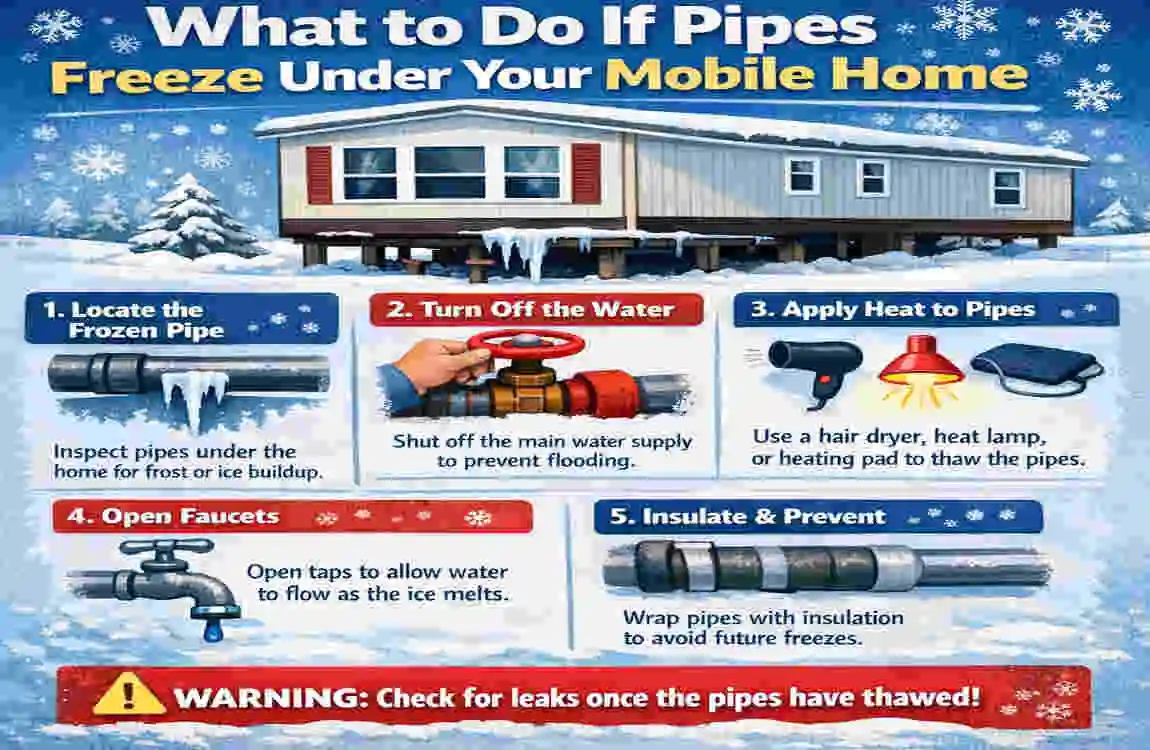
If you think a pipe is already frozen, act carefully. The wrong move can make the damage worse.
Turn Off the Water Supply
If you suspect a pipe may have cracked or burst, turn off the water supply as soon as possible. That can reduce flooding and limit further damage.
Even if the pipe has not burst yet, shutting off the water can be a smart safety step while you check the system.
Locate the Frozen Section
Look for the most likely problem area. Frozen pipes are usually found in exposed or poorly insulated spots.
Check:
- under the home
- around skirting gaps
- near exterior walls
- around vents and crawl space openings
Look for frost, bulging pipes, or areas where the pipe feels unusually cold and rigid.
Thaw Pipes Safely
If you need to thaw a frozen pipe, do it slowly and safely.
Safe methods may include:
- warm air from a space heater placed safely nearby
- a hair dryer used at a safe distance
- warm towels wrapped around the pipe
- gradual heat from a safe source
Do not use open flames, propane torches, or other unsafe heating methods. Those can damage the pipe or start a fire.
Check for Burst Pipes
Once the ice melts, watch carefully for leaks. A frozen pipe can crack without showing damage until water starts moving again.
Look for:
- dripping water
- wet insulation
- puddles
- soggy flooring
- low water pressure that does not improve
If you see signs of a burst pipe, call a qualified plumber.
Winter Maintenance Checklist for Mobile Home Plumbing
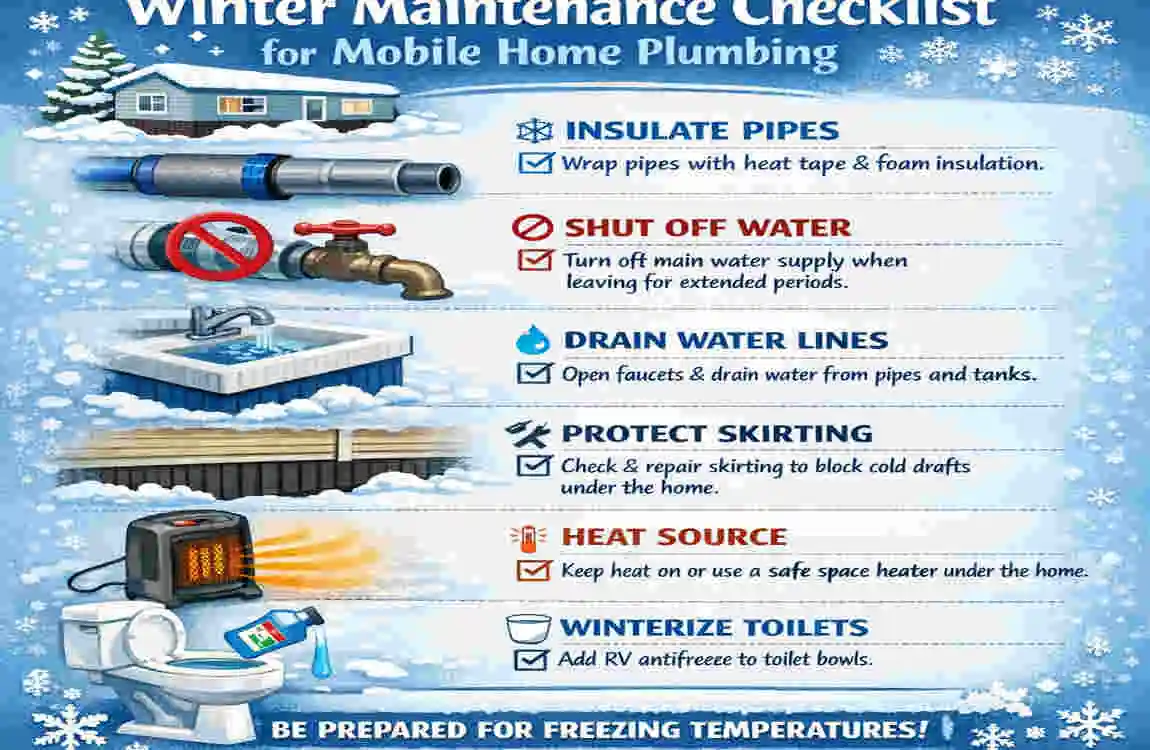
A little preparation before winter can save you a lot of stress later.
Task | When to Do It | Why It Matters
Inspect pipe insulation Before winter Finds exposed areas
Check mobile-home skirting Before cold weather Blocks cold air
Seal plumbing gaps Before freezing temperatures Reduces drafts
Test heating system Before winter Maintains indoor warmth
Protect vulnerable pipes Before extreme cold Prevents freezing
Check pipes after a freeze After severe cold Finds leaks or damage
Why Regular Inspections Matter
Regular inspections can help you catch small issues before they turn into big repairs. A loose panel, damaged insulation, or a small gap in skirting may not seem serious at first, but it can lead to frozen pipes later.
That is why winter maintenance should be part of your home routine, not something you do only after a problem shows up.
Simple Winter Prevention Habits
You do not need to do everything at once. Even small habits help:
- check exposed plumbing every few weeks
- watch the weather forecast
- keep indoor heat steady
- repair gaps early
- inspect after each major freeze
These simple steps can make a big difference.
FAQ About Frozen Pipes Under a Mobile Home
What temperature do pipes freeze under a mobile home?
A commonly cited danger point is around 20°F (-7°C), but pipes can freeze at different temperatures depending on wind, insulation, exposure, and how long the cold lasts.
Will pipes freeze at 32°F?
Yes, they can. 32°F is the freezing point of water, but whether a pipe freezes depends on how cold it gets and how long it stays exposed to freezing conditions.
How do I keep pipes from freezing under my mobile home?
Use insulation, seal drafts, repair skirting, keep the home warm, and protect vulnerable pipes before cold weather arrives.
Should I leave faucets dripping in freezing weather?
A small flow can help in some situations because moving water is harder to freeze. But use it with other protection, not as the only defense.
Does mobile home skirting prevent frozen pipes?
Skirting helps reduce cold-air exposure, but it does not prevent freezing on its own. It works best when combined with insulation and draft sealing.
How do you thaw frozen pipes under a mobile home?
Use safe, gradual heat such as warm air or warm towels. Avoid open flames and unsafe heating tools.
What should I do if a frozen pipe bursts?
Turn off the water supply and inspect the area for leaks. If the damage is serious, contact a qualified plumber.
| Outdoor Temperature | Freeze Risk | What to Do |
|---|---|---|
| Above 40°F (4°C) | Low | Normal precautions |
| 32–40°F (0–4°C) | Moderate | Check insulation and skirting |
| 20–32°F (-7–0°C) | High | Insulate exposed pipes and seal drafts |
| Below 20°F (-7°C) | Very High | Use approved heat tape and keep heat running |
| Below 10°F (-12°C) | Extreme | Monitor pipes closely and protect vulnerable areas |
