
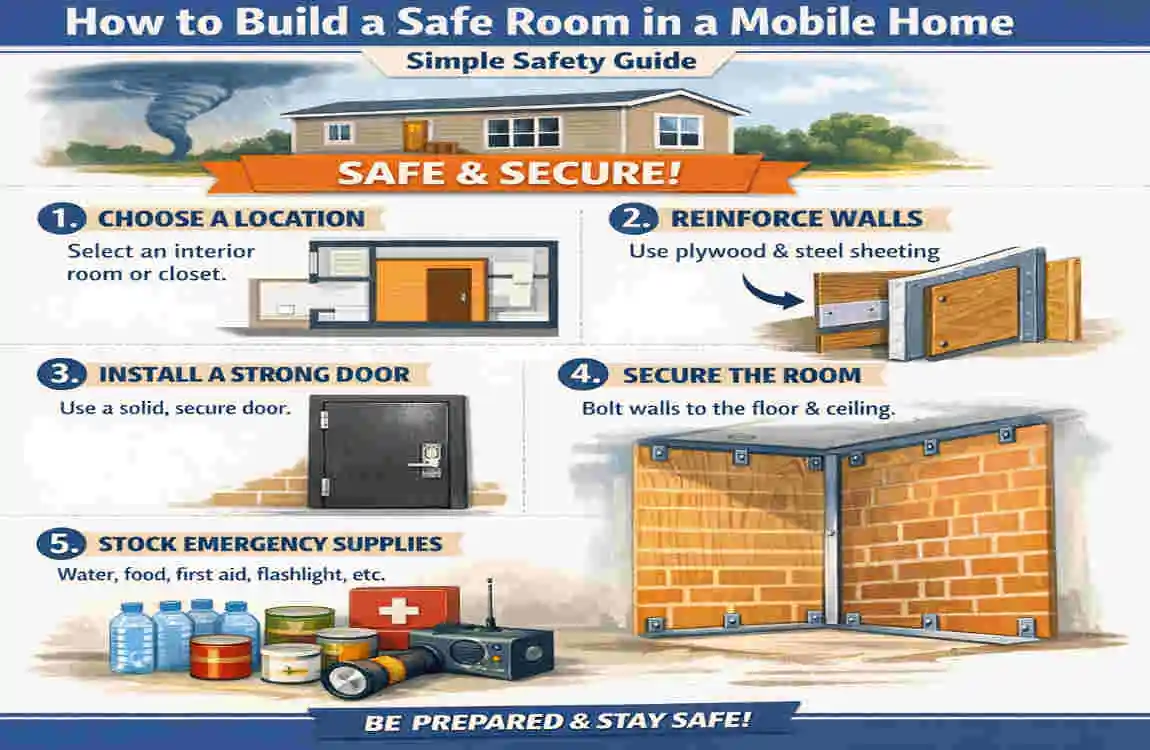
A safe room can give your family extra protection during severe weather, especially tornadoes and strong winds. This is especially important for mobile homes, since they are usually more vulnerable during extreme storms.
If you are wondering how to build a safe room in a mobile home, the most important thing to know is this: a real safe room must be carefully planned, properly built, and securely anchored. It is not just a regular closet or bathroom with a strong-looking door.
Choose the Safest Location
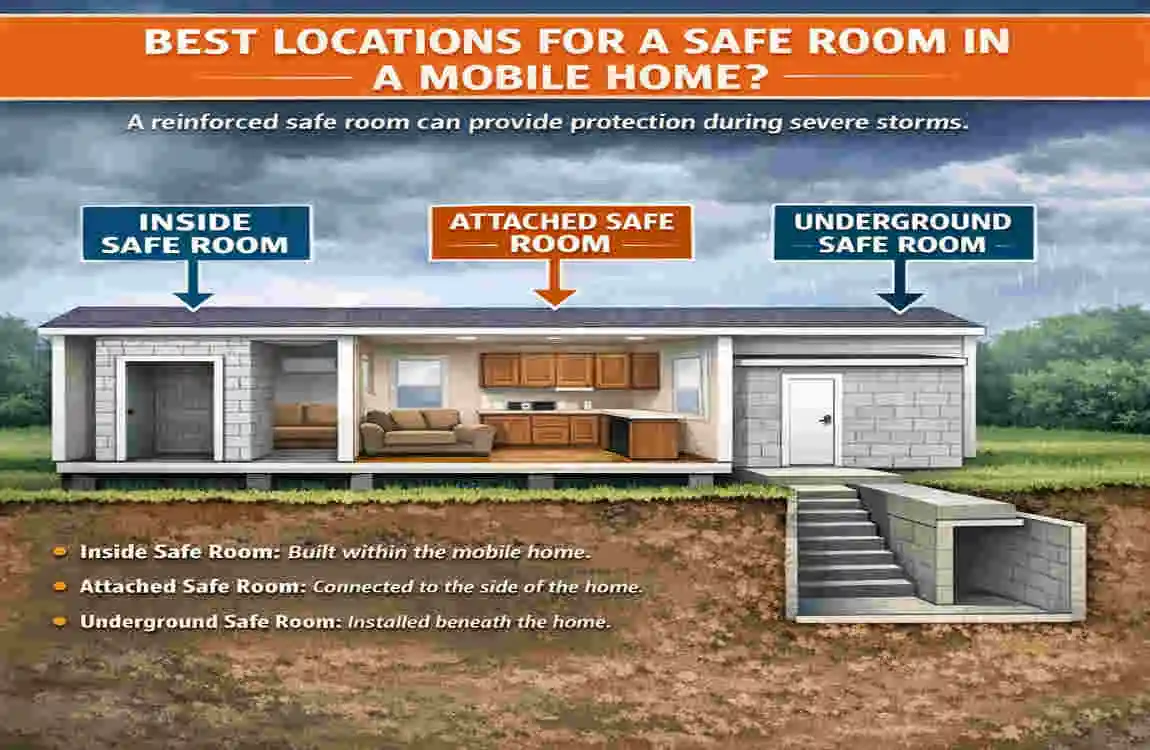
Pick a Protected Spot
The first step is choosing a location that is as protected as possible. A safe room should be away from windows and exterior doors whenever possible.
For a mobile home, an approved external safe room or a professionally built shelter is often safer than trying to turn an interior room into a storm shelter on your own.
Think About Stability
The shelter should sit on a stable foundation. It also needs enough space for the people who will use it. You should not place it where the ground shifts easily or where the structure may be weak.
Use Strong, Approved Construction Materials
Choose Real Shelter Materials
A safe room needs much stronger materials than a normal room. Depending on the design, that may include reinforced concrete, structural steel, or reinforced masonry.
These materials are used because they can withstand high wind loads and flying debris better than standard wall materials.
Do Not Rely on Basic Interior Materials
Ordinary drywall, plywood, and residential doors are not enough on their own. They may look sturdy, but they are not made to protect against severe storm impact.
The walls, roof, door, and frame should work together as a single tested system.
Secure the Safe Room Properly
Anchor It Correctly
A shelter is only effective if it is strongly attached to its foundation. This matters even more in mobile homes because wind can affect the entire structure.
A qualified contractor or structural professional should check the foundation, anchoring system, and shelter design.
Get Professional Help
This is not the kind of project where guesswork is a good idea. A professional can help you build a shelter that complies with local safety rules and fits your home properly.
Install a Tested Safe-Room Door
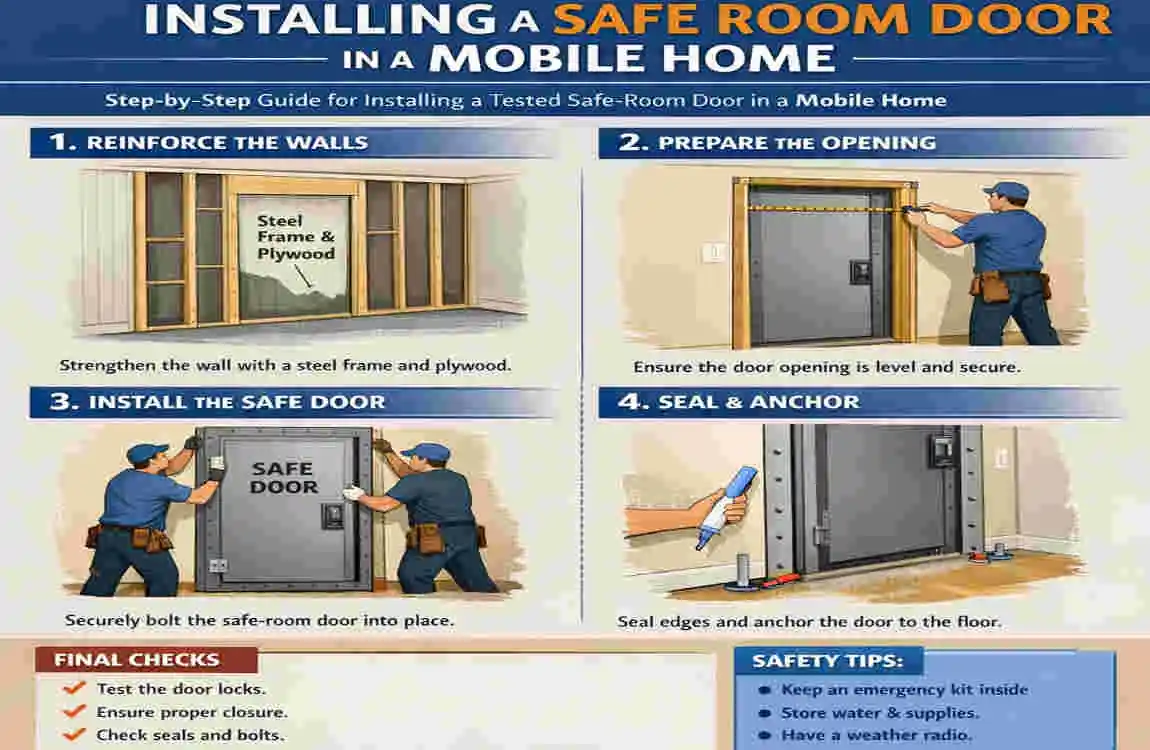
Use a Proper Door System
The door is one of the most important parts of the safe room. It should be tested and rated for safe-room use.
A regular home door may not stay in place during severe weather, even if it looks heavy.
Make Sure It Opens and Closes Easily
The door should still be usable from inside the shelter. In an emergency, you need a door that opens and closes smoothly without sticking or jamming.
Provide Ventilation and Emergency Supplies
Keep the Air Safe
A safe room needs ventilation, but the openings must not weaken the structure. Follow the design or manufacturer instructions closely.
Store Basic Supplies
Keep emergency items inside the shelter so you can reach them quickly. Good supplies include:
- Drinking water
- Flashlights
- Batteries
- First-aid supplies
- Necessary medications
- Blankets
- Battery-powered communication devices
- Basic emergency tools
Keep everything in easy-to-grab containers.
Make the Room Accessible and Ready
Keep the Path Clear
Everyone in the house should know where the safe room is and how to get there fast. Do not block the door with furniture, boxes, or heavy storage items.
Practice the Plan
It helps to practice before storm season arrives. Make sure every family member knows where to go when a warning is issued.
Common Mistakes to Avoid
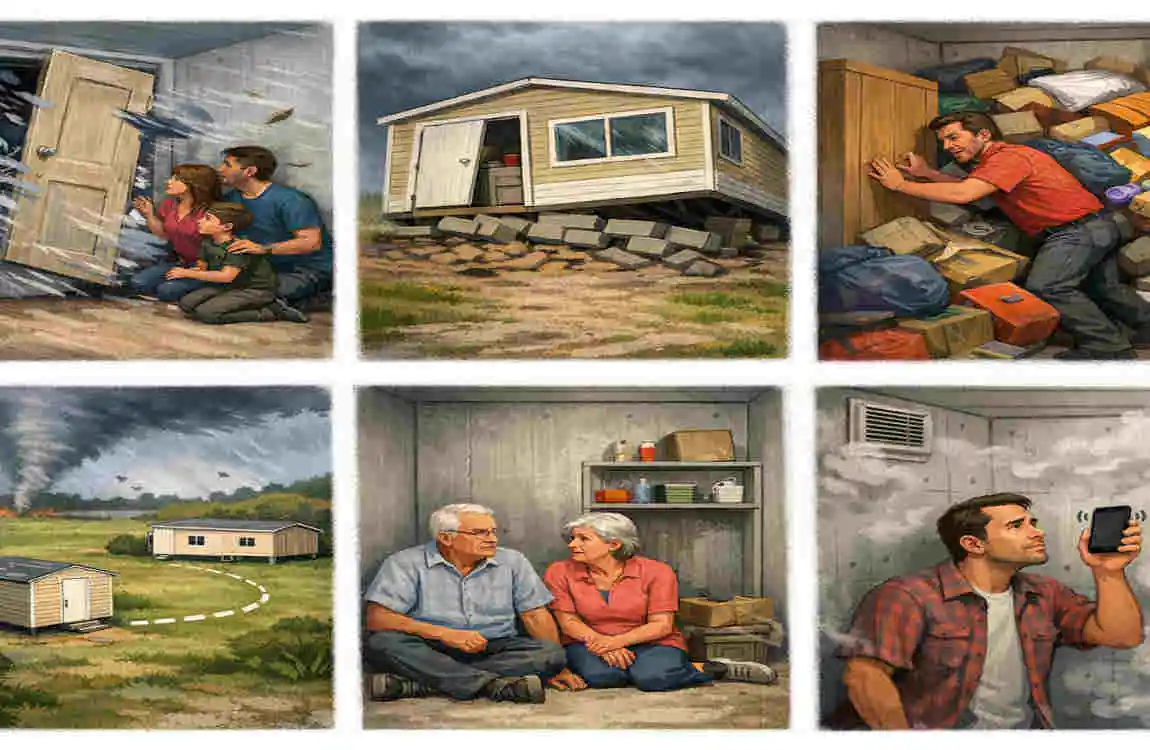
A few common mistakes can make a shelter much less safe.
- Treating a bathroom, closet, or bedroom as a tornado shelter without proper design
- Using an untested door
- Failing to anchor the shelter correctly
- Blocking the entrance
- Forgetting emergency supplies
- Skipping permits or professional advice
If the structure is being changed in a major way, always check local rules and talk to a qualified expert.
FAQ
Can you build a safe room inside a mobile home?
An interior room may offer some protection, but it should not automatically be treated as a certified safe room.
What is the safest place during a tornado in a mobile home?
A proper storm shelter or nearby community shelter is often safer if you can reach it in time and local guidance says it is safe to travel.
Can plywood make a safe room?
No, standard plywood alone is not enough for tornado protection.
How much does a mobile-home safe room cost?
The cost varies based on size, materials, location, labor, and whether it is an engineered or manufactured shelter.
Does a safe room need a special door?
Yes. It should have a tested, properly rated door system.
| Topic | Key Information |
|---|---|
| Safe Room Purpose | Provides a stronger, protected space during severe storms and emergencies. |
| Best Location | Choose a low-risk interior area away from windows and exterior walls when possible. |
| Strong Construction | Use a professionally designed, reinforced structure that can resist expected wind and debris loads. |
| Mobile Home Limits | A standard mobile-home room may not provide adequate tornado protection; follow local codes and safety guidance. |
| Door & Roof | Use a properly rated reinforced door and ensure the shelter has a secure, impact-resistant design. |
| Ventilation | Provide safe ventilation without creating openings that compromise the shelter’s protective structure. |
