
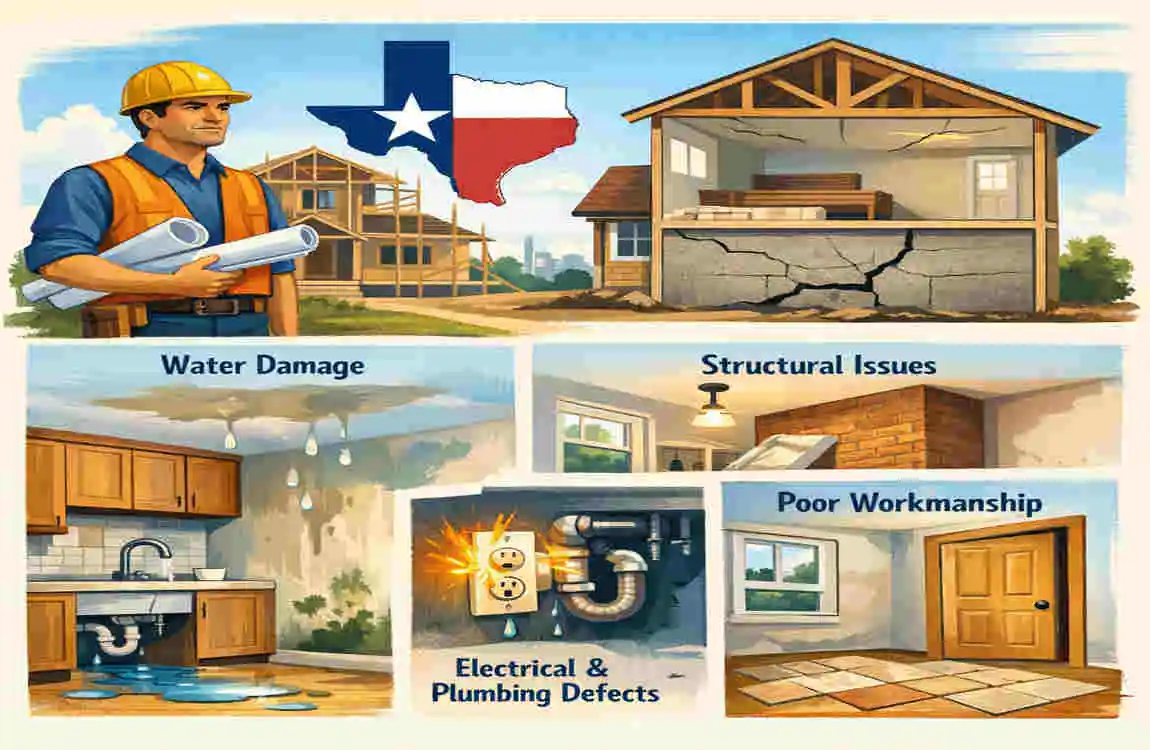
Building or buying a new home is a major investment. Most homeowners expect their property to be safe, durable, and free from construction problems. However, defects can still appear after moving in. This raises an important question: how long is a home builder responsible for defects in Texas?
The answer depends on several factors, including Texas laws, the builder’s written warranty, and the type of defect involved. Some issues are covered for only one year, while major structural problems may have protection for up to ten years.
What Is a Construction Defect?
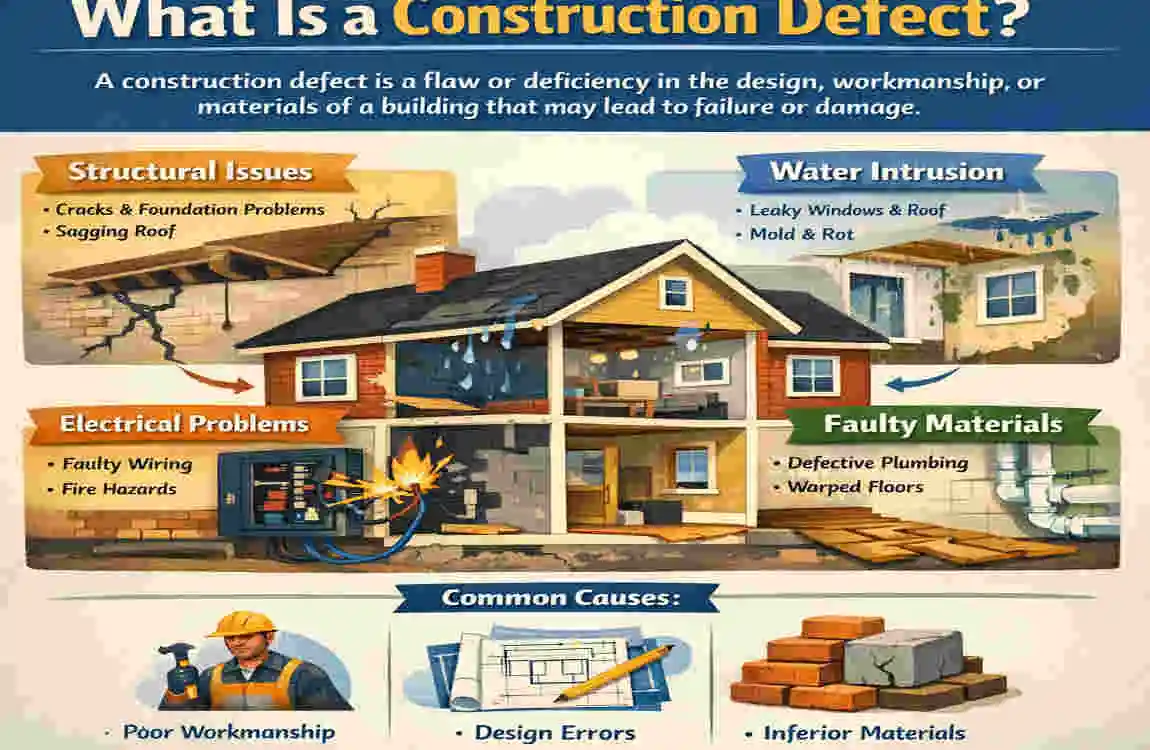
A construction defect is a problem caused by poor design, low-quality materials, or improper artistry during construction.
Definition of a Construction Defect
Common types include:
- Structural defects affecting the foundation or framing.
- Material defects caused by faulty building products.
- Artistry defects from poor installation.
- Design defects caused by planning or engineering errors.
Common Home Defects Found in Texas
Many homeowners experience issues such as:
- Foundation cracks
- Roof leaks
- Plumbing leaks
- Electrical wiring problems
- HVAC installation errors
- Water intrusion around windows and doors
How Long Is a Home Builder Responsible for Defects in Texas?
The answer depends on both Texas law and the builder’s warranty.
Texas Statute of Repose Explained
Texas generally has a 10-year statute of repose for construction defect claims. This means claims must usually be brought within 10 years after substantial completion of the home.
This law protects both homeowners and builders by setting a final deadline for legal claims.
Texas Statute of Limitations
The statute of limitations is different. It usually begins after a defect is discovered or reasonably should have been discovered.
This means homeowners should act quickly once they notice a problem.
Builder Warranty Periods
Many Texas builders offer warranties similar to the following:
- 1 Year: Workmanship defects
- 2 Years: Plumbing, HVAC, and electrical systems
- 10 Years: Major structural defects
Always review your builder’s written warranty because coverage may differ.
Types of Home Builder Warranties in Texas
Express Warranty
An express warranty is a written promise provided by the builder that explains what is covered and for how long.
Implied Warranty
Texas law may recognize implied warranties that require a home to be built in a good and workmanlike manner.
Manufacturer Warranties
Many building products come with separate manufacturer warranties, such as roofing materials and appliances.
Third-Party Home Warranty Programs
Some builders protect independent home warranty companies that manage repair claims.
What Defects Are Usually Covered?
Coverage often depends on the warranty.
Structural Problems
Major framing issues, load-bearing walls, and serious structural failures.
Foundation Movement
Significant foundation settlement or movement caused by construction defects.
Roof Failures
Leaks resulting from poor installation rather than storm damage.
Plumbing Defects
Pipe leaks, drainage problems, or improper plumbing installation.
Electrical Problems
Faulty wiring, improperly installed outlets, or unsafe electrical systems.
HVAC System Issues
Heating and cooling systems that fail due to installation errors.
What Is Usually Not Covered?
Not every issue qualifies for warranty protection.
Common exclusions include:
- Normal wear and tear
- Homeowner neglect
- Lack of maintenance
- Natural disasters
- Unauthorized remodeling or repairs
Signs Your Home May Have Construction Defects
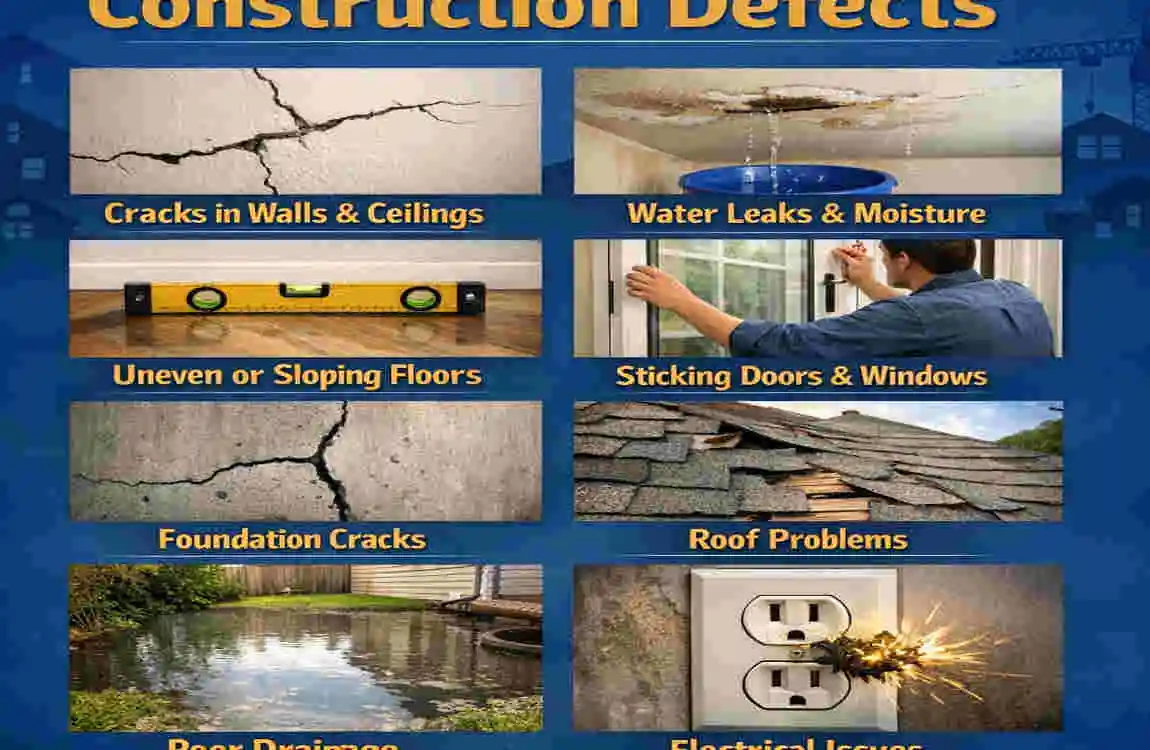
Watch for these warning signs.
Interior Warning Signs
- Large drywall cracks
- Uneven floors
- Doors that won’t close properly
Exterior Warning Signs
- Brick cracks
- Loose siding
- Roof damage
Foundation Warning Signs
- Gaps around windows
- Sloping floors
- Cracked concrete
Moisture and Mold Indicators
- Water stains
- Mold growth
- Damp smells
What to Do If You Discover a Construction Defect
Taking quick action improves your chances of resolving the issue.
Document the Problem
Take clear photos and videos.
Review Your Warranty
Check whether the defect falls within the warranty period.
Notify the Builder
Provide written notice as soon as possible.
Hire an Independent Inspector
An inspection report can help identify the cause.
Keep Repair Records
Save invoices, inspection reports, and communication with the builder.
Texas Residential Construction Liability Act (RCLA)
The Texas Residential Construction Liability Act (RCLA) outlines procedures for resolving construction defect disputes.
Purpose of the RCLA
It encourages builders to repair defects before lawsuits begin.
Notice Requirements
Homeowners generally must notify the builder before filing a lawsuit.
Builder’s Right to Repair
Builders often have the opportunity to inspect and fix the problem.
Legal Remedies Available
If repairs are unsuccessful, homeowners may seek legal remedies available under Texas law.
Can You Sue a Home Builder in Texas?
Sometimes legal action becomes necessary.
When Legal Action Is Appropriate
- Builder refuses repairs.
- Serious structural damage exists.
- Warranty obligations are ignored.
Evidence You’ll Need
- Photos
- Inspection reports
- Contracts
- Warranty documents
- Repair estimates
Possible Compensation
Depending on the case, compensation may include repair costs or other legally available damages.
Settlement vs Court Litigation
Many disputes settle before reaching court, saving both time and money.
How Homeowners Can Protect Themselves
Before Buying a New Home
- Research the builder.
- Read warranty documents carefully.
- Schedule a professional inspection.
During Construction
Visit the site regularly and document progress.
After Moving In
Report problems immediately.
Schedule Regular Home Inspections
Routine inspections help identify defects before they become expensive repairs.
Tips to Prevent Future Construction Problems
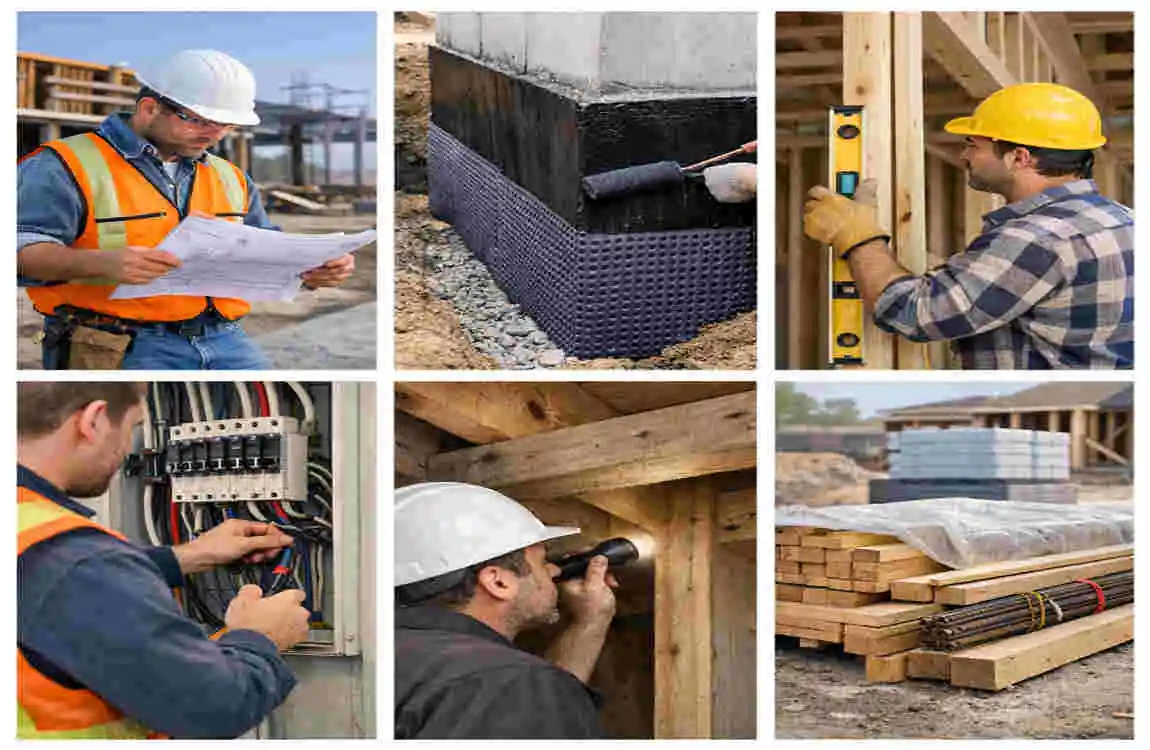
- Perform seasonal home maintenance.
- Fix small issues quickly.
- Maintain proper drainage around the foundation.
- Keep warranty documents organized.
- Schedule annual inspections.
Frequently Asked Questions
How long is a home builder responsible for defects in Texas?
Many builders provide one-year artistry, two-year systems, and up to ten-year structural warranties, while Texas law also sets legal deadlines for certain claims.
Does Texas require builders to provide a home warranty?
Requirements vary, but many builders voluntarily provide written warranties.
What is considered a structural defect?
Problems affecting the home’s foundation, framing, or load-bearing components.
Can I sue my builder after 10 years?
In most cases, claims become much more difficult after the 10 years, although limited exceptions may apply.
What is the Texas Residential Construction Liability Act?
It is a Texas law that outlines the process homeowners generally follow before filing construction defect lawsuits.
Does a builder warranty cover foundation cracks?
Significant structural foundation problems may be covered, depending on the warranty terms and the cause of the damage.
What should I do if my builder refuses to fix defects?
Document the issue, obtain an independent inspection, keep all records, and consider seeking legal advice if necessary.
Do home inspections affect warranty claims?
Yes. Inspection reports often provide valuable evidence that supports warranty claims.
Home Builder Responsibility for Defects in Texas Explained – Quick Information Table
| Topic | Details |
|---|---|
| What Are Construction Defects? | Problems caused by poor workmanship, defective materials, or failure to meet building standards. |
| Builder’s Responsibility | Texas home builders are generally responsible for fixing qualifying construction defects covered by warranties or state law. |
| Typical Warranty Coverage | Many new homes include workmanship, systems, and structural warranties, though coverage periods vary by builder and warranty provider. |
| Structural Defects | Major structural issues, such as foundation or load-bearing failures, often have the longest warranty coverage. |
| Workmanship Defects | Cosmetic or installation-related defects may be covered for a shorter period after construction. |
| Hidden (Latent) Defects | Defects that are not immediately visible may still be eligible for legal claims if discovered later, depending on Texas law and deadlines. |
| Homeowner’s Role | Report defects promptly, document damage with photos, and keep copies of contracts and warranty documents. |
| Texas Law | Texas has legal procedures for resolving construction defect disputes, including providing notice to the builder before filing a lawsuit. |
| When to Contact a Professional | If the builder refuses repairs or major structural defects appear, consult a qualified construction attorney or licensed home inspector. |
| Key Takeaway | Understanding warranty terms and Texas construction laws helps homeowners protect their rights and ensure defects are addressed properly. |
