
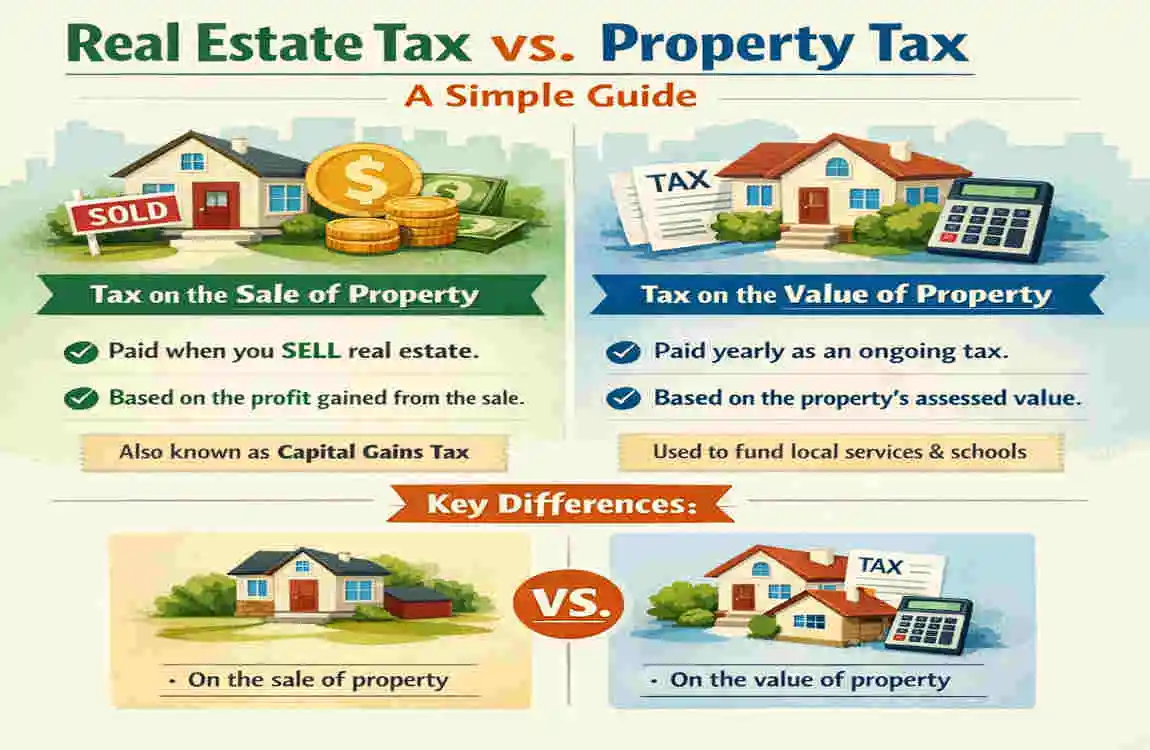
If you are wondering whether real estate taxes are the same as property taxes, the short answer is usually yes in everyday conversation, but not always in exact legal wording.
Most homeowners use the terms interchangeably. Still, tax rules can vary by state, county, or city, so it helps to understand what each term means before you look at a bill or budget for a home purchase.
Are Real Estate Taxes the Same as Property Taxes?
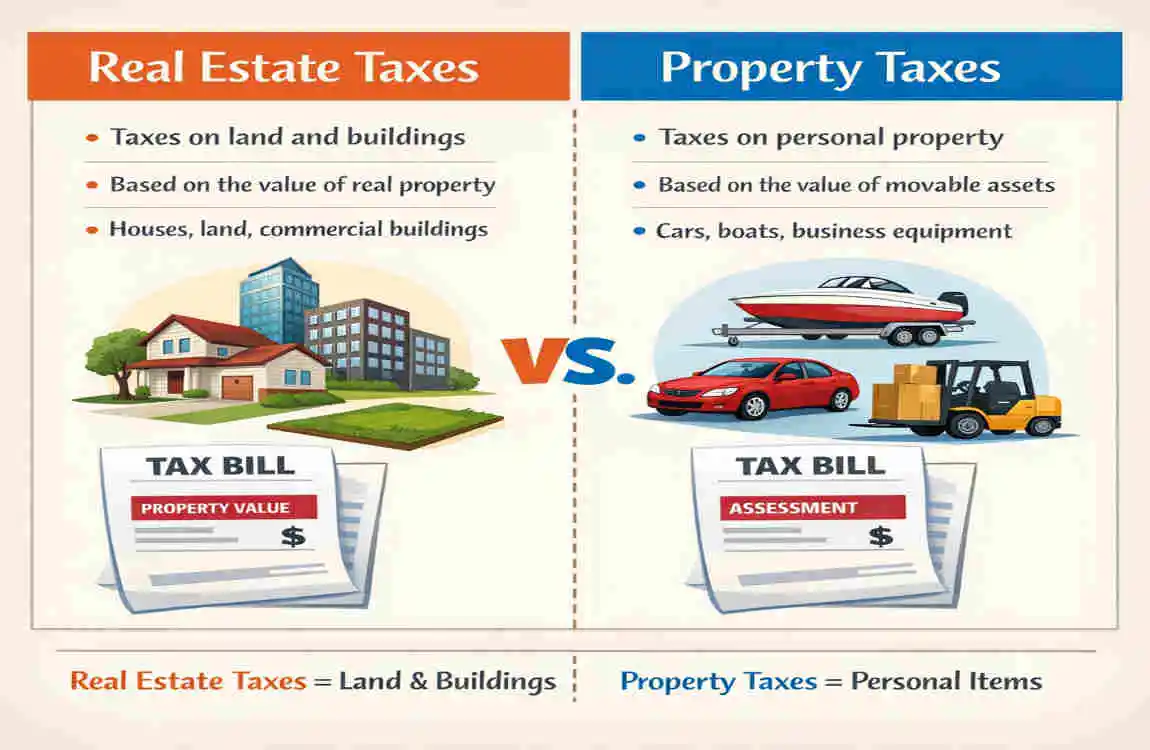
In many places, real estate tax is basically a type of property tax. People often use the terms interchangeably when talking about homes, land, or buildings.
Why the wording can differ
The exact meaning can change depending on where you live. Some local governments use one term more often than the other. Others may use both, but with slightly different legal meanings.
Why this matters
If you are buying a home, owning rental property, or planning a budget, you need to know what tax is being charged and how it is calculated. Even a small difference can affect your yearly costs.
What Is Real Estate Tax?
Basic meaning
Real estate tax is a tax on land and any permanent structures attached to it, such as houses, office buildings, or stores.
How it works
Local governments usually assess property value and apply a tax rate to that value. The result becomes the tax bill.
What the money pays for
Real estate taxes often help fund:
- Schools
- Roads
- Police and fire services
- Local government services
- Public infrastructure
Who usually pays it
This tax is usually paid by:
- Homeowners
- Landowners
- Commercial property owners
- Real estate investors
What Is Property Tax?
Simple definition
Property tax is a broader term. It can refer to taxes on real estate and, in some areas, to taxes on other types of property.
Real property vs personal property
Here is the basic difference:
- Real property: land, houses, buildings, and permanent structures
- Personal property: movable items, depending on local tax rules
How it is calculated
A simple formula is:
Property Tax = Taxable Property Value × Applicable Tax Rate
What affects the final amount
Several things can change the bill:
- Assessed value
- Taxable value
- Local rate
- Exemptions
- Reassessment
Real Estate Tax vs Property Tax: Key Differences
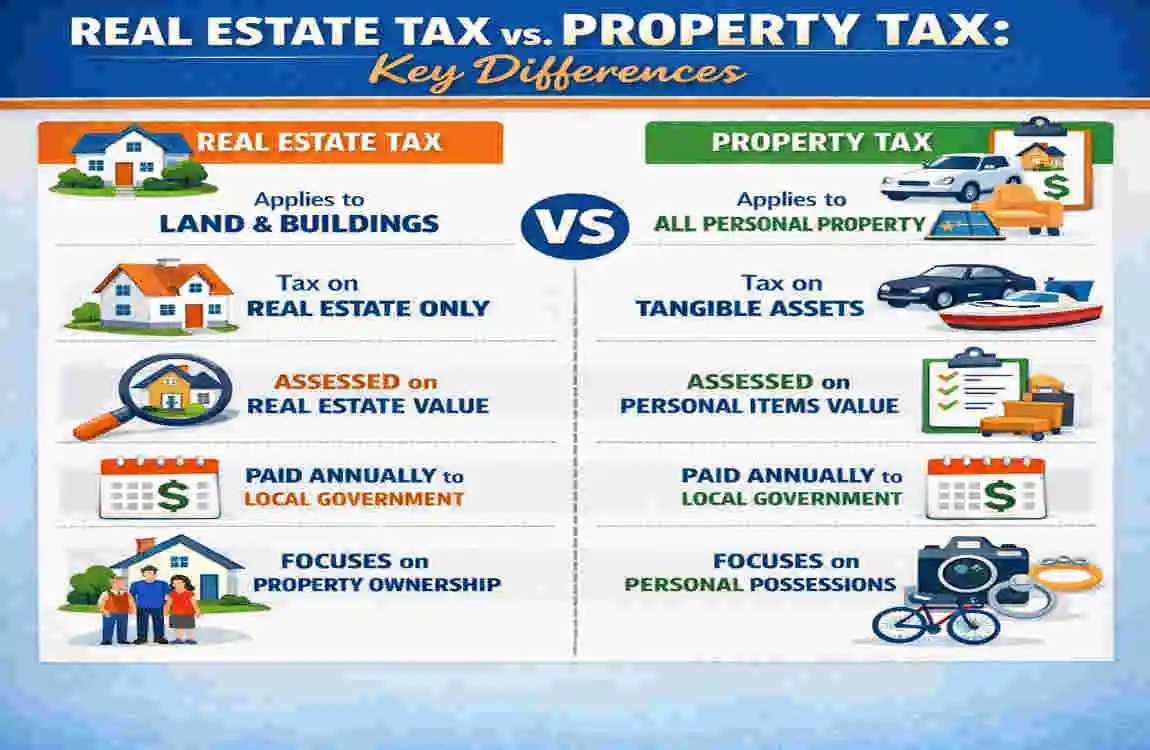
Feature Real Estate Tax Property Tax
Basic meaning Tax generally applied to real estate Tax applied to property according to local rules.
Commonly applies to Land and buildings Real property and, in some places, personal property.
Who collects it? Usually local government Depends on the jurisdiction
Based on Property value Taxable property value
Terminology Common in many areas More widely used term
Rates Vary by location Vary by location
Payment schedule Depends on local rules Depends on local rules
Are they actually different taxes?
Often, no. In many places, real estate tax is simply the local property tax on land and buildings. But exact definitions can change by jurisdiction.
Why terminology matters
You may see different wording on a tax bill, a county website, or a lender’s paperwork. Knowing the local term helps you avoid confusion.
How These Taxes Affect Homeowners and Investors
Impact on homeowners
Property or real estate taxes become part of the cost of owning a home. They can affect:
- Monthly housing expenses
- Escrow payments
- Annual budget planning
Impact on home buyers
If you are buying a house, always check the current tax bill. The amount can change after a sale if the home is reassessed.
Impact on investors
For rental properties, taxes are a major part of operating expenses. They directly affect cash flow and profitability.
What happens if you do not pay
Missing property tax payments can lead to:
- Late fees
- Penalties
- Tax liens
- Collection actions
- Possible foreclosure or tax sale, depending on local law
How to Find Out How Much Property Tax You Owe
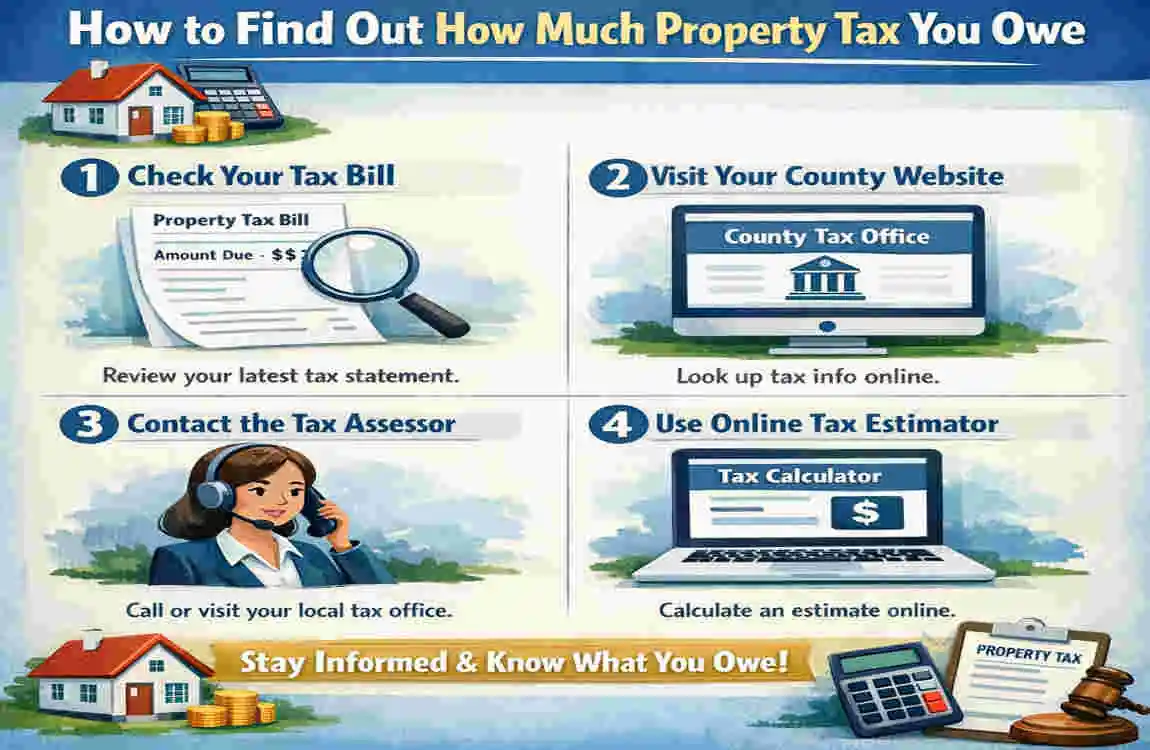
Check your tax bill.
Look for these items:
- Assessed value
- Taxable value
- Tax rate
- Exemptions
- Amount due
- Payment deadline
Check local tax offices.
Useful sources include:
- County assessor’s office
- Municipal tax office
- Tax collector’s office
Understand assessments
A property‘s market value is not always the same as its assessed value. Taxes are usually based on assessment rules, not just what you think the home is worth.
Possible ways to lower the bill
You may be able to:
- Apply for exemptions
- Review the assessment for errors
- Use available homeowner programs
- Appeal the assessment if needed
Frequently Asked Questions
Are real estate taxes the same as property taxes?
Usually, yes. The terms are often used interchangeably to refer to the same tax, but local definitions can differ.
Is property tax the same as real estate tax on a house?
In most cases, yes. For a house, both terms usually refer to the tax on the home and the land it sits on.
What is the difference between real property and personal property?
Real property includes land and buildings. Personal property includes movable items, depending on local tax rules.
How are real estate taxes calculated?
They are usually calculated by multiplying the taxable property value by the local tax rate.
Who collects property taxes?
Usually, a local tax authority, such as a county or municipal office, collects them.
Can property taxes increase after buying a house?
Yes. A home can be reassessed after a sale, which may increase the tax amount.
Can you appeal a property tax assessment?
Often, yes. Many areas allow you to review or appeal the assessed value.
Are property taxes deductible?
That depends on your tax situation and current tax law. It can vary by person and location.
What happens if property taxes are not paid?
You may face penalties, liens, collection actions, or other legal consequences.
| Feature | Real Estate Tax | Property Tax |
|---|---|---|
| Meaning | Tax charged on real estate such as land and buildings | Tax charged on property owned by an individual or business |
| What It Covers | Usually land and permanent structures | May include real estate and, in some places, personal property |
| Who Pays? | Property owners | Property owners |
| How It’s Calculated | Based on the assessed value of the real estate | Based on assessed value and the local tax rate |
| Payment Frequency | Often annual or semi-annual | Varies by local government |
| Who Collects It? | Local government or taxing authority | Local government or taxing authority |
