
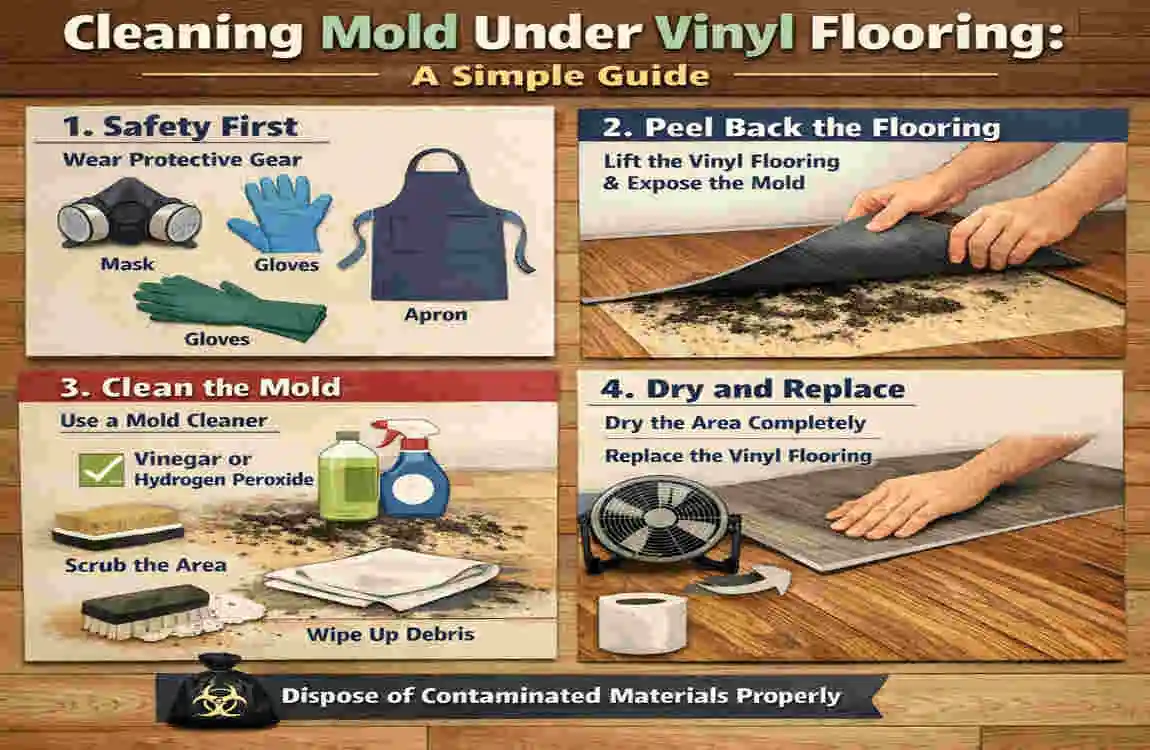
Mold under vinyl flooring can be a hidden problem. At first, you may not see it, but you might notice a musty smell, soft spots, or flooring that starts to lift.
This often happens when water gets trapped under the vinyl. A leak, spill, flood, high humidity, or poor ventilation can create the right conditions for mold to grow. And because vinyl covers the surface so well, the moisture may stay hidden for a long time.
Understanding Why Mold Grows Under Vinyl Flooring
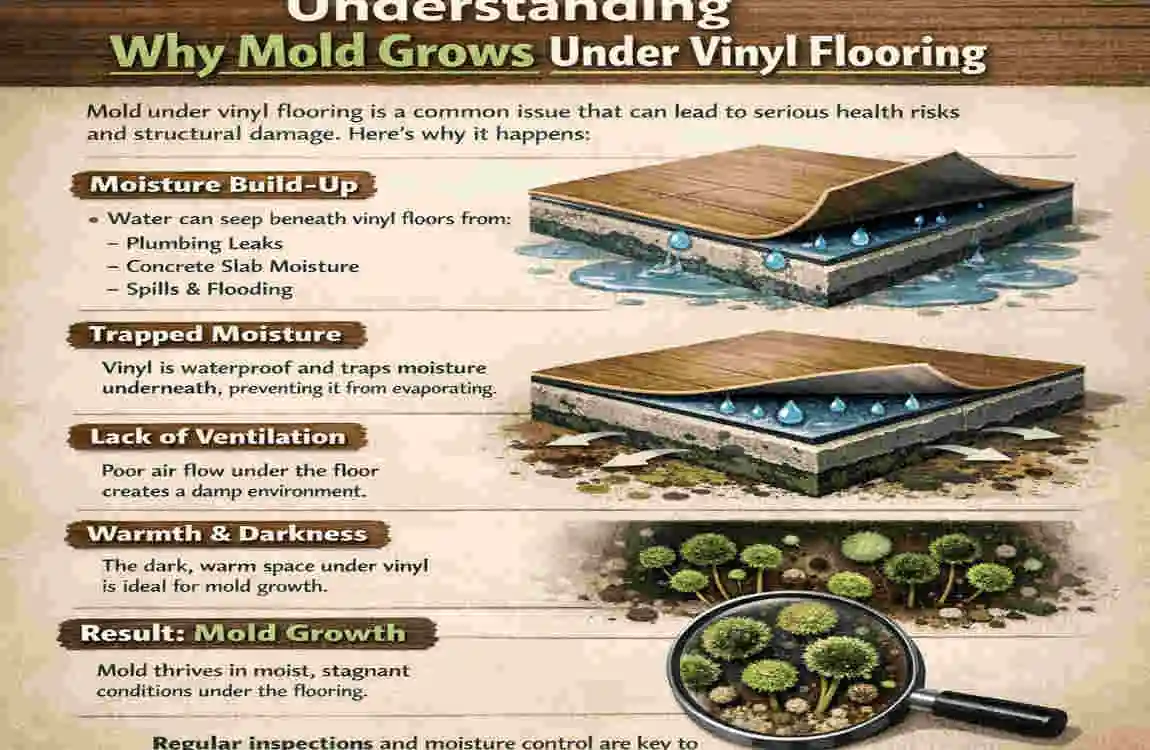
Common Causes of Moisture Under Vinyl
Mold does not grow by accident. It usually needs moisture, warmth, and time.
Here are the most common causes under vinyl flooring:
- Plumbing leaks
- Water damage from flooding
- Moisture trapped under the floor
- High indoor humidity
- Poor installation
- Condensation
- Moisture moving up through concrete
Even a small leak can become a bigger issue if it stays hidden. That is why quick action matters.
Signs of Mold Under Vinyl Flooring
You may not see the mold right away, but the floor often gives warning signs.
Look for:
Sign What It May Mean
Musty smell Hidden moisture or mold growth
Bubbling vinyl Water trapped underneath
Soft or spongy spots Damage to the subfloor
Dark stains Possible mold or water damage
Warped edges Flooring has absorbed moisture
Allergy symptoms Possible indoor mold exposure
If you notice more than one of these signs, inspect the area carefully.
Why Vinyl Flooring Can Hide Mold
Vinyl is strong and water-resistant on the surface, but that can also be a problem. It can trap moisture underneath, so the area stays damp longer.
That hidden moisture gives mold a place to grow without being noticed. This is why finding the source of the water is just as important as cleaning the mold itself.
How to Clean Mold Under Vinyl Flooring
Inspect the Area Carefully
Before cleaning, look closely at the affected space.
Check the floor, nearby walls, cabinets, and any plumbing fixtures. If the vinyl is loose or lifted, inspect underneath. Try to find where the moisture is coming from before you do anything else.
If the mold area is large or the smell is strong, avoid disturbing it too much. You do not want to spread spores around the room.
Remove the Affected Vinyl Flooring
In many cases, the flooring must be lifted to reach the moldy area.
The removal method depends on the type of vinyl:
- Peel-and-stick vinyl may come up in sections
- Sheet vinyl may need careful cutting and lifting
- Vinyl planks may unlock or be removed one by one
If the flooring is badly damaged, cleaning may not be enough. In that case, replacement is often the better choice.
Protect Yourself During Mold Cleanup
Mold cleanup should be done carefully.
Use:
- Gloves
- Eye protection
- A mask or respirator if needed
Also keep children and pets away from the work area. Open windows or use fans if the space allows it. The goal is to clean safely without spreading contamination.
Clean the Subfloor
Once the vinyl is removed, clean the surface underneath.
The exact method depends on the subfloor:
- Concrete may need scrubbing and drying
- Plywood may need deeper cleaning or replacement if it is heavily damaged
- Other materials may need special handling based on condition
Use a mold-cleaning product suitable for the surface and follow the label instructions. Do not mix cleaning chemicals.
If the subfloor is badly stained, soft, or crumbling, it may be too damaged to save.
Dry Everything Completely
This step is very important.
After cleaning, the area must dry completely before new flooring is installed. Use fans, open windows, or a dehumidifier if possible.
If you cover a damp surface too soon, the mold can return quickly.
What to Do With Mold-Damaged Vinyl Flooring
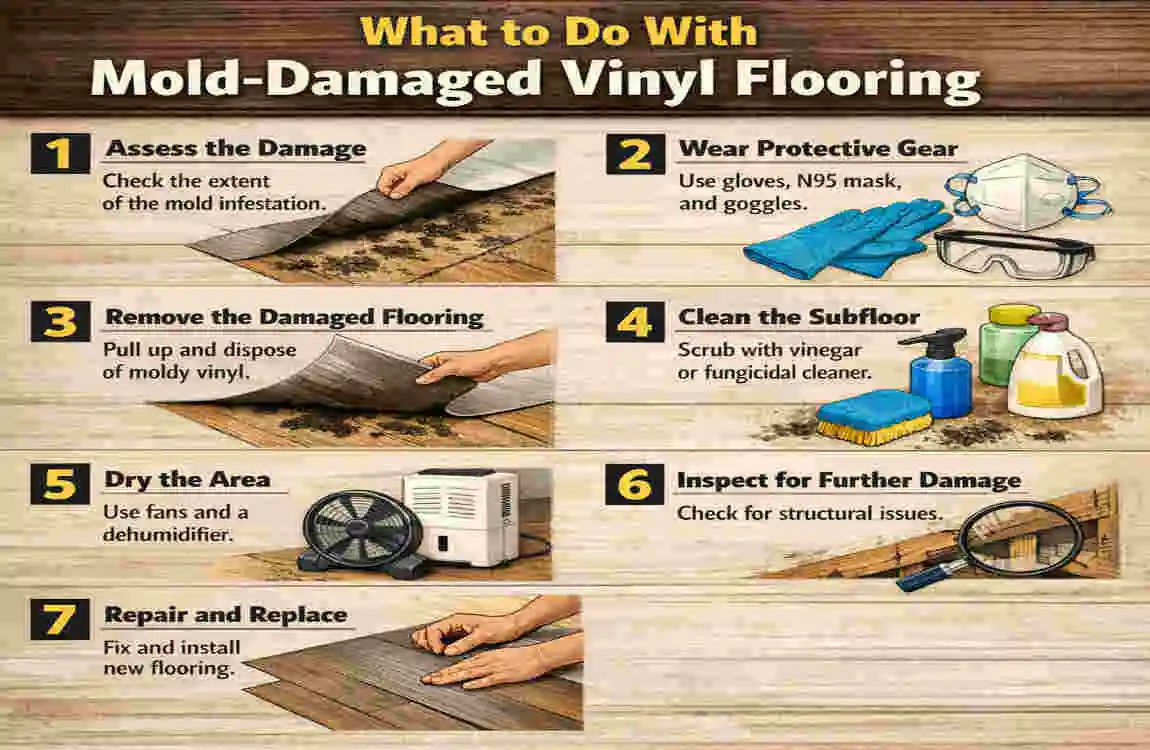
When Cleaning May Be Possible
Sometimes, light mold on a nonporous surface can be cleaned.
This is more likely when:
- The mold is small
- The flooring is still in good condition
- The backing has not been damaged
- The area can be fully cleaned and dried
Still, you should always check the manufacturer’s guidance before trying to save the flooring.
When Replacement Is Better
Replacement is usually the better option when:
- Mold covers a large area
- The flooring has warped or lifted
- The backing or adhesive is damaged
- Moisture has been trapped for a long time
- The mold is under several layers
- The material cannot be fully cleaned and dried
If you are unsure, replacing damaged flooring is often safer than trying to reuse it.
How to Dispose of Damaged Flooring
Carefully remove the damaged material and seal it before disposal, if needed. Do not drag contaminated pieces through clean parts of the house.
Afterward, clean the tools and the work area to prevent mold from spreading.
Preventing Mold From Returning Under Vinyl Flooring
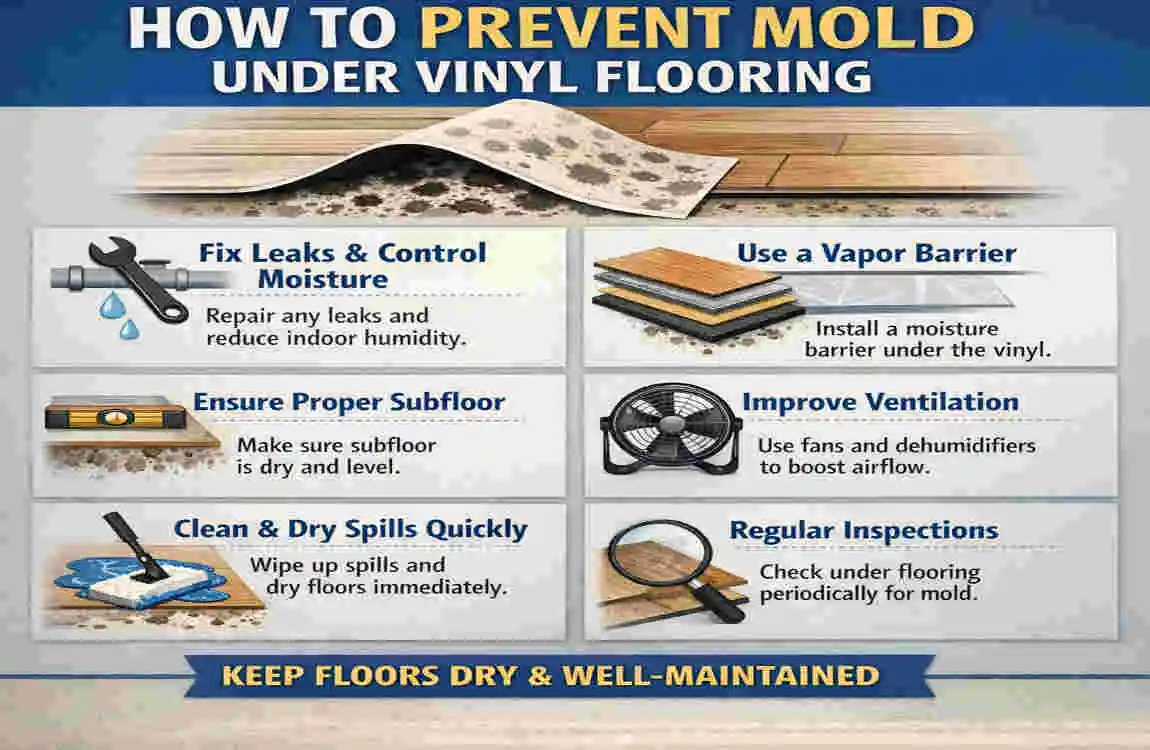
Fix the Moisture Source
This is the most important step.
If you do not fix the water problem, the mold problem will likely come back. Common fixes include:
- Repairing plumbing leaks
- Improving drainage around the home
- Fixing water damage quickly
- Ventilating bathrooms, laundry rooms, and kitchens better
- Controlling indoor humidity
Prepare the Subfloor Before Reinstallation
Before installing new flooring, make sure the area is:
- Clean
- Dry
- Level
- Free of moisture problems
If the subfloor is damaged, repair or replace it first. A solid base helps prevent future mold growth.
Maintain Vinyl Flooring
A few simple habits can help protect the floor:
- Wipe up spills quickly
- Do not let water sit on the surface
- Check moisture-prone rooms often
- Watch for loose seams or lifting edges
- Keep air moving in the room
These small steps can make a big difference over time.
FAQ About Mold Under Vinyl Flooring
Can mold grow under vinyl flooring?
Yes. Mold can grow under vinyl flooring when moisture gets trapped and stays there long enough.
How do you clean mold under vinyl flooring?
You need to identify the source of moisture, remove any affected flooring if needed, clean the subfloor, and dry everything thoroughly before replacing the vinyl.
Can you clean mold without removing vinyl flooring?
Sometimes light surface mold can be cleaned, but mold under vinyl usually requires access to the area below the floor.
Should moldy vinyl flooring be replaced?
Often yes, especially if the flooring is damaged, warped, or heavily contaminated.
Does bleach remove mold under vinyl flooring?
Bleach is not always the best choice. The right cleaner depends on the material and the amount of contamination.
How can I prevent mold from coming back?
Fix leaks, control humidity, dry spills quickly, and ensure the subfloor is completely dry before installing new flooring.
| Cleaning Step | What to Do | Important Tip |
|---|---|---|
| Find the Mold | Lift the vinyl carefully and inspect the subfloor. | Check for moisture or leaks. |
| Remove the Flooring | Remove affected vinyl if mold is underneath. | Wear gloves and a mask. |
| Clean the Area | Scrub hard surfaces with an appropriate mold cleaner. | Never mix cleaning chemicals. |
| Dry the Subfloor | Allow the subfloor to dry completely. | Use fans or a dehumidifier. |
| Fix Moisture Problems | Repair leaks, plumbing issues, or water damage. | Mold can return if moisture remains. |
| Replace Damaged Materials | Replace badly moldy or damaged subfloor sections. | Consider professional help for extensive damage. |
| Reinstall Flooring | Only reinstall vinyl after the area is clean and completely dry. | Ensure the flooring is properly sealed. |
