
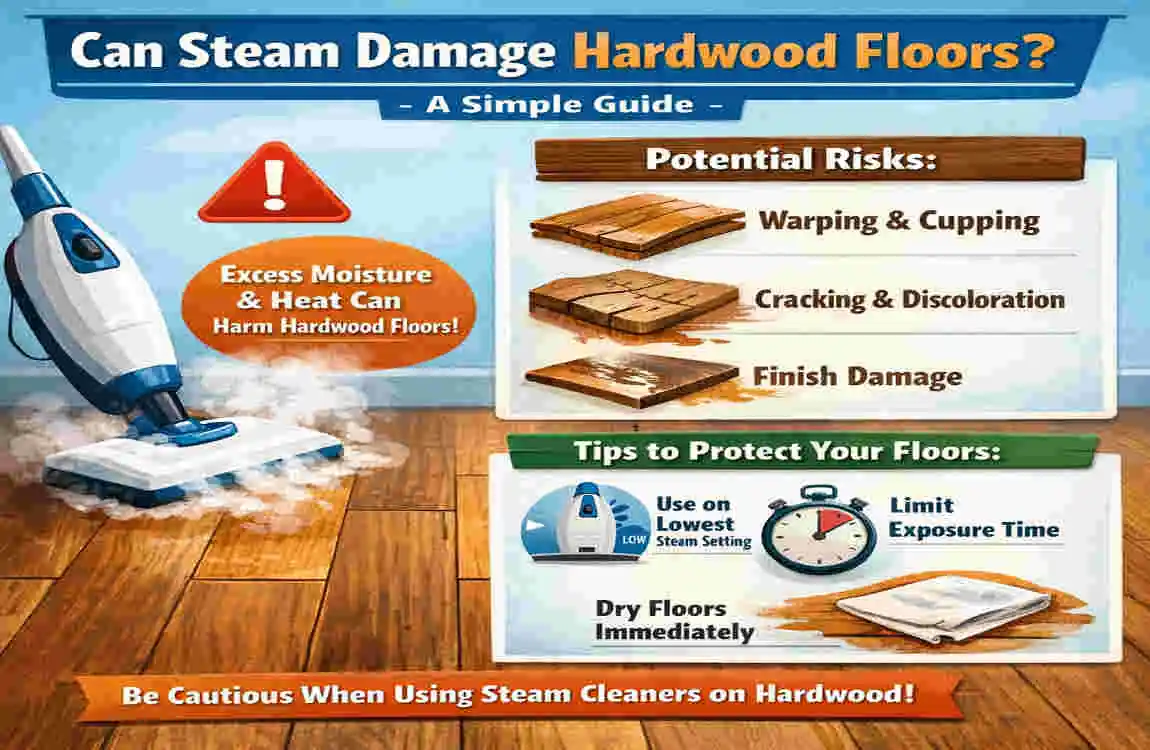
Steam mops are popular because they feel fast, easy, and powerful. But hardwood is different from tile or vinyl. Wood reacts to heat and moisture, so too much steam can cause trouble over time.
The exact risk depends on the type of hardwood, the finish, the age of the floor, and the manufacturer’s recommendations. Some floors may handle a little moisture better than others, but traditional hardwood usually does best with gentle cleaning methods.
Can Steam Actually Damage Hardwood Floors?
How steam affects wood
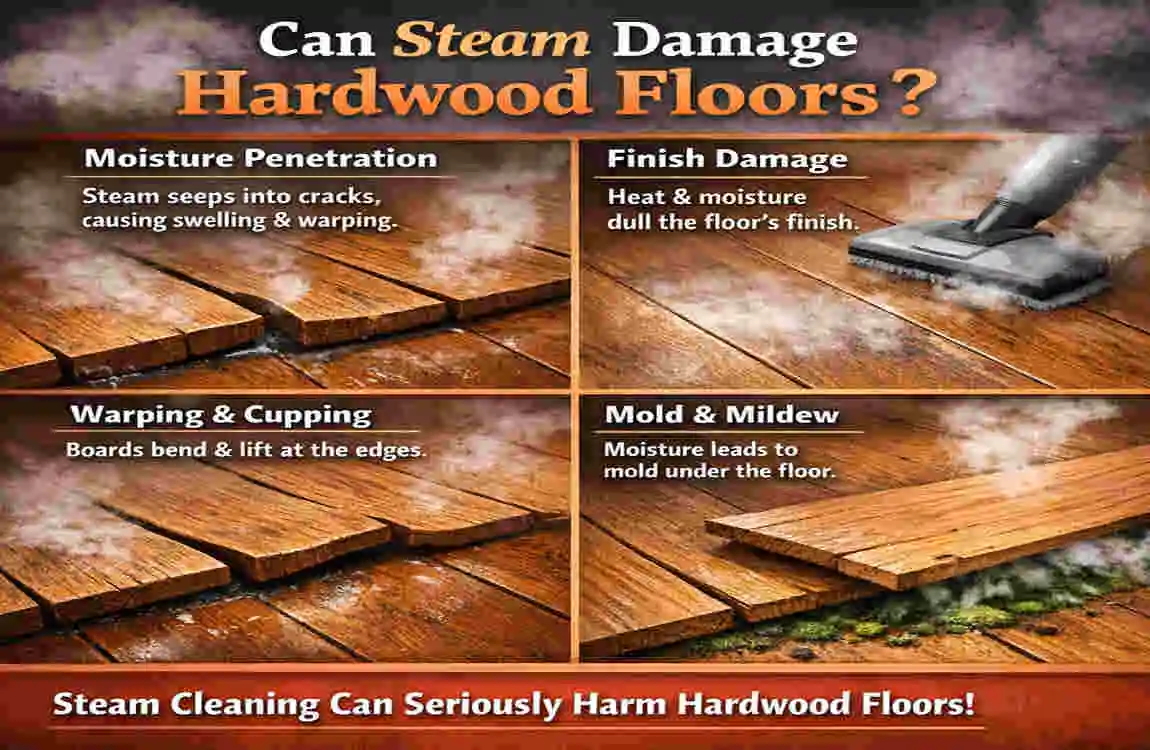
Steam is hot moisture. When that moisture touches hardwood, it can move into tiny seams, cracks, and weak spots in the finish.
Wood is a natural material so that it can absorb moisture. Once that happens, the boards may expand, shift, or change shape. Even if the surface looks dry again later, the wood underneath may still be affected.
Common types of steam damage
Here are some of the most common problems steam can cause on hardwood:
- Warping or cupping
- Swelling
- Cracking
- Discoloration
- Damaged finish
- Loose boards
- Moisture trapped below the flooring
These issues do not always happen right away. Sometimes the damage builds slowly after repeated steam cleaning.
Why the damage may not be immediate
That is one reason steam can be misleading. A floor may look fine after one cleaning, but repeated exposure can weaken the wood and finish over time.
This is why steam is often a bigger problem than it first appears. You may not notice the damage until the floor starts to change shape or the finish begins to fail.
Are Steam Mops Bad for Hardwood Floors?
The direct answer
Yes, steam mops can be bad for hardwood floors, especially for traditional solid wood floors.
Many flooring manufacturers warn against using steam because the combination of heat, pressure, and moisture can damage the surface and cause moisture to seep into the wood.
Why manufacturers often say no
Even if a floor looks sealed, that does not mean it is safe for steam. A finish can help protect the wood, but it is not always designed to withstand repeated exposure to hot steam.
That is why many companies recommend avoiding steam mops unless the product specifically says they are safe.
Solid hardwood vs engineered hardwood vs laminate
This difference matters a lot.
- Solid hardwood is usually the most sensitive.
- Engineered hardwood may handle moisture a little better, but not always.
- Laminate flooring is a different product and should not be treated the same way as wood.
So when people ask, “Can you use a steam mop on wood floors?” the safest answer is usually no, no, unless the manufacturer clearly approves it.
Why a “sealed” floor is not always steam-safe
Some people think a polyurethane finish means the floor is fully protected. That is not always true.
Steam can still find weak spots, especially along seams, edges, scratches, and worn areas. Over time, that moisture can still reach the wood.
Best rule to follow
If you want to know whether steam cleaners are safe for hardwood floors, the best rule is simple: check the flooring instructions first.
If the maker does not clearly approve steam, it is smarter to avoid it.
Signs That Steam Has Damaged Your Hardwood Floor
Visible changes
Steam damage often shows up in the way the floor looks.
Watch for:
- Raised boards
- Uneven surfaces
- Dark or cloudy spots
- Peeling finish
- Discoloration
- Cracks between boards
These signs can indicate moisture issues.
Structural warning signs
Sometimes the floor changes shape more severely.
You may notice:
- Cupping
- Crowning
- Buckling
- Swelling
- Squeaking or movement
If the boards feel different underfoot, it is a sign that moisture may be affecting the flooring.
When to stop using a steam mop
If you see damage, stop using the steam mop right away.
Continuing to steam a weak floor can make the problem worse. Instead, look for the source of the moisture and consider whether the floor needs repair or a professional inspection.
Why early signs matter
The sooner you notice the issue, the easier it may be to limit further damage. Small changes can become expensive repairs if you keep exposing the floor to steam.
What Makes Hardwood Floors More Vulnerable to Steam?
Floor finish and condition
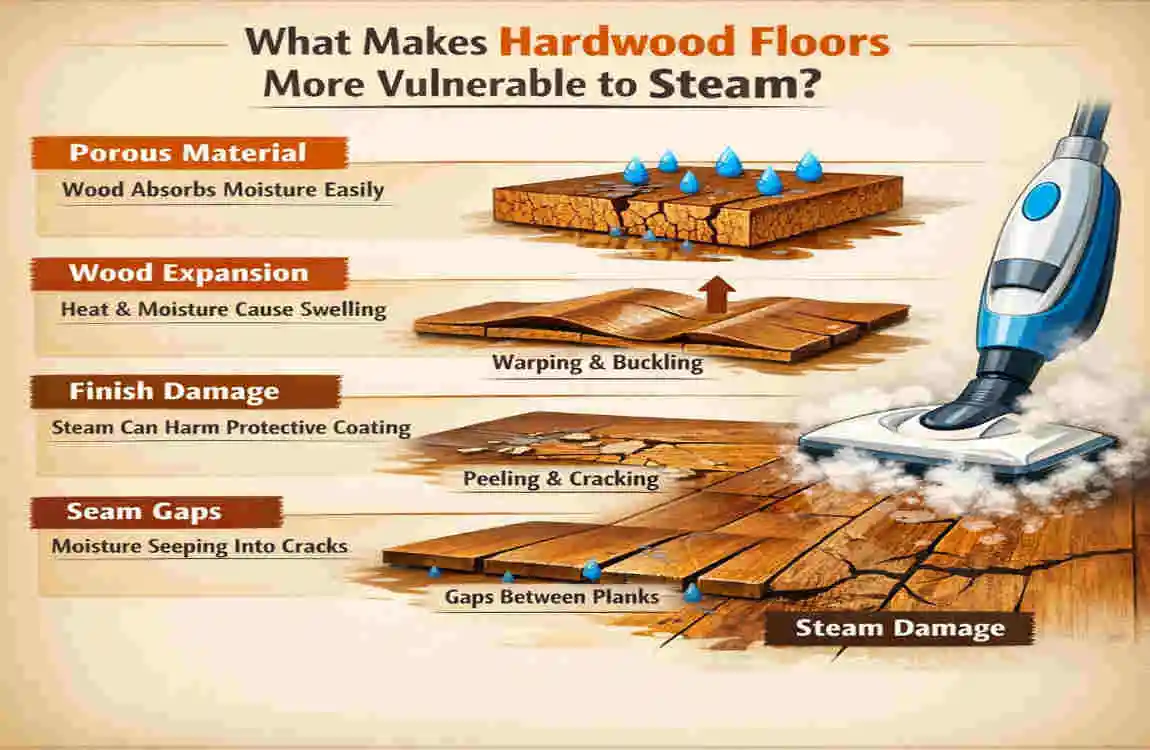
A strong finish helps protect wood, but older or worn finishes are more vulnerable.
If the floor has:
- Scratches
- Thin or worn coating
- Exposed wood
- Cracks between boards
then steam can reach the wood more easily.
Age and installation
Older hardwood floors often have more gaps, movement, or wear. That makes them more likely to react badly to moisture.
Poor installation can also make things worse. If the floor was not installed tightly or evenly, steam can enter weak spots more quickly.
Amount of steam and cleaning frequency
One quick pass is not the same as repeated steam cleaning. Frequent use means repeated exposure to moisture, which can wear on the floor over time.
Holding a steam mop in one spot for too long is especially risky. Even a short pause can create too much heat and moisture in a small area.
Environmental conditions
The room itself can also affect how steam impacts the floor.
Problems get worse when there is:
- High humidity
- Poor ventilation
- Existing leaks
- Moisture near the subfloor
If the room already has moisture issues, steam cleaning is a bad idea.
Safer Ways to Clean Hardwood Floors
Hardwood likes low moisture.
Hardwood usually does best with dry cleaning first, and only minimal moisture when needed.
That means you should start by removing dust, hair, and grit before using any damp cleaner.
A simple hardwood cleaning routine
A safe routine usually looks like this:
- Remove loose dust and dirt
- Vacuum carefully with a floor-safe attachment
- Use a hardwood-floor cleaner if needed
- Mop with only a slightly damp microfiber mop
- Let the surface dry naturally
- Check seams and edges for extra moisture
This method is much gentler than steam.
Why microfiber works well
A microfiber mop can pick up dirt without soaking the floor. That makes it a much better choice for regular hardwood cleaning.
It removes dust and grime while keeping moisture under control.
Use the right cleaner.
Choose a cleaner designed for hardwood floors and recommended for your finish type. Not every cleaner works for every floor, so check the label first.
Clean spills right away
Spills should never sit on hardwood for long. Wipe them up quickly so moisture does not soak into the wood.
That simple habit helps protect the finish and the boards below it.
Steam Mop Alternatives: What Should You Use Instead?
Microfiber mop
For everyday cleaning, a microfiber mop is one of the best choices. It is gentle, effective, and easy to use.
It helps you clean without flooding the floor.
Hardwood floor cleaner
A purpose-made hardwood cleaner can help remove dirt and grime without harming the finish.
Use only products that match your floor type. A cleaner that works on one finish may not work well on another.
Vacuum and dry cleaning
Regular dry cleaning is one of the easiest ways to keep hardwood looking good. Vacuuming or dusting removes grit before it can scratch the floor.
This is especially helpful in homes with kids, pets, or heavy foot traffic.
Professional hardwood care
Sometimes a floor needs more than routine cleaning.
You may want professional help if:
- The finish is badly worn
- The floor has stains that will not come out
- The boards are warped or buckled
- Moisture damage has already started
Professional care can help you decide whether the floor needs repair, refinishing, or replacement.
How to Protect Hardwood Floors From Moisture Damage
Keep water away from the floor.
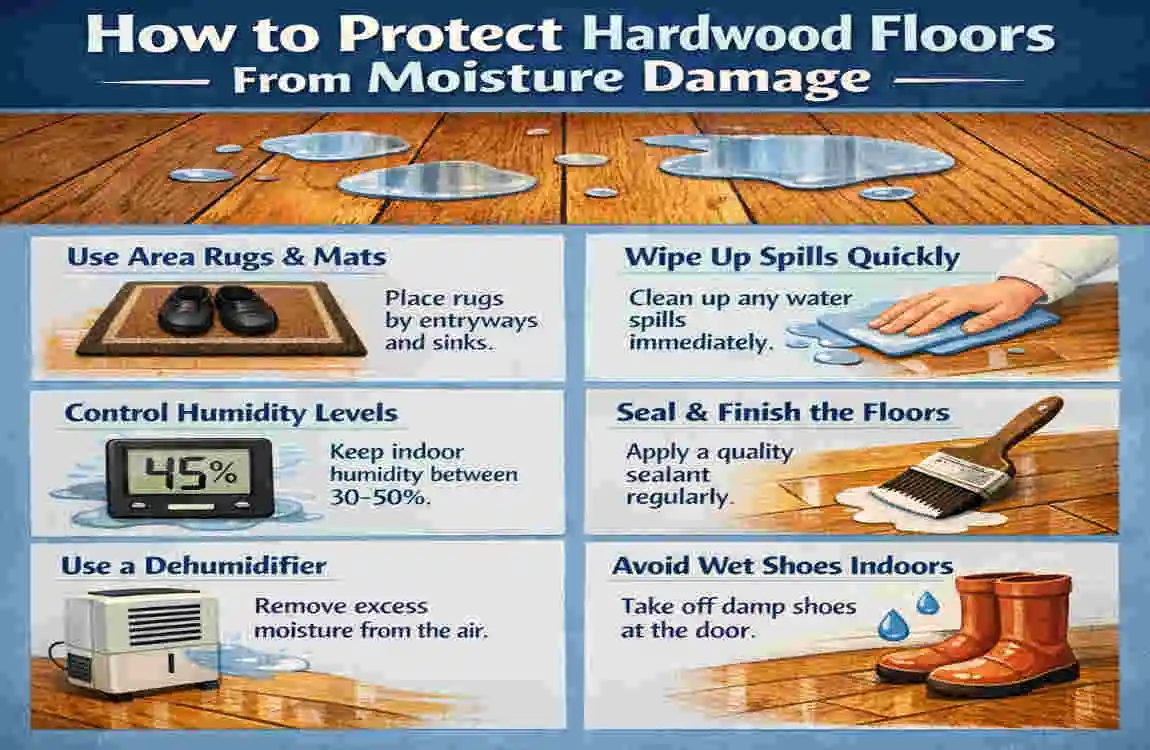
The easiest way to protect hardwood is to avoid unnecessary moisture.
That means no soaking mops, no standing water, and no steam unless the manufacturer specifically allows it.
Use mats in the right places.
Place mats near entry doors, sinks, and other moisture-prone spots. This helps keep water, dirt, and grit off the floor.
Control indoor humidity
Humidity can slowly affect hardwood. Try to keep indoor air at a balanced level, especially during humid seasons.
If the room feels damp, the floor may be at higher risk.
Inspect the floor regularly.
Look for:
- Gaps
- Stains
- Swelling
- Loose boards
- Worn finish
Catching problems early makes them easier to handle.
Use furniture pads
Furniture can scratch the finish and expose the wood underneath. Pads under chair and table legs can help protect the floor.
Follow the manufacturer’s instructions.
This is one of the most important steps. Every hardwood floor is a little different, and the maker’s care guide should always come first.
FAQ: Are Steam Mops Bad for Hardwood Floors?
Can you use a steam mop on real hardwood floors?
Usually, it is best not to. Traditional hardwood is sensitive to heat and moisture, and manufacturer instructions should always come first.
Will steam mop damage hardwood floors?
It can. Steam may cause swelling, warping, discolouration, finish damage, and board movement over time.
Are steam mops bad for engineered hardwood?
They can be. Engineered hardwood varies a lot, so you should check the manufacturer’s recommendations before using steam.
How often should you clean hardwood floors?
Dry cleaning can happen often, while damp cleaning should be done less frequently and with minimal moisture.
What is the safest way to clean hardwood floors?
A good routine is to dust, vacuum, and use a lightly damp microfiber mop with an approved hardwood cleaner.
Can steam remove stains from hardwood floors?
It may seem like a quick fix, but steam can create more moisture problems than it solves.
How do you repair hardwood floors damaged by steam?
Small surface problems may need cleaning or refinishing, but serious warping or buckling may require professional evaluation.
Is a damp mop better than a steam mop for hardwood?
Yes. Controlled, low moisture is generally much safer than hot steam.
Can you use a steam mop on polyurethane-finished hardwood?
Not automatically. The finish alone does not guarantee steam safety, so always check the flooring guidance first.
| Question | Short Answer |
|---|---|
| Can steam damage hardwood floors? | Yes. Excess heat and moisture can damage wood. |
| What can happen? | Boards may warp, swell, discolor, or develop cracks. |
| Are steam mops safe? | Generally not recommended for traditional hardwood floors. |
| What about sealed floors? | Sealing offers some protection, but steam can still penetrate seams or damaged areas. |
| Safer cleaning method | Use a slightly damp microfiber mop and a hardwood-floor cleaner recommended by the flooring manufacturer. |
| If water spills | Wipe it up immediately to reduce the risk of moisture damage. |
| Best prevention tip | Avoid excessive water, steam, and harsh cleaning products. |
