
Have you ever found yourself standing in the middle of a home improvement store, staring at a massive wall of bathroom fixtures, and wondering, ” Are mobile home toilets different from the ones sitting in traditional houses? If you are asking this question right now, you are certainly not alone.
Before we dive into the details, let us clarify exactly what we mean by a “mobile home.” In the housing industry, we refer to structures built after the sweeping 1976 HUD (Department of Housing and Urban Development) standards as “manufactured homes.” These modern structures follow strict safety and building codes.
To answer your main question: Yes, mobile home toilets differ from standard house toilets. You will find distinct variations in physical size, flush power, and the complex plumbing that connects them to the floor. However, thanks to incredible modern upgrades and universal designs, the line between a “mobile” fixture and a “traditional” fixture is blurring fast.
History of Mobile Home Plumbing
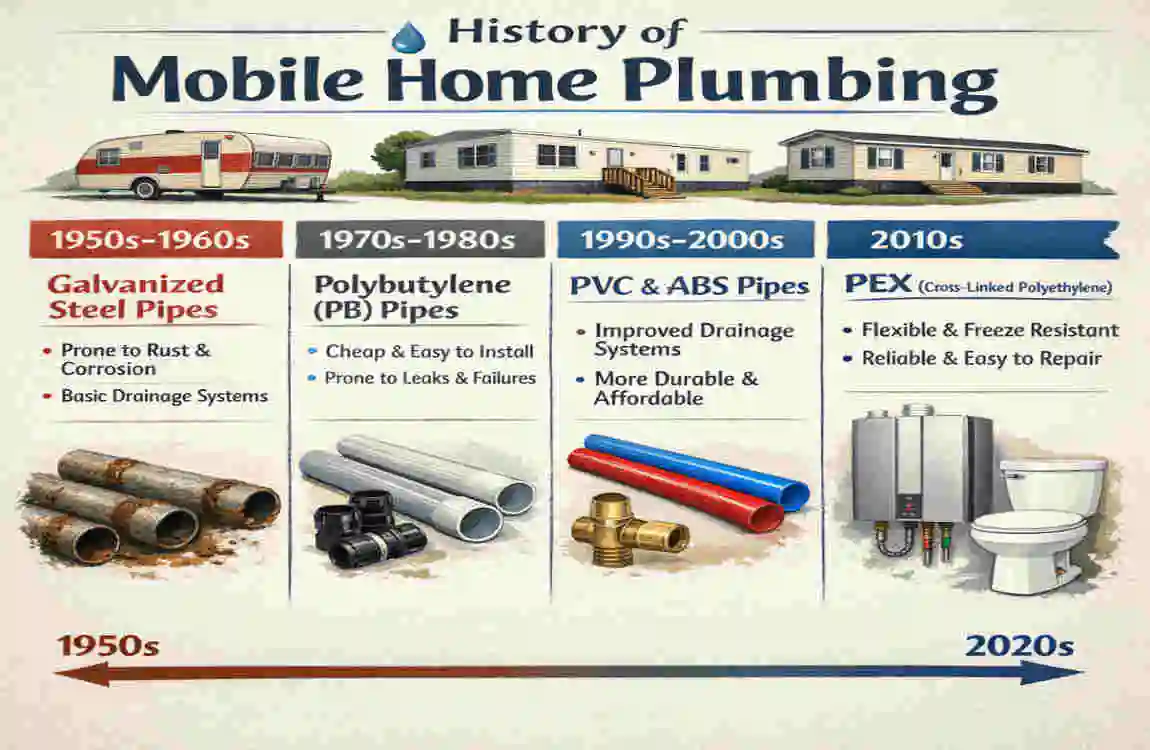
To truly understand why your manufactured home features specific plumbing parts, we need to take a quick trip back in time. Knowing the history of mobile home construction gives you a significant advantage when it’s time to repair or replace your bathroom fixtures.
The Wild West of Pre-1976 Plumbing
If you own a vintage mobile home built before 1976, you already know that renovations can turn into wild adventures. Before the government stepped in to regulate the industry, builders basically did whatever they wanted. They constructed homes using incredibly lightweight materials to keep highway transport costs to a minimum.
Because of this intense focus on weight reduction, builders installed extremely narrow drain pipes. Many older mobile homes feature tiny 2-inch drain lines and strange, non-standard floor flanges (the ring that connects the toilet to the floor). Traditional house toilets could not connect to these tiny, unstandardized pipes without causing massive backups.
The 1976 HUD Code Revolution
Everything changed in 1976. The United States government introduced the HUD Code, which standardized the construction of manufactured homes. This code forced builders to prioritize safety, durability, and standardized plumbing.
Starting in 1976, builders began outfitting manufactured homes with standard 3-inch drain pipes, exactly like the ones you find in traditional site-built houses. This massive upgrade meant that homeowners could finally start mixing and matching standard plumbing fixtures with their manufactured homes.
Why Differences Still Exist Today
You might ask yourself, if the pipes are the same size now, why do we still have distinct “mobile home toilets”? The answer comes down to two things: tight space constraints and structural movement.
Manufactured homes must travel down the highway on a chassis before they reach your plot of land. Even after you secure the home on its foundation, the structure naturally flexes and shifts slightly as temperatures change and the ground settles. Builders still design specific mobile home plumbing fixtures to handle this natural flexing without cracking.
Furthermore, with over 22 million manufactured homes currently occupied across the United States today, builders still need to maximize every square inch of space. Mobile home bathrooms are typically smaller than traditional house bathrooms, requiring highly compact, space-saving toilet designs.
Design and Size Differences
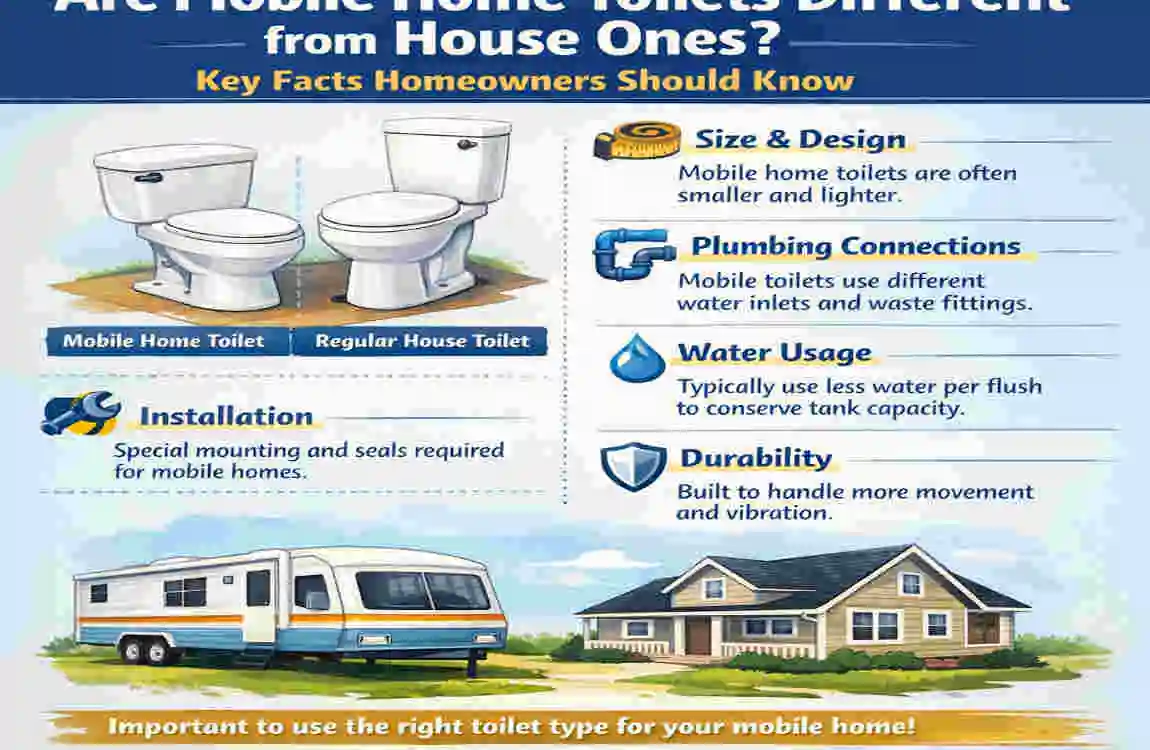
When you place a mobile home toilet right next to a traditional house toilet, you will immediately notice a few striking physical differences. Let us break down exactly what you are looking at.
The Core Comparison
To help you visualize the differences, take a look at this simple comparison table highlighting the standard features you will encounter.
Feature Mobile Home ToiletStandard House Toilet
Height 15 to 16 inches (Compact profile) 17+ inches (ADA standard comfort height)
Bowl Shape: Mostly round fronts. Elongated fronts are highly common
Tank Size Smaller profile (1.28 to 1.6 GPF) , Larger tanks with high-capacity options
Footprint Narrow base to fit tight spaces Wider, heavier porcelain base
Height and Comfort Levels
One of the most noticeable differences you will feel is the seat height. Manufacturers specifically design mobile home toilets to be slightly lower to the ground. You will typically find them measuring between 15 and 16 inches from the floor to the rim. Builders do this to make the fixture fit better under low bathroom windows or sloping walls.
Standard house toilets, especially in modern 2026 renovations, heavily favor “comfort height” designs. These fixtures are about 17 to 19 inches tall, making them compliant with the Americans with Disabilities Act (ADA). The taller height makes sitting down and standing back up much easier on your knees and back.
Bowl Shapes and Space Constraints
Have you ever bumped your knees against your vanity cabinet while sitting down? In a manufactured home, every single inch matters. Because mobile home bathrooms feature tight floor plans, builders almost exclusively use round-front toilet bowls. A round bowl shaves a couple of crucial inches off the front of the fixture, giving you just enough room to open your bathroom door or walk past the sink.
Traditional houses generally offer much more square footage. Therefore, homeowners usually prefer elongated bowls. An elongated bowl extends further out, offering adults a much more comfortable seating experience.
Tank Sizes and Water Usage
Finally, let us talk about the tank sitting against the wall. Mobile home toilet tanks are noticeably smaller and narrower. A smaller tank reduces the overall physical weight pressing down on your home’s flooring. While a lighter tank is great for your floor joists, it does mean the toilet relies on a slightly different flushing dynamic to clear the bowl, which we will explore next!
Flushing Mechanisms Compared
You press the handle, the water swirls, and everything disappears. It seems simple enough! However, the hidden mechanics inside the tank reveal exactly why mobile home toilets are different from standard ones. Let us explore how these fixtures actually move water.
Gravity Flush Systems
Both manufactured homes and traditional houses rely heavily on gravity flush systems. When you push the handle down, you lift a rubber flapper inside the tank. Gravity immediately pulls the stored water down into the bowl, creating a natural siphon that pulls the waste down the drain.
However, mobile home gravity systems are highly optimized for low water use. Because manufactured home pipes sometimes feature a slightly shallower slope underneath the floorboards, the toilet must push water out with sudden, concentrated force rather than relying on a massive volume of water to do the job.
Pressure-Assisted Systems
If you walk into a standard site-built house, you might hear a toilet that flushes with a loud, aggressive “whoosh.” That sound comes from a pressure-assisted flushing system. These tanks hold a sealed inner chamber that traps air. As water fills the tank, it compresses the air. When you flush, that compressed air blasts the water into the bowl like a power washer.
You will rarely find a pressure-assisted system pre-installed in a mobile home. Why? First, they are quite expensive. Second, the violent, high-pressure blast of water puts too much strain on the lightweight plastic piping used in many manufactured homes, leading to blown joints and messy leaks.
Composting and Portable Hybrids
In 2026, the tiny house and off-grid living movements continue to influence manufactured housing heavily. Because of this, many modern mobile homeowners are ditching traditional flushing entirely.
You will frequently see composting toilets or RV-style hybrid toilets making their way into stationary manufactured homes. These systems use absolutely no water. Instead, they separate liquids from solids and use organic materials (such as peat moss or coconut coir) to break down waste naturally. You will rarely ever see these systems inside a traditional suburban house in a standard neighborhood.
WaterSense Certification and Efficiency
Water conservation is a massive priority today. No matter which type of home you live in, modern toilets must meet strict environmental standards. Look for the EPA WaterSense label when you shop. This label guarantees that the toilet uses 1.28 gallons per flush (GPF) or less. Mobile home toilets actually excel in this category, as their smaller tanks naturally restrict excessive water waste!
Plumbing and Installation Variations
Now we reach the most critical part of the conversation. The absolute biggest differences between these two systems lie hidden right beneath the floorboards. If you plan to tackle a bathroom DIY project, you must understand these plumbing and installation variations.
Navigating the Pipes and Fittings
Traditional site-built houses usually feature thick, rigid PVC (Polyvinyl Chloride) or heavy cast iron drain pipes. Plumbers glue these heavy-duty pipes together permanently.
Manufactured homes require materials that can flex, bend, and withstand vibrations from heavy winds or transportation. Because of this, builders typically use ABS (Acrylonitrile Butadiene Styrene) for the drain lines. ABS is a tough, black plastic tubing that handles movement beautifully. For the smaller water supply lines coming into the tank, mobile homes almost exclusively use PEX (cross-linked polyethylene) tubing, which expands and contracts without bursting during winter freezes.
A Step-by-Step Guide to Installation Differences
When you decide to install a new toilet, you will quickly notice how the process diverges. Let us look at the specific variations:
- Examine the Flange: The flange is the circular bracket bolted to your floor that connects the toilet to the drain pipe. In a traditional house, the flange usually features curved sliding slots for the mounting bolts. In a mobile home, you will often find a specialized flange featuring threaded hubs or unique hold-down brackets designed to keep the toilet from wiggling when the home shifts.
- Check the Floor Support: Traditional houses have thick plywood subfloors and heavy joists. Mobile homes often use lighter particle board or OSB (Oriented Strand Board) for the subfloor. When you install a heavy traditional toilet into a mobile home, you often need to reinforce the floor first to prevent the heavy porcelain from cracking the subfloor.
- Retrofitting House Toilets: Can you install a standard house toilet in your manufactured home? Yes, absolutely! If your home was built after 1976, it features the standard 3-inch drain. However, you will likely need to buy a specialty adapter kit to connect the standard porcelain base securely to your mobile-specific floor flange.
The Dreaded Wax Ring Issue
Here is a secret that saves homeowners massive headaches. Traditional house toilets use a thick ring of sticky beeswax to create a waterproof seal between the toilet base and the floor drain.
Do not use a traditional wax ring in a mobile home! Because manufactured homes naturally vibrate and flex during strong storms, a stiff wax ring will eventually crack and break, causing raw sewage to leak into your subfloor. Instead, always purchase a modern, flexible rubber or foam gasket seal. These foam seals bounce back and maintain their watertight grip even when the house shifts.
Installation Costs
If you hire a professional plumber, expect the costs to vary. Installing a direct-replacement mobile home toilet is usually a quick job, costing around $200 for labor. However, if you hire a plumber to retrofit a heavy, standard house toilet into your manufactured home—which requires modifying the flange and reinforcing the floor—you should expect to pay closer to $500 for the labor alone.
Maintenance and Durability Factors
Once you install your brand new toilet, you need to keep it running smoothly. Maintaining a bathroom in a manufactured home requires a slightly different approach than maintaining one in a traditional brick-and-mortar house.
Dealing with Home Movement
As we mentioned earlier, traditional houses sit on deep concrete foundations. They do not move unless an earthquake strikes! Therefore, traditional house toilets feature heavy, rigid designs built for absolute stability.
Manufactured homes sit on metal chassis and rest on piers or cinderblocks. They naturally sway slightly in high winds and settle into the dirt over time. This continuous micro-movement puts constant stress on your plumbing joints.
The Risk of Cracking
Because of this constant flexing, standard house toilets made of heavy, thick porcelain pose a slight risk when installed in a mobile home. If the floor shifts unevenly, the rigid porcelain base can actually crack right down the middle. Mobile-specific toilets often use lighter-grade porcelain or even highly durable, heavy-duty plastic composites for the base to absorb floor vibrations safely.
Upgrading Your Seals
If you notice a foul smell in your bathroom, your seal has likely failed. As a mobile homeowner, you must proactively check the bolts at the base of your toilet every six months. Hand-tighten them gently to ensure the fixture remains snug against the floor. Remember, always use RV-safe rubber seals rather than wax, as they provide the elasticity needed to withstand seasonal temperature changes.
Everyday Cleaning and Venting
Cleaning the bowls remains the same for both homes—grab your favorite brush and a good bowl cleaner! However, mobile homes feature a unique venting system you need to monitor.
Traditional houses feature tall PVC pipes that vent sewer gases directly out through the roof. Many mobile homes use an “anti-siphon valve” (also known as an air admittance valve) located right under the bathroom sink. This valve lets air into the pipes so your toilet flushes smoothly, but blocks sewer gas from entering the room. If your mobile home toilet suddenly starts bubbling or flushing very slowly, your anti-siphon valve likely needs a quick, cheap replacement!
Cost Breakdown: Buying and Replacing
Budgeting for home repairs is crucial. When you start shopping in 2026, you will find a wide variety of price points. Understanding exactly what you are paying for helps you make the smartest financial decision for your property.
Understanding the Price Tags
Let us look at a quick cost breakdown to help you plan your upcoming bathroom project.
Toilet Type Average Price Range Best Suited For
Mobile-Specific $150 to $300 Older units and strict budgets
Standard House $200 to $600 Post-1976 modern upgrades
High-End (Smart) $400 to $1,200+ Luxury modern manufactured homes
Mobile-Specific Replacements
If you own an older manufactured home and you want a simple, direct replacement without any plumbing headaches, buy a mobile-specific toilet. These models usually cost between $150 and $300. They come with the exact flange adapters you need out of the box. They are lightweight, highly functional, and very easy to install yourself on a Saturday afternoon.
Standard House Upgrades
If you want the comfort of a tall, elongated seat, you will need to buy a standard toilet for a house. These units range from $200 to $600, depending on the brand and porcelain finish. While the toilet itself is reasonably priced, you might need to spend an extra $50 on specialty floor adapters and reinforced foam seals to make it work in your manufactured home.
High-End Smart Toilets
Welcome to the future of bathroom technology! In 2026, smart toilets featuring heated seats, built-in bidets, automatic flushing sensors, and self-cleaning UV lights are incredibly popular. You can absolutely install a high-end smart toilet in a modern manufactured home. Just ensure you have a dedicated electrical outlet installed near the base of the toilet to power all those fancy gadgets! Expect to pay over $400 for entry-level smart models.
Where to Shop
You will rarely find a large selection of mobile-specific toilets at your local big-box home improvement store. To find the exact fit for your manufactured home, you should search online for dedicated mobile home supply retailers or visit an RV and camper supply store. If you decide to go with a standard house toilet, you can easily pick one up from any local hardware store today.
Top Recommendations
Are you ready to pull the trigger and buy a new fixture? Navigating the thousands of options on the market feels overwhelming. To make your life easier, we have compiled a list of the best choices available to homeowners this year.
The Best Options on the Market Today
- The Universal Fit Winner: Toto Entrada. Toto remains a powerhouse in the plumbing world. The Entrada model offers a powerful gravity flush while utilizing a highly compact footprint. It fits beautifully into smaller mobile home bathrooms while providing the heavy-duty reliability of a standard house toilet.
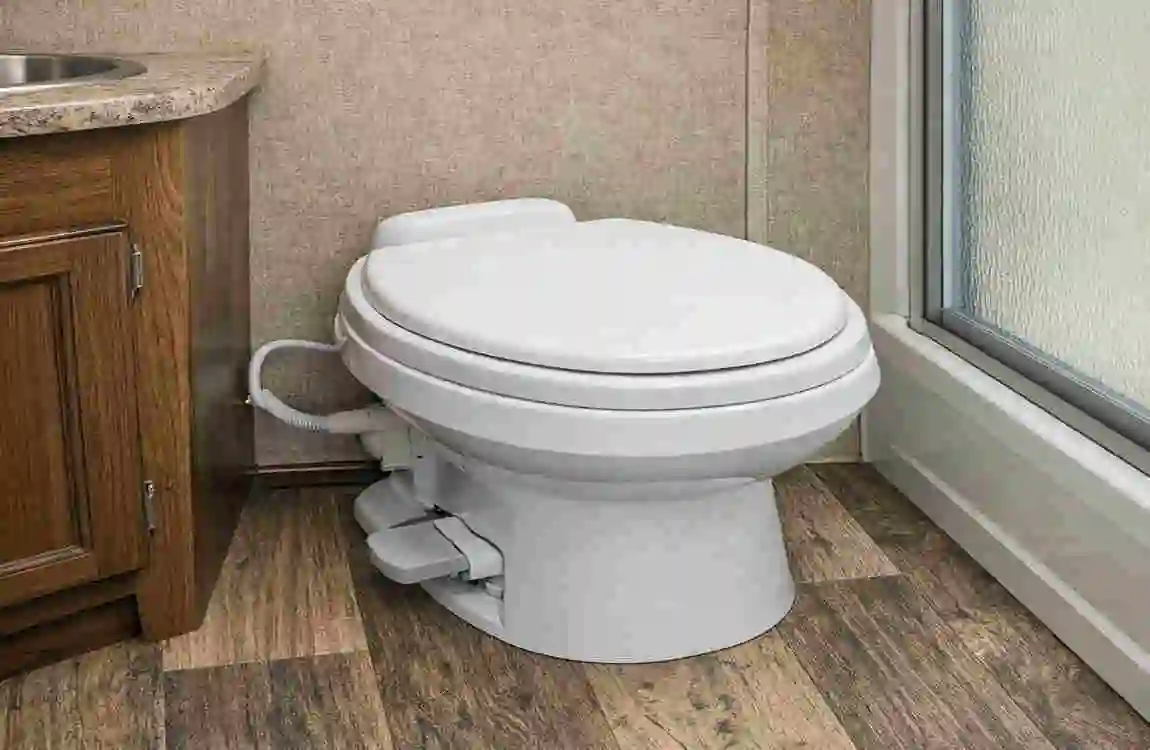
- The Mobile-Specific Champion: Dometic 300 Series. If you want a lightweight, absolute breeze of an installation, look to Dometic. While well-known in the RV space, their residential-style, gravity-flush plastic toilets are perfect for older mobile homes that cannot support heavy porcelain toilets.
- The Eco-Friendly Option: Glacier Bay Dual Flush. Want to save money on your monthly water bill? This highly affordable option lets you choose between a half-flush for liquids and a full-flush for solids, delivering incredible WaterSense efficiency to your manufactured home.
- The Space Saver: Kohler San Souci. If your bathroom is incredibly tight, this one-piece, round-front toilet is a dream come true. Because the tank and bowl are fused into a single piece of porcelain, it saves crucial inches against the wall and eliminates the risk of leaks between the tank and bowl.
- The Luxury Upgrade: BioBidet Smart Toilet. Bring the spa experience to your mobile home. This model features a sleek, tankless design and a built-in bidet, proving that manufactured housing can feel just as luxurious as a penthouse suite!
The Ultimate Buyer’s Guide: Measuring Your Rough-In
Before you buy any of the models listed above, you must measure your “rough-in.” Grab a tape measure and measure the distance from the bare wall behind your current toilet straight out to the center of the bolts holding the toilet to the floor.
Do not measure from the baseboard; measure from the actual drywall. In almost all modern manufactured homes and traditional houses, this measurement will be exactly 12 inches. If your rough-in is 10 or 14 inches, you must buy a toilet designed for those exact, unusual dimensions; otherwise, the tank will not fit against the wall!
FAQ: Answering Common Questions
We know plumbing can feel like a complex puzzle. Let us quickly address some of the most frequently asked questions homeowners have regarding their bathrooms.
Are mobile home toilets different in flush power?
Generally, yes. Because mobile home toilets often feature smaller tanks and must push waste through slightly shallower drain slopes, they utilize a fast, aggressive gravity drop. Traditional house toilets hold more water, allowing for a longer, more sustained flushing action. However, modern high-efficiency designs make both types perform incredibly well today.
Can I use a regular house toilet in a mobile home?
Yes, you absolutely can! If your manufactured home was built after the 1976 HUD Code, you have standard 3-inch drain pipes. You will need to ensure your subfloor is strong enough to support the heavy porcelain, and you must use a flexible rubber gasket seal rather than a traditional beeswax ring.
What is the best mobile home toilet replacement?
The “best” replacement depends entirely on your floor plan and budget. For direct, easy replacements, brands like Dometic offer great lightweight options. For an upgrade, a compact one-piece toilet from Kohler or Toto gives you the durability of a house toilet while still fitting perfectly into your tight floor plan.
Do mobile home toilets use less water?
They often do! Because they feature smaller tanks designed for tight spaces, many mobile home fixtures naturally use closer to 1.28 gallons per flush. Standard house toilets from older decades could use up to a massive 3 to 5 gallons per flush, though all newly manufactured toilets today must meet strict low-flow efficiency standards.
How to tell if my toilet is mobile-specific?
Take a close look at the base. Does it have four bolts holding it to the floor instead of the standard two? Does the base feel like heavy-duty plastic rather than cold porcelain? Is the brand name associated with RVs or campers (like Dometic or Thetford)? If you answer yes to these questions, you likely have a mobile-specific fixture.
