
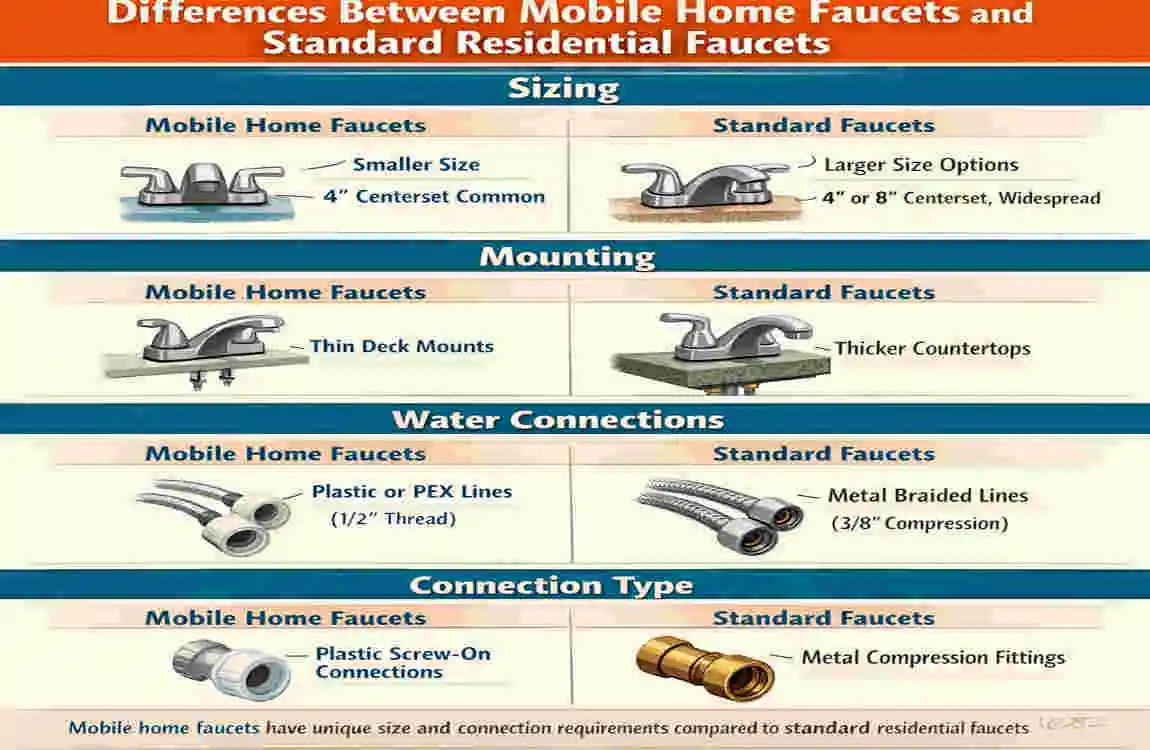
In many mobile and manufactured homes, faucets may have different mounting styles, hole spacing, and plumbing connections than those used in traditional houses. That is why a direct replacement can sometimes feel confusing.
At the same time, not every mobile home faucet is special or unique. In many cases, a standard faucet can still work if the measurements and connections match. So the real issue is usually compatibility, not the label on the box.
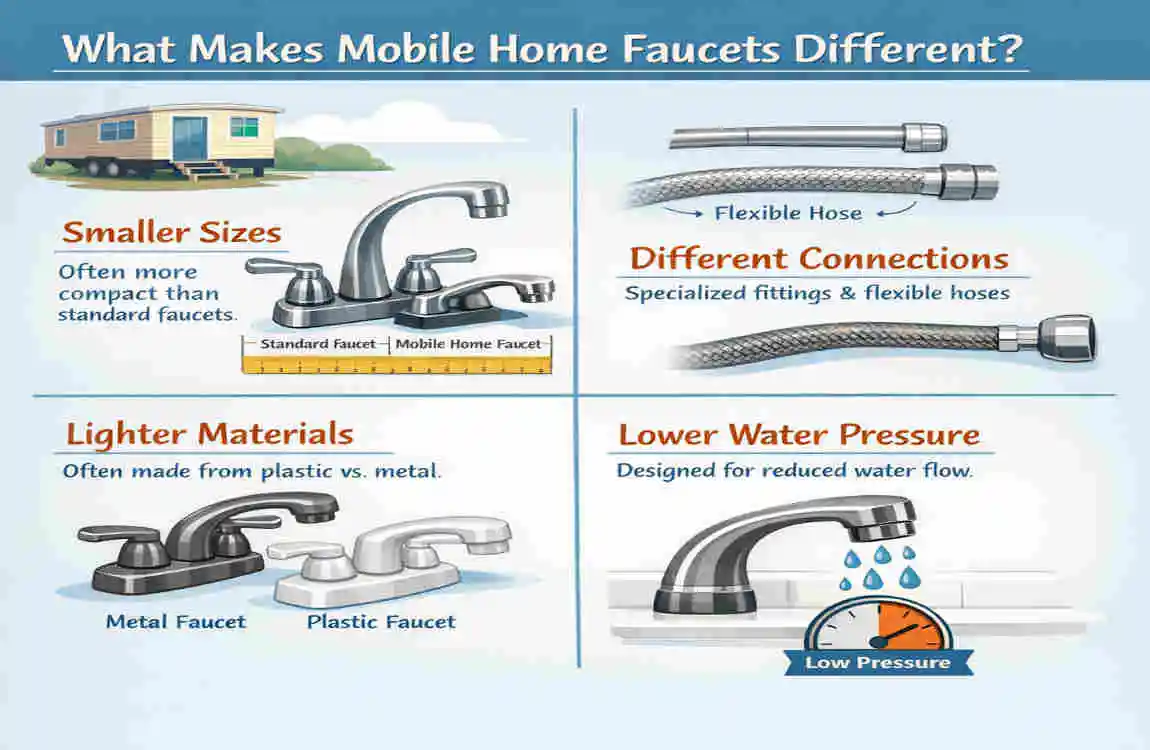
What Makes Mobile Home Faucets Different?
Mobile Home Plumbing Basics
Mobile homes often use plumbing layouts that are a little easier to access than those in some site-built homes. But the plumbing design can still vary widely depending on the home’s age and how it was built.
That means one mobile home may use very common fittings, while another may need a more specific type of faucet connection. This is why it helps to look at the actual setup instead of guessing.
Faucet Mounting Differences
One big difference is the mounting style.
Some sinks use:
- Single-hole faucets
- Two-hole faucets
- Three-hole faucets
The faucet must match the sink opening. If the spacing is wrong, it will not sit properly. That is why measuring before buying is so important.
Connection and Size Considerations
The faucet also needs to connect properly to the water supply lines under the sink.
You should check:
- The size of the supply-line connection
- The fitting used
- Whether adapters are needed
Sometimes a faucet looks right but still does not fit underneath. That is where many installation problems begin.
Types of Faucets Commonly Used in Mobile Homes
Kitchen Faucets
Mobile home kitchens often use simple, practical faucets. Many homeowners choose:
- Single-handle faucets
- Two-handle faucets
- Pull-down faucets
- Pull-out faucets
The best choice depends on the sink size, hole spacing, and the amount of space you have around the sink.
Bathroom Faucets
Bathroom faucets can be a little different from kitchen faucets because the sink setup is often smaller.
Common styles include:
- Centerset faucets
- Widespread faucets
- Single-hole faucets
Bathtub and shower faucets are separate again, and they may follow different plumbing arrangements.
Mobile Home-Specific Faucets
When a faucet is labeled a mobile home faucet, it usually means the product is designed for common manufactured-home setups.
That can be helpful, but the label alone does not guarantee a perfect fit. You still need to compare the product specs with your sink and plumbing.
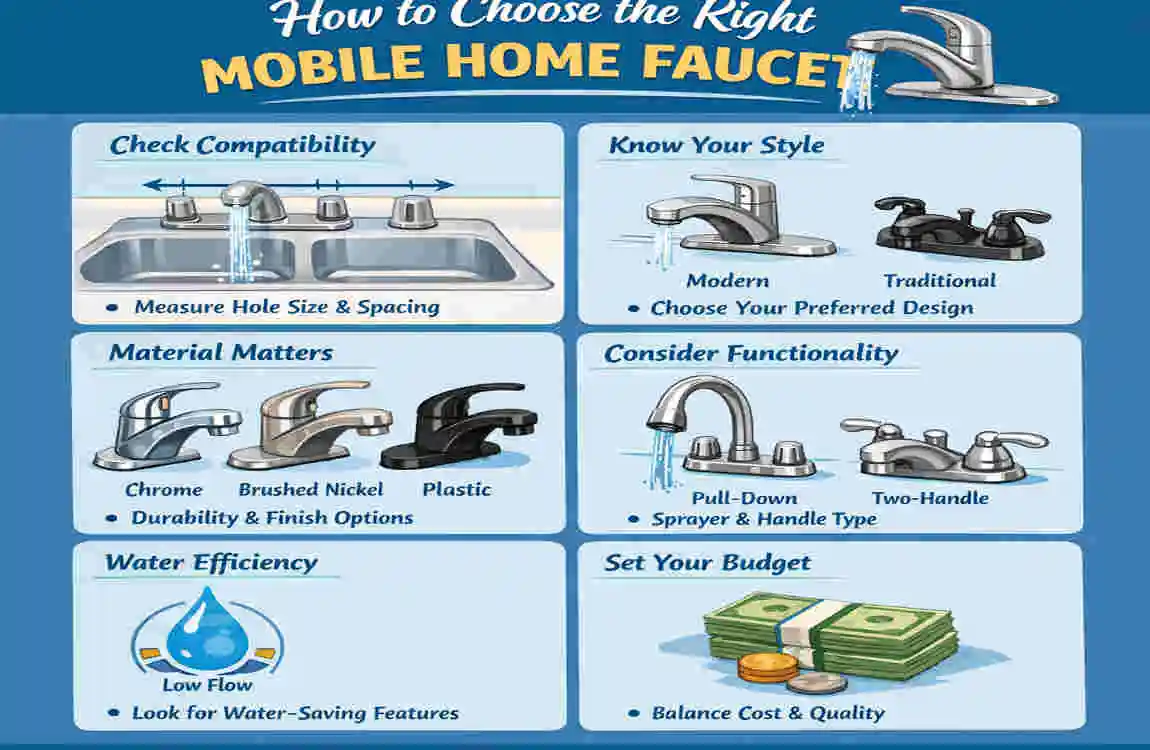
How to Choose the Right Mobile Home Faucet
Measure Before You Buy
This is the most important step.
Before buying, check:
- Number of holes in the sink or countertop
- Distance between holes
- Faucet base size
- Sink or countertop thickness
- Supply-line connection size
- Clearance under the sink
A few minutes of measuring can save you a lot of trouble later.
Check the Existing Plumbing
Look under the sink before you choose a replacement.
See what kind of shutoff valves and supply lines are already there. If the old faucet used a special fitting, your new one may need an adapter or a different connector.
Consider Faucet Material and Quality
Not all faucets are built the same.
Common materials include:
- Brass
- Stainless steel
- Plastic components
- Mixed metal parts
In general, better materials last longer and resist corrosion better. A cheap faucet may save money upfront, but it may wear out faster.
Choose the Right Style
Style matters too, especially if you want the faucet to match the room.
Popular finishes include:
- Chrome
- Brushed nickel
- Matte black
- Stainless steel
Pick a style you like, but always make compatibility the priority.
How to Replace a Mobile Home Faucet
Turn Off the Water Supply
Before you start, shut off the water supply to the faucet.
Then briefly turn the faucet on to release any remaining pressure. This helps prevent unexpected spraying.
Remove the Old Faucet
Disconnect the supply lines under the sink. Then remove the mounting nuts or brackets holding the faucet in place.
Once it is loose, lift the old faucet out and clean the surface around the opening.
Install the New Faucet
Set the new faucet in place and line it up correctly.
Then connect the supply lines carefully. Do not overtighten the fittings, because that can damage the parts.
Always follow the manufacturer’s instructions. Also, use plumber’s tape only where it is appropriate for that specific connection.
Test for Leaks
After installation, slowly turn the water back on.
Check all connections for drips or moisture. Run both hot and cold water if the faucet has both lines. Then look again under the sink after a few minutes.
Common Mobile Home Faucet Problems and Maintenance
Leaking Faucets
Worn parts, loose connections, or damaged seals often cause leaks.
Sometimes a small repair is enough. Other times, replacing the faucet is the better choice.
Low Water Pressure
Low water pressure may come from a clogged aerator, a supply-line issue, or a problem elsewhere in the plumbing system.
So if the water flow is weak, the faucet itself may not be the only cause.
Corrosion and Mineral Buildup
Hard water can leave mineral deposits on the faucet and inside the parts.
Wipe the faucet regularly and clean the aerator when needed. If corrosion becomes severe, replacement may be smarter than repair.
Preventive Maintenance Tips
Here are a few simple habits that help:
- Clean the aerator regularly
- Check for small leaks
- Tighten loose connections carefully
- Replace worn supply lines
- Avoid forcing the handles
Small problems are much easier to fix before they turn into bigger ones.
Mobile Home Faucets vs. Regular House Faucets
Feature Mobile Home FaucetStandard House Faucet
Mounting: May use manufactured-home sink setups. Wide range of mounting styles.
Connections May need specific fittingsOften follows common plumbing standards.
Size Can vary by model Also varies, but often easier to match
Compatibility Depends heavily on the home setup Depends on sink and plumbing setup
Replacement Usually needs careful measuring Often more straightforward
Availability Widely available Widely available
The biggest difference is usually fit, not appearance. Two faucets may look almost the same but still have different connection sizes or mounting requirements.
That is why measuring is more reliable than guessing from the product label.
When Should You Replace a Mobile Home Faucet?
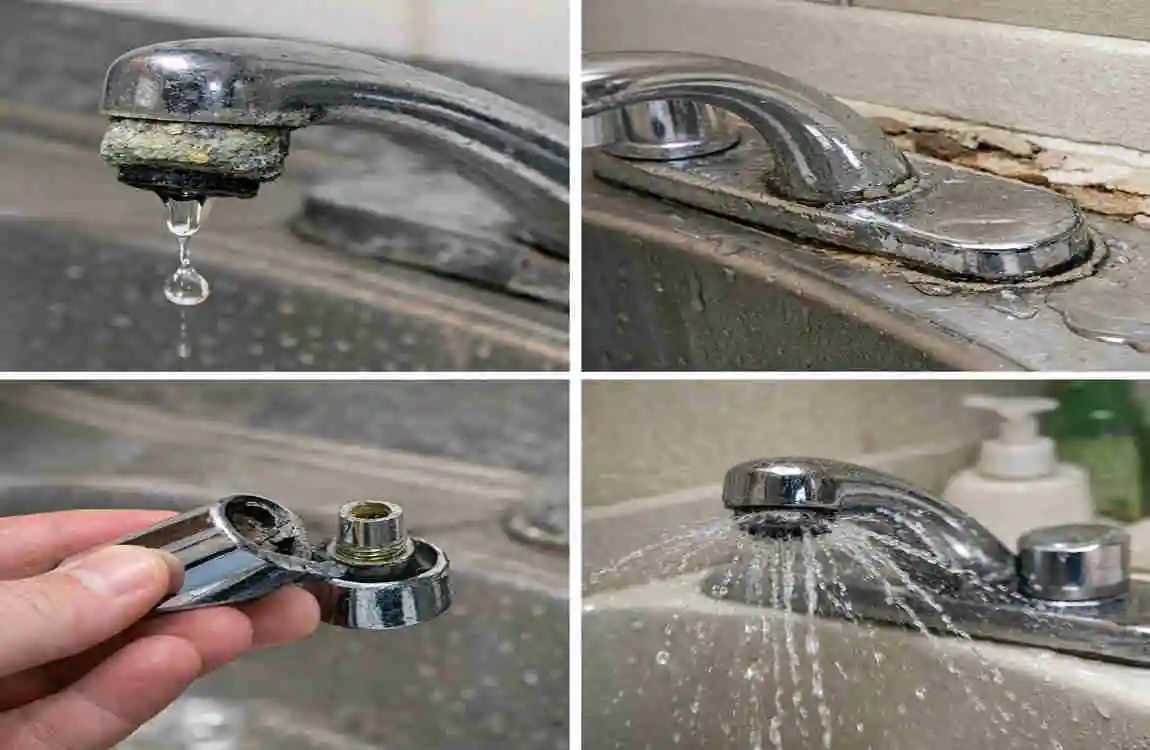
Signs You Need a New Faucet
Consider replacement if you notice:
- Constant leaking
- Cracked faucet body
- Heavy corrosion
- Loose mounting hardware
- Weak water flow
- Missing or hard-to-find replacement parts
Repair vs. Replacement
Sometimes a new cartridge, washer, or aerator will solve the problem.
But if the faucet is old, damaged, or expensive to keep repairing, replacement may make more sense. A new faucet can also improve water flow and appearance.
Should You Hire a Plumber?
A DIY replacement can work well if the setup is simple and accessible.
But call a plumber if:
- The connections are damaged
- The fittings do not match
- You find hidden leaks
- The plumbing is hard to reach
- You are unsure about the installation
It is better to get help than to risk water damage.
Frequently Asked Questions
Are mobile home faucets different from regular faucets?
Yes, some are different in mounting style, size, or connections. But many standard faucets can still work if the measurements match.
Can I use a regular faucet in a mobile home?
Often yes. The key is checking the sink holes, connection size, and under-sink setup first.
How do I know what size faucet I need for my mobile home?
Measure the hole spacing, faucet base, sink thickness, and supply-line connections. Then compare those measurements with the faucet specs.
Are mobile home kitchen faucets universal?
No, they are not universal. Different homes can have different sink and plumbing layouts.
Can I replace a mobile home faucet myself?
Yes, if the installation is simple and the connections are compatible. If not, professional help may be better.
Why does my mobile home faucet keep leaking?
Common causes include worn seals, loose connections, damaged cartridges, or old supply lines. Are mobile home faucets expensive?
Prices vary. Basic models are usually affordable, while better-quality or feature-rich faucets cost more.
Do mobile home faucets need special plumbing fittings?
Sometimes they do. It depends on the faucet and the existing plumbing setup.
| Feature | Mobile Home Faucets | Standard Home Faucets |
|---|---|---|
| Size | Often more compact | Usually wider options |
| Mounting | Commonly designed for mobile home sinks | Designed for standard plumbing setups |
| Connections | May use specialized connections | Usually standard connections |
| Water Lines | Often uses flexible supply lines | Uses standard supply connections |
| Replacement | Check model and connection size first | Generally easier to match |
| Best Choice | Faucet made for mobile homes | Standard faucet if plumbing is compatible |
