
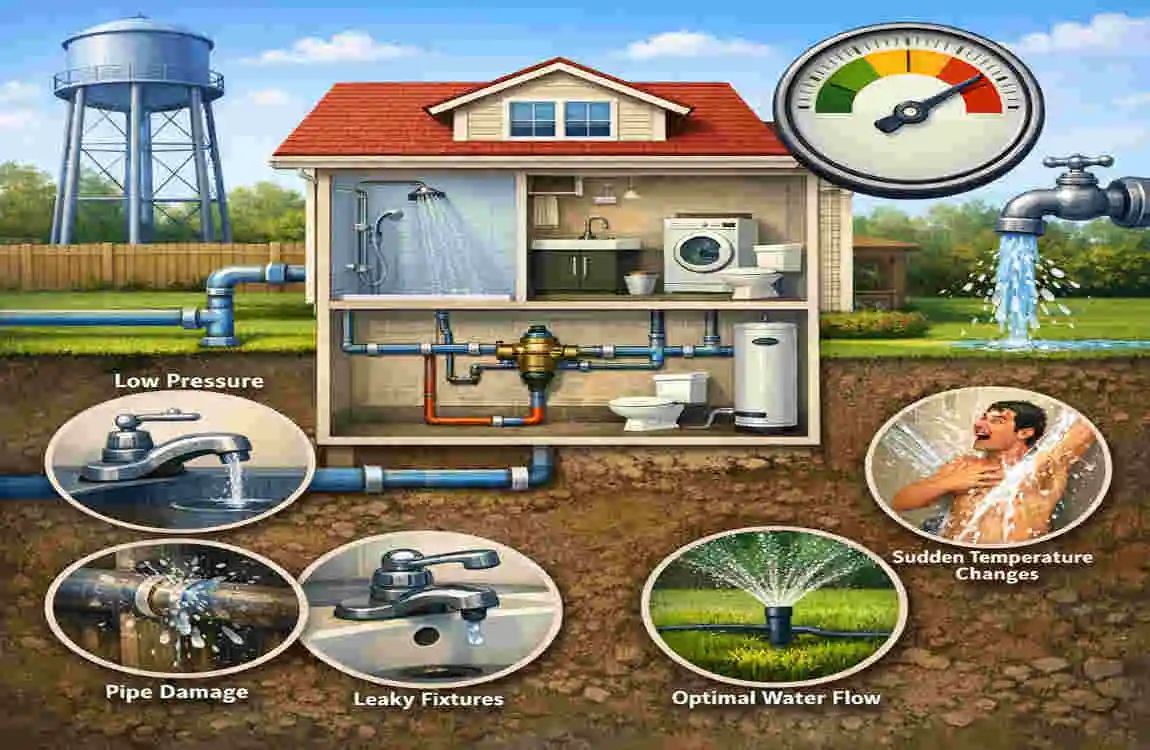
Water pressure may not seem important until something goes wrong. A shower feels weak. A faucet sprays too hard. A pipe starts making noise. Suddenly, a small plumbing issue becomes a real headache.
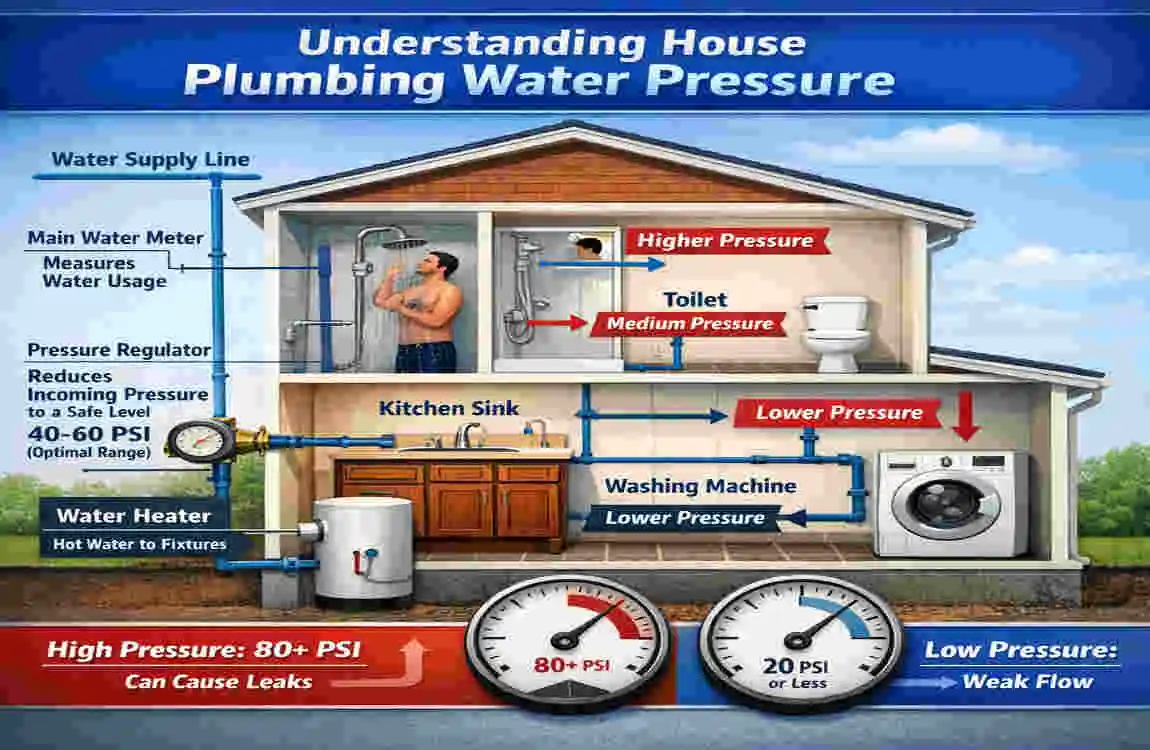
If you are wondering how much water pressure is in a house plumbing system, the answer is usually between 40 and 60 PSI. That range is generally considered safe, comfortable, and efficient for most homes.
Getting the pressure right matters more than many homeowners realize. Good water pressure supports daily tasks, protects pipes, and helps appliances run properly. But when the pressure is too high or too low, it can lead to leaks, wear, higher bills, and expensive repairs.
Understanding House Plumbing Water Pressure
What Is Water Pressure in a Home Plumbing System?
Water pressure is the force that pushes water through your pipes and out of your fixtures. It is what makes your shower work, fills your washing machine, and sends water to your kitchen sink.
Plumbers measure water pressure in PSI, which stands for pounds per square inch. This number indicates how strong the water pressure is in your plumbing system.
In many homes, the pressure comes from a city water supply. In others, especially rural homes, a private well system controls it. That means the source of your water can affect how strong or weak the pressure feels.
How Much Water Pressure Is in a House Plumbing System?
For most homes, the ideal range is 40–60 PSI. This is usually strong enough for showers, sinks, and appliances without putting too much strain on the plumbing.
Here is a simple guide:
Water Pressure LevelPSI RangeMeaning
Low Pressure Below 40 PSI Weak water flow
Normal Pressure 40–60 PSI Safe and comfortable
High Pressure 60–80 PSI Monitor regularly
Dangerous Pressure Above 80 PSI Can damage plumbing
If your pressure is too low, daily tasks become frustrating. If it is too high, your pipes and fixtures may wear out faster than they should.
Why Maintaining Safe Water Pressure Matters
Protects Pipes and Plumbing Fixtures
High water pressure puts stress on pipes, joints, faucets, and valves. Over time, this stress can cause leaks, cracks, and loose connections.
Safe pressure helps your plumbing system last longer. It also reduces the chance of sudden breakdowns that cost time and money.
Improves Water Efficiency
When water pressure is too high, more water may move through fixtures than you actually need. That can waste water without improving performance.
Balanced pressure helps your home use water more efficiently. It also prevents your water bill from rising due to hidden waste.
Keeps Household Appliances Safe
Your appliances depend on stable pressure to work properly. That includes:
- Water heaters
- Dishwashers
- Washing machines
- Toilets
- Shower systems
Too much pressure can damage seals, hoses, and internal parts. Too little pressure can make appliances slow or less effective.
Common Causes of High Water Pressure in Houses
Problems With Municipal Water Supply
City water pressure can vary depending on supply, demand, and the neighborhood’s layout. Sometimes pressure is higher at certain times of day.
If your area has a strong municipal supply, your home may receive more pressure than your plumbing can safely handle.
Faulty Pressure Regulator Valve
Many homes have a pressure-reducing valve, or PRV, that controls incoming water pressure. This valve keeps the pressure from getting too high.
If the valve is damaged or worn out, pressure may rise without warning. Signs of a problem can include loud pipes, leaking fixtures, or sudden changes in flow.
Thermal Expansion From Water Heaters
When water heats up, it expands. That expansion can raise pressure inside the plumbing system.
Homes with water heaters often need an expansion tank to handle that extra force. Without one, pressure may build up and strain the system.
Common Signs Your Home Has Incorrect Water Pressure
Signs of High Water Pressure
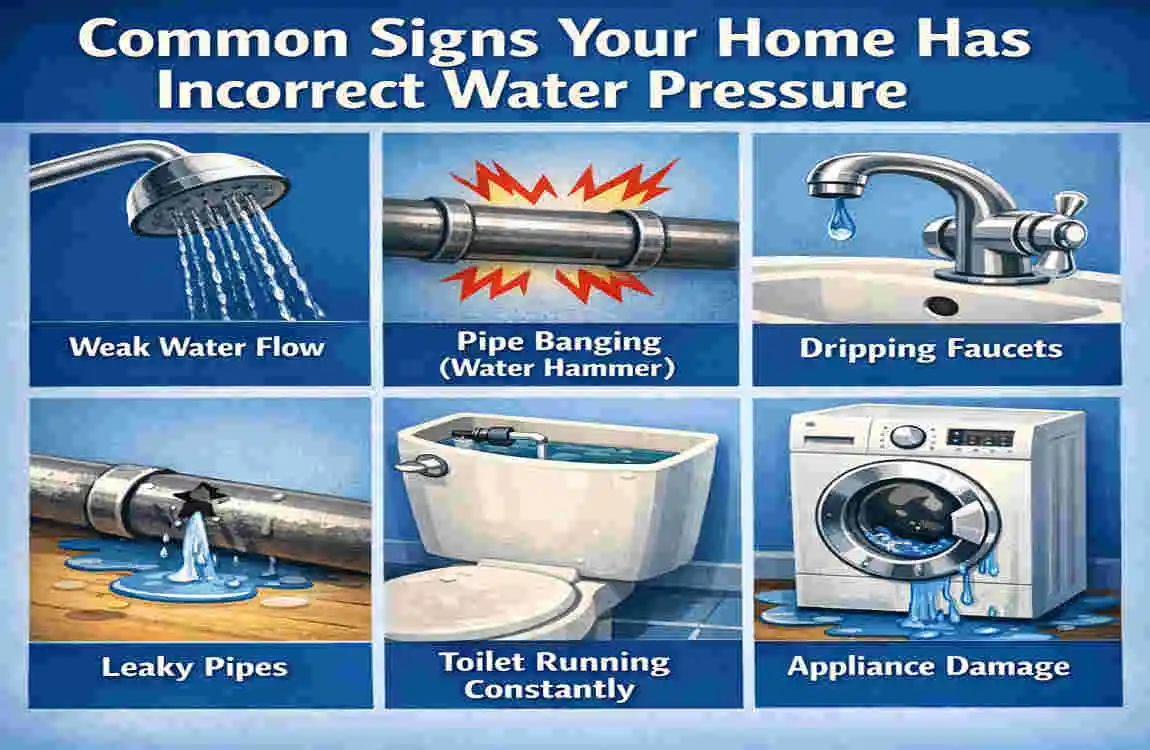
High pressure can seem helpful at first because the water flow feels strong. But the signs often show up in small ways before bigger damage starts.
Watch for:
- Banging pipes
- Leaking faucets
- Running toilets
- Damaged appliances
- Frequent pipe repairs
If you hear pipes knocking when the water turns on or off, that is a common sign of excessive pressure.
Signs of Low Water Pressure
Low pressure is usually easier to notice because everyday tasks become slower and less effective.
Common signs include:
- Slow showers
- Weak faucet flow
- Washing machine taking longer
- Poor sprinkler performance
If several fixtures feel weak at once, the problem may be in the main supply or the plumbing system itself.
How to Test Water Pressure in House Plumbing
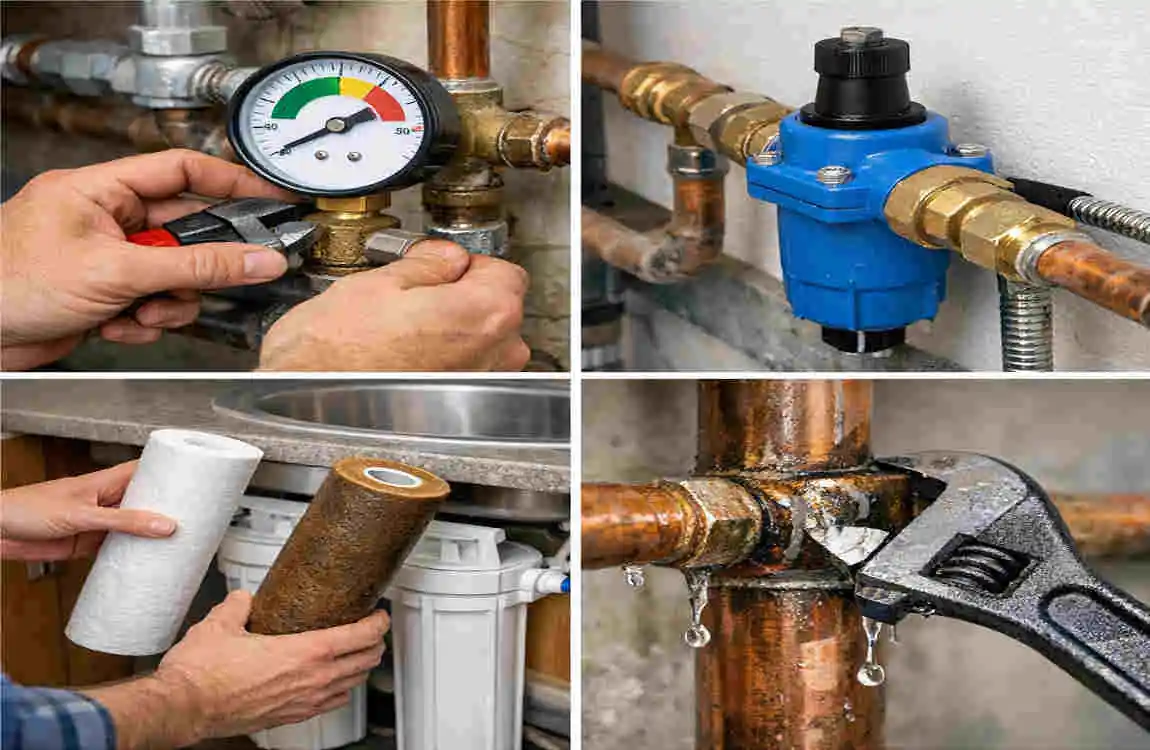
Tools Needed to Measure Water Pressure
You do not always need a plumber to check pressure. A simple pressure test can give you a good idea of what is happening.
You will need:
- Plumbing pressure gauge
- Outdoor faucet connection
- Adjustable wrench
Step-by-Step Water Pressure Testing Guide
Here is the basic process:
- Turn off water-consuming appliances.
- Attach the pressure gauge to an outdoor faucet.
- Open the faucet fully.
- Read the PSI number on the gauge.
- Compare the result with the recommended range.
If the reading is too high or too low, you may need to investigate further.
When Should You Test Water Pressure?
You should check pressure:
- After plumbing repairs
- Before buying a home
- When you notice leaks
- During regular home maintenance
Testing once in a while helps you catch issues before they become expensive.
How to Fix High Water Pressure in House Plumbing
Adjusting or Replacing a Pressure Regulator
If your home has a pressure regulator, it may be possible to adjust it. A small change can sometimes bring the PSI back into a safe range.
If the valve is old or failing, replacement may be the better option. In that case, a plumber can install a new one and ensure it works properly.
Installing a Water Pressure Reducing Valve
A pressure-reducing valve helps keep incoming water at a safer level. It protects pipes, fixtures, and appliances from constant stress.
This is one of the best long-term solutions for homes with strong municipal water pressure.
Adding a Thermal Expansion Tank
If your water heater is creating extra pressure, an expansion tank can help absorb that pressure buildup.
This small device can protect your plumbing system from the force created when heated water expands.
How to Fix Low Water Pressure Problems
Check for Blocked Pipes
Low pressure often comes from buildup inside pipes. Mineral deposits, rust, and old pipe materials can all reduce flow.
If the blockage is severe, a plumber may need to inspect the line and decide whether cleaning or replacement is best.
Clean Faucets and Showerheads
Sometimes the problem is not the whole plumbing system. Mineral buildup in faucet screens or showerheads can slow water flow.
Cleaning these parts can sometimes restore better pressure right away.
Inspect Plumbing Leaks
Leaks can steal pressure before water reaches your fixtures. Even a hidden leak behind a wall can cause weak flow in other parts of the house.
If you suspect a leak, it is smart to have a professional inspect it.
Safe Water Pressure Levels for Different Home Systems
Plumbing Pipes
Most residential pipes perform best in the 40–60 PSI range. Staying within that range helps reduce wear and maintain comfortable water flow.
Water Heater Systems
Water heaters should never run under excessive pressure. High pressure can damage valves, fittings, and connections.
Outdoor Plumbing and Irrigation
Sprinkler systems often need controlled pressure to work well. Too much pressure can damage sprinkler heads, while too little pressure can reduce coverage.
Tips to Maintain Safe House Plumbing Water Pressure
Schedule Regular Plumbing Inspections
Regular inspections help catch pressure issues early. A plumber can check valves, pipes, and appliances before problems get worse.
Monitor Water Pressure Changes
Pay attention if pressure suddenly changes. A drop or spike often means something in the system has changed.
If you recently made plumbing upgrades, it is smart to recheck the pressure afterward.
Replace Old Plumbing Components
Old pipes, worn valves, and aging fixtures can all affect pressure. Replacing outdated parts can improve reliability and reduce the need for future repairs.
Professional vs DIY Water Pressure Solutions
Problems You Can Handle Yourself
Some tasks are simple enough for most homeowners. These include:
- Testing pressure with a gauge
- Cleaning showerheads and faucet aerators
- Checking for visible leaks
These are good first steps if you notice flow problems.
Problems Requiring a Professional Plumber
Some issues need expert help. Call a plumber for:
- Pipe replacement
- Pressure regulator installation
- Major leaks
- Water heater pressure issues
A professional can identify the cause more quickly and fix it safely.
Frequently Asked Questions
Q: How much water pressure is in a house plumbing system?
Most homes have water pressure between 40 and 60 PSI, which provides good performance while protecting plumbing fixtures.
Q: Is 80 PSI too high for house water pressure?
Yes. Pressure above 80 PSI can damage pipes, appliances, and fixtures over time.
Q: What is the best water pressure for a home?
A range of 40–60 PSI is usually considered ideal for residential plumbing systems.
Q: How can I check my home’s water pressure?
You can use a plumbing pressure gauge attached to an outdoor faucet to measure PSI.
Q: What causes low water pressure in a house?
Common causes include clogged pipes, leaks, faulty valves, and problems with the main water supply.
| Topic | Information |
|---|---|
| Ideal House Water Pressure | Most homes work best with 40–60 PSI water pressure for comfortable and safe plumbing performance. |
| High Water Pressure Problems | Pressure above 80 PSI can damage pipes, faucets, water heaters, and appliances over time. |
| Low Water Pressure Issues | Low pressure may cause weak showers, slow faucets, and poor appliance performance. |
| How to Check Water Pressure | Use a water pressure gauge connected to an outdoor faucet or hose bib to measure PSI. |
| Pressure Regulator Purpose | A pressure-reducing valve (PRV) controls incoming water pressure and protects the plumbing system. |
| Signs of Excess Pressure | Banging pipes, leaking fixtures, dripping faucets, noisy plumbing, and frequent repairs. |
