
When you build a new home, electrical planning is one of the most important parts of the project. Wiring affects safety, comfort, and the house’s future use. If the wire estimate is too low, the work can slow down, and costs can rise. If it is too high, you may waste money and materials.
That is why so many homeowners ask, how much wire to wire a sq ft house. The short answer is that it depends on the home’s size, layout, number of outlets and lights, and the appliances you plan to use.
How Much Wire Does a House Need Per Square Foot?
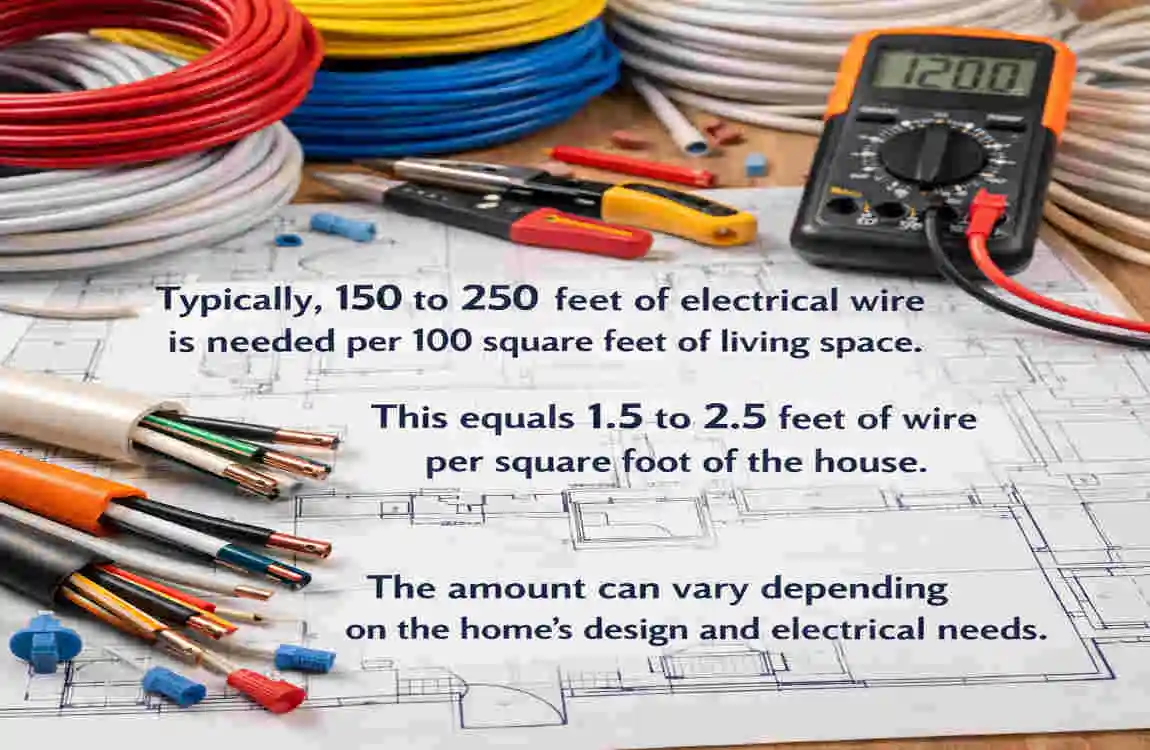
There is no single exact number that fits every home. Still, many residential projects use a general range of about 3 to 5 feet of wire per square foot.
That means a 1,500-square-foot house may need far more than 1,500 feet of wire, because each room, outlet, light, and appliance adds to the total. Wire also runs from the electrical panel to various parts of the home, increasing the overall length.
Average Wire Needed for Different House Sizes
House Size Estimated Wire Needed
1,000 sq ft house 3,000–5,000 feet of wire
1,500 sq ft house 4,500–7,500 feet of wire
2,000 sq ft house 6,000–10,000 feet of wire
3,000 sq ft house 9,000–15,000 feet of wire
These are rough estimates only. The actual amount depends on the house’s design and electrical load.
Factors That Affect How Much Wire a House Needs
Size and Layout of the Home
A larger home usually needs more wire. That makes sense because the electrical panel must serve more rooms, switches, and outlets.
The layout matters too. A simple square home may need less wire than a home with long hallways, multiple wings, or an open floor plan with many fixtures. The farther the electrical runs, the more wire you need.
Number of Electrical Outlets and Fixtures
Every outlet, light, and switch adds to the total wire count. A home with many wall outlets and ceiling lights will naturally use more wire than a simpler layout.
Common wiring points include:
- Wall outlets
- Ceiling lights
- Switches
- Fans
If you want a bright, modern home with lots of lighting, your wire needs will rise.
Electrical Appliance Requirements
Large appliances need dedicated circuits and often heavier wire. Some of the biggest wire users include:
- HVAC systems
- Electric ovens
- Water heaters
- Washing machines
- Dryers
- EV chargers
If your home has several of these appliances, the electrical plan must allow for extra wire and separate circuits.
Type of Electrical System
A home’s service size also affects the amount of wiring and circuit planning.
- 100-amp service usually works for smaller homes with lighter electrical use.
- 200-amp service is more common in modern homes because it supports more appliances and devices.
- Smart home systems may need extra wiring for automation, sensors, and upgraded controls.
Types of Electrical Wire Used in House Wiring
Non-Metallic Cable (NM-B / Romex)
NM-B cable, often called Romex, is the most common type of wire used in homes. It is popular because it is easy to install, reliable, and suitable for many standard residential circuits.
It is often used for lighting, outlets, and general household wiring.
Copper vs Aluminum Wire
Most homes use copper wire because it is durable and conducts electricity very well. It is also easier to work with in many residential projects.
Aluminum wire is usually cheaper but less common in typical house wiring because it requires special handling and more careful installation.
Different Wire Gauges Used in Homes
Wire size matters because different loads need different thicknesses. Here is a simple guide:
Wire Gauge Common Use
14 AWG Lighting circuits
12 AWG General outlets
10 AWG Heavy appliances
8 AWG Larger electrical loads
Using the wrong wire size can create serious safety problems, so this part should always follow electrical code.
How Electricians Calculate Wire Requirements for a House
Create an Electrical Layout Plan
Electricians start with a clear floor plan. They mark where the outlets, lights, switches, and appliance connections will go.
This helps them see how much wire each circuit needs and where the wire will travel through the house.
Measure Circuit Runs
Next, they measure the distance from the electrical panel to each connection point. They also look at the routing path, because wire does not always run in a straight line.
Longer routes mean more wire, and some rooms need separate circuits for safety and convenience.
Add Safety Margins
Electricians usually add extra wire for:
- Connections
- Future repairs
- Small changes during installation
That extra allowance helps avoid shortages and makes the job easier to finish properly.
How Much Wire Is Needed for a 1,500 Square Foot House?

A 1,500-square-foot house may need around 4,500 to 7,500 feet of wire, depending on the design.
A typical home of this size may include:
- Lighting circuits
- Bedroom outlets
- Kitchen circuits
- Bathroom circuits
- Appliance wiring
If the house has a modern open layout, extra lighting, or several large appliances, the total can move toward the higher end of the range.
How Much Does House Wiring Cost Per Square Foot?
Average Electrical Wiring Cost
The cost of wiring a home depends on both materials and labor. New construction is usually less expensive than rewiring an older house.
Typical factors include:
- Material costs
- Labor costs
- Permit costs
Factors That Increase Wiring Costs
Some features can make wiring more expensive:
- High-end fixtures
- Smart home technology
- Long wire runs
- Difficult construction areas
Project Type Average Cost
New construction wiring $3–$8 per sq ft
Electrical rewiring $6–$15 per sq ft
Luxury home wiring Higher depending on features
Common Mistakes When Estimating House Wire Requirements
Buying Too Little Wire
If you run short, the project can slow down fast. You may need extra trips to buy more wire, and sometimes the new batch may not match exactly.
Using Incorrect Wire Size
Wrong wire size can cause overheating, poor performance, or serious electrical issues. This is one of the biggest safety risks in home wiring.
Ignoring Future Electrical Needs
Think ahead. Many homes now need space for:
- Solar systems
- EV charging
- Smart devices
If you plan only for today, you may end up spending more later to upgrade the system.
Tips to Reduce Electrical Wiring Costs
Plan Before Construction Starts
A complete electrical blueprint helps reduce waste. When you know where everything goes before work begins, you avoid changes that cost time and money.
Use Energy-Efficient Electrical Designs
Energy-efficient choices can lower long-term costs. For example:
- LED lighting
- Smart switches
- Efficient appliances
These options can also help reduce the overall load on the system.
Hire a Licensed Electrician
A licensed electrician helps ensure the work is safe and complies with local regulations. That can save you from expensive mistakes and future repairs.
How Much Extra Wire Should You Buy?
A good rule is to buy 10–15% extra wire. This gives you room for:
- Unexpected routing changes
- Small corrections
- Future modifications
It is better to have a little extra than to run short in the middle of the job.
Benefits of Proper Home Electrical Planning

Improved Safety
Good planning helps prevent overloads and reduces fire risks. This is one of the most important reasons to take wiring seriously.
Better Energy Efficiency
A well-designed system supports modern appliances and better power use. That can make the home more efficient over time.
Increased Home Value
Buyers often notice safe, updated electrical systems. A well-wired home can feel more complete and more valuable.
Frequently Asked Questions
How much wire do I need per square foot for a house?
Most homes need about 3 to 5 feet of electrical wire per square foot, but the exact amount depends on the design and electrical needs.
How much wire is needed for a 2,000-sq-ft house?
A typical 2,000 sq ft home may need around 6,000 to 10,000 feet of wire.
What type of wire is commonly used in homes?
NM-B copper cable, also known as Romex, is widely used for residential wiring.
Can I estimate wire needed without an electrical plan?
You can make a rough estimate, but a detailed electrical plan provides a much better one.
Does a bigger house always need more wire?
Usually yes, but layout and appliance needs also play a big role.
How much does it cost to wire a new house?
The cost usually ranges from a few dollars per square foot, depending on materials, labor, and project complexity.
| Topic | Information |
|---|---|
| Average Wire Needed Per Square Foot | A typical house requires around 1–1.5 feet of electrical wire per square foot of living space, depending on the design and electrical needs. |
| Small Home (1,000 sq. ft.) | Approximately 1,000–1,500 feet of wire may be required for basic electrical installation. |
| Medium Home (2,000 sq. ft.) | Usually needs around 2,000–3,000 feet of wire for lighting, outlets, appliances, and circuits. |
| Large Home (3,000+ sq. ft.) | May require 3,000–4,500+ feet of wire depending on electrical complexity. |
| Factors Affecting Wire Amount | Home size, number of outlets, lighting fixtures, appliances, wiring layout, and local electrical codes affect total wire usage. |
| Common Wire Types Used | NM-B (Romex) cable, copper wire, and specialized cables are commonly used for residential wiring. |
