
Imagine walking into a kitchen where the centerpiece isn’t just a piece of furniture, but a slice of history. You run your hand across the surface, feeling the grain, the slight imperfections, and the warmth that only time can create. This is the magic of reclaimed wood kitchen tables.
In 2025 alone, sales for reclaimed wood furniture jumped by nearly 40%. Whether you are browsing high-end boutiques in Lahore or scrolling through Etsy, the demand is undeniable. People are moving away from mass-produced, “fast furniture” that falls apart in a few years. Instead, they are craving connection, sustainability, and style.
Why Choose Reclaimed Wood Kitchen Tables?
You might be asking, “Why should I pay for old wood when I can buy a brand new table?” It is a fair question. However, once you understand the benefits, the choice becomes obvious. Choosing reclaimed wood kitchen tables isn’t just a style preference; it is a statement about your values and your appreciation for quality.
The Sustainability Edge
We live in an era where eco-conscious living is more than just a buzzword; it is a necessity. Every time you buy a reclaimed table, you are saving a tree from being cut down. You are also keeping perfectly good lumber out of landfills.
The carbon footprint of processing reclaimed wood is significantly lower—about 70% less—than harvesting, transporting, and processing new virgin timber. By choosing reclaimed, you are actively participating in the fight against deforestation.
Unique Aesthetics and Character
No two reclaimed wood kitchen tables are ever the same. When you buy a factory-made table, it looks exactly like the one in your neighbor’s house. But with reclaimed wood, you get a fingerprint of history.
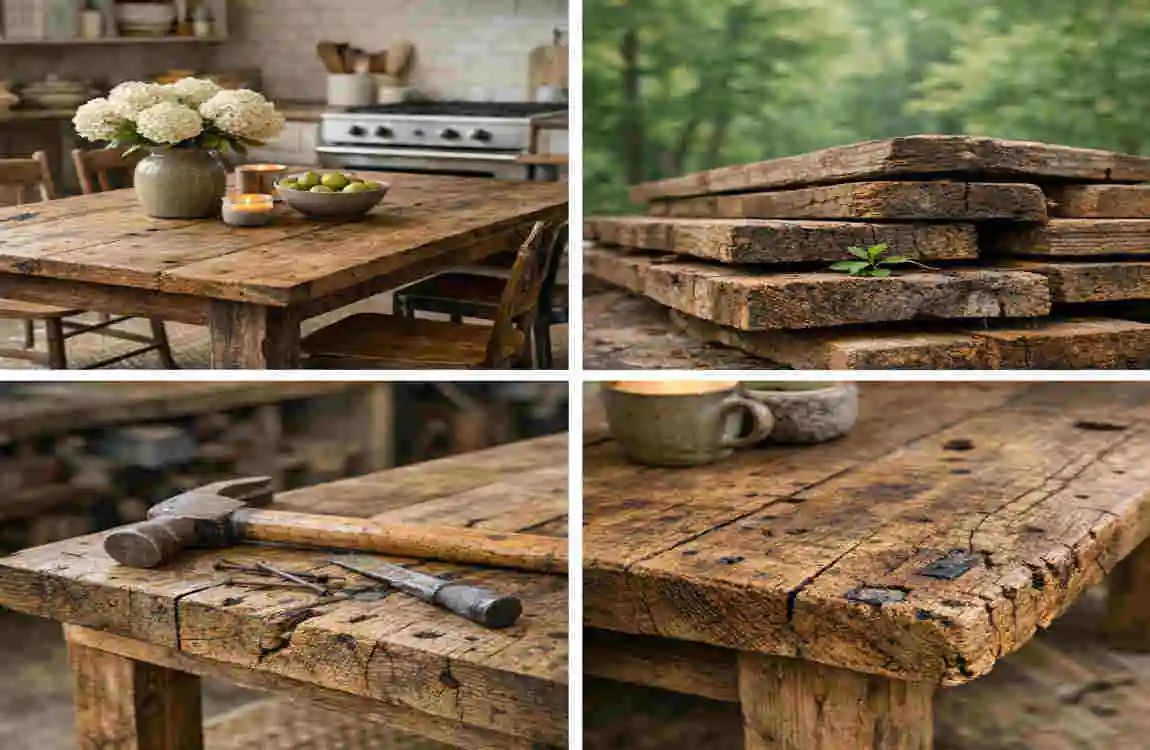
You might find nail holes where old iron spikes used to be, natural knots, or a rich patina that only decades of sunlight and oxidation can produce. These aren’t flaws; they are features. They tell a story. This unique character adds a layer of warmth and texture to your kitchen that new wood cannot mimic.
Unmatched Durability
There is a common misconception that “old” means “weak.” The opposite is true. Most reclaimed wood comes from “old-growth” trees. These trees grew slowly over centuries in natural forests, resulting in their rings being tight and dense.
This wood is significantly harder and more stable than the “new-growth” pine you find in big-box stores today, which is quickly farmed and often soft. A reclaimed oak or teak table has already survived 100 years of weather and use; it can certainly handle your family dinners for the next 100 years.
Value Boost and Investment
Because of their durability and demand, these tables hold their value. While a particle-board table loses its value the moment you assemble it, a solid reclaimed wood table is an heirloom. Antique experts and insurance companies often value these pieces 20% to 30% higher than their modern counterparts.
To help you weigh your decision, here is a quick look at the pros and cons:
ProCon
Eco-Friendly: Saves trees and reduces waste. Higher Upfront Cost: Labor-intensive to process.
Timeless Style: Fits almost any decor theme. Imperfections: Surfaces may not be perfectly flat.
Durability: Harder, denser wood lasts longer. Limited Supply: You can’t just order more of the same wood.
Trending Styles of Reclaimed Wood Kitchen Tables in 2026
The beauty of reclaimed wood is its versatility. It doesn’t just belong in a log cabin. Designers are mixing old wood with metal, glass, and resin to create looks that fit everything from a sleek city apartment to a cozy beach house. Here are the top styles dominating the market this year.
Rustic Farmhouse
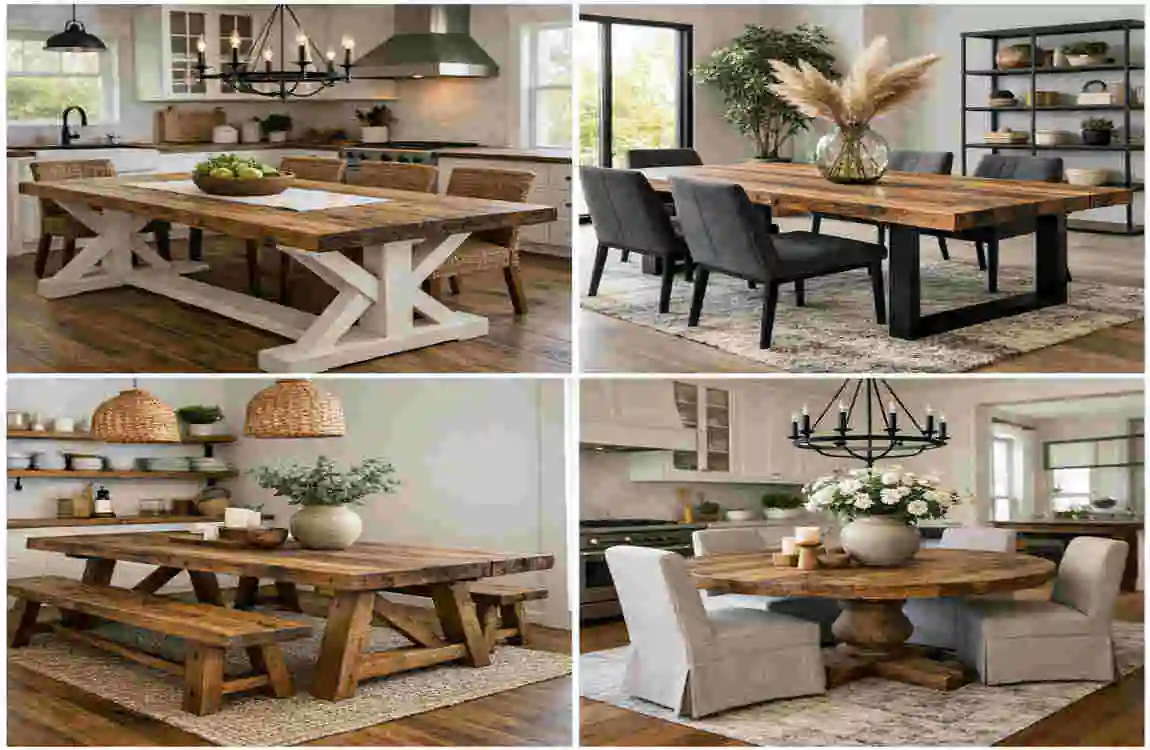
This is the classic look that started the craze. Rustic farmhouse tables are big, bold, and welcoming. They anchor the room.
- The Look: Think thick, chunky planks of wood with visible saw marks. The base is often a “trestle” style (an X or H shape), which allows for maximum legroom.
- Best For: Large families or people who love to host dinner parties. These tables look incredible paired with white shiplap walls or neutral tones.
- Styling Tip: Don’t be afraid to mix seating. Use a long bench on one side and vintage wooden chairs on the other to create a casual, lived-in vibe.
Industrial Modern
If you live in a loft or a modern apartment, the Industrial Modern style is your best bet. This style celebrates the contrast between warm wood and cool metal.
- The Look: A reclaimed wood top—often sanded smoother than the farmhouse style—sitting on black steel or iron pipe legs. The edges are usually sharp and sleek rather than rounded.
- The Trend: In 2026, we are seeing a shift toward matte finishes. The wood is kept natural (no glossy varnish), and the metal is powder-coated black.
- Lighting Pairing: This style screams for Edison bulb pendant lights hanging directly above the center.
Coastal / Beach House
You don’t need to live by the ocean to enjoy the breezy, relaxed vibe of a Coastal reclaimed table.
- The Look: This style often uses driftwood or wood salvaged from old docks and ships. The wood usually has a grey or white-washed tone, giving it a sun-bleached appearance.
- Local Twist: In regions like Pakistan, artisans are reclaiming Mango wood or Sheesham from old factories and giving it a light wash to achieve this airy aesthetic.
- Best For: Kitchens with lots of natural light and white cabinetry. It brings a softness to the room that is very calming.
Mid-Century Minimalist
Who says reclaimed wood has to be chunky? The Mid-Century Minimalist trend proves that old wood can be elegant and slender.
- The Look: Designers take old slabs and plane them down to be thin and refined. They mount them on tapered wooden legs (the hallmark of mid-century design).
- The Vibe: It is clean, functional, and uncluttered. This style often features “live edges,” where the natural curve of the tree is left on the side of the table, but the surface is polished to a shine.
- Scandinavian Influence: This blends perfectly with the “Hygge” concept—cozy, simple, and functional.
Custom Extensions
Space is a luxury, especially in city living. The custom extension table is making a huge comeback.
- The Innovation: These tables use butterfly leaves (hidden sections that fold out) made from the same batch of reclaimed material.
- Why It Works: You can have a 4-seater for daily breakfast and expand it to a 10-seater for Eid or Christmas dinner. It offers the best of both worlds without sacrificing the vintage look.
Sourcing and Quality Guide for Reclaimed Wood Kitchen Tables
Finding the perfect table is like a treasure hunt. However, because the trend is so hot, there are plenty of “fakes” out there. Some manufacturers take new, cheap wood and beat it with chains to make it look old. Here is how you find the real gems.
Where to Look
- Local Salvagers: In places like Lahore or Karachi, visit timber yards that specialize in demolition salvage. They often have the raw material and can point you to carpenters who specialize in it.
- Online Marketplaces: Platforms like Etsy or specialized sustainable furniture sites are goldmines. You can talk directly to the maker.
- Custom Makers: The best route is often finding a local woodworker. You can pick the exact planks you want.
How to Spot a Fake
- Check the Grain: Real old-growth wood has very tight growth rings (the lines on the end of the board). If the rings are far apart, it is likely new, soft pine.
- Look at the Ends: If the “wear and tear” looks the same on every board, it was done by a machine. Real wear is random.
- Smell It: New wood smells like fresh sawdust or strong chemicals. Reclaimed wood has a subtle, earthy, or musty scent (sealed in during finishing).
Budget Tiers
Reclaimed wood is an investment. Here is a realistic breakdown of what you might expect to pay in Pakistani Rupees (PKR) for a quality piece.
Size / Style, Estimated Price Range (PKR), Expected Lifespan
Small (4-Seater) 150,000 – 300,000 50+ Years
Medium (6-Seater) 300,000 – 500,000 60+ Years
Large/Custom (8+ Seater) 400,000 – 800,000+ 75+ Years (Heirloom)
Iconic Designs and Inspiration Galleries
To help you visualize the perfect table for your home, let’s look at five specific designs that are capturing hearts this year.
The Epoxy River Table
This is a showstopper. Two slabs of live-edge reclaimed wood are placed with a gap between them. That gap is filled with colored or clear epoxy resin. It looks like a river flowing through a canyon.
- Vibe: deeply artistic and modern.
The Live-Edge Waterfall
In this design, the wood grain flows continuously from the table top down the side legs. The carpenter cuts the wood at a 45-degree angle (a miter joint) so it looks like a waterfall of wood.
- Vibe: Seamless and sleek.
The Parquet Inlay
Builders take smaller scraps of reclaimed wood (in different colors and textures) and arrange them in geometric patterns, such as herringbone or chevron, on the tabletop.
- Vibe: Intricate and fancy.
The Bench-Set Rustic
A massive, thick slab table accompanied by matching long benches instead of chairs. This promotes “family style” dining where everyone scooches in together.
- Vibe: Casual and communal.
The Foldable Urban
Designed for studio apartments, this table folds flat against the wall or collapses into a console. It uses lighter reclaimed woods, such as cedar.
- Vibe: Smart and efficient.
Design Comparison Table
Design NameStyle FitTypical SeatingApprox Price (PKR)
River Table Modern / Art 6 500,000
Live-Edge Rustic / Minimalist 8 350,000
Parquet Traditional 6 400,000
Bench-Set Farmhouse 8-10 450,000
Foldable Apartment 2-4 150,000
Care and Maintenance for Long-Lasting Tables
You have bought your dream table. Now, how do you keep it looking amazing? Reclaimed wood is tough, but it needs love to stay hydrated and protected.
Daily Care
Treat your table with respect.
- Use Coasters: Old wood can be porous. Water rings are hard to remove. Always use coasters for glasses.
- Placemats are Friends: Hot plates can melt the wax finish or turn the wood white. Use mats or trivets.
- Avoid Direct Sun: If your table sits in a sunbeam, the UV rays will fade the color over time. Rotate your table once a year if possible.
Seasonal Maintenance
Wood is a living material; it expands in humidity and shrinks in dry air.
- Oiling: Every 3 to 6 months, feed the wood. You don’t need expensive chemicals.
- DIY Recipe: Mix 1 part lemon juice with 3 parts olive oil. Rub it in with a soft cloth, let it sit for 20 minutes, and wipe off the excess. This keeps the wood from cracking.
Handling Repairs
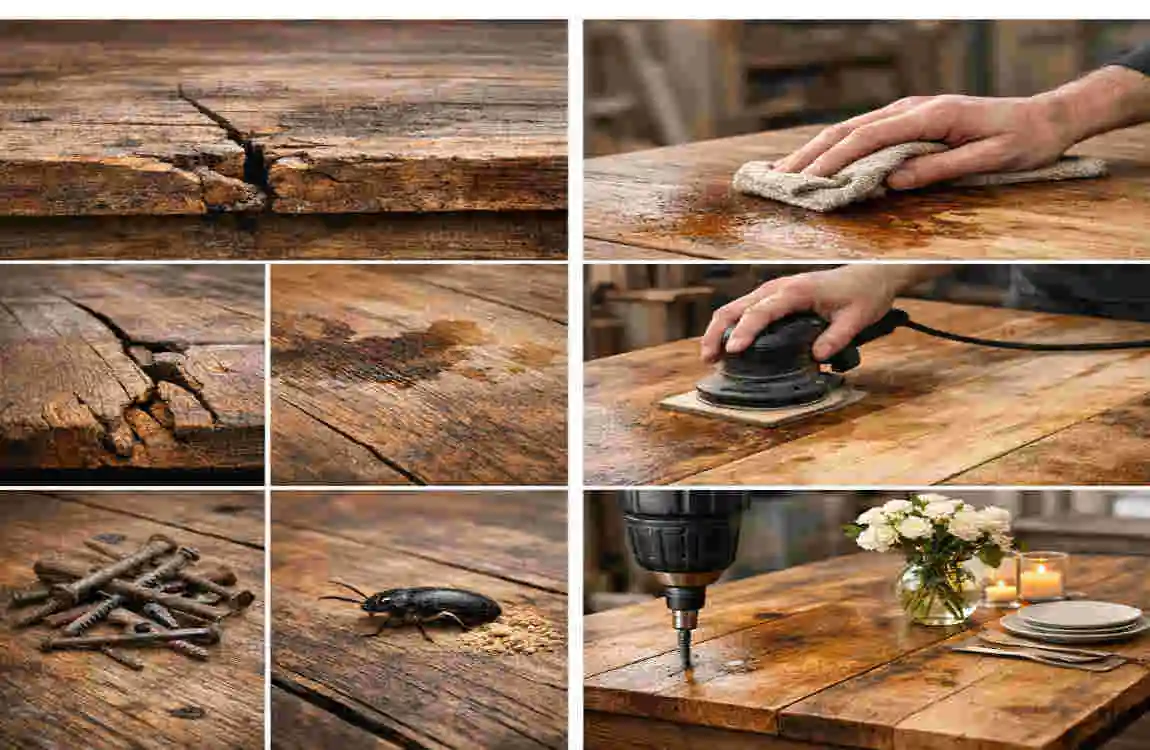
- Scratches: If you scratch the surface, don’t panic. Because the wood is rustic, scratches often blend in. For deep ones, you can lightly sand the spot and re-oil it.
- Refinishing: Every 5 to 10 years, you might want to hire a professional to sand the whole top and re-seal it lightly. This brings the table back to brand-new condition.
Maintenance Checklist
- Weekly: Dust with a dry microfiber cloth.
- Quarterly: Apply wax or oil.
- Annually: Inspect the joints and legs to tighten any loose bolts.
Integrating Reclaimed Wood Kitchen Tables into Stylish Homes
A table doesn’t exist in a vacuum. You need to style the room around it to make it shine.
Styling Tips
- Layering: Reclaimed wood loves greenery. Place a large vase of eucalyptus or a potted plant in the center. The green leaves pop against the brown wood.
- Metallics: Mix in metal accents. Copper bowls, brass candlesticks, or a silver tray look stunning against the rustic grain.
- Kitchen Islands: If you don’t have space for a table, consider using a reclaimed wood slab as your kitchen island countertop. It instantly warms up an all-white kitchen.
The Pakistan Context
For homes in Pakistan, reclaimed wood kitchen tables offer a beautiful fusion opportunity.
- Jali Work: Pair your rustic table with chairs that feature intricate Jali (lattice) work backs.
- Textiles: Throw a colorful runner hand-embroidered in Multan or a Sindhi Ajrak across the table. The contrast between the rough wood and the vibrant, soft fabric is breathtaking.
Challenges and Solutions
Let’s be real—owning a rustic table has a few quirks. Here is how to handle them.
Challenge: Uneven Surfaces. Because the wood is old, it may have grooves or cracks. This creates “crumb catchers” that are annoying to clean.
- Solution: Ask your builder to fill the cracks with clear epoxy resin. You get the crack’s look without the hole. Alternatively, invest in a custom-cut glass top for a smooth surface.
Challenge: The Cost Myth. People think they cannot afford reclaimed wood.
- Solution: While large tables are pricey, you can save 30% or more by buying “raw” reclaimed wood from a yard and DIY-ing the finish yourself, or by purchasing during clearance sales at major holidays.
The Future of Reclaimed Wood Kitchen Tables
What is next for this trend? We are seeing a merger of the old and the new. Tech-Integrated Tables are on the horizon. Imagine a 100-year-old oak table with invisible wireless charging pads embedded beneath its surface. You set your phone on the wood, and it charges.
We are also seeing Lab-Grown “Reclaimed” Alternatives. Scientists are working on growing wood that mimics the density and grain of old-growth timber without cutting down ancient forests. While this is still new, it could be the future of sustainable furniture.
Frequently Asked Questions (FAQs)
Are reclaimed wood kitchen tables durable enough for kids? Absolutely. In fact, they are better for kids than glass or polished veneer tables. Because the wood is already distressed and rustic, a new scratch or dent from a toy adds to the character rather than ruining the finish. Plus, the wood is dense and sturdy so it won’t wobble.
Where is the best place to buy reclaimed wood kitchen tables in Pakistan? You have several great options. Specialized furniture boutiques in larger cities like Lahore and Karachi often stock them. However, for the best price and authenticity, visit local timber markets where wood from demolished buildings is sold, and hire a skilled carpenter to craft one to your specs. Online stores like Etsy also ship globally.
Is reclaimed wood safe to eat off of? Yes, provided it has been sealed properly. Raw reclaimed wood can harbor bacteria or splinters. Ensure your table is finished with a food-safe sealant, such as polyurethane, natural wax, or Tung oil. This creates a barrier that makes the table safe and easy to clean.
Can I use reclaimed wood for a kitchen island? Yes! A reclaimed-wood topper on a kitchen island is a major trend for 2026. It adds warmth to kitchens that might otherwise feel cold with stone counters and white cabinets. Just ensure it is well-sealed against water, especially if your island has a sink.
How do I clean a reclaimed wood table? Keep it simple. Use a damp microfiber cloth for daily wiping. Avoid harsh chemical cleaners, bleach, or vinegar, as these can strip the natural oils and finish. If you have a sticky spill, use a mild dish soap diluted in warm water.
