
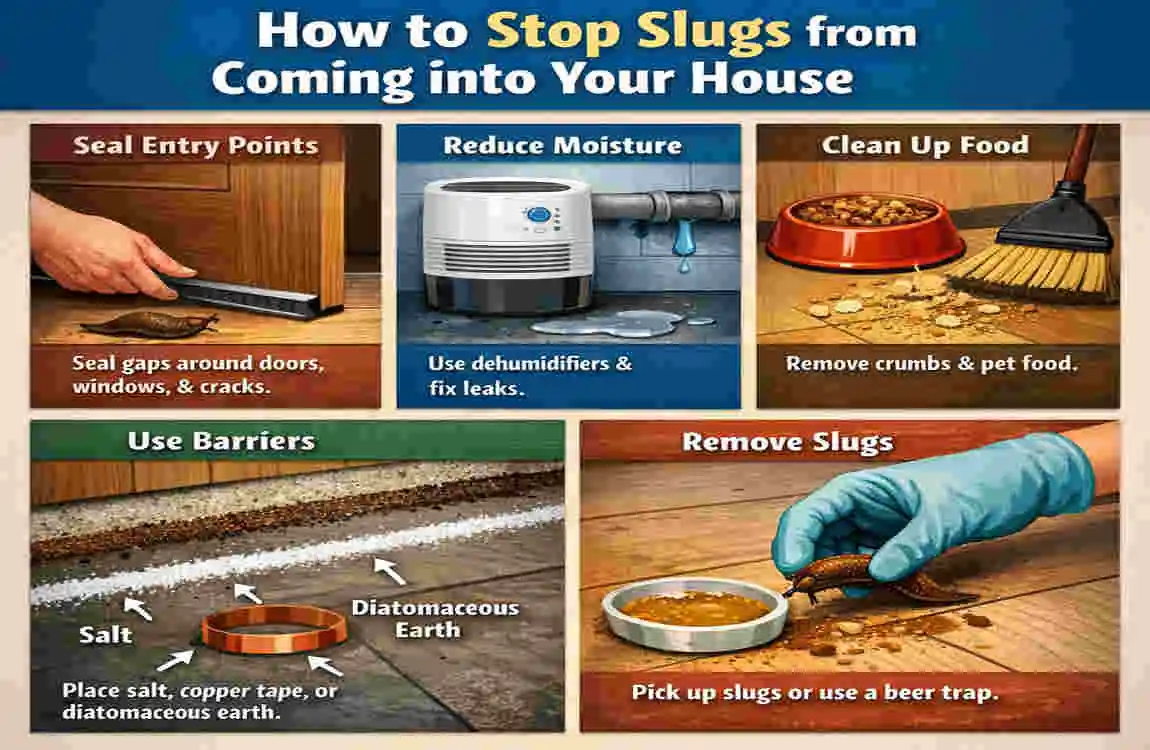
If you have found slugs indoors, you are not alone. It can feel odd, messy, and a little unsettling. The good news is that slugs usually come inside for simple reasons, and most of those reasons can be fixed.
Slugs prefer dark, damp, cool places. That means a house with moisture, shelter, and small openings can look like a comfortable path or hiding spot to them. They may slip in through doors, windows, cracks, vents, pipes, and tiny gaps you would barely notice.
If you are asking how to stop slugs from coming into your house, the answer starts with identifying what attracts them and blocking the entry points they use. In most cases, the best solution is a mix of moisture control, sealing gaps, and cleaning up outdoor hiding spots.
Why Are Slugs Coming Into Your House?
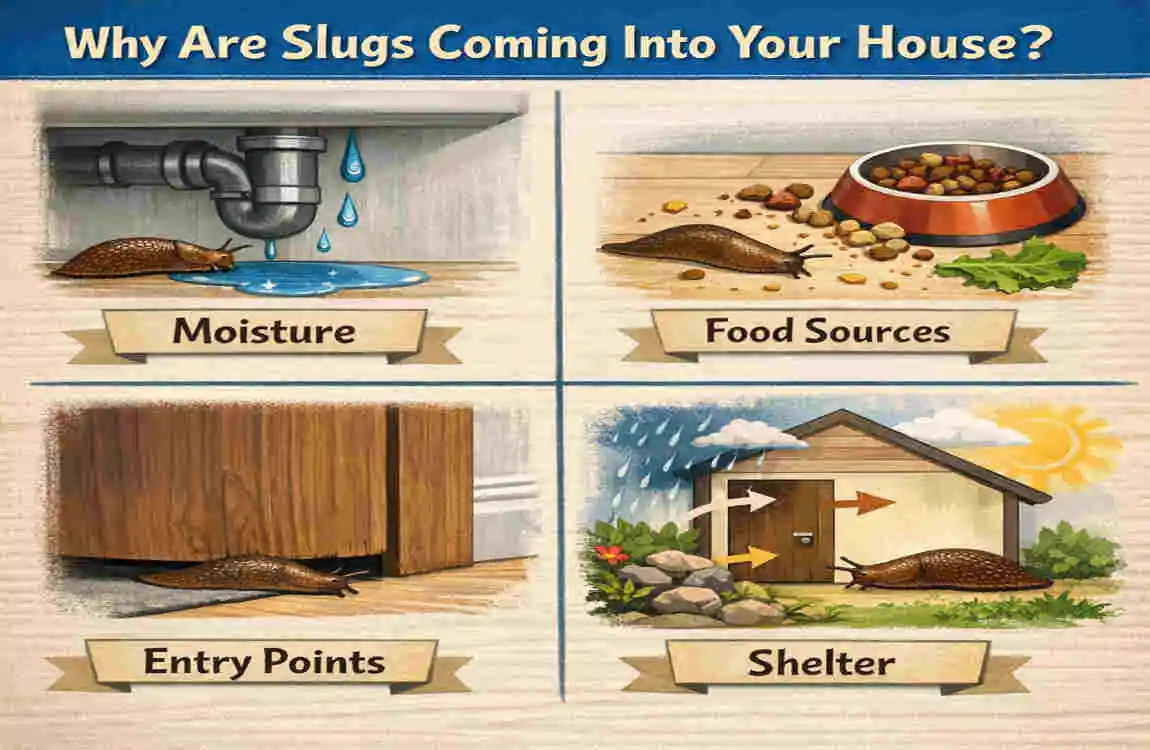
Damp and Humid Conditions
Moisture is one of the biggest reasons slugs move toward a house. They need damp conditions to survive, so they naturally look for places that stay cool and wet.
That is why they often show up in bathrooms, basements, laundry rooms, kitchens, and utility areas. If a room has leaks, condensation, or poor airflow, it may feel more inviting to slugs than a dry part of the house.
Even a small damp patch can matter. Slugs do not need a flooded room. They need enough moisture to keep from drying out.
Food and Organic Matter
Slugs are not only drawn to water. They are also attracted to food residue, plant material, and organic debris.
Crumbs on the floor, pet food, damp compost, and leftover bits near doors can all help bring them closer. If you keep potted plants or garden containers near entrances, that can also make the area more appealing.
Outside the clean home, slugs may hide under leaves, mulch, wood piles, and thick plants. Once they are close to the house, it becomes much easier for them to find a way inside.
Easy Entry Points
Slugs can squeeze through surprisingly small spaces. A tiny crack around a door or window may be enough.
Common entry points include:
- Gaps under doors
- Loose window seals
- Cracks in walls or foundations
- Openings around pipes and cables
- Vents and utility access points
If your home has even a few weak spots, slugs may use them as a direct route inside.
Weather Conditions
Slugs are more active during rainy, humid, and cool weather. Wet conditions help them move around more safely, so they often travel farther when the weather is damp.
They are also more active at night. That means you may not notice them until morning, when they have already crossed the floor or hidden near a wall.
How Do You Stop Slugs From Coming in Your House?
Seal Cracks and Gaps
The first big step is to block the openings slugs use.
Check around:
- Doors
- Windows
- Walls
- Pipes
- Vents
- Foundation edges
Use the right material for each area, such as caulk, sealant, or weather stripping. The goal is to close the gap without creating new problems.
If you are unsure where the gap is, look at the house at floor level and around corners. Slugs often follow the easiest path, so even a small opening can matter.
Keep Floors and Areas Dry
Dry spaces are less attractive to slugs. This is one of the easiest ways to make your clean home less inviting.
Fix leaks quickly, especially in places like sinks, toilets, washing machines, and basement walls. Wipe up standing water and keep damp floors dry.
If a room feels sticky or humid, improve airflow with ventilation or a dehumidifier. The drier the area, the less appealing it becomes.
Improve Door Sealing
Doors are a very common entry point. If there’s a gap at the bottom of the door, slugs can slide right in.
A door sweep or good weather seal can make a big difference. Check the space beneath exterior doors, especially after rain or after the weather changes.
If you can see daylight under the door, slugs may be able to get through too.
Remove Outdoor Hiding Places
Your yard can either help keep slugs away or bring them closer. If they have places to hide near the house, they are more likely to stay nearby.
Clear away:
- Leaves
- Grass clippings
- Wood piles
- Garden debris
- Thick mulch near walls
Also keep plants from touching the outside walls of the house. Slugs love shaded, damp cover, so trimming that area can reduce their activity.
Simple Ways to Get Rid of Slugs Already Inside
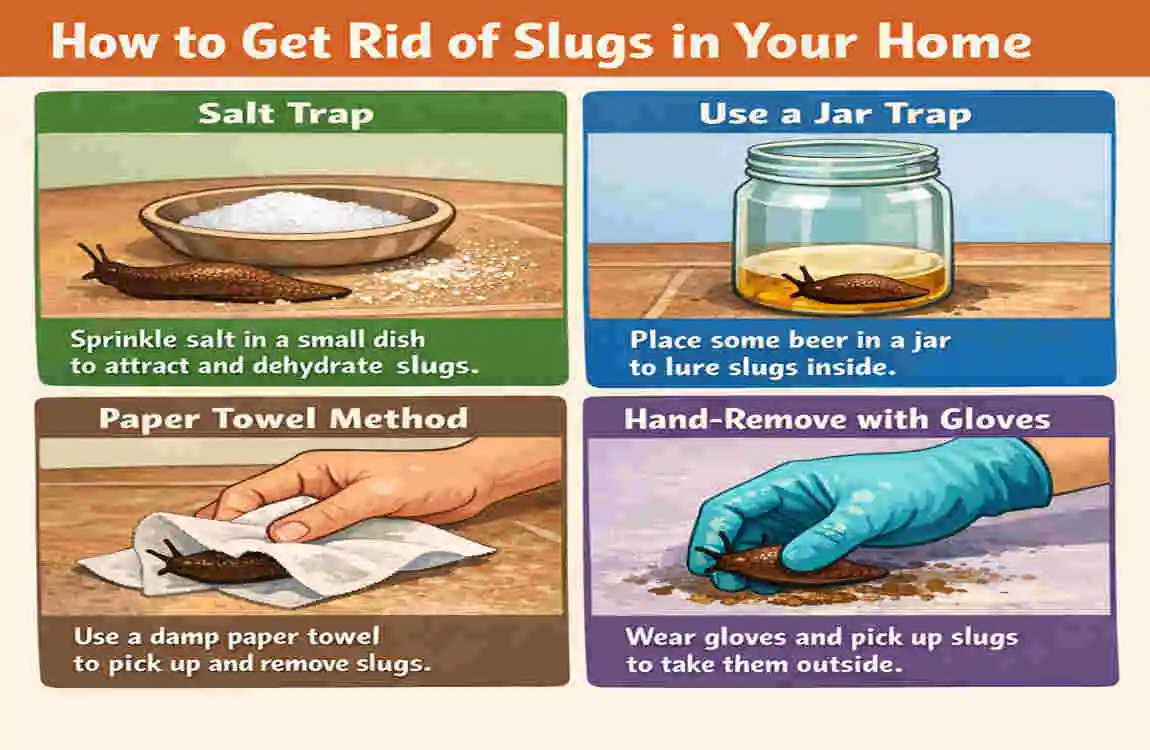
Remove Slugs Safely
If you spot a slug indoors, remove it carefully. You can use gloves or another safe tool to avoid direct contact.
Place it outside away from the house, preferably in a dry spot far from entrances. That lowers the chance of it coming right back in.
Clean the Area
After removing the slug, clean the area well. Slugs leave slime trails that can encourage others to follow the same path.
Wipe the floor, clean up any food residue, and remove damp organic material. Then dry the area as much as possible.
A clean, dry space is much less attractive to another slug.
Reduce Indoor Moisture
If slugs keep appearing, moisture may be part of the problem. Check for leaks, damp corners, and condensation near windows or pipes.
Use ventilation where needed and keep an eye on areas that stay wet for too long. A room that feels dry to you may still have enough moisture to attract slugs.
Natural Slug Prevention Methods
Copper Barriers
Copper can help in some situations because slugs do not readily cross it. People often use it around selected areas where slugs tend to enter.
It works best as a barrier, not a full solution. If the house is still damp or open, slugs may find another path.
Diatomaceous Earth
Diatomaceous earth is sometimes used around dry areas to discourage crawling pests. It can help in certain spots, but it must stay dry to work properly.
If it gets wet, it loses much of its effect. That is why it should be used carefully and as part of a bigger prevention plan.
Garden Maintenance
Good garden care can make a real difference. Keep plants trimmed and remove damp debris near the foundation.
This helps reduce the cool, shaded hiding places slugs enjoy. The less shelter they have near the house, the less likely they are to stay close.
Tip: Focus on removing what attracts slugs in the first place rather than relying solely on products or traps.
How to Prevent Slugs From Returning
Create a Dry Perimeter
Try to keep the area right around your home clean and reasonably dry. Do not overwater plants near exterior walls.
If you water your garden often, direct the moisture away from the house. A dry edge around the home makes it harder for slugs to settle nearby.
Check the Foundation and Exterior Walls
Look closely at the base of the house, wall seals, and any visible cracks. Pay special attention to places where pipes and cables enter the home.
Even small openings can become easy access points. If you find damage, seal it as soon as possible.
Maintain Gutters and Drainage
Poor drainage can create a wet zone around the home. That is exactly the kind of environment slugs like.
Keep gutters clear and ensure rainwater flows away from the house. If water pools near the foundation, fix that as soon as you can.
Inspect the House Regularly
Make inspections part of your routine, especially after heavy rain. Check doors, windows, vents, and low openings.
You do not need a big inspection every day. Just a careful look now and then can help you catch problems before slugs become a repeat issue.
Common Mistakes That Attract Slugs
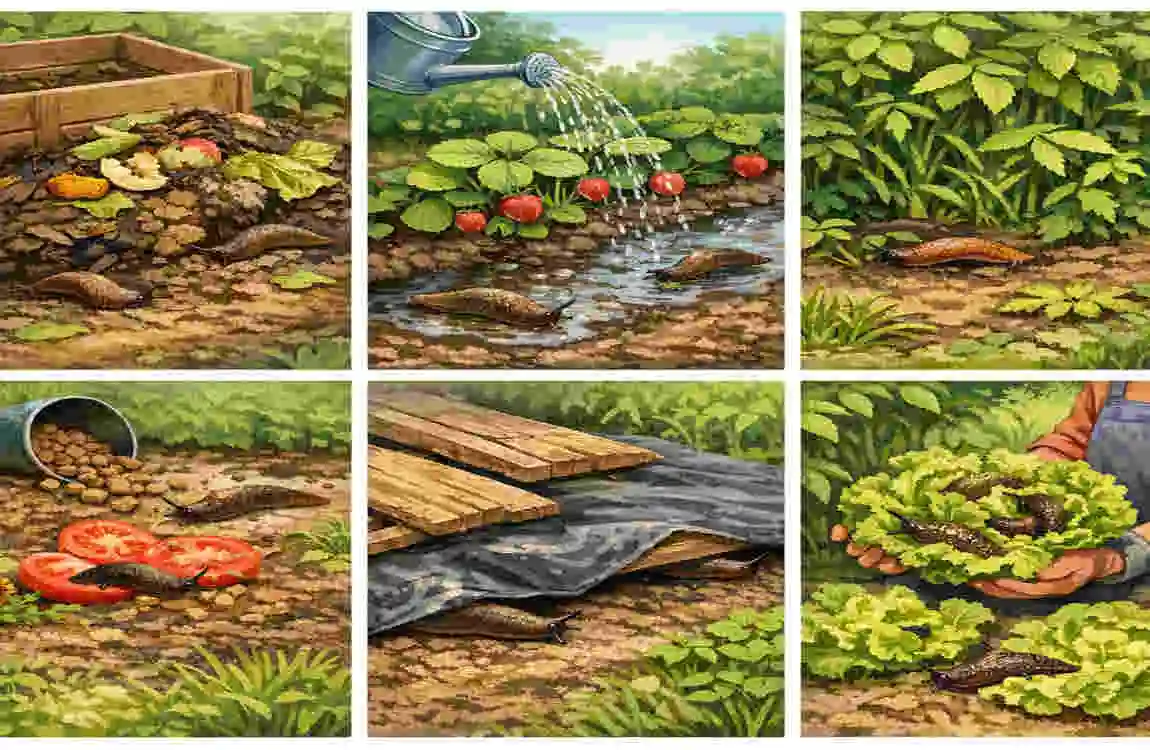
A few simple habits can make slug problems worse. Try to avoid these mistakes:
- Leaving damp towels or cloths on floors
- Overwatering plants near the house
- Letting leaves and debris pile up
- Ignoring small cracks or gaps
- Leaving exterior doors open at night
- Not checking again after repeated slug sightings
These habits may seem small, but they can create the exact conditions slugs want.
When Should You Be Concerned About Slugs in the House?
Finding one slug now and then does not always mean something serious. Sometimes a slug wanders in by accident, especially after wet weather.
But repeated sightings are worth paying attention to. If slugs keep showing up, that can point to moisture, drainage issues, or hidden openings in the house.
If the problem continues, check for leaks, damp areas, and poor sealing. You may also want help from a pest-control or clean home-maintenance professional if the issue does not improve.
FAQ: Slugs Coming Into the House
How do you stop slugs from coming in your house?
Seal cracks and gaps, install door sweeps, reduce moisture, improve drainage, and clear debris or vegetation near the home.
Why do slugs suddenly appear in my house?
Rain, humidity, damp rooms, and small openings can quickly bring slugs inside. They often appear when outdoor conditions change.
Do slugs come into houses at night?
Yes. Slugs are usually more active at night, especially when the air is cool and damp.
Can slugs climb walls to enter a house?
Yes, slugs can move across walls and other vertical surfaces, especially if those surfaces are damp.
What smell do slugs hate?
Some strong natural smells may help discourage them, but sealing gaps and controlling moisture are usually more reliable.
Should I worry if I find one slug inside?
Not always. One slug may be a one-time visitor. Still, repeated sightings mean you should check for entry points and moisture problems.
How can I stop slugs from coming under my door?
Check the gap under the door and install a properly fitted door sweep or seal. Also keep the outside area clean and dry.
Can moisture attract slugs into my home?
Yes. Moisture is one of the biggest reasons slugs come near houses and enter them.
| Reason | Simple Solution |
|---|---|
| Moisture and damp areas | Fix leaks and improve ventilation |
| Slugs enter through gaps | Seal cracks around doors, windows, and walls |
| Food attracts slugs | Clean up food scraps and spills |
| Wet gardens near the house | Keep plants and soil slightly away from walls |
| Nighttime activity | Check for slugs after dark and remove them |
| Poor drainage | Improve gutters and drainage around the home |
| Easy access through doors | Use door sweeps and weather stripping |
