
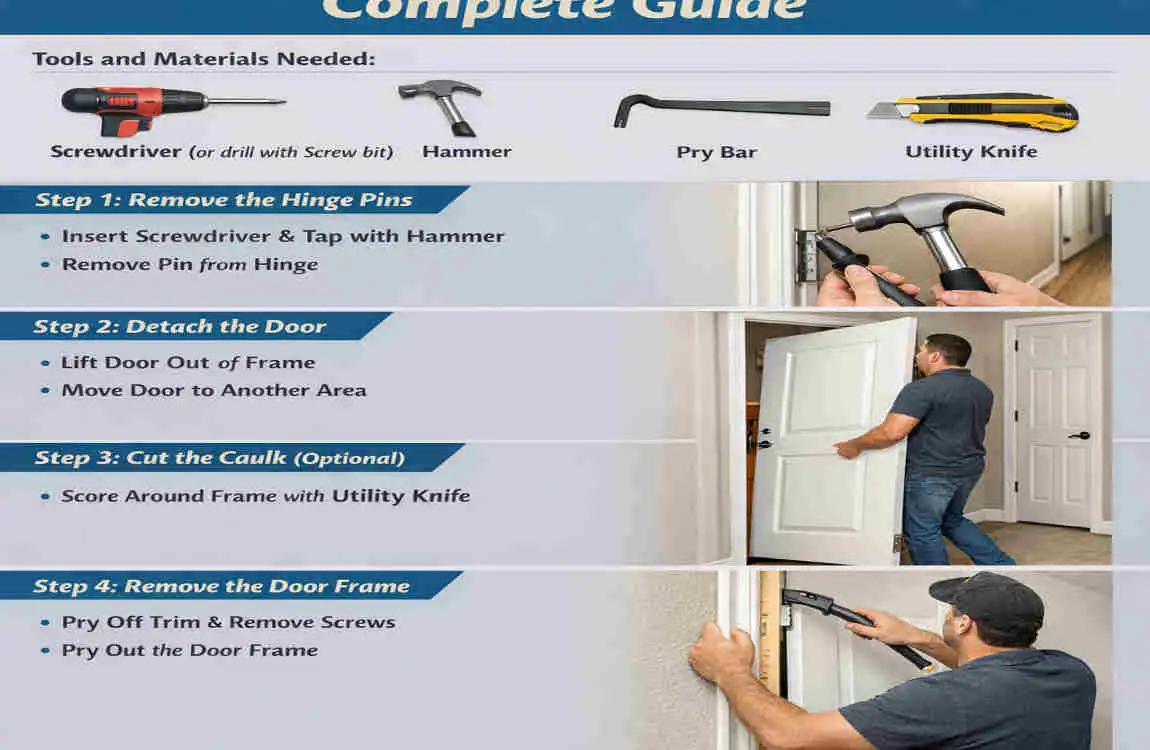
If you are learning how to remove a door, the good news is that most interior doors are easier to take off than they look. Homeowners often remove doors to paint, replace old hardware, fix squeaks, or make room during a remodel.
There are many reasons you may want to remove an interior door. Maybe you want to repaint it. Maybe the hinges are loose. Or maybe you are replacing the door with a new style.
Tools and Materials You Need
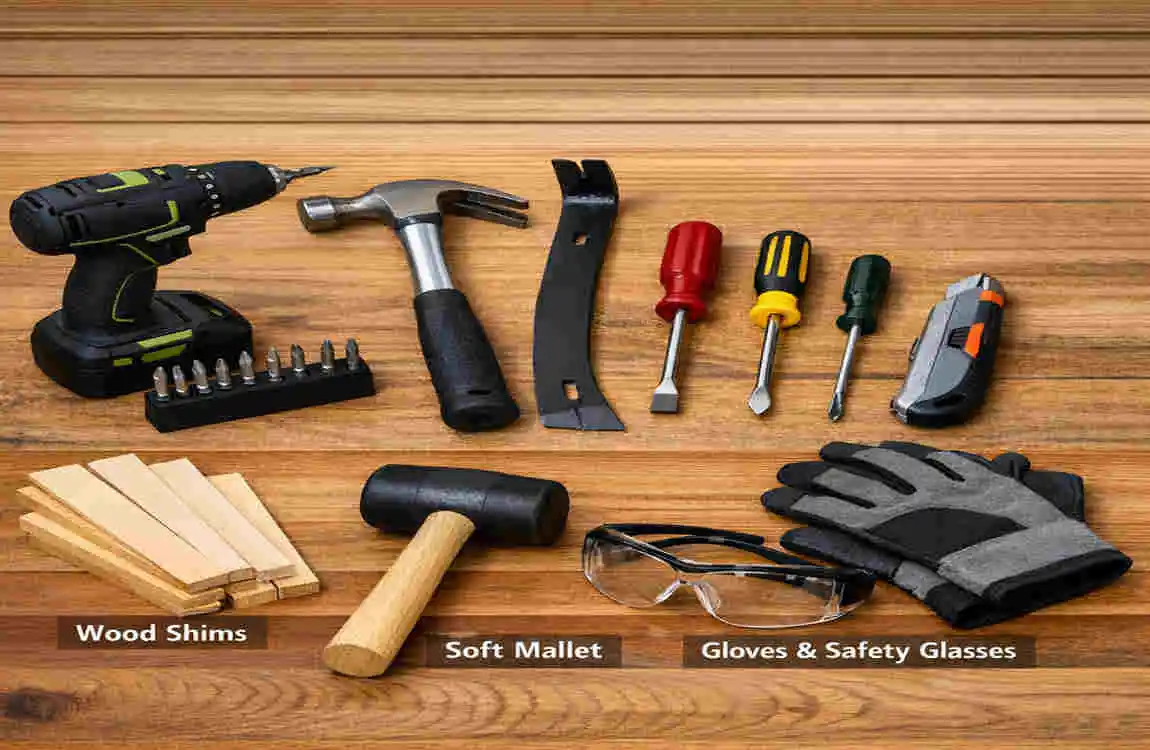
You do not need a large toolbox for this job. A few basic items are usually enough.
Basic Tools
- Screwdriver
- Hammer
- Nail set or punch
- Utility knife
- Pliers
- Pry bar if needed
Safety Equipment
- Work gloves
- Safety glasses
- Proper footwear
Helpful Extra
If the door is large or solid-core, ask someone to help you. A second person can hold the door steady while you remove the pins.
What You Really Need
For many doors, the most important tools are a hammer and a nail set or punch. Those help you tap out the hinge pins cleanly without damaging the hinge.
Prepare the Door and Work Area
Good preparation makes the job easier and helps prevent damage.
Clear the Area
Move furniture, rugs, and anything else near the doorway. You want enough room to lower the door safely once it comes off.
Inspect the Door
Before starting, look closely at the hinges and hardware. Check whether the door has:
- Standard hinges
- A door closer
- A lockset
- Security hardware
- Painted-over hinge pins
Knowing what you are dealing with helps you avoid surprises.
Why Preparation Matters
If the space is crowded, you may bump the wall, scrape the floor, or drop the door. A clear area gives you better control and more safety.
How to Remove a Door Step by Step
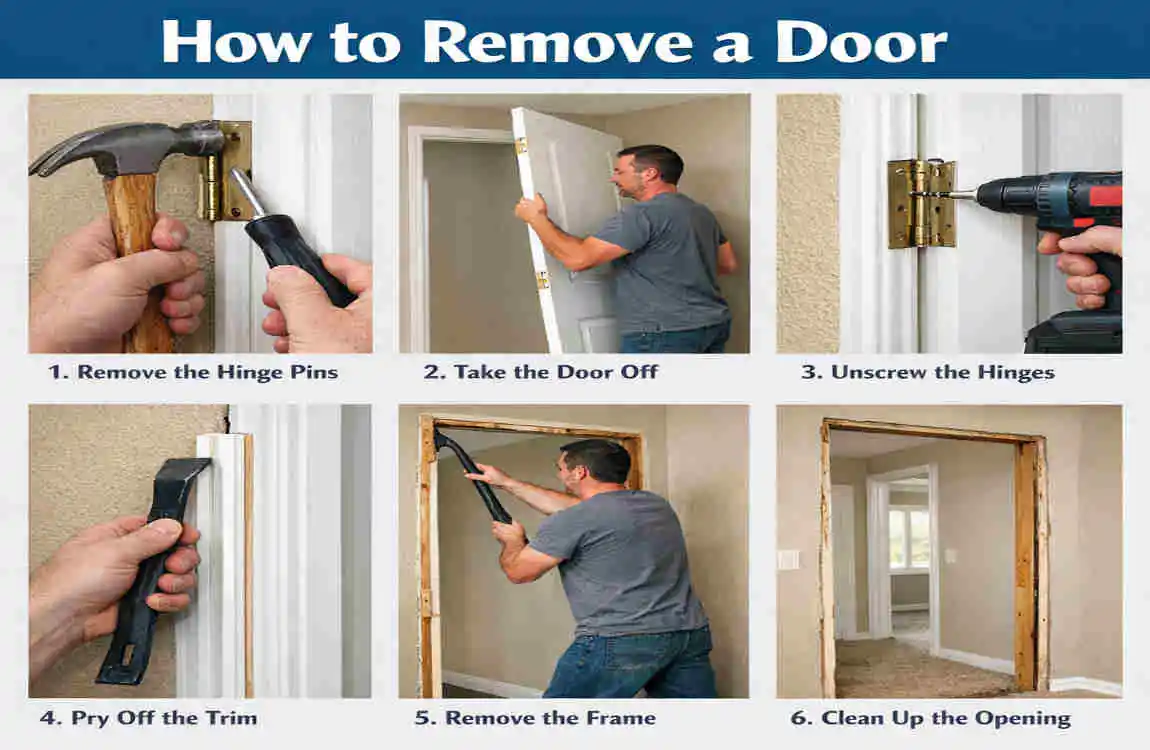
This is the main part of the process. Take your time and do each step carefully.
Support the Door
Before you remove anything, hold the door steady. You can also place a block or wedge under the bottom to keep it from shifting.
This matters because once the hinge pins are removed, the door will no longer be firmly attached to the frame.
Remove Hinge Pins
Most interior doors use hinge pins that slide upward or downward through the hinge. Place the tip of your nail set, punch, or screwdriver under the bottom of the pin and gently tap it upward with a hammer.
If the pin starts moving, keep tapping until you can pull it out by hand or with pliers.
If the pins are stuck:
- Tap a little harder, but do not force it too much
- Try loosening paint around the hinge
- Use penetrating oil if needed
- Work slowly so you do not bend the pin
Separate the Door From the Hinges
Once the pins are out, pull the door slightly toward you and lift it off the hinge leaves. If it feels heavy, ask someone to help.
Be careful here. The door can shift suddenly when the last bit of weight comes free.
Remove Remaining Hardware
If you are painting or replacing the door, you may want to remove the handle, latch, or lockset too. Use a screwdriver to take those off before storing or working on the door.
Quick Removal Checklist
- Support the door
- Tap out the hinge pins
- Lift the door off the frame
- Remove handles or locks if needed
- Store the door safely
How to Remove Different Types of Interior Doors
Not every door comes off the same way. Some are simple, while others need a different approach.
Standard Hinged Doors
These are the easiest. Remove the hinge pins, lift the door off, and you are done.
French or Double Doors
With double doors, work one side at a time. Keep both panels supported so they do not swing or knock into each other.
Sliding or Pocket Doors
Sliding and pocket doors are different from hinged doors. They usually do not come off when the hinge pins are removed. Instead, you may need to lift them off the track or carefully open the frame access.
Heavy or Solid-Core Doors
These doors are much heavier than hollow-core doors. You should almost always have help when removing them. They can strain your back or damage the floor if dropped.
Common Problems, Safety Tips, and What to Do After Removal
A few problems come up often, but they are usually manageable.
Common Problems
Stuck Hinge Pins
Paint, rust, or old hardware can make the pins hard to remove.
Stripped Screws
If you need to remove hardware, old screws may spin without loosening.
Painted-Over Hinges
Thick paint can hold the hinge parts together.
Heavy Doors
Some doors are much heavier than they look.
Tight or Damaged Hardware
Old hinges may bend or shift over time.
Safety Tips
- Do not force stuck parts too hard
- Keep fingers away from hinge pinch points
- Protect floors with a towel or cardboard
- Use a helper if the door feels unstable
- Wear gloves and safety glasses
After Removing the Door
Once the door is off, decide what comes next.
You may want to:
- Store the door for reuse
- Inspect the hinges and frame
- Fill old screw holes
- Repair trim or wall marks
- Prepare for a replacement door
If you are keeping the door, store it flat so it does not warp.
FAQ: How to Remove an Interior Door
Can I remove an interior door by myself?
Yes, if it is a light door and you are comfortable handling it. But for larger or solid-core doors, a helper is safer.
What is the easiest way to remove a door?
The easiest method is to remove the hinge pins and lift the door off the frame.
How do you remove a door with stuck hinge pins?
Try tapping the pins gently with a punch and hammer. If needed, use a little oil and let it sit before trying again.
Do I need to remove the hinges to take off a door?
Usually no. Most of the time, removing the pins is enough. You only remove the full hinge if you are replacing or repairing it.
How long does it take to remove an interior door?
A simple door can take 10 to 20 minutes. A heavy or painted-over door may take longer.
Can I remove a door without damaging the frame?
Yes. If you work slowly, support the door well, and use the right tools, you can usually avoid damage.
What should I do with the door after removing it?
You can store it, repaint it, repair it, reuse it, or prepare it for replacement.
Can I remove a pocket door myself?
Yes, but pocket doors are different from standard doors. They usually require a different process and more care.
| Step | What to Do | Helpful Tip |
|---|---|---|
| Gather Tools | Get a screwdriver, hammer, nail set, and utility knife. | Use the correct screwdriver to avoid damaging screws. |
| Remove Door Hardware | Take off the door knob, latch, or other hardware if necessary. | Keep small screws in a container. |
| Support the Door | Have someone hold the door steady while you work. | This prevents the door from falling unexpectedly. |
| Remove Hinge Pins | Tap the hinge pins upward with a hammer and nail set. | Start with the bottom hinge and work upward. |
| Lift the Door Away | Carefully pull the door away from the hinges and set it aside. | Avoid dragging it across the floor. |
