
If you have been asking yourself why there are beetles in your house, you are not alone. Many homeowners notice beetles indoors and immediately wonder where they came from and why they keep showing up.
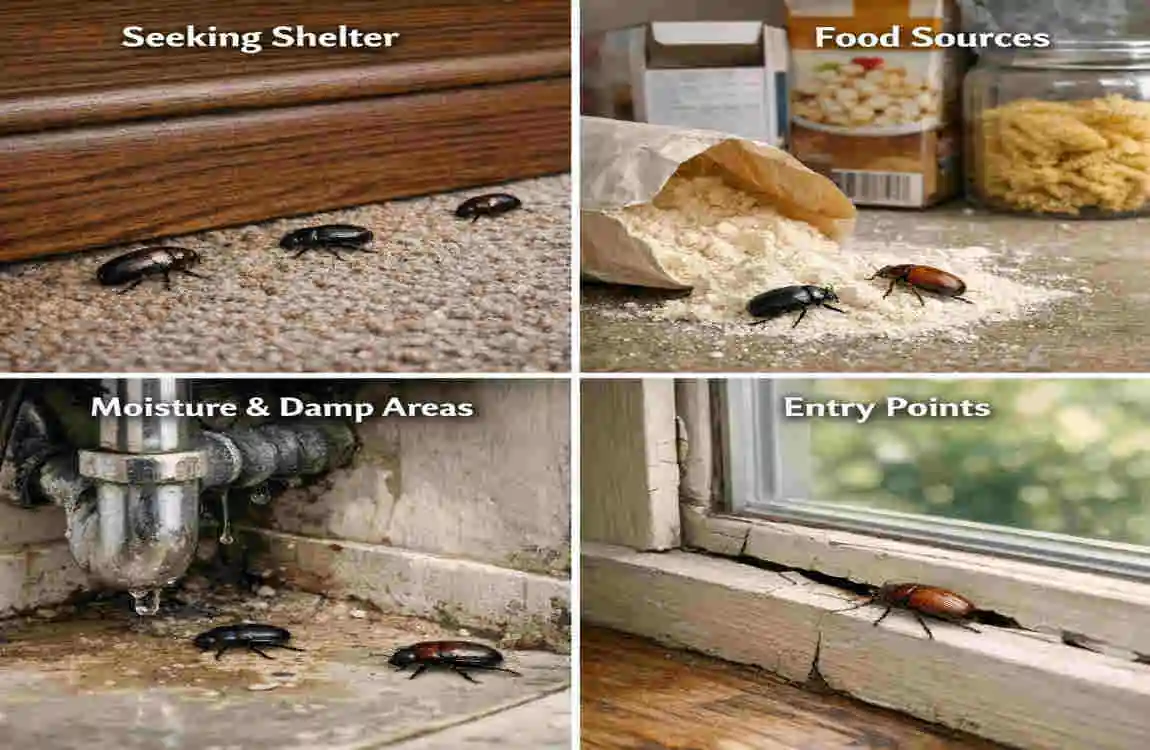
In most cases, beetles enter the home by accident or because something in the home attracts them. They may enter through tiny cracks, open windows, damaged screens, vents, or gaps around doors. Some are looking for food, while others are drawn to warmth, moisture, or shelter.
The good news is that most beetle problems can be managed with simple cleaning, better sealing, and a few smart prevention steps.
What Attracts Beetles to a House?
Food sources
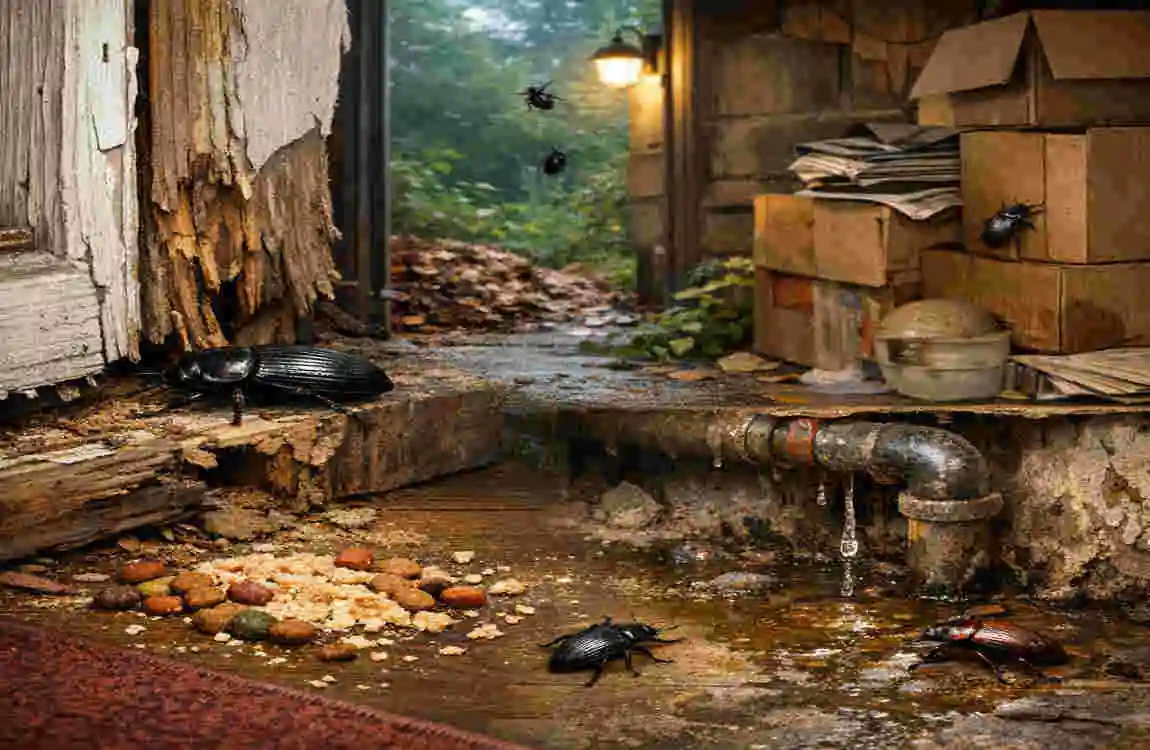
One of the biggest reasons beetles enter a home clean is food. Some beetles are drawn to dry goods like flour, cereal, grains, pet food, and dried snacks. Others feed on natural fibers, old food crumbs, or organic material left in hidden places.
Even a small spill in a pantry or a forgotten bag of food can bring beetles indoors. If food is stored in open boxes or loosely sealed containers, beetles may find it much easier to settle in.
Light and warmth
Some beetles are attracted to light, especially at night when porch lights, window lights, or indoor lamps shine through glass. Others want a warm place to rest when the outdoor temperature changes.
This is why you may notice beetles near windows, doors, or light fixtures. They are often not trying to invade your home on purpose. They are just drawn to the conditions around it.
Moisture and damp areas
Beetles also like damp spaces. Basements, crawl spaces, bathrooms, laundry rooms, and leaky areas can all be attractive to insects.
When a home has high humidity or hidden moisture problems, it can become more appealing to beetles and other pests. Poor airflow can make the problem even worse.
Outdoor vegetation
If your house is surrounded by plants, mulch, firewood, or thick landscaping, beetles may live nearby before they move inside. Trees, shrubs, and garden beds near walls can provide them with shelter and easy access.
The closer their outdoor hiding spots are to your home, the more likely they are to wander in.
Common Types of Beetles You May Find Indoors
Carpet beetles
Carpet beetles are one of the most common house beetles. They often show up in closets, carpets, furniture, and stored clothing.
You may notice small holes in fabrics or damage to natural materials like wool, fur, or feathers. The beetles themselves are usually tiny and may be black, brown, or speckled.
Pantry beetles
Pantry beetles are found in kitchen cabinets and food storage areas. They can infest flour, rice, cereal, spices, and dry pet food.
A common sign is finding small beetles in or near food packages. You may also notice tiny holes in packaging or fine dust in the pantry.
Ground beetles
Ground beetles usually live outdoors, but they sometimes wander into clean homes by accident. They are often larger than pantry beetles and may appear near doors, basements, or ground-level entry points.
These beetles do not usually want to stay inside. They often enter while chasing light or shelter.
June beetles and other outdoor beetles
Some beetles are seasonal visitors. June beetles and similar outdoor species may fly toward lights or slip into the house through open doors and windows.
These insects are often accidental visitors rather than signs of a major infestation. Still, if they keep showing up, it usually means there is an easy entry point nearby.
Why correct identification matters
Knowing the type of beetle is important because each one may need a different solution. A pantry beetle problem starts in the kitchen, while a carpet beetle problem may begin in closets or rugs.
If you correctly identify the beetle, you can focus on the real source instead of just removing the bugs you can see.
Why Are There Beetles in My House? Main Causes Explained
Cracks and gaps around the home
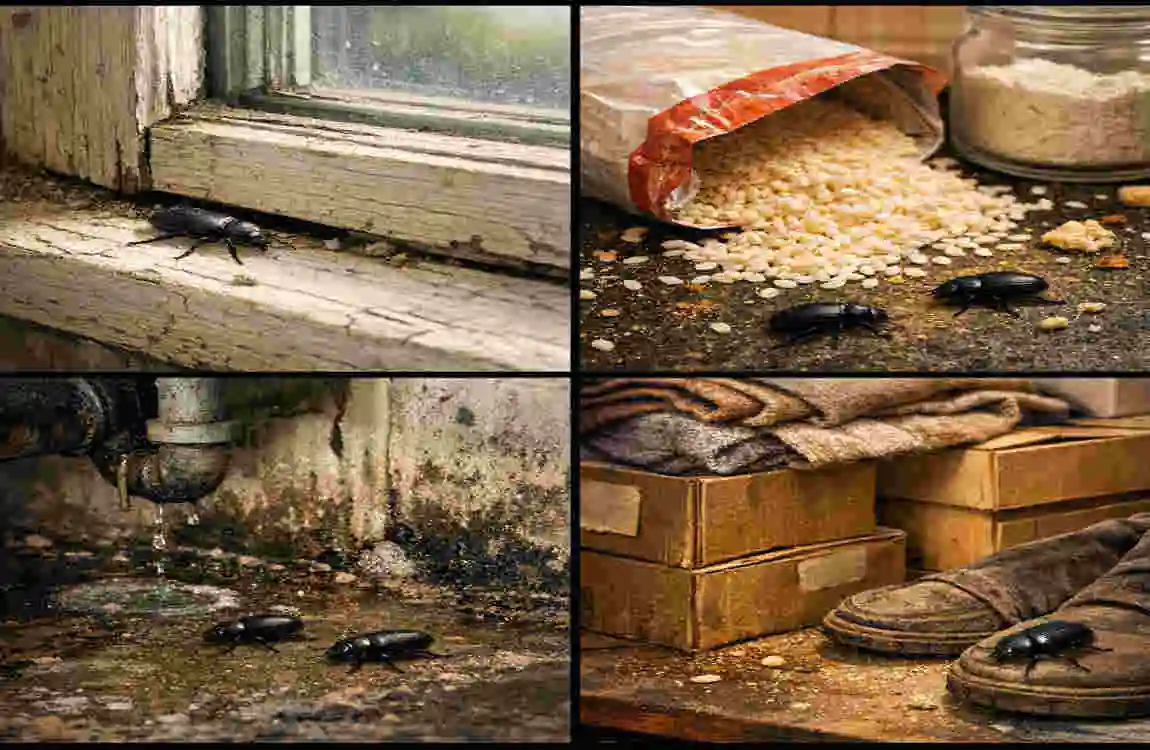
Beetles do not need a large opening to get inside. Small cracks around windows, doors, siding, vents, and utility lines can be enough.
Even tiny spaces can act like open doors for insects. Once they are inside, they may move into walls, closets, or hidden corners.
Damaged screens and loose seals
Window screens that are torn or loose can easily let beetles in. The same goes for broken weatherstripping or worn door sweeps.
If your screens have holes or your doors do not close tightly, beetles have a simple path into your home.
Food and organic debris
Open food packages, crumbs, pet food, and stored dry goods are common attractants. Beetles may also feed on dead insects, lint, dust, and other organic debris.
That is why clean kitchens and storage areas matter so much. A small amount of leftover material can be enough to support a pest problem.
Moisture problems
Leaks, damp clean basements, and poor ventilation can draw beetles indoors. Many insects prefer moisture because it helps them survive and reproduce.
If you repeatedly notice beetles in the same damp area, check for leaks, standing water, or hidden condensation.
Firewood and plants brought indoors
Firewood, potted plants, garden tools, and outdoor storage items can carry beetles into the house. In some cases, beetles ride in on these items.
This is especially common when outdoor items are brought inside without being inspected first.
Seasonal activity
Sometimes beetles appear in larger numbers during certain times of the year. Changes in temperature, light, and weather can push them indoors.
So if you are asking why there are beetles in my house all of a sudden, the answer may be seasonal rather than permanent.
How to tell where they are coming from
Look closely at the places where beetles appear most often. Try checking:
- Window frames and doors
- Kitchen cupboards and pantry shelves
- Carpet edges and closets
- Basements, attics, and crawl spaces
- Areas near lights, vents, or moisture
If beetles keep showing up in one spot, that area may be the source.
How to Get Rid of Beetles in Your House
Clean and vacuum thoroughly
Start with a deep cleaning. Vacuum carpets, baseboards, corners, furniture edges, and hidden spots where beetles may hide.
After vacuuming, empty the contents immediately to prevent insects from remaining inside the machine. This helps remove both beetles and their eggs or larvae.
Remove infested food or materials.
Check all dry food packages in the kitchen. Throw away anything that looks infested, damaged, or contaminated.
Wipe shelves, bins, and cabinets clean before putting food back. This helps stop beetles from returning to the same area.
Seal entry points
Repair broken screens, seal cracks, and close gaps around doors, windows, pipes, and vents. Add door sweeps if needed.
This step is important because even after cleaning, beetles may return if the entry points remain open.
Reduce moisture
Fix leaks, improve airflow, and dry out damp spaces. Use fans or dehumidifiers where needed.
If a basement or crawl space remains moist, beetles may continue to find it attractive.
When to call a professional
If beetles keep returning or you see them in large numbers, professional pest control may be the best option.
You should also get help if:
- You cannot identify the beetle
- You suspect damage inside walls or storage areas
- The infestation returns after cleaning
- The problem seems to involve food, fabric, or hidden nesting areas
How to Prevent Beetles From Coming Back
Keep the home less attractive.
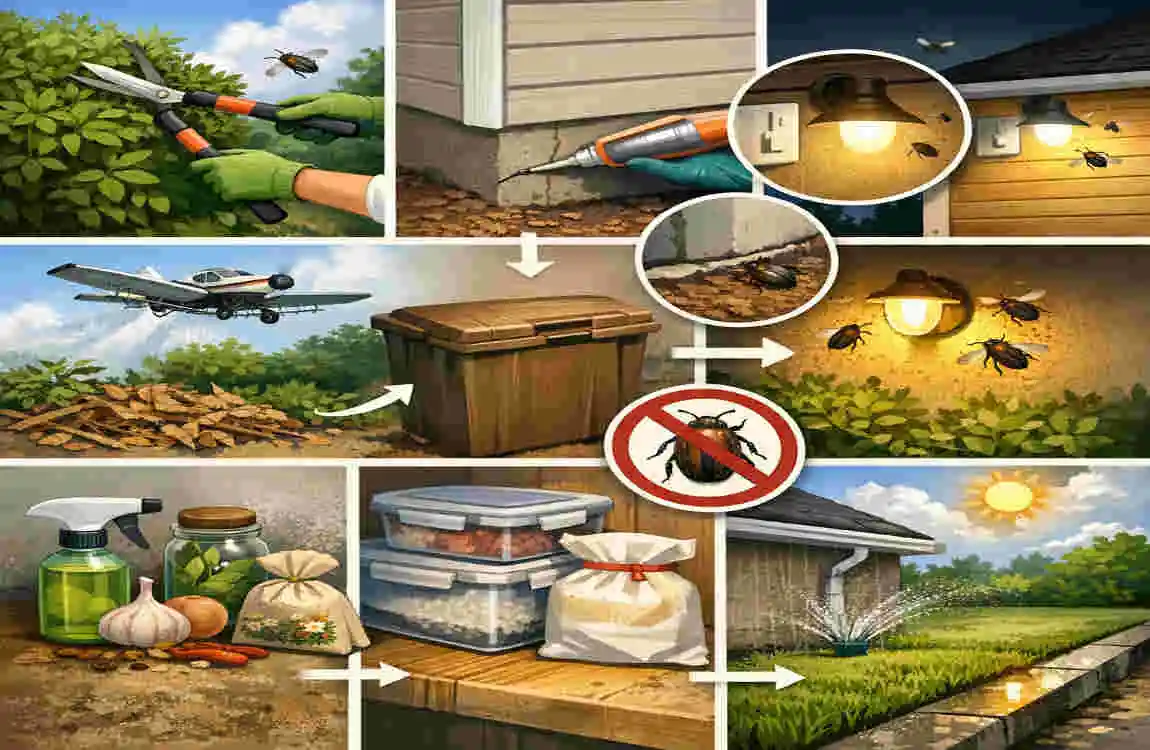
The best way to prevent beetles is to make your house less inviting to them. That means keeping food sealed, moisture low, and clutter under control.
Regular cleaning goes a long way. Even small habits can make a big difference over time.
Simple prevention checklist
- Store dry foods in airtight containers
- Repair damaged window screens
- Seal cracks around doors and windows
- Keep basements dry and ventilated
- Vacuum carpets and corners often
- Inspect groceries before bringing them inside
- Trim plants away from exterior walls
- Store firewood away from the house
Frequently Asked Questions About Beetles in the House
Why are there beetles in my house all of a sudden?
This can happen because of seasonal changes, nearby vegetation, moisture, open food, or a new opening in the home. Beetles often enter when conditions inside become more attractive.
Are beetles in the house dangerous?
Most house beetles are not dangerous to people. However, some can damage food, fabrics, or stored materials.
Why do I keep finding beetles near my windows?
Beetles may be drawn to light, or they may be entering through damaged screens or gaps around the window frame.
Can beetles come into the house through cracks?
Yes. Small cracks around doors, windows, pipes, vents, and foundations can give beetles easy access.
How do I know if I have a beetle infestation?
Repeated sightings, larvae, damaged materials, contaminated food, or beetles appearing in several rooms can all be signs of an infestation.
What attracts beetles indoors?
Food, moisture, warmth, light, organic debris, and nearby outdoor vegetation are all common attractants.
Should I use insecticide for beetles?
Insecticide may help in some cases, but it is better to identify the beetle and fix the source first. For larger or stubborn problems, professional treatment may be the safer choice.
| Reason | What It Means | What to Do |
|---|---|---|
| Food sources | Beetles may find crumbs, grains, pet food, or stored foods. | Store food in sealed containers and clean spills. |
| Moisture | Damp areas can attract certain beetle species. | Fix leaks and improve ventilation. |
| Outdoor entry | Beetles can enter through doors, windows, cracks, and vents. | Seal gaps and repair screens. |
| Light | Some beetles are attracted to indoor lights at night. | Reduce unnecessary outdoor lighting. |
| Plants | Houseplants or garden plants may carry beetles indoors. | Check plants before bringing them inside. |
