
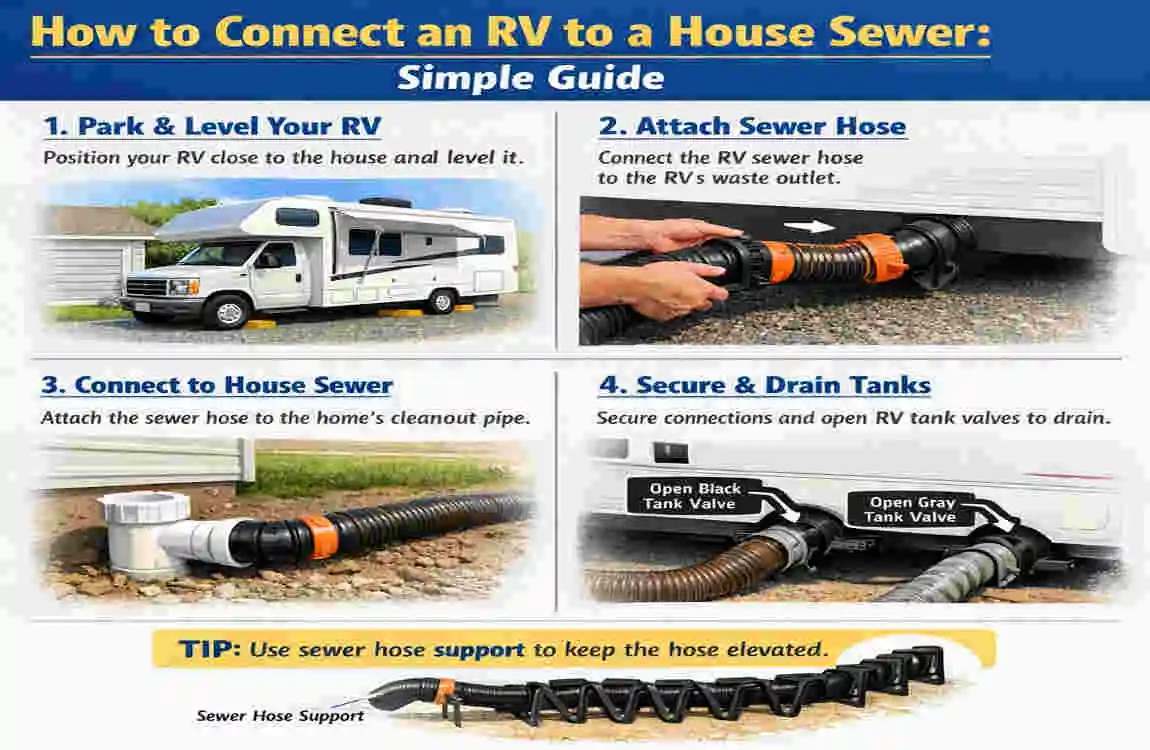
If you are learning how to connect an RV to a house sewer, the most important thing to know is this: you must use the correct sewer cleanout, secure fittings, and follow safe waste-handling steps. RV waste should never go into the wrong drain or an open pipe without proper protection.
Can You Connect an RV to a House Sewer?
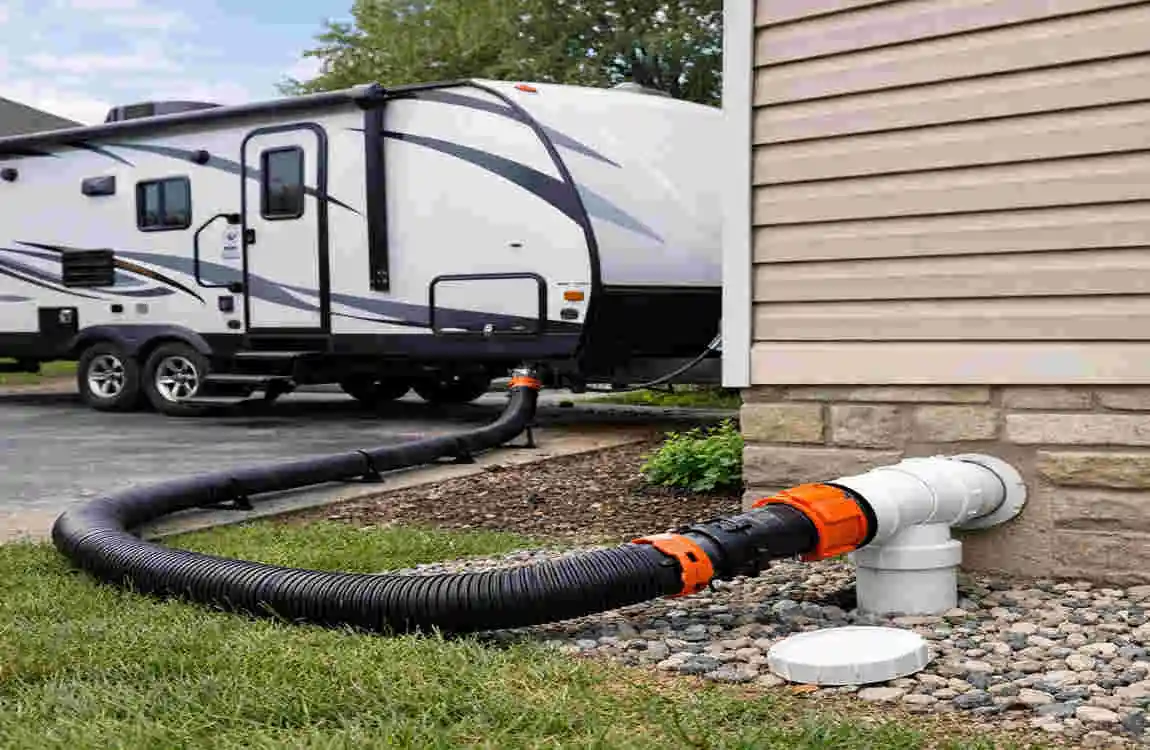
Yes, in many cases you can connect an RV to a house sewer, but it depends on your home plumbing setup and local rules.
Understanding the Basic Connection
An RV sewer line usually connects to a house sewer cleanout, not to a sink, toilet, or random drain. The cleanout gives you direct access to the sewer line more safely and properly.
When It Is Safe and Legal to Connect
It is usually safer when:
- You use a proper cleanout adapter
- The hose is sealed and secure
- The setup does not allow spills or backflow
- Local rules allow temporary RV dumping
Local Plumbing and Wastewater Regulations
Rules can vary by city, county, or state. Some places allow temporary RV sewer connections at home, while others may require special steps. If you are unsure, check local plumbing rules before connecting anything.
Equipment Needed to Connect an RV to a House Sewer
Before you begin, gather the right tools and parts. The job is much easier when everything is ready first.
RV Sewer Hose and Fittings
You will need a standard RV sewer hose that fits your RV outlet. Make sure the hose is in good condition with no cracks or damage.
Sewer Cleanout Adapter
This is one of the most important parts. The adapter helps connect the RV hose to the house sewer cleanout safely and tightly.
Hose Support and Protective Equipment
A hose support helps keep waste flowing downward. You should also wear gloves and keep cleaning supplies nearby.
Simple Equipment Table
ItemWhy You Need It
RV sewer hose Moves waste from the RV to the sewer
Cleanout adapter Creates a proper sewer connection
Hose support Helps maintain downhill flow
Gloves Protects your hands
Disinfectant or cleaner Helps clean spills and surfaces
Find the Correct House Sewer Cleanout
This step matters a lot. You should never connect an RV hose to the wrong opening.
What a Sewer Cleanout Looks Like
A sewer cleanout is usually a capped pipe outside the home. It may be made of PVC or metal and often sits near the house, yard, driveway, or foundation.
Where to Find It Around Your Home
Look around:
- The side of the house
- Near the foundation
- In the yard
- Close to plumbing access points
Why You Should Never Use an Improper Drain
Do not connect to a sink drain, toilet drain, or storm drain. Those are not meant for RV waste and can cause clogging, odors, and legal problems.
How to Connect RV to House Sewer Step by Step
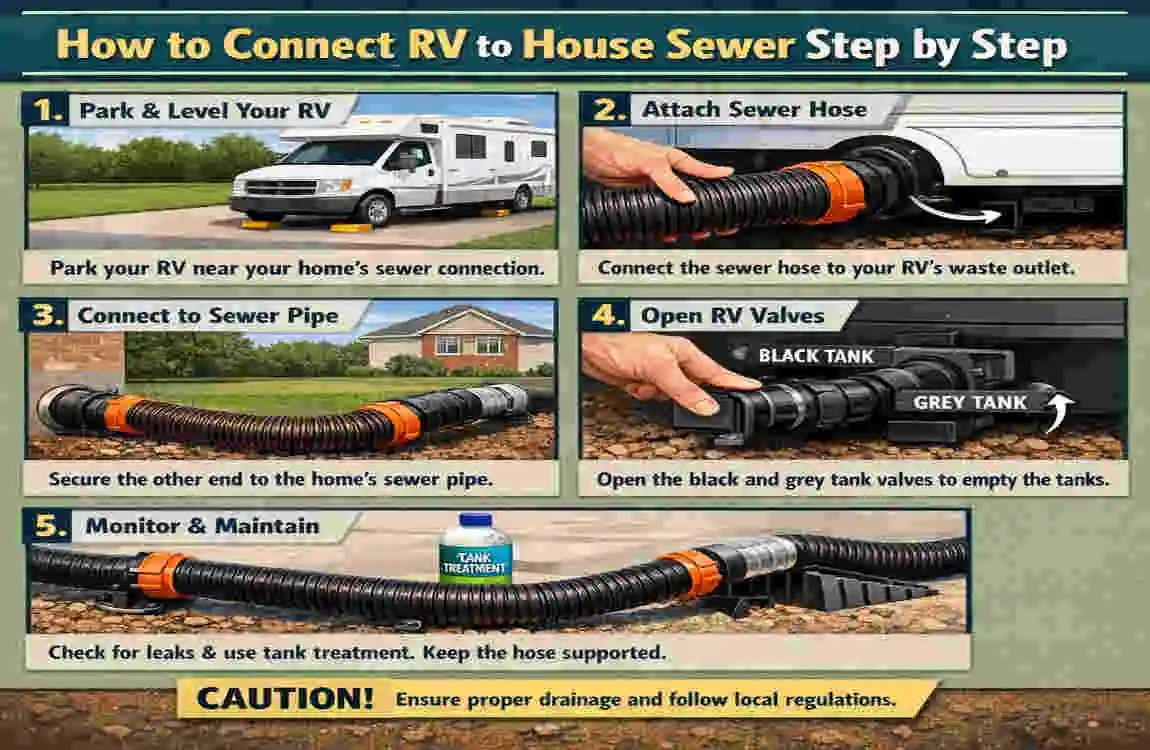
Once you have the correct cleanout and equipment, you can carefully connect the system.
Prepare the RV and Sewer Connection
Park the RV on level ground if possible. Make sure the sewer hose can slope downward from the RV to the cleanout.
Attach the RV Sewer Hose
Connect one end of the hose to the RV waste outlet. Make sure the fitting locks in place properly.
Connect the Hose to the House Sewer Cleanout
Attach the other end to the cleanout adapter. Then place the adapter into the sewer cleanout opening to keep it secure.
Secure the Connection and Check for Leaks
Before dumping anything, check the whole setup. Make sure:
- The hose is tight
- The adapter is sealed
- The hose is supported
- Nothing can move or pop loose
Safely Empty the RV Black and Gray Water Tanks
Dumping the tanks in the right order helps prevent clogs and odors.
Which Tank Should You Empty First?
Usually, you should empty the black tank first, then the gray tank. The gray water helps rinse the hose after the black water is drained.
How to Control the Flow
Open the valve slowly and let the waste flow through the hose in a controlled manner. Do not force it. If flow is slow, check for clogs or poor slope.
Flushing and Cleaning the Sewer Hose
After dumping, rinse the hose if your setup allows it. Then cap and store everything properly so it stays clean for the next use.
Common Problems and Mistakes to Avoid
A few small mistakes can turn into big messes.
Sewer Hose Leaks
Leaks usually happen when the hose is damaged, poorly connected, or not sealed well. Always inspect the hose before use.
Clogged or Slow Drains
If waste moves slowly, the hose may not have enough slope, or the line may be partially blocked.
Bad Odors Around the Connection
Bad smells usually mean the connection is not sealed well enough. Tighten the fittings and check the adapter.
Leaving the Black Tank Valve Open
Do not leave the black tank valve open all the time. That can cause solids to accumulate and form a clog. Dump it when needed, then close it again.
Important Safety Tips for RV Sewer Connections
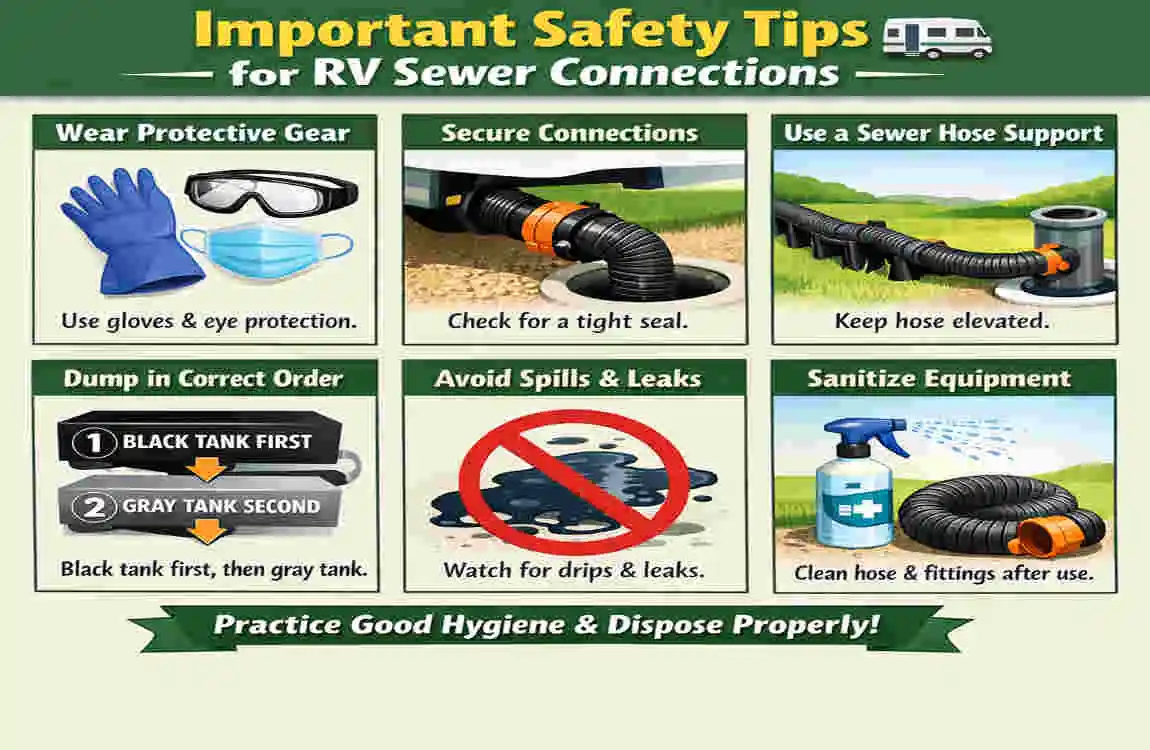
Safety should always come first when dealing with waste systems.
Wear Protective Gloves
Always use gloves when handling sewer equipment. Clean your hands well afterward too.
Use a Secure and Sealed Connection
Loose fittings can lead to spills and contamination. Make sure every part is connected tightly.
Prevent Backflow and Spills
Keep the hose sloped downward so waste moves in the right direction. A secure setup reduces the chance of backflow.
Follow Local Plumbing Rules
If your area has special rules, follow them. That protects your home, your RV, and your plumbing system.
Frequently Asked Questions
Can I connect my RV sewer directly to my house sewer?
Yes, but only through the proper house sewer cleanout and with the correct adapter.
How do I find the sewer cleanout at my house?
Look near the foundation, in the yard, or around the side of the home. It usually has a capped pipe.
Can I dump RV waste into a septic system?
Sometimes yes, but only if the system is designed for it and local rules allow it. Be careful not to overload the septic tank.
What size sewer hose do I need?
Most RV sewer hoses are standard sizes, but you should match the hose and fittings to your RV outlet and cleanout adapter.
Should I leave my RV black tank valve open?
No. It is usually better to keep it closed and dump it only when the tank is ready.
Do I need a permit to connect an RV to a house sewer?
That depends on local rules. Some places may allow it without a permit, while others may not.
Can I connect an RV sewer hose to a toilet or sink drain?
No. That is not safe or proper. Use a real sewer cleanout instead.
| Step | What to Do | Important Tip |
|---|---|---|
| Find Sewer Access | Locate a house sewer cleanout or approved connection | Do not connect to a storm drain |
| Prepare Equipment | Use a quality RV sewer hose and proper adapters | Choose a leak-resistant hose |
| Connect the Hose | Securely attach the hose to the RV outlet and sewer inlet | Keep both ends tightly sealed |
| Position the Hose | Create a gentle downhill slope | Avoid sharp bends and kinks |
| Empty the Black Tank | Open the black-water valve first | Close it after the tank is empty |
| Empty the Gray Tank | Open the gray-water valve afterward | This helps rinse the hose |
