
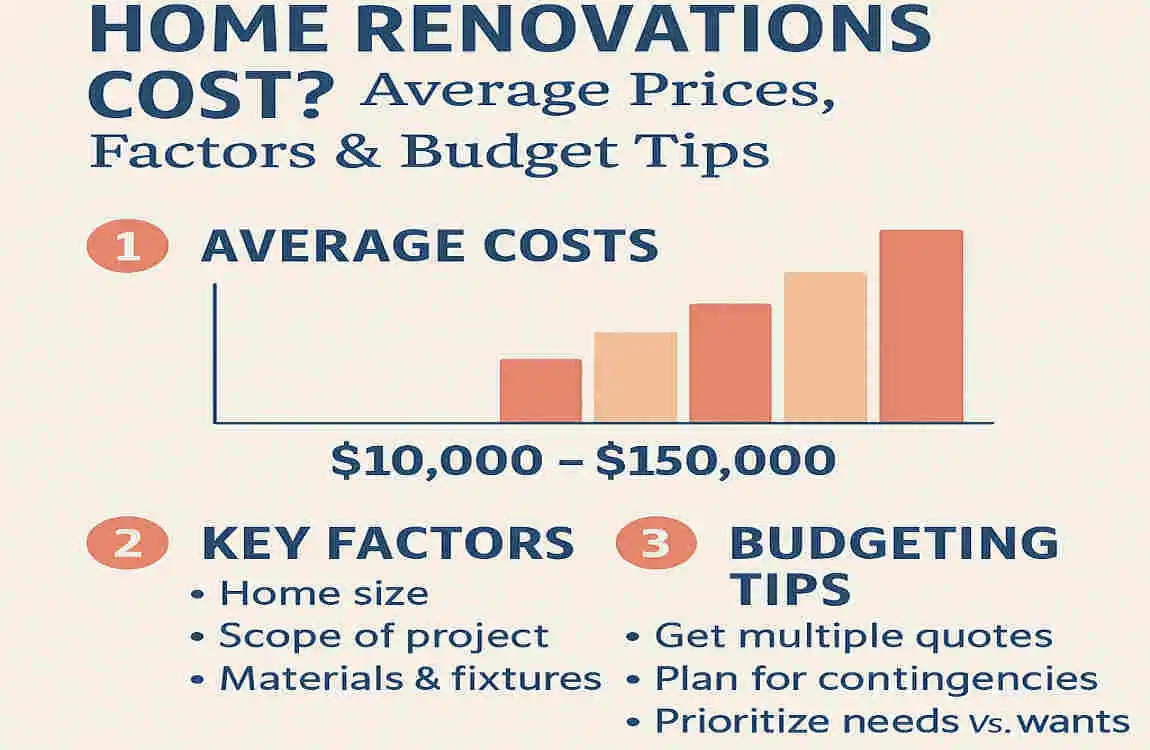
Planning to refresh your home but wondering how much home renovations cost in 2025? You’re not alone. Homeowners across the U.S. are budgeting anywhere from $15,000 to over $100,000 per project this year, according to Remodelling Magazine’s latest report. With inflation, material costs, and labour rates on the rise, understanding the price tags for renovations is more important than ever.
Renovation costs vary widely depending on where you live, the size of your project, and the quality of materials you choose. For example, upgrading a kitchen in New York city might cost 30% more than in a smaller Midwestern town. Plus, hidden expenses like permits or unexpected repairs often catch people off guard.
Average Home Renovation Costs in 2025
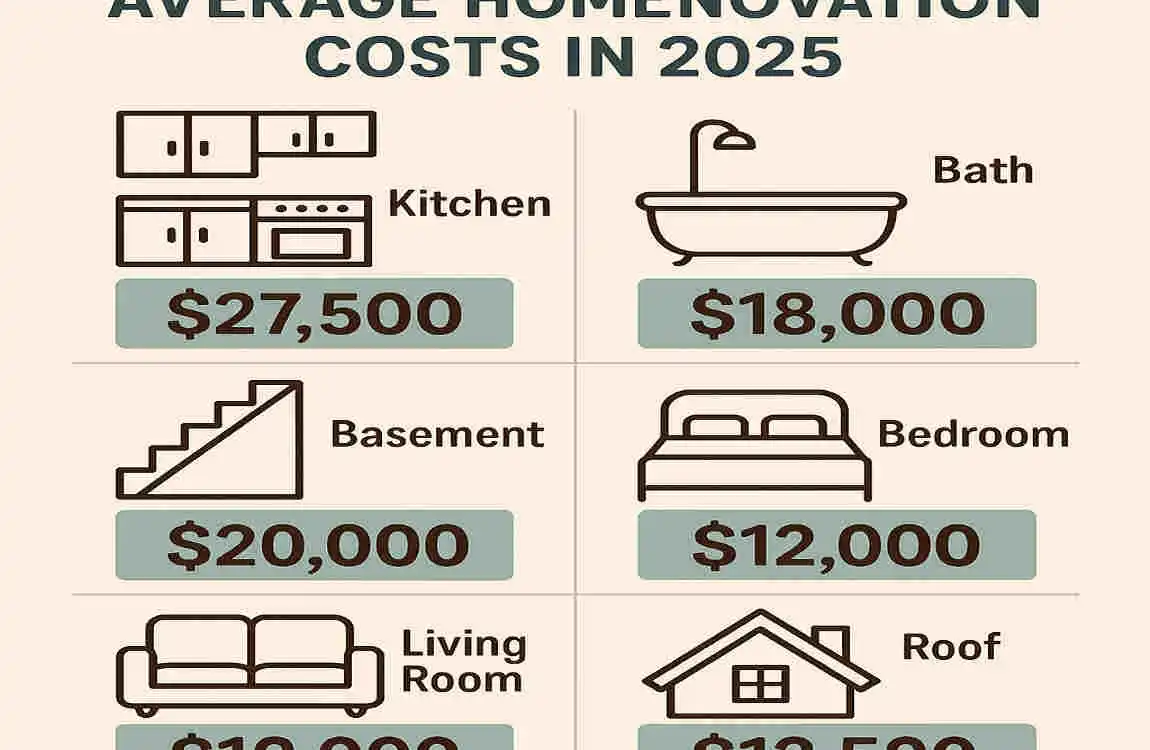
When it comes to budgeting for home renovations, numbers matter. They give you a realistic sense of what to expect and how to plan. Below, you’ll find a detailed breakdown of renovation costs across common projects, along with insights on inflation and regional differences.
National Averages by Project Type
Here’s a quick reference table showing typical project costs for 2025, along with estimated ROI (return on investment). This can help you prioritise renovations that add the most value to your home.
Renovation Type: Low-End Cost, Average Cost, High-End Cost, ROI Potential
Minor Kitchen Update $10K $25K $40K 70-80%
Full Kitchen Remodel $25K $65K $150K 50-60%
Bathroom Refresh $6K $15K $30K 60-70%
Full Bathroom Remodel $10K $25K $50K 50-60%
Basement Finish $20K $40K $80K 70%
Whole-Home Reno (1,500 sq ft) $50K $100K $250K+ Varies
As you can see, kitchens and bathrooms are among the most common and costly projects. But they also offer strong returns when you decide to sell.
Inflation Trends and Regional Variations
Renovation costs have climbed about 5-10% annually over the past few years, driven by rising material prices and labour shortages. For example, lumber and steel prices surged post-pandemic and continue to affect budgets.
Regional differences also play a big role. Coastal cities like San Francisco and Miami often see costs 20% higher than the national average due to labour demand and strong real estate markets. In contrast, Midwestern or rural areas may save money due to lower labour rates and lower material shipping costs.
Cost Per Square Foot Breakdown
Another way to estimate renovation costs is by looking at the price per square foot:
- Mid-range projects: $100 – $250 per sq ft
- Luxury renovations: $300+ per sq ft
For example, a 500 sq ft kitchen remodel could range from $50,000 to $125,000 depending on finishes and appliances.
Hidden Costs Often Overlooked
Don’t forget about expenses that sneak up on you:
- Permits: $500 – $2,000 depending on the city and scope
- Unexpected repairs: Always set aside a 10-20% contingency fund for surprises like water damage or outdated wiring
Key Factors That Influence Home Renovation Costs
Understanding what drives costs can save you money and headaches. Let’s look at the main factors affecting your renovation budget.
Location and Regional Differences
Where you live dramatically impacts pricing. For instance:
- Urban vs. Rural: Cities like New York or Los Angeles can charge a 30% Premium on labour and materials.
- International Example: In Tashkent, Uzbekistan, renovation costs range from $80 to $150 per sq ft, including local labour and materials.
- Labour rates: Average between $50 and $150 per hour, with international shipping adding 10-15% to material costs.
Home Size, Age, and Scope of Work
- Larger homes naturally cost more due to volume.
- Older homes often require structural updates, electrical rewiring, or plumbing fixes, adding 20-30% more.
- For example, a century-old house may need costly foundation work that a newer build wouldn’t.
Material and Finish Quality Levels
Materials can make or break your budget. Here’s a simple breakdown:
- Budget materials: Laminate countertops cost about $20 per sq ft.
- Mid-range: Quartz runs $50-$100 per sq ft.
- Luxury: Marble or custom stone can cost over $200 per sq ft, as seen in celebrity kitchens.
Eco-friendly materials may cost 10-20% more upfront but offer better long-term savings and resale value (up to 80% ROI).
Labour, Contractor, and Timeline Factors
Labour can be your biggest expense:
- DIY savings: Doing it yourself can reduce costs by 30-50%, but comes with risks and time costs.
- Contractors: Expect 20-30% markup on materials and labour.
- Rushed timelines: Adding 15% or more to costs if you need quick completion.
- Supply chain issues in 2025 may cause delays and price spikes.
DIY vs. Professional: Cost Comparison Table
Aspect DIY Professional
Kitchen Cabinets $5K $15K
Plumbing/Electrical Risky (permit issues) $10K+ safe
While DIY can save money, it’s important to consider permits, safety, and skill level, especially for electrical or plumbing.
Room-by-Room Cost Breakdown
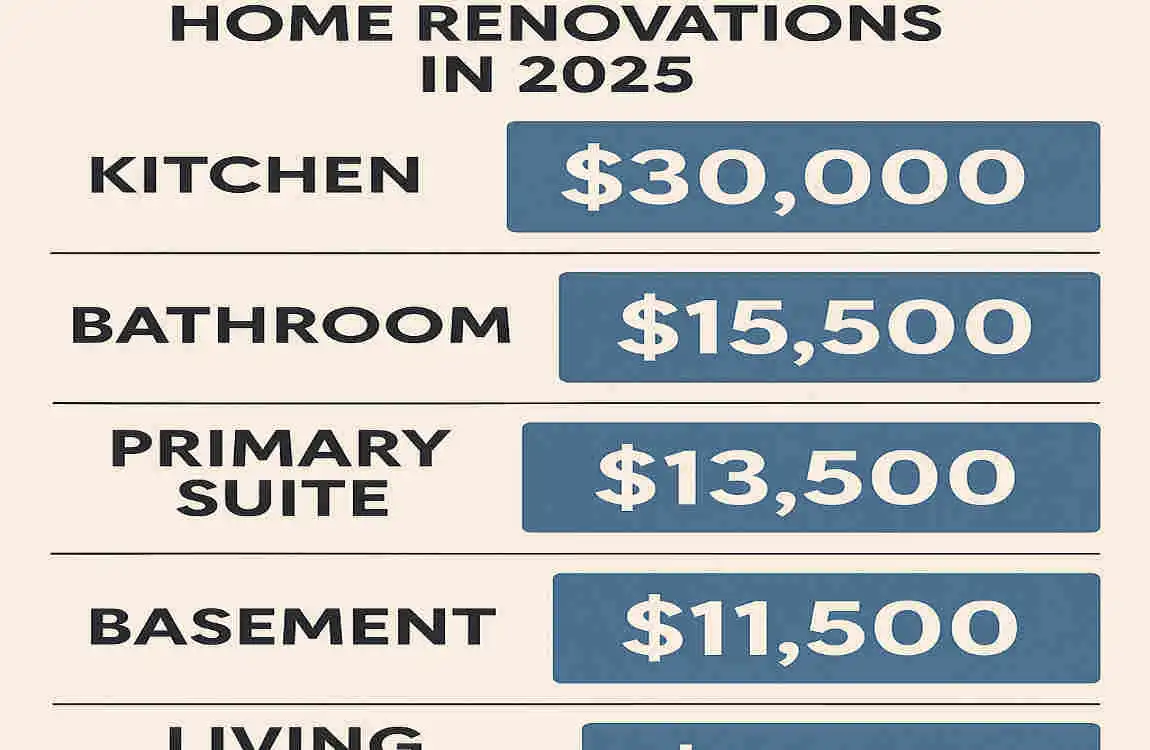
Let’s zoom in on popular renovation areas and their costs.
Kitchen Renovation Costs
- Minor updates: Around $25,000 on average.
- Full remodel: Typically $65,000 or more.
- Major cost drivers include appliances ($5K-$20), countertops, and kitchen islands (adding $3K+).
Bathroom Renovation Costs
- Bathroom refresh: $15,000 average, including new fixtures and paint.
- Full remodel: Approximately $25,000.
- Walk-in showers or luxury tubs add $5,000 to $10,000.
Bedroom, Living Room, and Outdoor Spaces
- Bedrooms: $10,000 to $30,000, especially if adding built-in closets or new flooring.
- Decks/Patios: Range from $15,000 to $50,000 depending on size and materials.
- Adding smart home tech can add $2,000 to $10,000, enhancing modern living appeal.
Smart Budgeting Tips to Control Renovation Costs
You don’t have to break the bank. Here are practical tips for keeping your project affordable.
Create a Realistic Renovation Budget Template
- Follow the 50/30/20 rule: 50% for materials, 30% for labour, and 20% for contingency.
- Use free downloadable checklists to track expenses and avoid surprises.
Cost-Saving Strategies
- Phase projects: Tackle renovations in stages to spread out costs.
- Shop sales: Look for discounts on appliances and materials.
- Reuse materials: Salvage cabinets or fixtures where possible.
- Always get at least three quotes from contractors and negotiate.
Financing Options and Maximising ROI
- Home Equity Lines of Credit (HELOCs) offer low rates in 2025.
- Take advantage of tax credits for energy-efficient upgrades.
- Focus on high-ROI projects, such as minor kitchen or bathroom updates, which can recoup 60-80% of costs.
Common Budget Pitfalls to Avoid
- Scope creep: Add a 15% buffer for unexpected additions.
- Don’t skimp on professional help for critical tasks to avoid costly mistakes later.
