
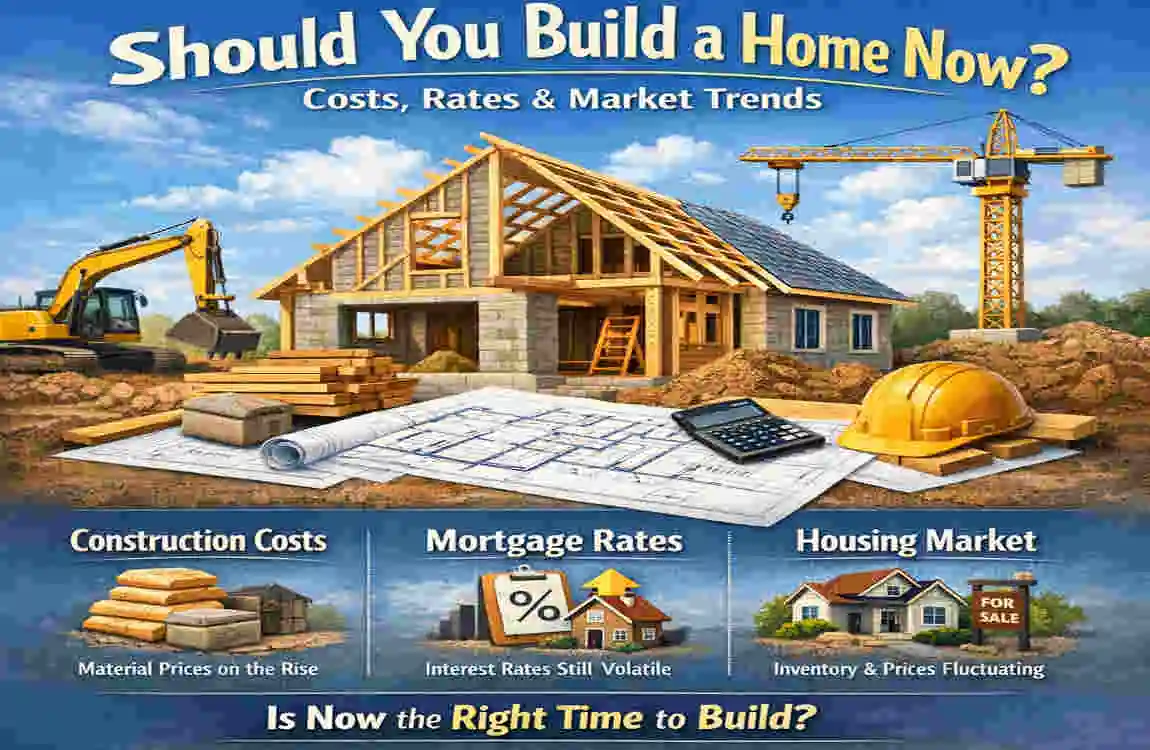
If you are asking if now is a good time to build a home, the honest answer is: it depends on your budget, your local market, and your long-term plans.
Building a home can be exciting. You get to choose the layout, the finishes, and the features that matter most to you. At the same time, building usually requires more upfront money than buying an existing home.
Current Home-Building Costs and What Buyers Should Expect
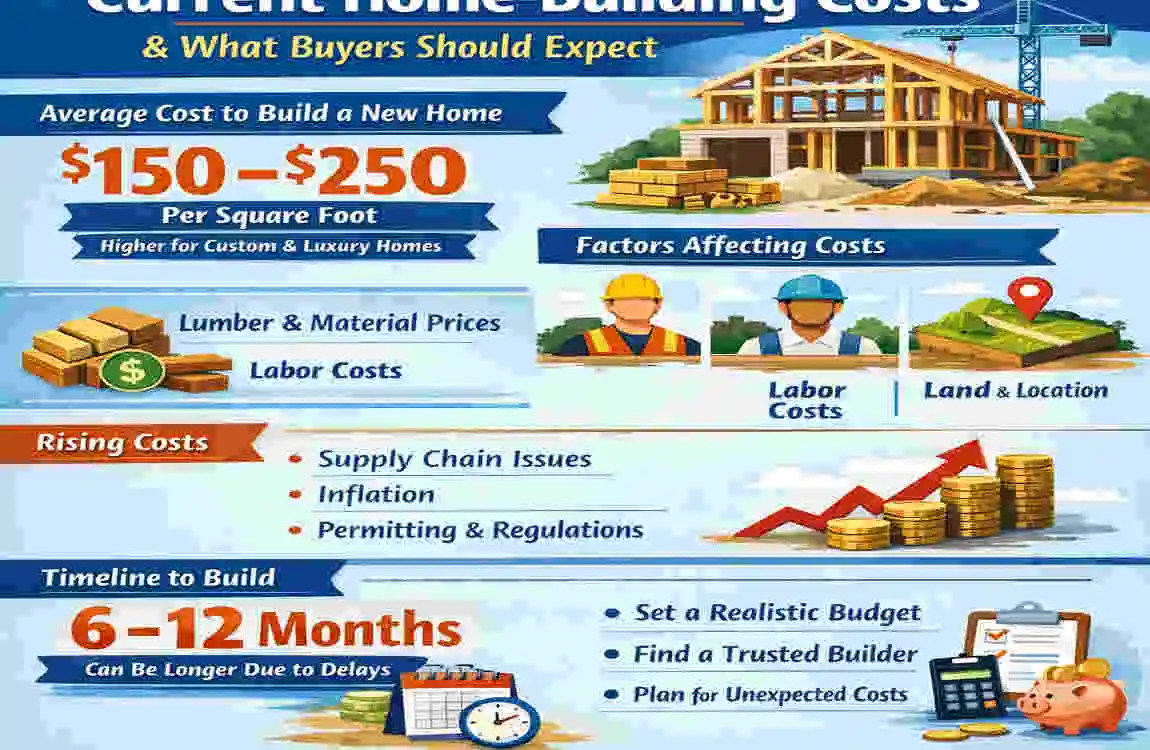
Average Costs of Building a New Home
The cost to build a home can vary widely depending on where you live. In some areas, land is expensive. In others, labor costs or material prices may be the bigger issue.
The final budget usually depends on:
- Home size
- Floor plan design
- Finish quality
- Local labor rates
- Site conditions
A small, simple home will usually cost less than a larger home with custom details. The more upgrades you add, the faster the budget can rise.
Land and Site Preparation Costs
If you do not already own land, that becomes a major part of the cost. Then you still need to prepare the site.
That may include:
- Excavation
- Grading
- Drainage
- Utility hookups
- Foundation work
- Permits
Undeveloped land often looks affordable at first, but it can quickly increase the total project cost once you factor in all the setup work.
Materials and Labor Costs
Construction depends heavily on materials like lumber, concrete, roofing, windows, flooring, and appliances. These prices can change over time.
Labor is just as important. If contractors are busy in your area, prices may be higher, and schedules may be tighter.
That is why it helps to get several detailed quotes before you make a decision.
Hidden Construction Expenses
Many first-time builders forget about extra costs. These can include:
- Permits
- Inspections
- Architectural or engineering fees
- Driveway work
- Landscaping
- Utility connections
- Temporary services
- Contingency funds
A smart rule is to keep a 10%–20% contingency budget for surprise expenses.
Mortgage Rates and Financing a New Construction
How Interest Rates Affect Building Decisions
Mortgage rates affect how much you pay each month and how much interest you pay over time. Even a small rate change can make a big difference.
A lower rate can improve affordability. A higher rate can stretch your budget very quickly.
That is why you should think about the full monthly payment, not just the home’s purchase price.
Construction Loans Explained
Most people do not pay for a new home all at once. They often use a construction-to-permanent loan.
This type of loan usually works in two stages:
- Construction phase — the lender releases money in stages as work gets done
- Permanent mortgage phase — the loan converts into a regular mortgage after completion
The lender may inspect the project before releasing each payment.
Should You Wait for Lower Mortgage Rates?
Waiting for lower rates can help, but it is not always the best move.
Why? Because while rates may fall, construction costs or land prices might rise. If you wait too long, you could save on interest but pay more for materials or the lot.
So instead of trying to predict the perfect moment, compare the total cost of building now versus later.
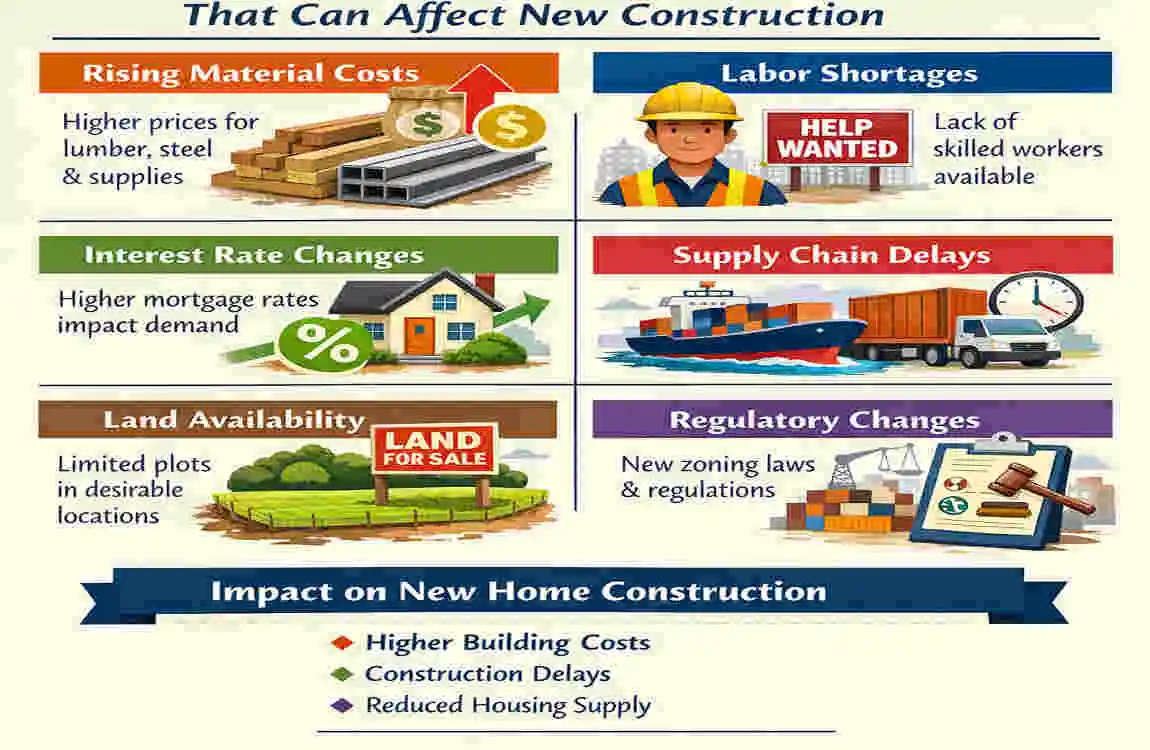
Housing Market Trends That Can Affect New Construction
Home Prices and Buyer Demand
In some markets, existing homes are very expensive or hard to find. In those places, building may be a better option.
A new home can offer better value if older homes in your area need major repairs or do not match your needs.
But remember: national trends do not tell the whole story. Your local market matters much more.
New Construction Supply
If many builders are active in your area, you may find more choices and maybe even incentives. But if supply is tight, prices may be higher and build timelines longer.
This is one reason local research matters so much.
Local Market Conditions Matter
Before deciding, check your local:
- Land prices
- Property taxes
- Zoning rules
- Insurance costs
- Contractor availability
A national news headline may sound encouraging or scary, but your city may tell a very different story.
The Biggest Advantages of Building a Home Now
Customize Your Home From the Start
One of the biggest benefits of building is control. You can choose the floor plan, room sizes, cabinet style, flooring, lighting, and appliances.
That means less need for immediate remodeling later.
Energy Efficiency and Modern Features
New homes often use newer insulation, better windows, efficient HVAC systems, and smart-home options. These features can help lower energy use over time.
That can be a real advantage if you want lower utility bills and fewer upgrade needs.
Lower Maintenance in the Early Years
A new home usually comes with newer systems and materials. That often means fewer repair issues in the first few years.
Many builders also offer warranties, which can add peace of mind. Just make sure you understand exactly what is covered.
Long-Term Property Value
A well-built home in a good location can hold value well over time. Still, value depends on many factors, such as neighborhood growth, construction quality, and layout.
Think of building as a long-term decision, not a quick profit move.
Potential Risks and Disadvantages of Building Right Now
Construction Costs Can Change
Prices for materials and labor do not always stay steady. A quote you get today may not fully match final costs later.
That is why it helps to ask what is included in the builder’s price and what is not.
Construction Delays
Building can take longer than expected because of permits, weather, inspections, or material shortages.
Delays can increase costs for temporary housing and financing.
Budget Overruns
Many projects cost more than the original estimate. Change orders, upgrades, and site issues are common reasons.
That is why a contingency fund is so important.
Financing Risks
Construction financing can be more complex than a normal mortgage. You need to pay attention to:
- Loan terms
- Rate-lock rules
- Closing costs
- Draw schedules
- Monthly payment estimates
Try to calculate using conservative numbers, not the most optimistic ones.
How to Decide If Building a Home Is Right for You
Review Your Financial Situation
Before you move forward, look closely at your money situation. Ask yourself:
- Is your income stable?
- Do you have enough savings?
- Can you handle your current debt?
- Do you have a strong credit profile?
You should also consider the full monthly cost, including taxes, insurance, utilities, maintenance, and any HOA fees.
Compare Building vs. Buying
Sometimes building costs more than buying. Sometimes it does not.
Compare:
- Land + construction
- Price of similar existing homes
- Renovation costs
- Long-term maintenance
- Energy efficiency
- Resale potential
If an existing home needs major repairs, building may become more attractive.
Consider Your Timeline
Building is usually best for buyers who can wait. If you need a home quickly, buying may be easier.
Also think about your future. Will you change jobs soon? Expand your family? Move again in a few years? Those things matter.
Research Builders Carefully
A good builder can make the process smoother. A poor one can create expensive problems.
Check:
- Licenses
- Insurance
- References
- Past projects
- Warranties
- Contracts
- Payment schedules
You should also ask for a clear timeline and a written list of allowances and upgrade costs.
Frequently Asked Questions
Is now a good time to build a home?
There is no single answer for everyone. It depends on your budget, local construction costs, mortgage rates, and financial readiness.
Is it cheaper to build or buy a house?
It depends on the area. Compare land, construction, closing costs, repairs, taxes, and maintenance before deciding.
Are construction costs going down?
They can vary by region and by material type. It is best to get current local estimates.
Should I wait for mortgage rates to fall before building?
That may be, but lower rates do not always mean lower total cost. Land and building costs may change too.
How much money should I save before building a house?
You should plan for a down payment, closing costs, construction expenses, and a contingency reserve.
What is the biggest risk when building a new home?
Budget overruns and delays are two of the biggest risks, along with financing and contractor issues.
| Factor | Quick Overview |
|---|---|
| Home Building Costs | Costs depend on location, materials, labor, home size, and design. |
| Mortgage Rates | Higher rates can increase monthly payments and borrowing costs. |
| Construction Trends | Energy-efficient materials, smart-home features, and flexible layouts remain popular. |
| Land Costs | Buying land can significantly increase the total project budget. |
| Builder Availability | Labor demand and local contractor availability can affect timelines and prices. |
| Build Now or Wait? | Building now may make sense if you have stable finances, affordable land, and a long-term plan. |
| Market Consideration | Compare construction costs, local home prices, financing rates, and expected resale value before deciding. |
| Best Approach | Get several builder estimates and create a budget with a contingency fund before starting. |
