

Imagine this: It’s the middle of summer, and you’re sitting in your living room, baking under the sun’s relentless rays. Even with the curtains drawn, the room feels uncomfortably warm, and your air conditioner is working overtime. You’ve heard about house window tinting, but you’re wondering, “Does house window tint block sunlight enough to solve this problem?”
The quick answer? Yes, house window tint does block a significant amount of sunlight, but there’s much more to it than that. Window tinting is a modern solution that not only reduces the intensity of the sun entering your home but also provides additional benefits, such as UV protection, heat reduction, and increased privacy.
What Is House Window Tint and How Does It Interact with Sunlight?
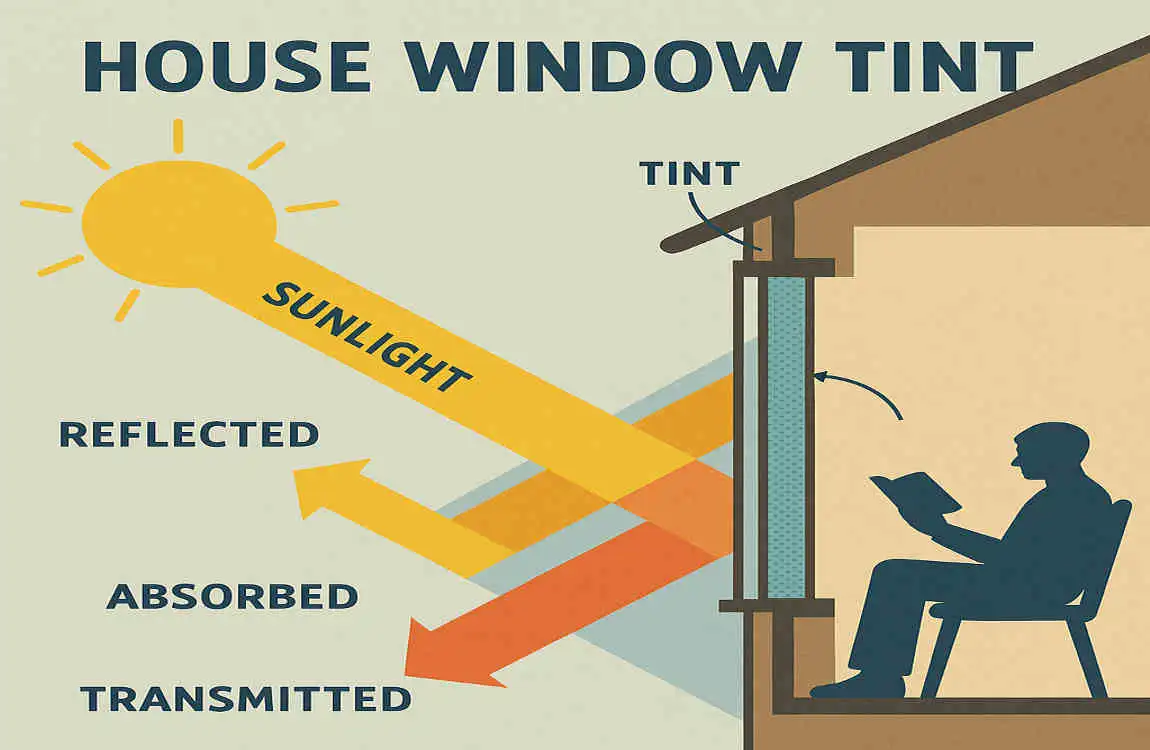
Before we get into the specifics of how window tint works, let’s break down the basics.
What Is House Window Tint?
House window tint refers to a thin film applied to residential windows. Unlike car window tints, which are primarily used for aesthetics and privacy, house window tints are engineered to block specific components of sunlight. These films come in various types, each designed to serve different purposes, such as UV protection, heat reduction, or glare control.
Window tints are typically made from materials like polyester, dyed coatings, or advanced ceramics, which allow them to filter or reflect sunlight.
Breaking Down Sunlight: UV, Visible Light, and Infrared
To understand how window tint works, it’s essential to know the components of sunlight:
- UV Rays (Ultraviolet Light): Invisible but harmful. UV rays are the main culprits behind furniture fading, sunburn, and long-term skin damage.
- Visible Light: This is the light we see, responsible for glare and brightness.
- Infrared Rays (Heat): Invisible but responsible for the majority of the heat we feel from sunlight.
Window tints interact with these components differently depending on their design and materials.
Does House Window Tint Block Sunlight?
The answer depends on the type of tint you choose. High-quality window tints can block:
- Up to 99% of UV rays are blocked, protecting your skin and furniture.
- 30-80% of infrared rays, significantly reducing heat.
- 20-95% of visible light, depending on the Visible Light Transmission (VLT) rating.
Here’s a handy table to illustrate how different types of window tints perform:
Tint Type UV Block Heat Reduction Visible Light Block (VLT)
Clear UV Tint 99% 20-40% 70-90% (minimal darkening)
Standard Tint 99% 40-60% 35-70%
Dark Privacy Tint 99% 60-80% 5-35%
Window tints don’t make your rooms pitch black. Instead, they selectively filter light, reducing glare and heat while allowing natural light to brighten your space.
UV Protection: Does House Window Tint Shield Your Home and Skin?
The Dangers of UV Rays
UV rays are more harmful than most people realize. Prolonged exposure can lead to serious health issues, including skin cancer and premature skin aging. But it’s not just your health at risk—UV rays can also wreak havoc on your home. Over time, they cause furniture, floors, artwork, and even curtains to fade and deteriorate.
How Window Tint Protects Against UV Rays
Certified window tints are designed to block up to 99% of UV rays, as verified by organizations like the National Fenestration Rating Council (NFRC). This means they act as a protective barrier for both you and your home.
Studies have shown that homes with tinted windows experience significantly less fading of furniture and floors than homes without tint. For example, in areas with intense sunlight, like Lahore or California, window tinting has become a popular alternative to heavy blinds or expensive UV-blocking curtains.
Heat Reduction: Cooling Your Home Without Cranking the AC
How Much Heat Does Window Tint Actually Block?
One of the most significant advantages of window tinting is its ability to reduce heat. Infrared rays, which make up over 50% of solar heat gain, are effectively blocked by high-quality tints. Depending on the type of tint, you can reduce heat gain by 30-70%, which directly translates to lower indoor temperatures.
The Impact on Energy Bills
By reducing heat gain, window tints help your air conditioner work more efficiently. The U.S. Department of Energy estimates that tinted windows can cut cooling costs by 10-30% annually, saving homeowners an average of $100 $300 per year.
Glare Control, Privacy, and Bonus Benefits
Reducing Glare for Better Comfort
If you’ve ever struggled to watch TV or work on your laptop due to sunlight glare, you’ll appreciate this feature. Window tints can cut glare by 50-90%, making your living spaces more comfortable for both work and relaxation.
Enhancing Privacy
Reflective window films offer a one-way mirror effect during the day, allowing you to see outside while preventing others from seeing in. This makes them an excellent choice for homes in busy neighborhoods.
Bonus Benefits
Beyond sunlight control, window tints also:
- Provide shatter resistance, holding glass together in case of breakage.
- Enhance the aesthetic appeal with sleek metallic or neutral finishes.
- Offer noise reduction, especially in urban areas.
Types of House Window Tints: Which Blocks Sunlight Best?
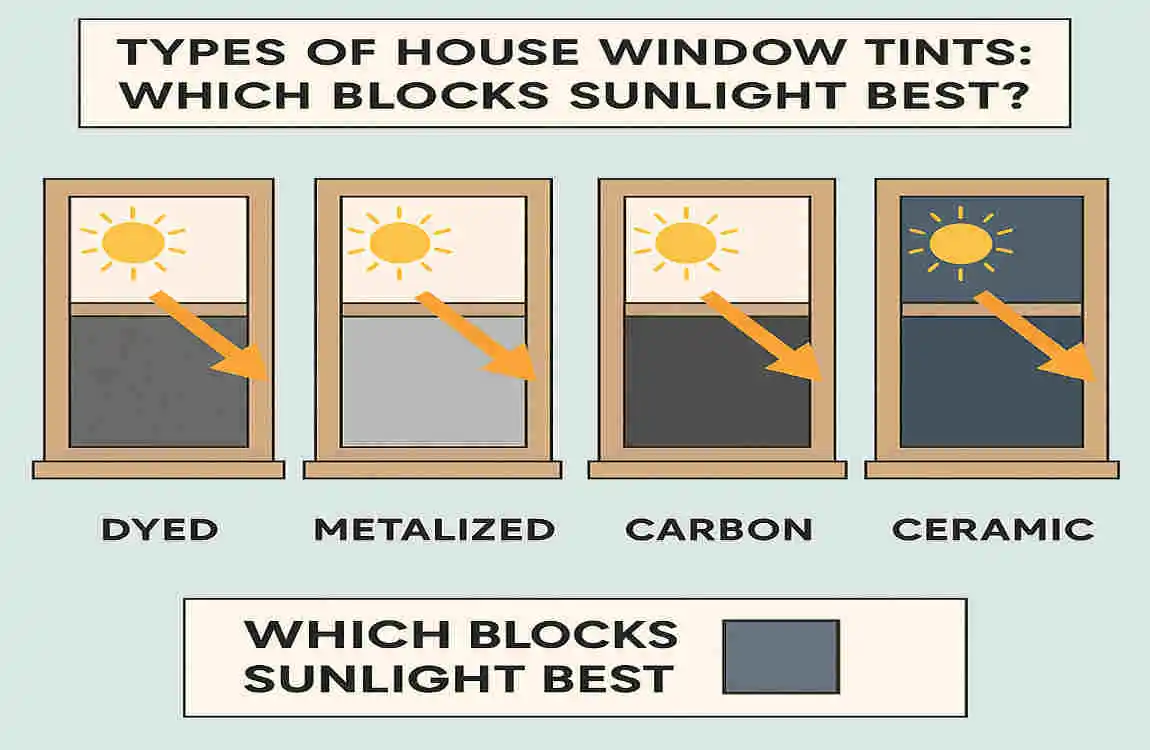
Choosing the right tint depends on your specific needs. Here’s a breakdown of the most common types:
Type Benefits Drawbacks Cost (per sq ft)
Dyed Tint Affordable, reduces visible light, Fades over time $5-7
Metalized Tint Excellent heat reduction May interfere with signals $7-9
Ceramic Tint Maximum UV/heat block, no signal issues , Expensive $10-15
Carbon Tint Strong privacy, no fade Limited availability $8-12
For those living in hot climates, ceramic tints are often the best choice due to their superior performance and durability.
Installation: DIY vs. Professional for Optimal Sunlight Blocking
DIY vs. Professional Installation
While DIY kits are available, professional installation is often the better option. Experts ensure a flawless application, remove air bubbles, and offer warranties that last 10-20 years.
Cost of Installation
Professional installation for an average home typically costs between $500 and $2,000, depending on the size of your windows and the type of tint chosen.
Cost, ROI, and Is It Worth It for Your Home?
Is Window Tint a Good Investment?
While the upfront cost may seem high, the long-term savings on energy bills, combined with the added benefits of UV protection and privacy, make window tinting a worthwhile investment. Most homeowners see a return on investment (ROI) within 2-5 years.
