
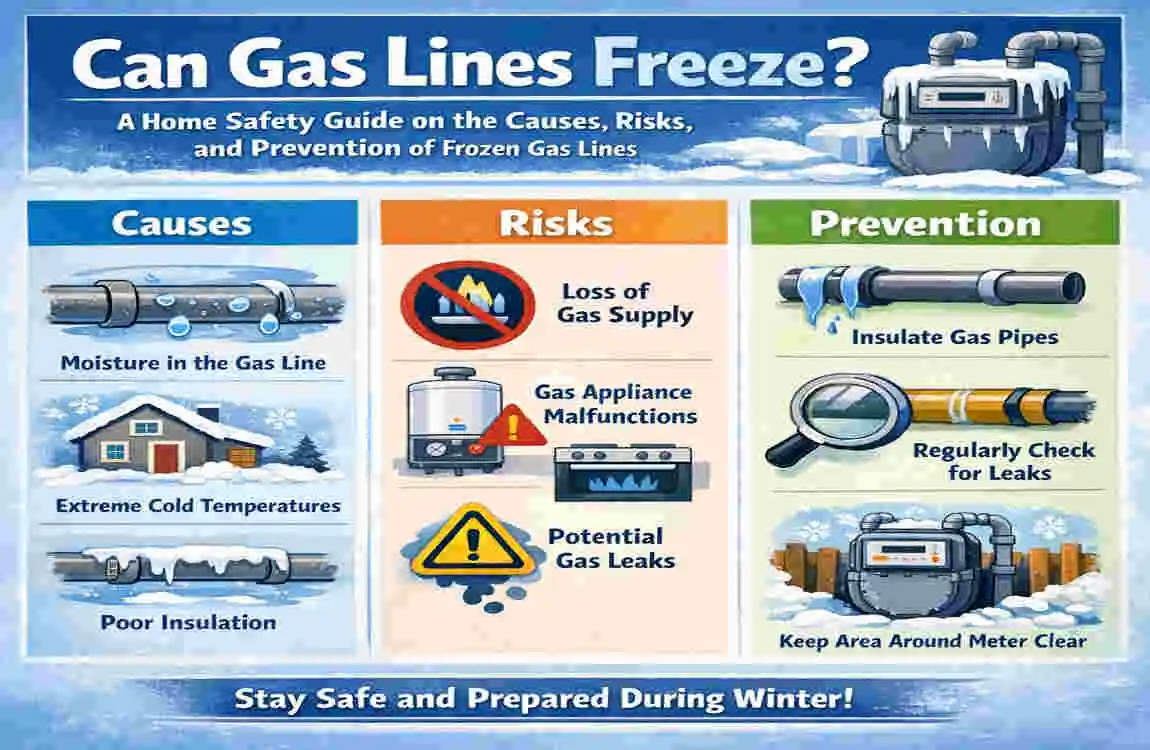
Yes, gas lines can run into cold-weather problems in a house, but the issue is usually not the gas itself freezing like water. More often, the trouble comes from moisture, condensation, poor insulation, or exposed piping in very cold weather.
If you are wondering whether gas lines can freeze in a house, the safest answer is this: it can happen in certain conditions, especially in exposed or poorly protected areas. Still, not every gas problem is caused by freezing.
That is why you should treat any gas issue carefully. If you suspect something is wrong, stop, stay safe, and call a professional.
Can Gas Lines Freeze in a House?
What Really Happens in Cold Weather
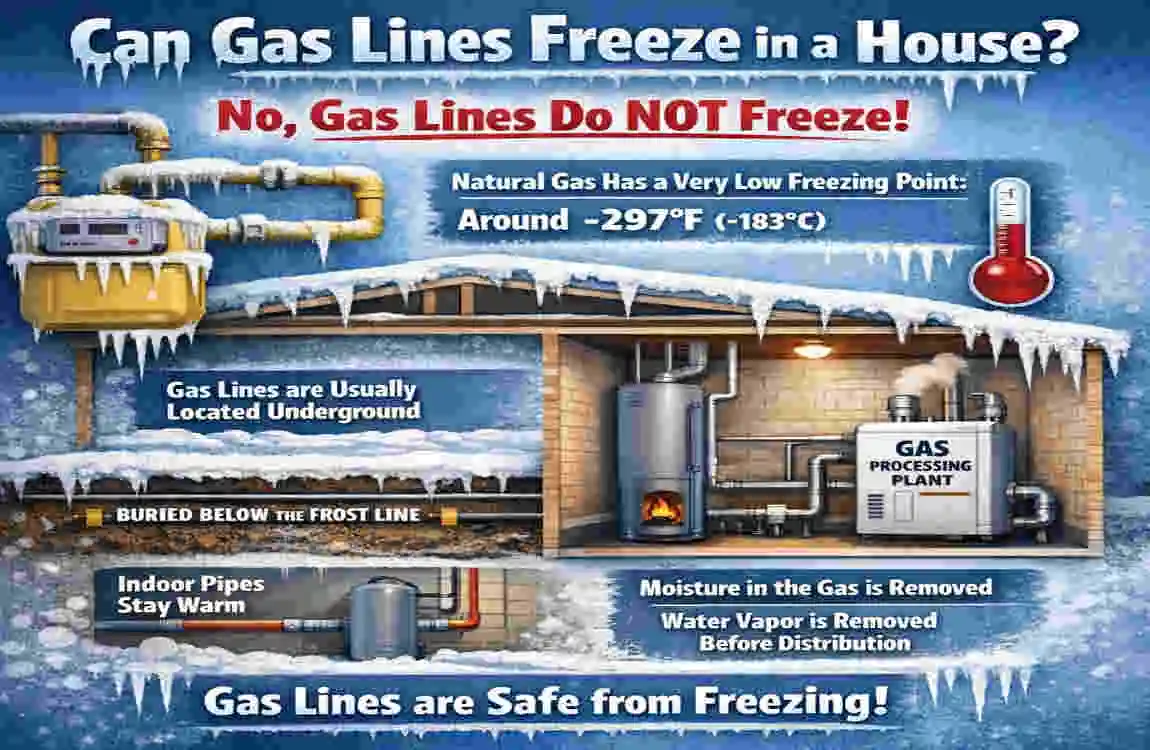
Gas lines do not usually freeze in the same way water pipes do. However, cold temperatures can affect gas system components, leading to blockages or performance issues.
This is more likely when a line, regulator, or outdoor component is exposed to extreme weather. If moisture gets inside or around the system, freezing can make the problem worse.
Why Some Homes Are More at Risk
Homes with outdoor piping, unheated garages, crawl spaces, attics, or poorly insulated areas may face more cold-weather trouble. These spaces get colder faster, so gas system parts there are more exposed.
Severe winter weather, poor installation, or damaged equipment can also increase the risk.
What Causes Gas Lines to Freeze?
Extremely Cold Temperatures
Long periods of freezing weather can affect gas system components exposed to the cold. Pipes in unheated areas are especially vulnerable.
If the cold lasts long enough, performance can drop, and appliances may not get enough gas.
Moisture Inside the Gas Line
Gas systems should not normally contain much moisture. But if water or condensation is present, freezing can cause blockages.
This is one reason gas problems should always be checked by a qualified professional.
Poor Insulation
When gas piping is not properly protected, the cold can reach it more easily. Areas like crawl spaces, attics, garages, and exterior walls are common weak spots.
Good insulation helps, but it must be installed correctly so it does not block ventilation or pose safety risks.
Outdoor Gas Equipment
Outdoor regulators, meters, and exposed pipes can have problems in freezing weather. These parts are often the first to feel the effects of cold and moisture.
Homeowners should never try to repair or modify gas equipment themselves.
Signs Your Gas Line May Have a Cold-Weather Problem
Look out for these warning signs:
- Weak or uneven appliance performance
- Appliances that will not ignite
- A pilot light that keeps going out
- Heating that seems to work poorly
- Frost or ice on exposed gas equipment
- Hissing sounds
- A gas odor
Safety Note
If you smell gas, do not assume it is only freezing. A gas smell can signal a leak, and that is an emergency. Leave the area and get help right away.
Can Cold Weather Stop Gas Appliances From Working?
Yes, it can. If gas is not reaching the appliance properly, you may notice problems with a furnace, boiler, water heater, stove, or fireplace.
That does not always mean the appliance is broken. The issue could be a supply restriction, a regulatory issue, or another gas-system fault.
What You Should Not Do
Do not keep restarting the appliance if you think the gas supply is the problem. That can be unsafe and may not fix anything.
Instead, contact the gas utility or a qualified technician.
How to Prevent Gas Lines From Freezing
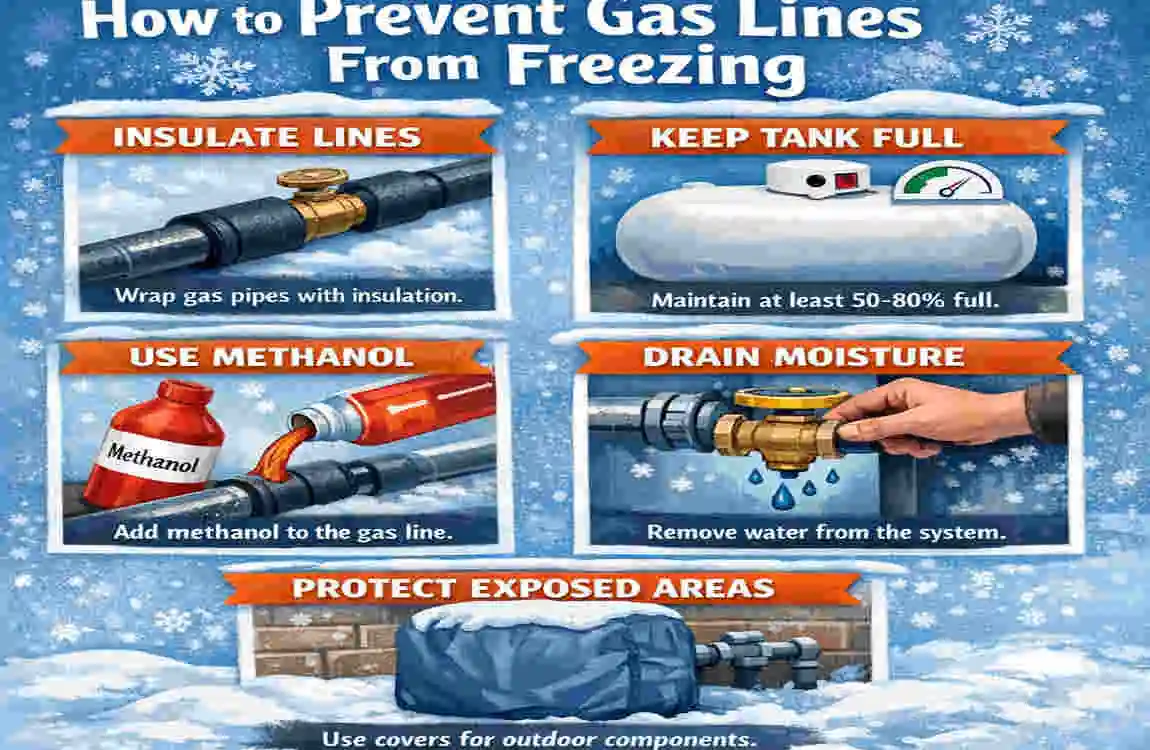
Protect Exposed Pipes
Keep exposed pipes protected in accordance with local rules and professional advice. Do not wrap them in random materials that could cause safety or ventilation problems.
Insulate Vulnerable Areas
Insulation can help in areas that get very cold, but it must be installed correctly. Gas equipment still needs access and proper airflow.
Keep Unheated Spaces Warmer
Try to prevent garages, crawl spaces, and utility areas from becoming extremely cold. Even a small temperature improvement can help reduce cold-weather problems.
Maintain Gas Equipment
Regular inspections are important. A professional can spot damage, rust, loose supports, or other issues before they become serious.
What to Do If You Think a Gas Line Is Frozen
If you think a gas line is frozen or restricted, do not try to thaw it yourself.
Do not use:
- An open flame
- A torch
- A heat gun
- A hair dryer
- Any improvised heating tool
Also, do not disconnect or repair the line yourself.
Safe Next Steps
- Turn off appliances only if it is safe to do so
- Leave the area if you smell gas
- Contact the gas utility or emergency gas service
- Have a qualified professional inspect the system before using it again
Frozen Gas Line vs. Other Gas Problems
A gas appliance that is not working does not always mean the line is frozen. Other causes may include:
- Appliance failure
- Blocked vents
- Faulty regulators
- Gas pressure issues
- Damaged piping
- Ignition or pilot problems
This is why professional diagnosis matters. Gas systems are not a good place for guesswork.
When Should You Call a Professional?
Call for help when:
- Gas appliances stop working suddenly
- The problem keeps happening in cold weather
- You see frost or damage on exposed gas parts
- You smell gas
- Your home had severe weather and now has gas issues
Local rules may also decide who can legally work on gas piping, so it is best to leave repairs to trained people.
Simple Cold-Weather Gas Safety Tips
Here are a few easy ways to stay safer:
- Keep gas appliances maintained
- Do not block vents or air openings
- Keep flammable items away from gas equipment
- Know where the gas shutoff is
- Install carbon monoxide alarms
- Never use outdoor heating equipment indoors
- Never use a stove or oven to heat your home
- Investigate gas odors right away
FAQ
Can gas lines freeze in a house?
Yes, gas-system parts can have cold-weather problems, especially when they are exposed, poorly protected, or affected by moisture. A professional should check any suspected issue.
What temperature can gas lines freeze?
There is no single exact temperature for every home. The risk depends on exposure, moisture, insulation, location, and the duration of the cold.
How do I know if my gas line is frozen?
Common signs include weak appliance performance, ignition trouble, or frost on exposed parts. But these signs can also indicate other gas issues, so a professional inspection is best.
Can I thaw a frozen gas line myself?
No. Never try to thaw a gas line with a flame, torch, heat gun, or other improvised method.
Why does my gas appliance stop working when it is very cold?
Cold weather can affect the gas supply or equipment, but the problem could also be the appliance itself, the regulator, or venting. A trained technician can find the real cause.
Can outdoor gas pipes freeze?
Outdoor gas components can be more exposed to severe cold and moisture. That is why proper installation and maintenance matter so much.
Is a frozen gas line dangerous?
A suspected frozen or restricted gas line should be treated as a safety issue, especially if you smell gas.
What should I do if I smell gas during freezing weather?
Leave the area immediately. Avoid switches, flames, and other possible ignition sources. Then contact your gas utility or emergency service from a safe location.
| Key Point | Simple Information |
|---|---|
| Can gas lines freeze? | Yes, in very cold conditions, moisture inside or around a gas line can freeze and restrict gas flow. |
| Common signs | Weak or interrupted gas supply, appliances not working properly, or unusual burner behavior. |
| Main causes | Extreme cold, moisture in the line, poor insulation, or exposed piping. |
| What to do | Turn off the appliance if it is not operating normally and contact a qualified gas professional. |
| What to avoid | Never use an open flame, torch, or other direct heat source to thaw a gas line. |
| Prevention | Protect exposed pipes from severe cold and have gas systems inspected regularly. |
| Safety first | If you smell gas, leave the area immediately and contact your local gas emergency service or fire department. |
