

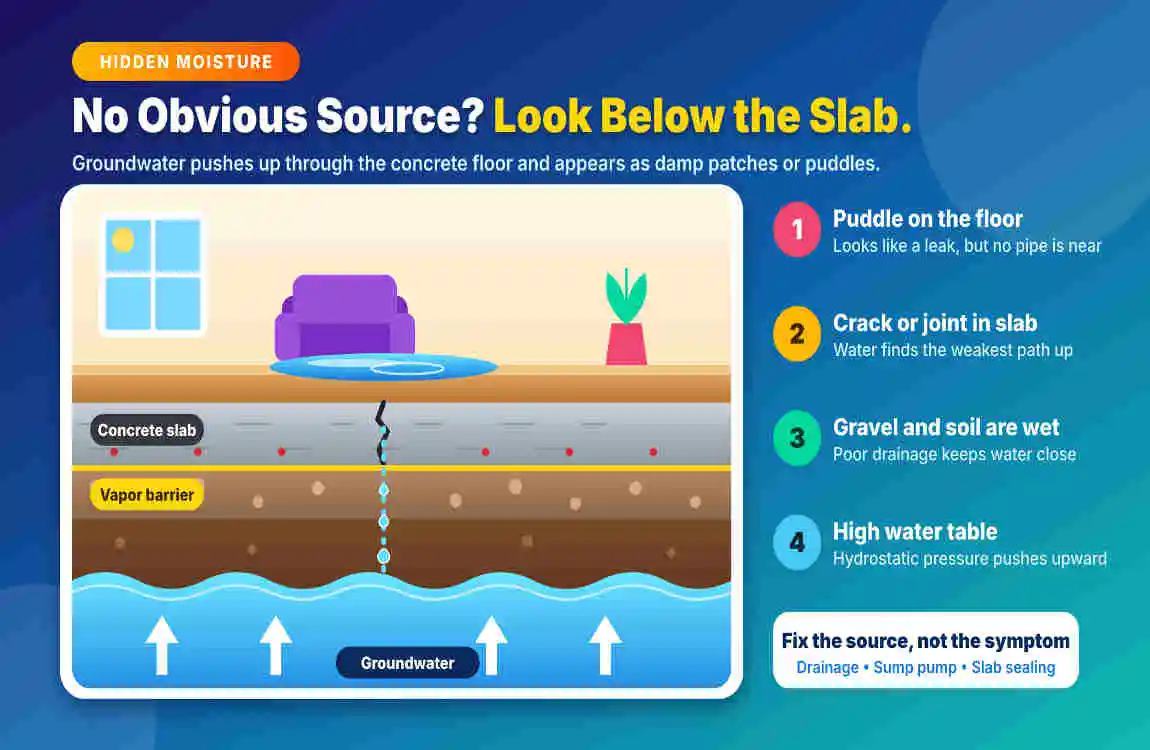
Water usually comes up through a floor because of hydrostatic pressure, which happens when soaked ground under and around your home pushes groundwater up through the concrete. The other common culprits are a leaking pipe under the slab, poor exterior drainage, a failed sump pump or drain, and condensation. Work out which one you have first, then dry the area within 24 to 48 hours to stop mould.
The 5 most common causes of water coming up through the floor
Hydrostatic pressure from groundwater
When the soil around and beneath your foundation becomes saturated, the water has nowhere to go but sideways and upward. That pressure presses on the slab and floor walls and forces moisture through cracks, joints and the concrete itself. Angi describes rising groundwater pushing against the foundation as the typical way water enters a basement, and drainage specialists note that pressure builds when soil around the foundation cannot drain.
This cause is the most likely if the water appears after heavy rain or snowmelt, then fades in dry spells.
A slab leak (pipe leaking under the concrete)
A slab leak is when a water line buried beneath a concrete foundation corrodes or fails. This Old House lists high water bills, wet spots on the cozy floor, wall cracks and unexplained mould or mildew as warning signs. Unlike groundwater seepage, a pipe leak does not care about the weather.
Cracks in the slab or foundation
Settling and ageing concrete can develop hairline cracks that let moisture through. Cracks alone do not create the water, but they give pressurised groundwater an easy route in. Inspectors also look at the cove joint (where wall meets floor), pipe penetrations and sump pits as typical entry points, according to This Old House’s waterproofing guide.
Poor drainage outside the house
Short downspouts, blocked gutters and soil that slopes toward the house all send water to the foundation. Bob Vila recommends making sure the ground slopes away from the home and extending downspouts before moving on to bigger drainage upgrades.
Failed drain, sump pump or sewer backup
If water is bubbling up through a floor drain or the sump pit is full, the problem may be a blocked line or a pump that has failed or lost power. Water from a sewer backup is contaminated: the EPA advises calling a professional experienced with contaminated water damage rather than cleaning it yourself.

Groundwater or plumbing leak? How to tell the difference
| Clue | Groundwater (hydrostatic) | Slab / pipe leak |
|---|---|---|
| Timing | After heavy rain or snowmelt | Any weather, often continuous |
| Water bill | Normal | Unexplained increase |
| Sound | None | Running water when taps are off |
| Floor temperature | Cool and damp | Warm spots if a hot line is leaking |
| Water pressure | Unchanged | May drop |
| Location | Along edges, cracks, wall-floor joint | Often one spot, may be mid-room |
A simple home test: turn off every tap and appliance, then check your water meter. If the dial keeps moving, you probably have a leak in the plumbing. Warning signs such as sounds of running water with taps closed and soggy ground near the foundation are worth a plumber’s visit.

What to do in the first 48 hours
- Stay safe. Keep away from standing water if it could be touching outlets, appliances or a breaker panel. Switch off power to the area if it is safe to reach the panel.
- Check the source. If you suspect a pipe leak, shut off the main water supply and call a licensed plumber.
- Remove the water. Use a wet vacuum or mop and bring in fans and a dehumidifier.
- Lift what can be lifted. Pull up wet rugs and move furniture. The EPA recommends pulling wet carpet and padding off the floor and drying with fans.
- Dry everything within 24 to 48 hours. The US EPA says this window is key to preventing mould growth.
- Know when to call a professional. The EPA suggests hiring help if there is a lot of water damage or mould covers more than 10 square feet, and always for sewage or other contaminated water.
- Do not just paint over it. The EPA warns against painting or caulking mouldy surfaces. Clean and dry them first.
Long-term fixes and typical costs
Surface sealers and waterproof paint may hide dampness but do not relieve pressure. Specialists explain that coatings only help temporarily because they do not address the water below the slab. Better options include:
- Fix exterior drainage: regrade soil, clean gutters and extend downspouts so water leaves the foundation area.
- Interior French drain with a sump pump: collects groundwater beneath the floor and sends it outside. HouseLogic estimates $3,000 to $4,000 and notes the pump needs battery or generator backup in a power cut.
- Exterior drain tile: keeps water from reaching the foundation in the first place, but is a bigger excavation job.
- Plumbing repair: a leak detection specialist locates the line, then repairs or reroutes it.
Keep in mind that, according to Bob Vila, an interior drain handles water under the floor but will not stop leaks coming through walls. Prices vary a lot by region and home, so get several quotes.

How to prevent water coming up through the floor again
- Keep gutters clear and downspouts discharging well away from the house.
- Make sure soil slopes away from the foundation.
- Test your sump pump every few months and add a battery backup.
- Watch your water bill for unexplained jumps.
- Use a dehumidifier in damp rooms and ventilate kitchens and bathrooms.
- Inspect clean floors, walls and corners after storms for new stains, a musty smell or efflorescence (white powder on concrete).
Frequently asked questions
Why is water coming up through my floor?
Most often it is groundwater pushed up by hydrostatic pressure. Other causes are a slab leak, a failed drain or sump pump, poor exterior drainage and condensation.
Can water come up through concrete without cracks?
Yes. Concrete is porous, so pressurised groundwater can pass through the slab itself as well as joints and hairline cracks.
Is water coming up through the floor dangerous?
It can be. Standing water near electrics is a shock risk, damp materials can grow mould within 24 to 48 hours, and prolonged leaks can undermine the soil under a foundation.
Will it stop on its own?
If it only happens during a wet spell, it may dry out, but the cause is still there and will return with the next storm. A plumbing leak will not stop by itself.
Who should I call?
Call a plumber if you suspect a pipe leak. For groundwater, speak to a drainage or waterproofing specialist. For contaminated water or large mould areas, use a certified restoration professional.
Sources
- U.S. Environmental Protection Agency (EPA): A Brief Guide to Mold, Moisture and Your Home
- U.S. EPA: Mold Information Slideshow
- U.S. EPA: Water Damage Cleanup and Mold Prevention (Table 1)
- This Old House: Signs of a Slab Leak
- This Old House: How to Keep a Basement Dry
- This Old House: Basement Waterproofing Tips
- Bob Vila: All You Need to Know About Basement Drains
- Bob Vila: Water Seeping Through Basement Floor
- Angi: 7 Reasons Water Is Seeping Through Your Basement Floor
- House Logic (National Association of REALTORS®): Interior French Drain Overview
- Waterproof Magazine: Moisture Management in Basements
