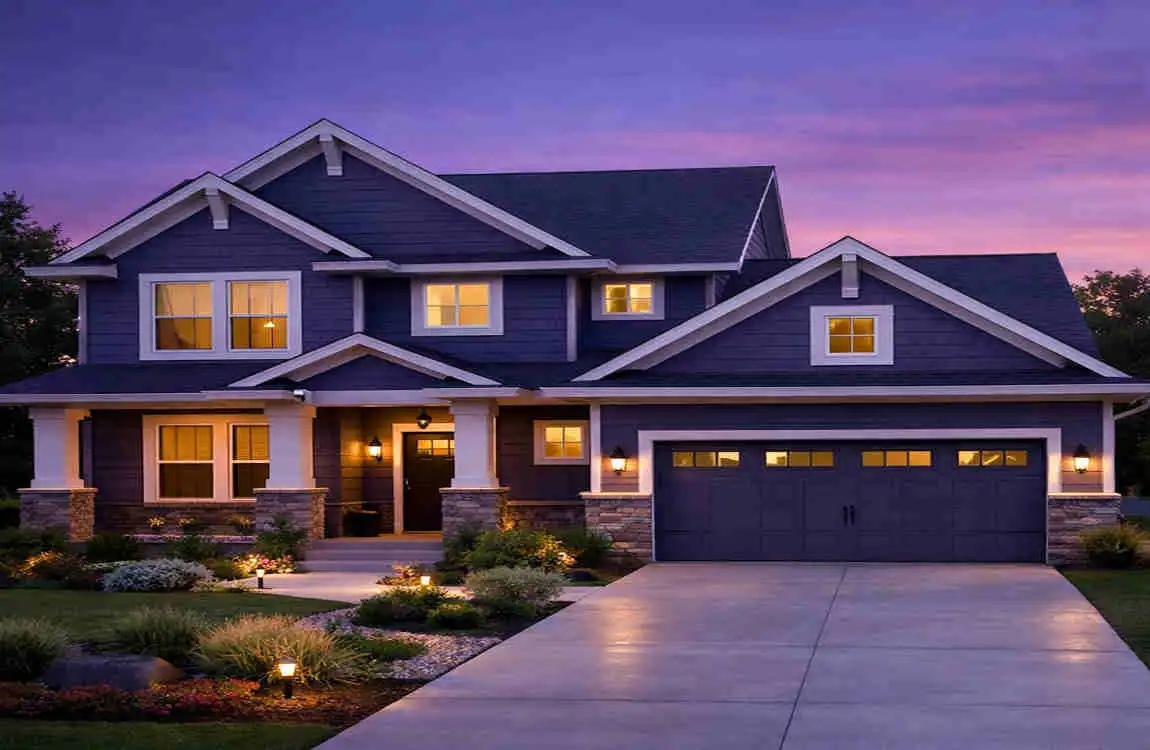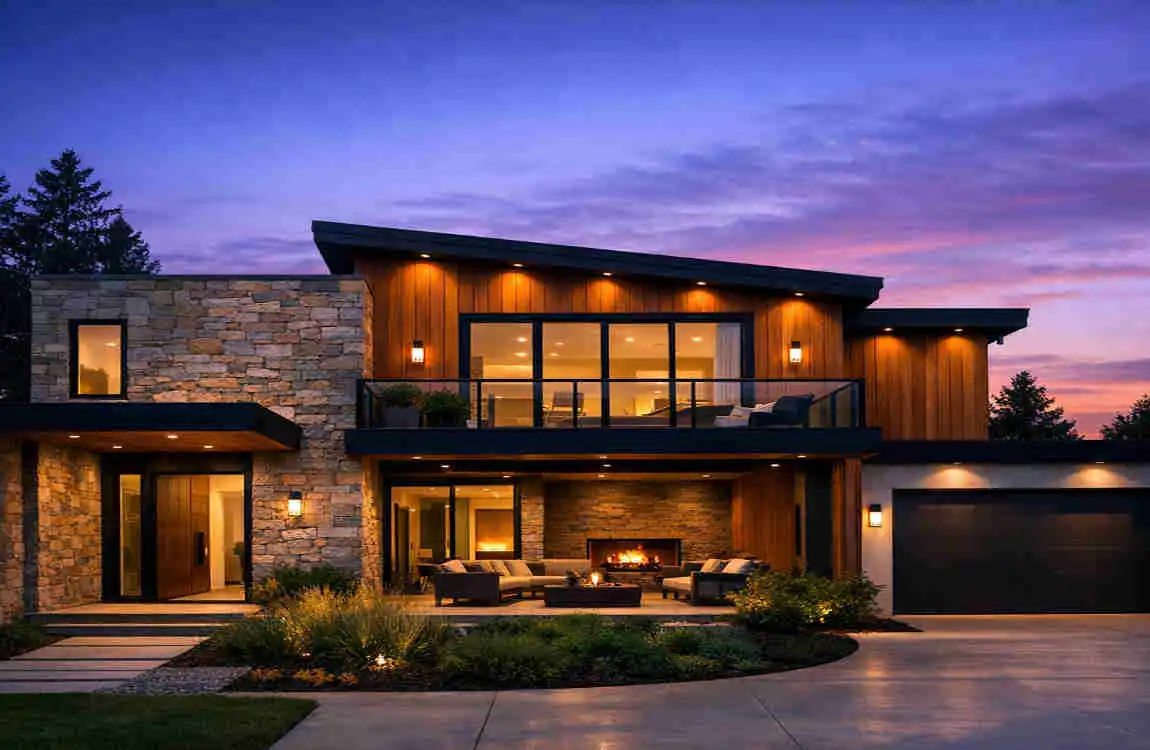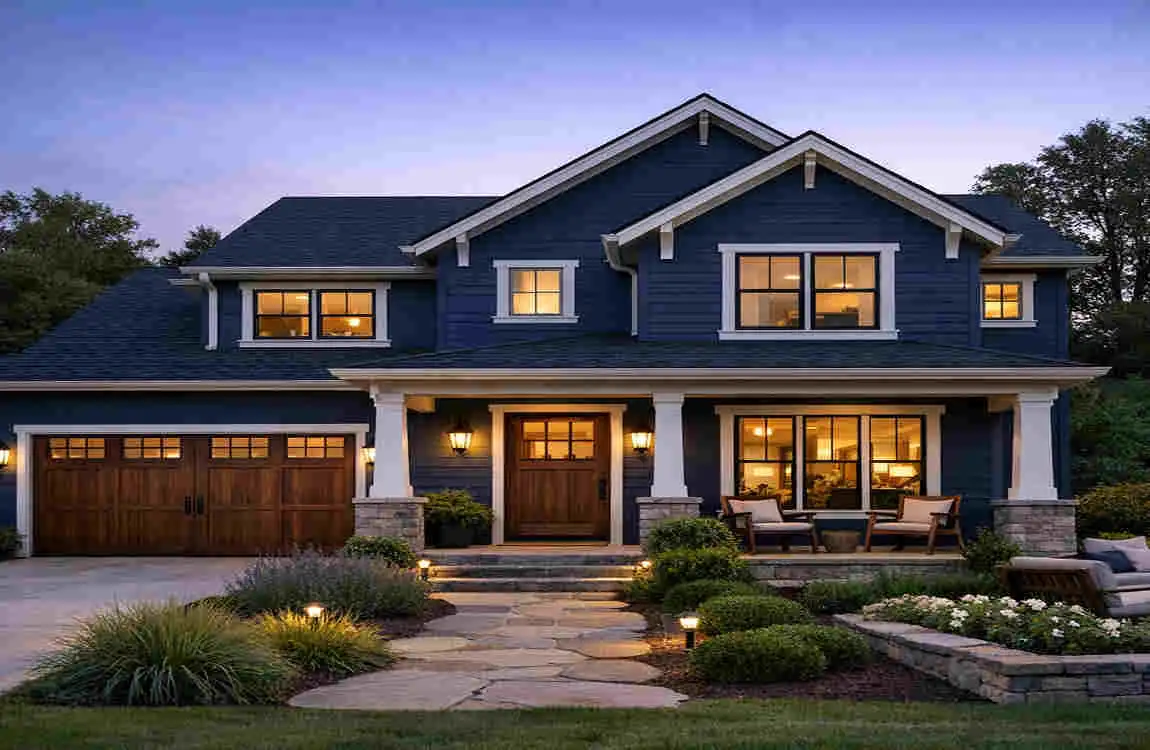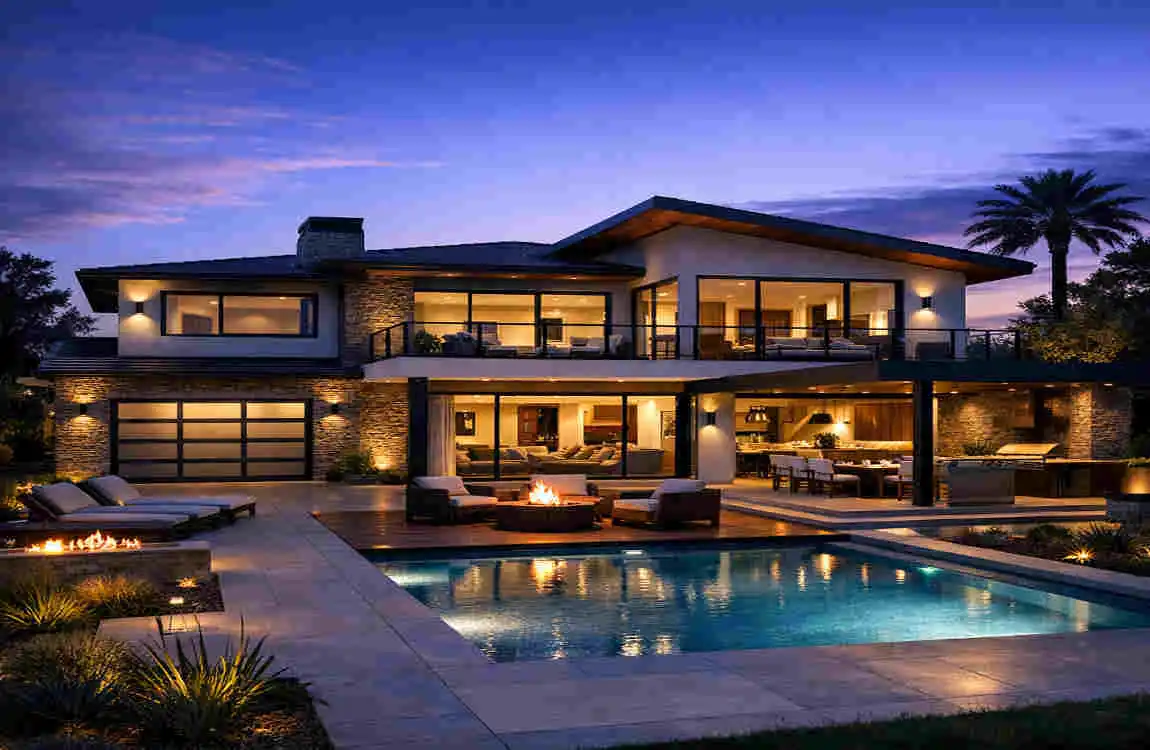
There is something truly magical about how a home looks at twilight. That brief, breathtaking window between day and night bathes everything in soft blues, warm purples, and gentle grays. Now imagine capturing that feeling permanently on your home’s exterior. That is exactly what twilight-colored home exteriors are all about in 2026, and homeowners everywhere are falling in love with the concept.
Twilight colors are those dusky, transitional shades that mimic the sky as the sun dips below the horizon. Think deep navy blues, soft mauves, moody charcoals, and muted lavenders. These hues have seen an incredible surge in popularity, with industry reports from Sherwin-Williams noting a 40% rise in earthy and dusky tone selections over the past two years. Homeowners are moving away from stark whites and bold primaries, gravitating instead toward colors that feel sophisticated, calming, and deeply connected to nature.
Why Choose Twilight Colors for Your Home Exterior?

Before we jump into specific shades, let’s talk about why twilight exterior colors are such a smart choice. Choosing a paint color for your home’s exterior is not just about aesthetics. It is a decision that affects your mood, your property value, your energy bills, and even the maintenance you will need down the road. Twilight colors check every single one of those boxes.
The Emotional Power of Twilight Hues
Color psychology is a well-researched field, and the findings are clear. Soft, cool-toned colors like blues, purples, and muted grays have a measurable calming effect on the human mind. Studies published in the Journal of Environmental Psychology suggest that exposure to these transitional hues can reduce stress levels by up to 20%. When you pull into your driveway after a long day and your home greets you with a serene dusky navy or a gentle lavender, you literally start to relax before you even walk through the front door.
This calming quality extends to your neighbors and visitors, too. A twilight-colored home creates an inviting, peaceful atmosphere for the entire street. It says, “This is a place of rest and beauty.” That is a powerful first impression.
Boosting Curb Appeal and Home Value
Let’s talk numbers. According to data from the National Association of Realtors, a well-executed exterior paint job in trending, sophisticated colors can increase a home’s perceived value by 5 to 10 percent. Twilight shades fall squarely into the category of colors that real estate agents describe as “universally appealing.” They are modern without being trendy, bold without being overwhelming, and elegant without feeling cold.
If you are thinking about selling your home in the next few years, a twilight color approach for the home exterior could be one of the best investments you make. Buyers in 2026 are specifically looking for homes that feel curated and intentional, and nothing achieves that quite like a thoughtfully chosen dusk-inspired palette.
Energy Efficiency You Might Not Expect
Here is a benefit that surprises many homeowners. Twilight colors, particularly the mid-tones of blue and gray, reflect solar heat more effectively than dark primaries like black or deep red. They absorb less thermal energy than truly dark shades while still providing that rich, dramatic look. In hot climates, this means your air conditioning does not have to work quite as hard during peak summer months. It is a small advantage, but over the years, it adds up on your utility bills.
Low Maintenance and Long-Lasting Beauty
One of the most practical reasons to choose twilight exterior paint colors is their forgiving nature when it comes to maintenance. Bright whites show every speck of dirt and mildew. Bold reds and yellows fade noticeably within a few years. Twilight colors, on the other hand, gracefully hide minor imperfections and resist visible fading far longer than their brighter counterparts. A quality twilight shade, applied properly, can look stunning for 7 to 10 years before needing a refresh.
Here is a quick comparison to help you see the difference at a glance:
Feature: Twilight Colors, Bright Colors
Mood & Atmosphere Serene, modern, and sophisticated Energetic and attention-grabbing
Maintenance & Fading: Low-fade hides dirt well. High-fade shows wear quickly.
Climate Versatility works beautifully in all climates. It can feel overwhelming in some settings.
Resale Appeal Universally attractive to buyers Polarizing and taste-dependent
Energy Reflection Moderate heat reflection varies widely by shade
When you weigh all of these benefits together, the case for twilight colors becomes incredibly compelling. They are not just a passing trend. They represent a thoughtful, practical, and beautiful approach to exterior design.
Top Best Twilight Colors for Home Exteriors
Now for the part you have been waiting for. Here are the ten best twilight colors for home exteriors this year, each carefully selected for their beauty, versatility, and ability to create that coveted twilight color effect. For each shade, you will find a description, its hex code for precise matching, the styles it suits best, and a professional tip to help you use it effectively.
Dusky Navy
Dusky Navy is the undisputed king of twilight exterior colors. This deep, rich blue captures the sky about twenty minutes after sunset, when the last traces of light are fading into darkness. It is sophisticated, timeless, and incredibly versatile.
This shade is an ideal twilight color for home exterior entryways. Imagine a front door and surrounding facade painted in Dusky Navy with crisp white trim framing every edge. The contrast is stunning, and the effect at actual twilight is almost magical, as the color seems to merge with the evening sky.
Lavender Twilight
Lavender Twilight is a soft, muted purple that feels like a warm hug for your home. It is not the bright lavender you might find in a child’s bedroom. Instead, it is a grown-up, dusty version with gray undertones that keep it grounded and elegant.
This color is perfect for creating a cozy, twilight patio room vibe. When the sun goes down, and you turn on soft string lights, a Lavender Twilight exterior transforms your outdoor living space into something truly enchanting.
Warm Charcoal Gray
If you want a twilight color that works with virtually any architectural style, Warm Charcoal Gray is your answer. This is not a cold, industrial gray. The warm undertones give it a softness that feels inviting rather than imposing.
Modern farmhouses look spectacular in this shade. It provides the drama and depth of a dark exterior while remaining approachable and warm. At dusk, Warm Charcoal Gray seems to glow with an inner light that is hard to describe but impossible to ignore.
Plum Dusk
For homeowners who want to make a bold statement, Plum Dusk delivers luxury and drama in equal measure. This deep, wine-influenced purple is reminiscent of the very last moments of twilight when the sky turns impossibly rich and deep.
Plum Dusk is a standout choice for Mediterranean and Spanish-style homes. Against terracotta roofing and wrought iron details, it creates a look that is both regal and warmly inviting. This is not a color for the faint of heart, but for those who embrace it, the results are breathtaking.
Sage Twilight Green
The green trend in exterior paint is not going anywhere, and Sage Twilight Green is the most sophisticated expression of it. This muted, gray-green shade evokes the look of a garden at dusk, when the plants’ greens soften and blend with the fading light.
It is a nature-inspired choice, perfect for eco-conscious homes and properties with landscaping. Sage Twilight Green makes your home look like it grew right out of the earth, creating a seamless connection between architecture and nature.
Blush Mauve
Blush Mauve captures the warm, pink-tinted clouds that sometimes appear during the most spectacular sunsets. It is a subtle, romantic shade that adds softness and warmth to any exterior without veering into territory that feels overly sweet or juvenile.
This is an excellent choice for cottage-style homes, Victorian-inspired architecture, or any property where you want to create a sense of warmth and welcome. Blush Mauve looks particularly stunning when the actual sunset casts its warm glow across the facade.
Stormy Indigo
Stormy Indigo is for the homeowner who loves drama. This deep, moody blue-purple captures the intensity of a twilight sky just before a storm rolls in. It is powerful, commanding, and absolutely gorgeous on the right home.
Urban properties and contemporary twilight color rooms benefit enormously from this shade. Against concrete, glass, and steel elements, Stormy Indigo creates a look that is unmistakably modern and artistically bold.
Moonlit Taupe
Not every twilight color needs to be blue or purple. Moonlit Taupe captures the warm, earthy tones of the ground as moonlight begins to replace sunlight. It is a sophisticated neutral that serves as a perfect canvas for bolder accent colors.
This shade works as an exceptional base color for any twilight exterior palette. It is warm enough to feel inviting, neutral enough to pair with almost anything, and interesting enough to avoid looking bland or builder-grade.
Violet Haze
Violet Haze is a bold yet soothing mid-tone purple that sits right at the intersection of dramatic and calming. It is brighter and more saturated than some of the other twilight options on this list, making it an excellent choice for accent features like front doors, shutters, or garage doors.
On the right home, Violet Haze as a full exterior color is absolutely show-stopping. It works particularly well on smaller homes or townhouses where the contained surface area prevents the color from becoming overwhelming.
Ashen Blue
Rounding out our list is Ashen Blue, a soft, gray-blue that evokes the gentle twilight of coastal evenings. This is perhaps the most universally flattering shade on the list. It works on virtually every home style, in every climate, and with almost any accent color.
For coastal and lakeside properties, Ashen Blue is perfection. It mirrors the water and sky, creating a seamless visual flow between your home and its natural surroundings. But do not let the coastal association limit you. This color looks equally stunning on suburban colonials and urban row houses.
How to Pair Twilight Colors with Trim and Accents
Choosing your main twilight color is only half the battle. The magic truly happens when you pair it with the right trim and accent colors. This is where the 60-30-10 rule becomes your best friend.
The concept is simple. 60% of your exterior should be your primary twilight color. This is your siding, your main walls, the dominant visual element. 30% should be your trim color, including window and door frames, fascia boards, and corner boards. The remaining 10% is your accent color, reserved for the front door, shutters, hardware, and decorative details.
Here are some proven pairings that create a stunning twilight color room for the home exterior:
- Dusky Navy base + Cream trim + Gold hardware — Classic elegance that never goes out of style.
- Warm Charcoal Gray base + White trim + Sage green door — Modern farmhouse perfection.
- Lavender Twilight base + Soft gray trim + Plum accents — A monochromatic twilight dream.
- Ashen Blue base + Bright white trim + Coral front door — Coastal charm with a pop of personality.
The one rule you should never break? Avoid pairing twilight colors with neon or overly saturated accents. The whole beauty of a twilight palette lies in its subtlety and sophistication. A neon green front door on a Dusky Navy home would completely shatter the serene atmosphere you are trying to create. Stick with muted, complementary tones and let the twilight magic speak for itself.
Twilight Color Room for Home Exterior: Architecture Style Guide
One of the most common questions homeowners ask is, “Will twilight colors work on my style of home?” The answer is almost always yes, but the specific shades and approaches vary depending on your architecture. Let’s break it down style by style.
Modern and Contemporary Homes
Modern architecture and twilight colors are a match made in design heaven. The clean lines, flat roofs, and large glass expanses of contemporary homes provide the perfect canvas for dramatic twilight shades like Stormy Indigo, Warm Charcoal Gray, and Dusky Navy.
The key with modern homes is to keep the palette tight and intentional. Choose one dominant twilight color and pair it with a single, crisp trim color. White, black, or raw concrete all work beautifully as contrasting elements. The color scheme’s simplicity mirrors the architecture’s, creating a cohesive look that feels both bold and restrained.
Imagine a sleek, boxy villa painted in Warm Charcoal Gray with floor-to-ceiling windows glowing warmly from within as dusk settles. The effect is absolutely stunning, like a lantern set against the evening sky. This is the twilight color room for the home exterior concept at its most powerful.
Traditional and Craftsman Styles
Traditional homes, including Craftsman bungalows, Colonials, and Tudor-style properties, have a warmth and character that pairs beautifully with the softer end of the twilight spectrum. Think Blush Mauve, Moonlit Taupe, Plum Dusk, and Lavender Twilight.
These homes often feature natural wood elements, such as exposed beams, shingle siding, and detailed trim work. Twilight colors enhance these features rather than competing with them. A Craftsman bungalow in Moonlit Taupe with dark wood trim and a Plum Dusk front door looks like it has been standing there for a hundred years, perfectly at home in its surroundings.
The trick with traditional homes is to lean into the warmth. Choose twilight shades with warm undertones, reds, browns, and golds hiding beneath the surface, rather than cool, stark blues. This keeps the home feeling cozy and inviting, which is exactly what traditional architecture is all about.
Farmhouse and Rustic Exteriors
The modern farmhouse trend shows no signs of slowing down, and twilight colors give this beloved style a fresh, sophisticated update. Sage Twilight Green and Warm Charcoal Gray are the standout choices here.
Farmhouse exteriors typically feature board-and-batten siding, metal roofing, and wide front porches. These elements look incredible in muted twilight tones. A farmhouse in Sage Twilight Green with a black metal roof and white-washed porch railings feels grounded, organic, and effortlessly stylish.
For rustic cabins and mountain homes, Warm Charcoal Gray creates a look that blends with the natural landscape while still feeling intentional and designed. It is a color that says, “I belong here.”
Coastal and Mediterranean Designs
Coastal homes and Mediterranean villas are practically made for twilight colors. Ashen Blue, Stormy Indigo, and Violet Haze capture the essence of ocean sunsets and warm evening breezes.
For coastal properties, Ashen Blue is the obvious choice. It mirrors the water, reflects the sky, and creates a seamless visual connection between the home and its environment. Pair it with white trim and weathered wood accents for a look that is relaxed, beautiful, and timeless.
Mediterranean homes, with their stucco walls and terracotta roofs, come alive in Plum Dusk or Violet Haze. These rich purples complement the warm orange tones of clay tiles, creating a look that evokes the twilight skies of the Mediterranean coast. It is romantic, luxurious, and deeply inviting.
Factors to Consider Before Painting Your Home Exterior Twilight
Choosing a beautiful twilight color is exciting, but before you buy a single gallon of paint, there are several practical factors you need to consider. Taking the time to think through these details will save you money, frustration, and the heartbreak of a color that doesn’t look quite right in your home.
Climate and Sun Exposure
Your local climate plays a huge role in how a twilight color will look and perform on your home. In hot, sunny climates, lighter twilight shades like Ashen Blue, Blush Mauve, and Moonlit Taupe are your best bets. They reflect more solar heat, resist UV fading better, and will not make your home feel like an oven during peak summer months.
In cooler, cloudier climates, you can go darker and bolder. Dusky Navy, Stormy Indigo, and Plum Dusk look spectacular under overcast skies, where the diffused light brings out their depth and complexity. These darker shades also absorb a bit more sunlight, which can be a minor benefit in colder regions.
Material Compatibility
Not all exterior materials take paint the same way. Here is a quick guide:
- Wood siding absorbs paint beautifully and shows twilight colors at their richest.
- Stucco’s textured surface adds dimension to twilight shades, creating subtle shadows that enhance the dusky effect.
- Brick is trickier. Rather than painting the entire brick surface, consider twilight colors for the mortar, trim, and accents, letting the brick’s natural color serve as a complementary element.
- Vinyl siding can be painted, but choose a shade that is equal to or lighter than the original color to prevent heat-related warping.
- Fiber cement, like HardiePlank, takes paint exceptionally well and is one of the best surfaces for achieving a smooth, even twilight finish.
The Dusk Test
This is the most important tip in this entire article. Always test your twilight color at actual dusk. The whole point of a twilight color room for the home exterior is how the color looks and feels during those magical evening hours. A shade that looks perfect on a paint chip under fluorescent store lighting might look completely different on your home at 7 PM.
Buy sample pots of your top two or three choices. Paint large swatches, at least two feet by two feet, on different walls of your home. Then observe them at multiple times of day, especially during the golden hour and twilight. You will be amazed at how much the colors shift. The one that looks most beautiful at dusk is your winner.
Paint Quality and Finish
Do not skimp on paint quality. For twilight exterior colors, invest in Premium, low-VOC paints with excellent UV resistance. Brands like Behr, Benjamin Moore, and Sherwin-Williams all offer lines specifically formulated for exterior durability. Look for paints with built-in mildew resistance and self-priming properties to simplify your application process.
As for finish, satin or eggshell sheens work best for twilight colors. They provide a subtle sheen that catches the light beautifully without the glare of a semi-gloss. Flat finishes can work on stucco or textured surfaces, but they tend to show dirt more easily.
Budget Planning
A full exterior repaint is a significant investment. For an average-sized home, expect to spend between $3,000 and $10,000, depending on your region, the condition of your existing surfaces, and whether you hire professionals or tackle it yourself. Here is a rough breakdown:
- Paint and materials: $500 to $1,500
- Professional labor: $2,500 to $8,000
- Prep work (repairs, power washing): $200 to $1,000
The investment is well worth it when you consider the boost in curb appeal, home value, and the sheer joy of coming home to a beautifully painted twilight exterior every single day.
Step-by-Step Guide to Applying Twilight Exterior Colors
Whether you are hiring professionals or taking the DIY route, understanding the proper application process ensures your twilight colors look their absolute best. Here is a clear, step-by-step guide to getting it right.
Prepare Your Surfaces
Great paint starts with great prep. Power wash your entire exterior to remove dirt, mildew, chalking, and loose paint. Allow the surfaces to dry completely, which typically takes 24 to 48 hours, depending on your climate. Inspect every surface carefully. Scrape off any peeling or flaking paint, fill cracks and holes with exterior-grade filler, and sand rough spots smooth.
This step is not glamorous, but it is the foundation of a paint job that will last for years. Skipping prep is the number one reason exterior paint jobs fail prematurely.
Prime for Perfect Adhesion
Apply a high-quality exterior primer to all bare or repaired surfaces. If you are making a dramatic color change, such as going from a light beige to Dusky Navy, consider priming the entire exterior with a tinted primer that closely matches your final twilight color. This reduces the number of topcoats needed and ensures even, rich color coverage.
Apply Your Twilight Color
Now the exciting part. Apply your chosen twilight shade in two full coats, allowing proper drying time between each coat as specified by the paint manufacturer. Use a combination of brushes for detail work and rollers or sprayers for large flat surfaces.
Pay special attention to coverage consistency. Twilight colors, especially the deeper blues and purples, can show lap marks and uneven coverage more readily than lighter shades. Work in manageable sections and maintain a wet edge to avoid visible seams.
Seal and Protect
Once your final coat is fully cured, apply a clear exterior sealer with UV protection. This extra step adds years to your paint job’s lifespan. It helps maintain the color’s vibrancy against sun, rain, and temperature fluctuations. It is a small investment of time and money that pays enormous dividends.
The Twilight Reveal
Here is a fun final step. Wait for dusk on the day you finish, then step back and admire your work. Take photos during the golden hour and twilight. The transformation will be dramatic, and you will see exactly why twilight colors have become one of the most exciting trends in exterior design. Share those before-and-after photos with friends, family, and your social media followers. You have earned the bragging rights.
Real Home Transformations with Twilight Colors

Nothing illustrates the power of twilight exterior colors quite like real-world transformations. Seeing actual homes go from ordinary to extraordinary with a twilight palette is the best motivation for your own project.
The Suburban Bungalow Revival
One homeowner took their dated beige bungalow and transformed it with Warm Charcoal Gray on the main body, crisp white trim, and a Sage Twilight Green front door. The result was a home that looked like it had been plucked from a design magazine. The real estate appraiser noted an 8% increase in the estimated property value after the repaint, more than covering the project’s cost.
The homeowner reported that the most rewarding part was the neighbors’ reaction. Several families on the same street were inspired to update their own exteriors, and the entire block saw a noticeable improvement in overall curb appeal.
The Urban Townhouse Transformation
A row of urban townhouses received a coordinated twilight makeover, with each unit painted in a different shade from the twilight palette. Dusky Navy, Stormy Indigo, Warm Charcoal Gray, and Ashen Blue lined up side by side, creating a stunning gradient effect that mimicked an actual twilight sky. The project attracted local media attention and became a neighborhood landmark.
The Coastal Cottage Refresh
A weathered coastal cottage was brought back to life with Ashen Blue siding, white trim, and a Violet Haze front door. The combination captured the essence of ocean twilights perfectly. The homeowner described the feeling of sitting on the front porch at dusk as “like living inside a painting.”
These transformations prove that twilight colors are not just a theoretical concept. They deliver real, tangible results that enhance both the beauty and value of your home. If you are ready to experience this transformation for yourself, book a twilight color consultation today and let professionals help you find the perfect palette for your unique home.
FAQs: Twilight Colors for Home Exteriors
What is the best twilight color for the home exterior in hot climates?
Dusky Navy and Ashen Blue are excellent choices for hot climates. They provide the rich, sophisticated twilight look without absorbing excessive heat. Pair them with light-colored trim to maximize heat reflection and keep your home comfortable during the summer months.
Do twilight colors fade quickly?
No, twilight colors are actually among the most fade-resistant options available. Their muted, complex pigments hold up far better than bright primaries under UV exposure. When you use a high-quality exterior paint with built-in UV protection and apply a clear sealer, your twilight colors can remain vibrant for 7 to 10 years or more.
Can I use Twilight Shades on brick?
Absolutely. However, rather than painting the entire brick surface, many designers recommend using twilight colors on the mortar joints, trim, shutters, and front door while allowing the natural brick to serve as a complementary base. If you do want to paint the brick itself, make sure to use a breathable masonry paint to prevent moisture from being trapped.
What are the trending twilight exterior colors?
Sage Twilight Green and Blush Mauve are the breakout stars of 2026. Sage green connects with the ongoing biophilic design movement. At the same time, Blush Mauve offers a warm, romantic alternative to cooler twilight tones. Both colors are appearing in major paint brand trend forecasts and designer showcases.
How much does a twilight exterior repaint cost?
For an average-sized home, expect to invest between $0.50 and $2.00 per square foot, depending on your location, the complexity of your exterior, and the quality of paint you choose. A typical project ranges from $3,000 to $10,000 all-in, including prep work, materials, and professional labor.