
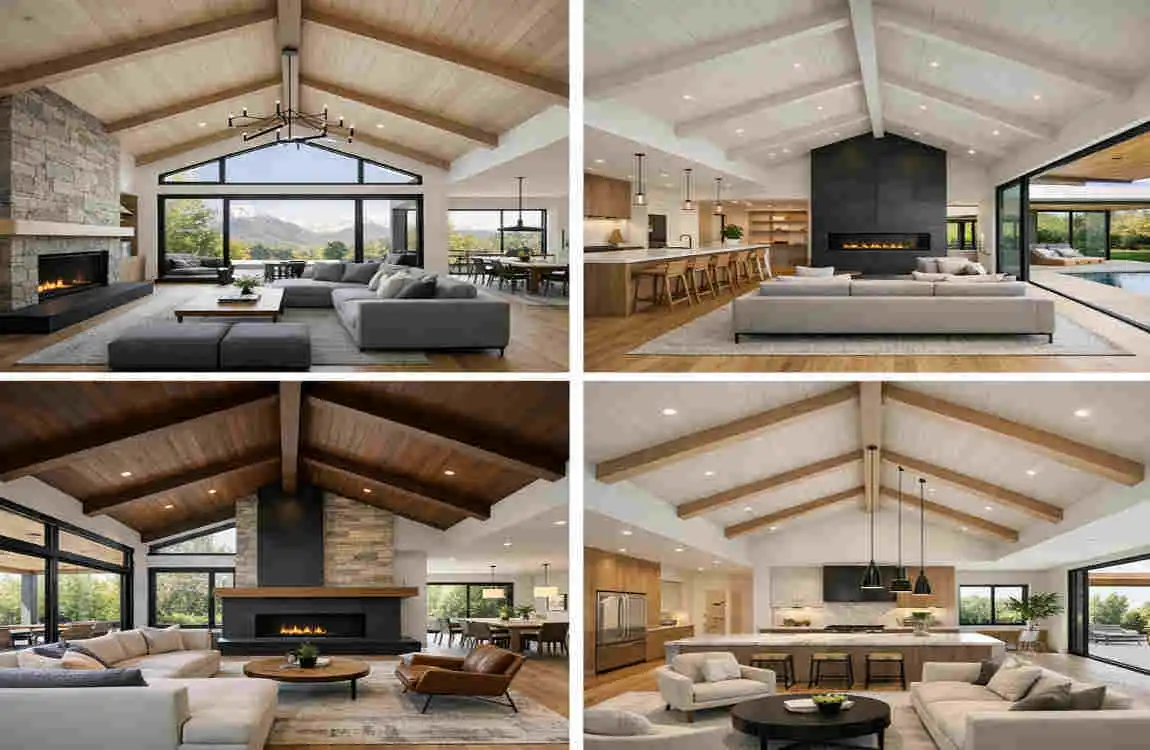
If you have ever walked into a home and felt the rooms open up above you, you have probably seen a vaulted ceiling. It adds height, light, and a sense of space that many homeowners love.
So, what is the best house design for a vaulted ceiling? In most cases, the best choice is a modern open-concept home, a modern farmhouse, or a contemporary layout with large windows and simple lines.
Vaulted ceilings work especially well when the home design supports their height instead of fighting against it. That means the room should feel balanced, bright, and easy to live in.
What Is a Vaulted Ceiling?
Definition of a Vaulted Ceiling
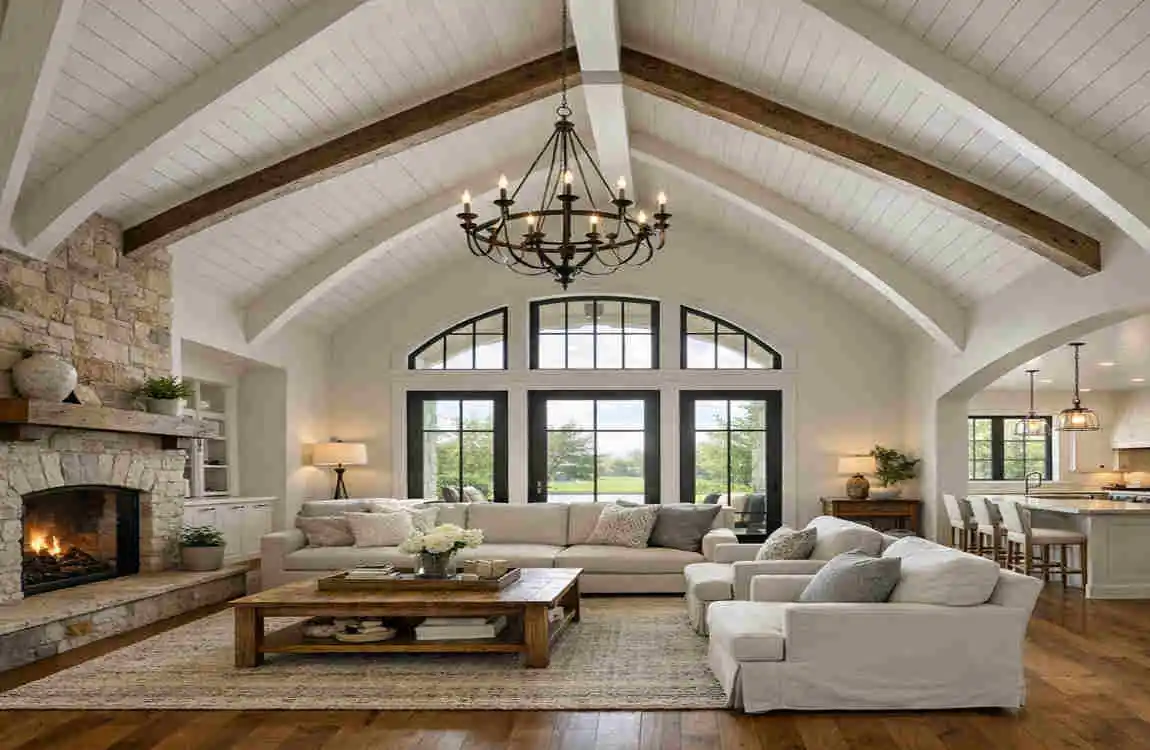
A vaulted ceiling is a ceiling that rises higher than a standard flat ceiling. It often slopes upward or follows the roofline, which gives the room a taller and more open feel.
People often choose vaulted ceilings because they make a home feel larger without changing the floor space.
How It Differs from Standard Ceilings
A standard ceiling is usually flat and level. It keeps the room simple, practical, and often easier to heat and cool.
A vaulted ceiling, on the other hand, creates a dramatic look. It creates more visual space and often allows for larger windows or more natural light.
Common Types of Vaulted Ceilings
Here are the most common styles:
- Cathedral ceiling: Slopes upward at a sharp angle, often mirroring the roofline
- Barrel vault: Rounded like the inside of a tunnel
- Groin vault: Made by crossing two barrel vaults
- Dome: Curves upward in a rounded shape
- Shed vault: Slants in one direction, often used in modern homes
Each type creates a different mood. Some feel classic, while others feel more modern and clean.
What Is the Best House Design for a Vaulted Ceiling?
Open Concept Floor Plans
An open-concept home is one of the best matches for a vaulted ceiling. Why? Because the open layout makes the ceiling a major feature rather than being hidden in a small, closed room.
This design works well in living rooms, kitchens, and dining spaces that flow together.
Modern Farmhouse Designs
Modern farmhouse homes often pair beautifully with vaulted ceilings. The ceiling adds charm and a little drama, while the farmhouse style keeps the space warm and welcoming.
If you like bright rooms, wood accents, and a cozy feel, this style is a strong choice.
Contemporary Homes
Contemporary homes are another great fit. They usually have clean lines, large windows, and simple shapes, which match the look of a vaulted ceiling very well.
This style makes the ceiling feel intentional, not oversized.
Scandinavian Style Homes
Scandinavian homes are known for light colors, natural materials, and simple design. A vaulted ceiling fits this style because it helps the home feel airy and calm.
If you want a peaceful and uncluttered space, this is a smart option.
Mountain and Cabin Homes
Vaulted ceilings are very popular in mountain homes and cabins. They make wood interiors feel grand and help bring attention to the roof structure and beams.
This style works especially well when paired with stone, timber, and large windows.
Luxury Custom Homes
Luxury homes often use vaulted ceilings in entryways, great rooms, and master suites. The added height gives the home a refined, high-end feel.
If you want a bold architectural feature, vaulted ceilings deliver that effect beautifully.
Benefits of Modern Vaulted Ceiling House Designs
Creates a Spacious Feel
One of the biggest advantages is simple: the room feels larger.
Even if the square footage stays the same, the added height creates a sense of openness that people notice right away.
Brings in More Natural Light
Vaulted ceilings often make it easier to add larger windows or skylights. That means more daylight can enter the room.
Natural light makes a space feel warmer, brighter, and more inviting.
Improves Air Circulation
Higher ceilings can improve airflow in some homes. Warm air rises so that the room can feel less cramped and stuffy.
This is especially helpful in larger open spaces.
Adds Property Value
A well-designed vaulted ceiling can increase a home’s appeal. Buyers often like the dramatic look and the sense of luxury it creates.
That does not guarantee a huge return, but it can make your home more attractive.
Enhances Interior Beauty
Vaulted ceilings can turn an ordinary room into a focal point. They give you space for beams, statement lighting, and unique design details.
That extra visual interest can make your modern home feel more special.
Best Rooms for Vaulted Ceilings
Living Room
The living room is one of the best places for a vaulted ceiling. It is where people gather, relax, and spend time together.
A vaulted ceiling can make the room feel open and impressive without losing comfort.
Great Room
A great room is often the heart of the house, so it is a natural place for a tall ceiling. The design helps the room feel grand and connected.
This works especially well in open-concept homes.
Kitchen
Vaulted ceilings in kitchens create a bright and airy feeling. They also help the kitchen feel more spacious, which is useful if it opens into other rooms.
Dining Area
A vaulted ceiling can make a dining area feel elegant and memorable. It works well if you want the space to feel a little more formal or stylish.
Main Bedroom
In a bedroom, a vaulted ceiling can create a peaceful, luxury feel. It gives the room a soft and open feeling without making it look too crowded.
Entryway
A vaulted entryway makes a strong first impression. It welcomes guests with height and drama right away.
Popular Modern Vaulted Ceiling Design Ideas
Exposed Wooden Beams
Wooden beams add warmth and character. They also help the ceiling feel more grounded and less empty.
If you want a home that feels modern but not cold, beams are a great choice.
Skylights
Skylights are a smart addition to vaulted ceilings. They bring in natural light from above and make the space feel even more open.
Floor-to-Ceiling Windows
Tall windows work beautifully with vaulted ceilings. They let the ceiling and the walls work together rather than compete.
This is one of the best ways to make the room feel bright and dramatic.
Statement Chandeliers
A bold chandelier can stylishly fill the vertical space. It becomes a focal point and helps the room feel complete.
White Minimalist Ceilings
A white vaulted ceiling gives the room a clean, fresh look. It reflects light well and works with many design styles.
Black Modern Ceiling Accents
Black or dark accents can make a vaulted ceiling look more dramatic and modern. This works best in luxury homes with strong contrast and simple decor.
Materials Used for Vaulted Ceilings
Wood
Wood adds warmth and natural beauty. It is one of the most popular choices for vaulted ceilings in both modern and rustic homes.
Drywall
Drywall is common because it creates a smooth, clean finish. It works well in modern homes that prefer a simple look.
Steel Beams
Steel beams may be used for structure and style. They are often found in industrial or contemporary homes.
Tongue-and-Groove Panels
These panels create texture and detail. They are especially nice in cabins, farmhouses, or homes with a handcrafted look.
Decorative Wood Planks
Wood planks give the ceiling depth and a custom feel. They can make the room feel more finished and visually interesting.
Vaulted Ceiling vs Flat Ceiling
FeatureVaulted CeilingFlat Ceiling
Appearance Spacious Traditional
Natural Light Excellent Moderate
Home Value Higher Standard
Construction Cost Higher Lower
Maintenance Moderate Easy
A vaulted ceiling gives you more visual impact, while a flat ceiling is usually simpler and cheaper. The better choice depends on your budget, style, and space.
Design Tips for Modern Vaulted Ceiling Homes
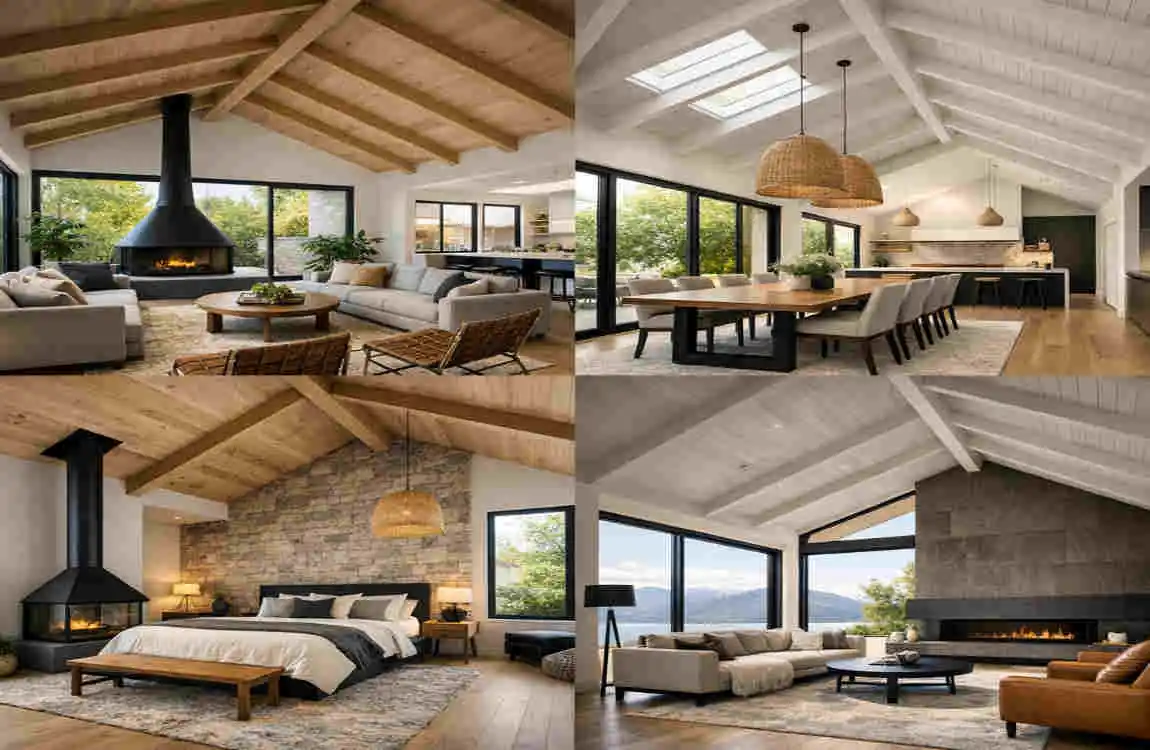
Choose Large Windows
Large windows help the ceiling feel balanced. They also bring in more daylight, which makes the room feel even taller.
Install Energy-Efficient Insulation
Because vaulted ceilings create more open space, good insulation is especially important. It helps keep the home comfortable and can lower energy use.
Add Pendant Lighting
Pendant lights work well because they draw the eye downward and help fill the vertical space. They also add style without overwhelming the room.
Highlight Structural Beams
If your home has visible beams, make them part of the design. They can add charm and make the ceiling feel intentional.
Select Neutral Paint Colors
Neutral colors help a vaulted room feel calm and clean. Light shades also reflect more light and can make the space feel bigger.
Common Challenges and Solutions
Heating and Cooling Costs
Tall ceilings can sometimes make a room harder to heat or cool. That is why insulation, good windows, and ceiling fans matter.
Difficult Maintenance
Cleaning a high ceiling can be tricky. You may need extension tools or professional help for light fixtures and dusting.
Lighting Placement
Lighting needs to be planned carefully. A vaulted ceiling should have enough light so the room does not feel dark or empty.
Echo and Acoustics
High ceilings can sometimes create echo. Rugs, curtains, furniture, and fabric pieces can help soften the sound.
Furniture Scaling
The furniture should match the room’s height. Small furniture can look lost in a vaulted space, so choose pieces with some visual weight.
Cost of Building a Vaulted Ceiling
Factors Affecting Cost
The cost depends on the ceiling height, roof shape, materials, labor, and whether you are building new or remodeling.
New Construction vs Remodeling
It is usually easier and less expensive to build a vaulted ceiling during new construction. Adding one to an existing home can be more complex.
Material Costs
Wood, drywall, beams, lighting, and insulation all affect the final cost—the more detailed the design, the higher the price.
Labor Expenses
Vaulted ceilings often need skilled labor, especially if structural changes are involved. That can raise the budget.
Budget Planning Tips
Start with a clear plan. Decide where the vaulted ceiling will go, what materials you want, and how much detail you can afford.
Mistakes to Avoid
- Ignoring insulation
- Poor lighting choices
- Using small windows
- Overcrowding the room
- Choosing the wrong ceiling height
These mistakes can make the design feel unfinished or uncomfortable. A vaulted ceiling should improve the room, not overwhelm it.
Is a Vaulted Ceiling Right for Your Home?
Climate Considerations
If you live in a very hot or very cold climate, think carefully about energy use. Vaulted ceilings can affect temperature control if not well designed.
Budget Planning
A vaulted ceiling usually costs more than a flat one. Make sure the design fits your budget before you commit.
Home Size
Vaulted ceilings work best when the room has enough space to support them. In a very small or low home, they may not feel right everywhere.
Lifestyle Needs
If you like open, airy rooms and visual drama, a vaulted ceiling may be a great match. If you prefer cozy and simple spaces, a flat ceiling may suit you better.
Expert Tips for Designing Modern Vaulted Ceiling Homes
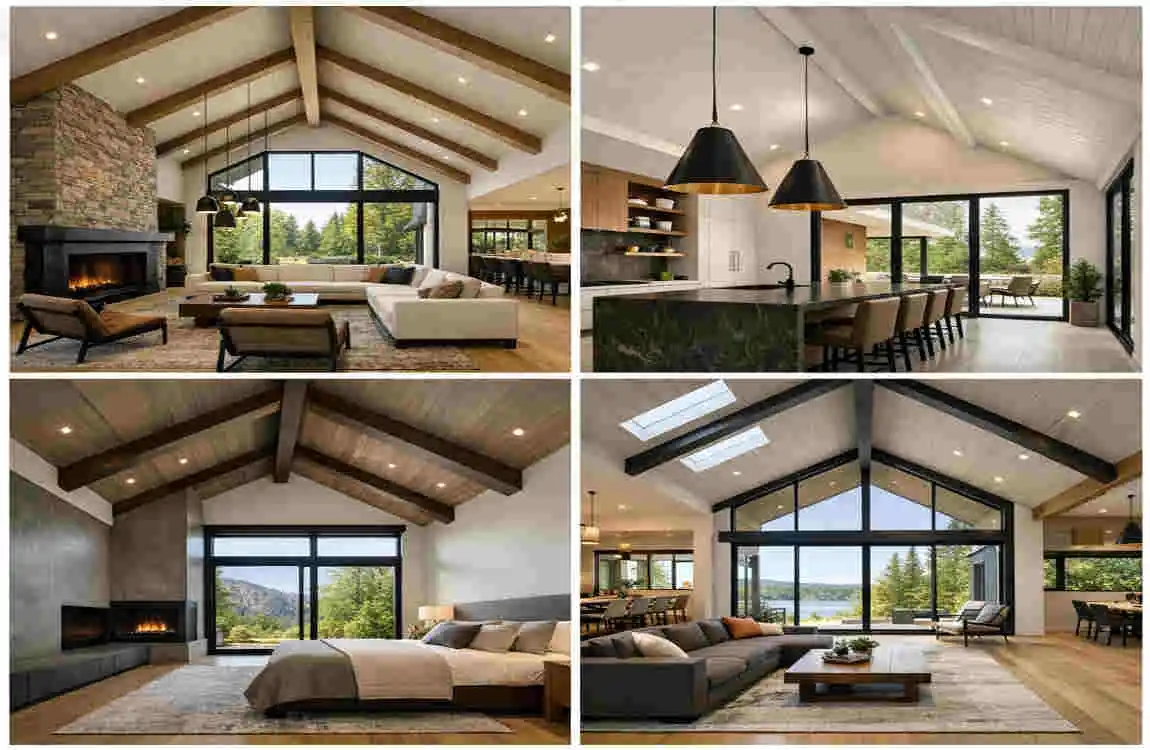
- Work with an experienced architect
- Focus on energy efficiency
- Maximize natural lighting
- Balance aesthetics and functionality
- Invest in quality materials
These tips help you get a ceiling that looks good and works well in daily life.
Frequently Asked Questions
What is the best house design for a vaulted ceiling?
The best design is usually an open-concept home, modern farmhouse, or contemporary layout with large windows and simple lines.
Are vaulted ceilings worth the extra cost?
Yes, for many homeowners, they are. They add style, light, and value, though they do cost more to build.
Which rooms look best with vaulted ceilings?
The living room, great room, kitchen, main bedroom, and entryway are some of the best spaces.
Do vaulted ceilings increase home value?
They often improve curb appeal and buyer interest, which can help with resale value.
Are vaulted ceilings energy efficient?
They can be, but only if the home has good insulation, proper ventilation, and efficient windows.
What is the difference between a cathedral ceiling and a vaulted ceiling?
A cathedral ceiling is a type of vaulted ceiling that usually follows the roofline with a steep slope.
Can you add a vaulted ceiling to an existing house?
Yes, but it can be complex and costly because it may require structural changes.
| Feature | Details |
|---|---|
| Design Style | Contemporary, Modern Farmhouse, Scandinavian, Rustic, Minimalist |
| Ceiling Height | Typically 10–20 feet at the highest point |
| Ceiling Shape | Sloped, Cathedral, Exposed Beam, Shed, or A-Frame |
| Best Roof Types | Gable, Shed, Hip, or Vaulted Roof |
| Popular Materials | Wood beams, drywall, shiplap, steel, exposed timber |
| Natural Light | Large windows, skylights, clerestory windows |
| Best Rooms | Living room, great room, kitchen, dining area, master bedroom |
| Main Advantages | Spacious feel, improved natural light, modern appearance, better ventilation |
| Potential Drawbacks | Higher heating/cooling costs, more expensive construction and maintenance |
