
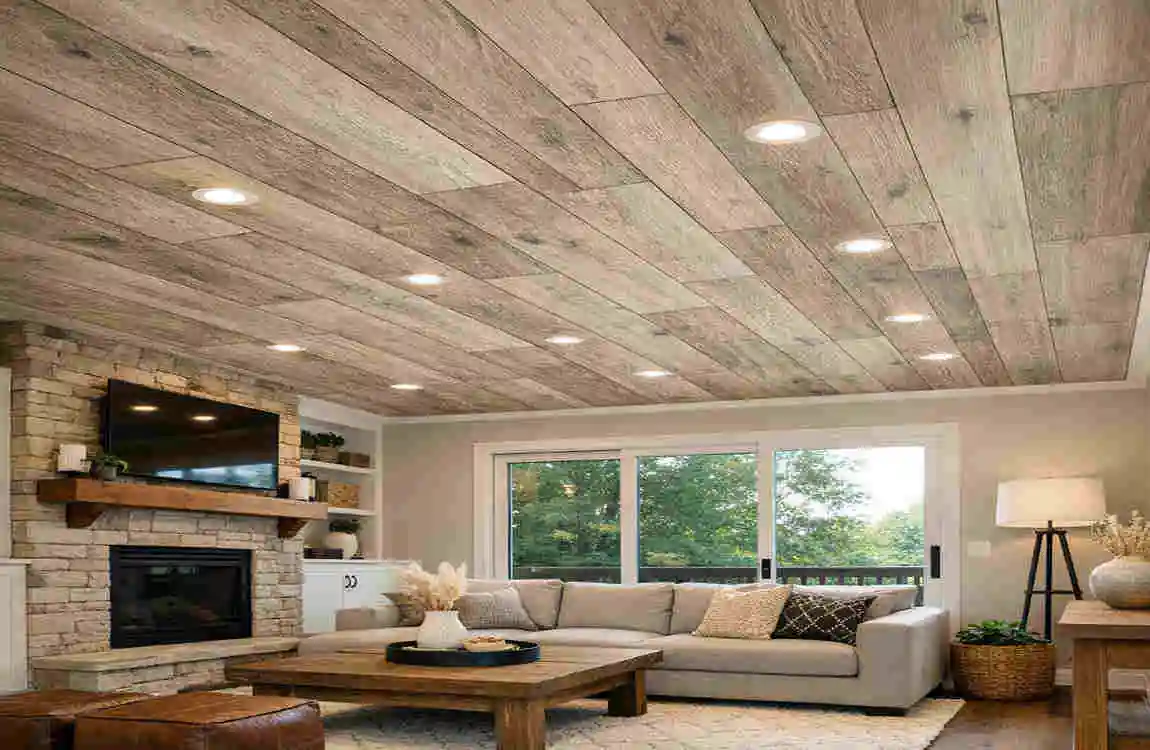
This idea is becoming more popular because homeowners want something different. A vinyl ceiling can add warmth, texture, and a polished finish to a room. It is also lighter and easier to care for than many traditional ceiling materials.
Can You Use Vinyl Flooring on Ceiling?
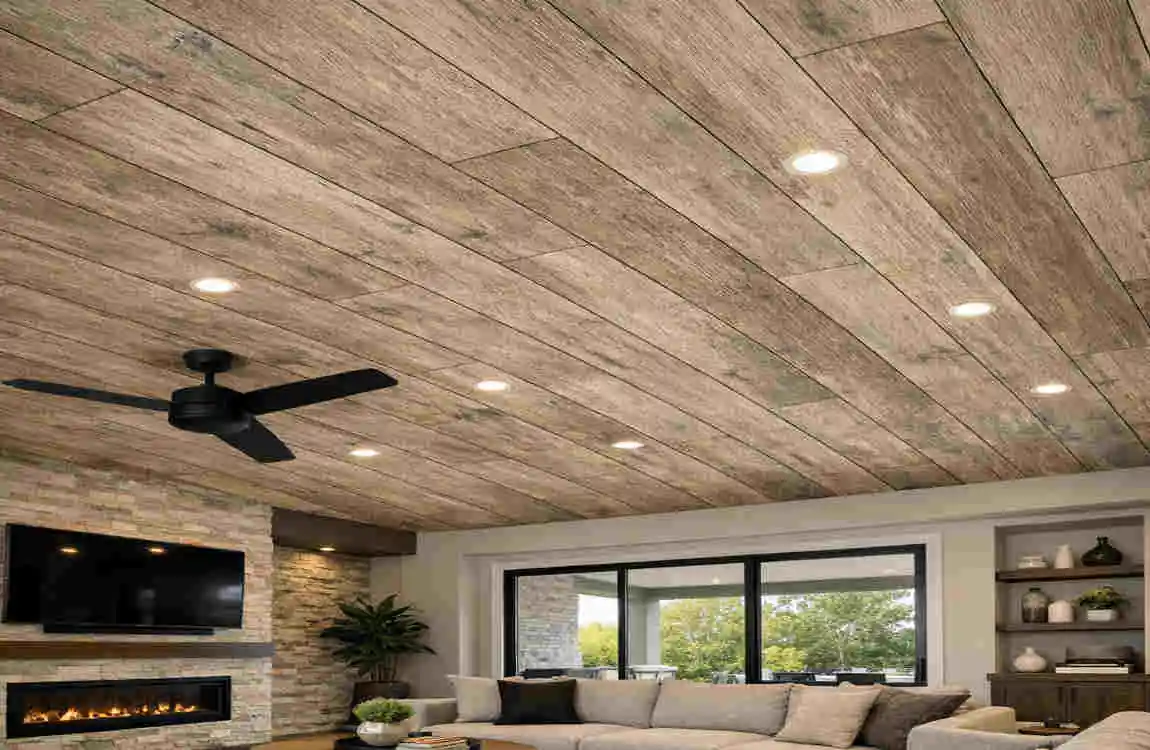
Understanding Vinyl Flooring as a Ceiling Material
Vinyl flooring is usually made with PVC layers, a printed design layer, and a protective wear layer. These layers make it strong, attractive, and easy to clean.
Even though it is made for floors, some vinyl products can also work on walls and ceilings. The key is choosing the right type. Not every vinyl flooring product is safe or practical for overhead use.
You need to think about weight, adhesive strength, and surface support. A ceiling must hold the material securely over time, so both the product and the installation method matter a lot.
Types of Vinyl Flooring Suitable for Ceilings
Vinyl Type Suitability for Ceiling Features
Luxury Vinyl Planks (LVP) Excellent Wood look, lightweight, easy to install
Vinyl Tiles Good Flexible styles and patterns
Peel-and-Stick Vinyl Moderate Simple DIY option
Waterproof Vinyl Excellent Durable and moisture resistant
If you want the safest and most attractive option, luxury vinyl planks are usually the best place to start.
Benefits of Using Vinyl Flooring on a Ceiling
Creates a Stylish Wood-Look Ceiling
One of the biggest reasons people choose vinyl is the look. It can mimic hardwood, reclaimed wood, or modern panel designs very well.
This gives you a ceiling that feels warm instead of plain. In living rooms, bedrooms, and home offices, that visual change can make the whole room feel more finished.
More Affordable Than Real Wood
Real wood ceilings can be expensive. You pay more for the material, the labor, and the ongoing care.
Vinyl is usually much more budget-friendly. It can save money in:
- Material cost
- Installation cost
- Long-term maintenance
If you want a stylish ceiling without a big renovation bill, vinyl is a smart option.
Easy Maintenance and Cleaning
Vinyl is simple to care for. It does not need painting, sanding, or refinishing.
A light dusting or gentle wipe is often enough. That makes it a practical choice for busy homes.
Moisture Resistance
Another strong advantage is moisture resistance. This makes vinyl useful in rooms like:
- Bathrooms
- Basements
- Laundry rooms
- Kitchens
If your space has more humidity than usual, waterproof vinyl can be a better choice than wood.
Lightweight and Easy to Customize
Vinyl is easier to cut and shape than many heavier ceiling materials. That makes it easier to fit around lights, vents, and edges.
You can also choose from many colors, textures, and finishes, so it is easier to match your interior style.
Drawbacks of Installing Vinyl Flooring on a Ceiling
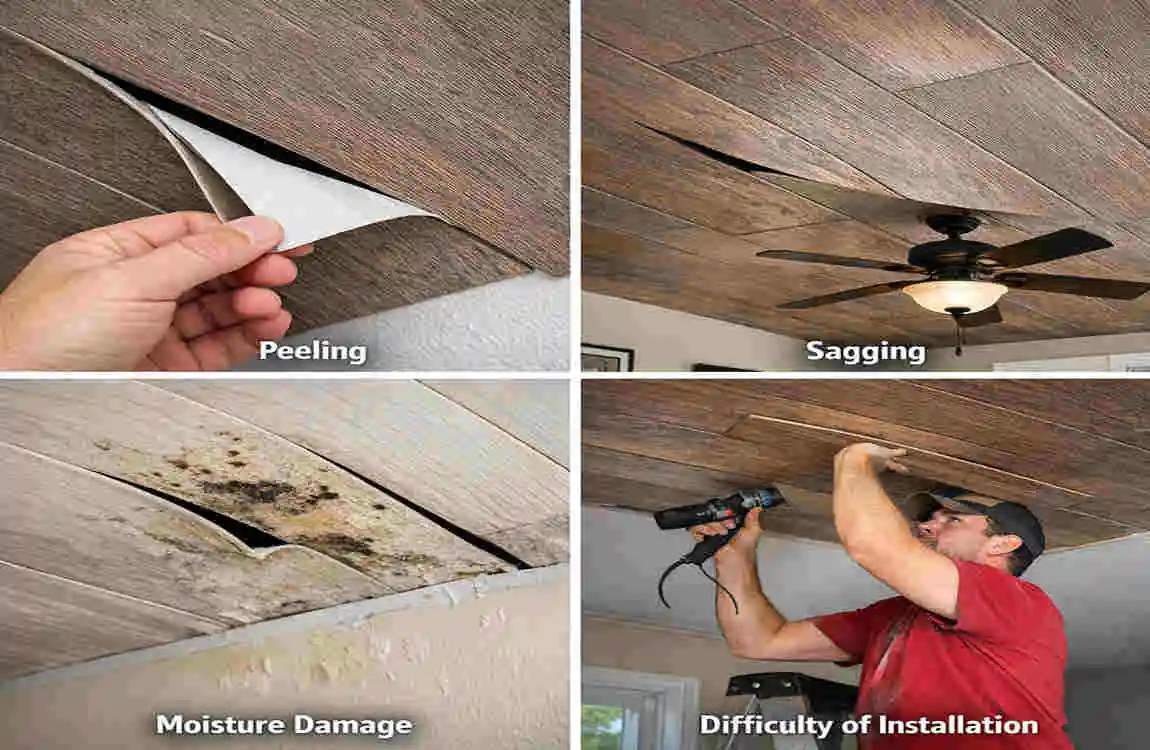
Installation Can Be Challenging
Installing flooring on a ceiling is harder than on a wall or floor. Gravity works against you, so you need careful measuring and strong support.
A poor installation can lead to loose panels or uneven lines. That is why planning matters so much.
Adhesive Failure Risk
If the glue is weak, the planks may loosen over time. Heat, humidity, and poor surface prep can all cause problems.
This is why using high-quality adhesive is so important. You also need a clean, dry ceiling before starting.
Not All Vinyl Flooring Is Designed for Ceilings
Some vinyl products are made only for floors. These may be too heavy or not suitable for overhead attachment.
Before you buy, check:
- Weight
- Manufacturer instructions
- Installation recommendations
This simple step can save you a lot of trouble later.
May Reduce Ceiling Height Appearance
Thicker panels or extra framing can make a ceiling feel lower. In small rooms, this can affect the sense of space.
If your room already has a low ceiling, choose thin, lightweight vinyl to keep the space open.
Best Rooms to Install Vinyl Flooring on Ceiling
Living Rooms
A vinyl ceiling can add a strong design feature in a living room. It works well in modern, rustic, and farmhouse-style spaces.
Bedrooms
In bedrooms, vinyl can create a cozy and warm feeling. A wood-look ceiling can make the room feel more relaxing.
Bathrooms
Moisture-resistant vinyl can work well here, but good ventilation is a must. Without proper airflow, moisture can still cause issues.
Basements
Basements often feel plain or unfinished. A vinyl ceiling can help improve the look without requiring heavy materials.
Home Offices
A stylish ceiling can make a workspace feel more polished and inviting. If you want a clean and modern look, vinyl can help.
How to Install Vinyl Flooring on a Ceiling
Prepare the Ceiling Surface
Start by cleaning the ceiling well. Remove dust, dirt, and loose material.
Then fix cracks, dents, or weak spots. The surface needs to be flat and strong before you begin.
Choose the Right Vinyl Flooring
Pick a product that is lightweight, durable, and suitable for overhead use. Waterproof options are often a good choice, especially in humid rooms.
Plan the Layout
Measure the ceiling carefully. Decide which direction the planks should run to make the room look balanced.
Planning also helps reduce visible seams and uneven cuts.
Apply Adhesive or Mounting System
You can use different methods depending on the ceiling type:
- Construction adhesive
- Nails or staples
- Furring strips
- Drop ceiling systems
The right method depends on the ceiling structure and the vinyl product you choose.
Install the Vinyl Planks
Work from one side of the room to the other. Keep the lines straight and press each plank firmly in place.
Take your time here. A careful installation gives you a much cleaner result.
Finish the Edges
Once the planks are in place, add trim or molding around the edges. Use caulking where needed to create a neat finish.
Vinyl Flooring Ceiling Installation Methods
Method Best For Advantages Challenges
Adhesive Installation: Smooth ceilings, Clean appearance, Needs strong bonding.
Nail Gun Installation Wood framing Very secure Leaves small holes
Furring Strip Method Uneven ceilings Strong support Takes more time
Drop Ceiling System Commercial spaces Easy access More materials needed
For most homes, installing adhesive or furring strips works well, depending on the condition of the ceiling.
Vinyl Flooring Ceiling Cost Guide
The cost depends on the material, room size, and installation method.
Item Estimated Cost
Vinyl flooring materials $1–$7 per sq. ft.
Adhesive and supplies $50–$200
Professional installation Varies by project
Additional framing Extra cost
If you want to save money, a DIY project may work for a small room. For larger rooms or high ceilings, professional help may be worth it.
Vinyl Flooring Ceiling vs Other Ceiling Materials
Vinyl Flooring vs Wood Ceiling
Vinyl usually costs less than real wood. It also needs less maintenance and handles moisture better.
Vinyl Flooring vs PVC Ceiling Panels
PVC panels are made specifically for ceilings so that they may be easier in some cases. Vinyl flooring, however, may offer more wood-like styles.
Vinyl Flooring vs Painted Drywall Ceiling
A painted ceiling is cheaper and simpler. But vinyl creates a much stronger design impact and adds texture.
Tips for Successfully Using Vinyl Flooring on Ceiling
Here are a few simple tips to help your project go better:
- Choose lightweight vinyl planks
- Use strong adhesive
- Check ceiling strength first
- Let the material adjust to room temperature
- Plan lighting carefully
- Get professional help for tall ceilings
These small steps can make a big difference in the final result.
Common Mistakes to Avoid
Using Heavy Flooring Materials
Heavy planks are harder to hold overhead and may create safety problems.
Skipping Surface Preparation
If the ceiling is dirty or uneven, the installation may fail sooner than expected.
Using Weak Adhesive
Weak glue is one of the biggest reasons planks fall. Always use a product made for the job.
Ignoring Moisture Issues
Humidity can affect performance. This matters especially in bathrooms, kitchens, and basements.
Maintenance Tips for Vinyl Flooring Ceilings
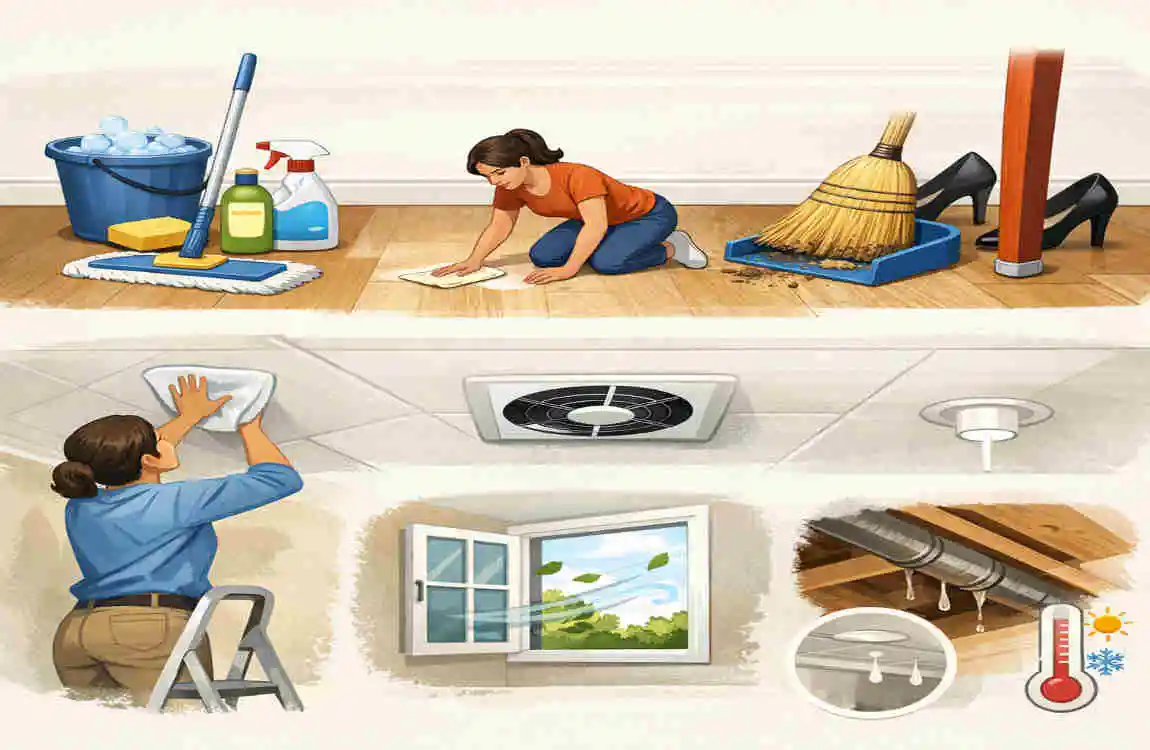
Vinyl ceilings are easy to maintain, but they still need a little care.
- Dust them regularly
- Wipe gently with a soft cloth
- Check for loose panels
- Avoid harsh cleaners
- Watch for moisture damage
A quick visual check every so often can help you catch small issues early.
Is Vinyl Flooring on Ceiling a Good Idea?
Yes, vinyl flooring on a ceiling can be a very good idea if you want a unique, affordable, and stylish finish.
Good choice for:
- Homeowners who want a creative design
- DIY enthusiasts
- Budget-friendly remodels
May not be ideal for:
- Damaged ceilings
- Very humid spaces without ventilation
- Temporary structures
So, if your ceiling is in good shape and you choose the right material, this can be a smart upgrade.
Frequently Asked Questions
Can you use vinyl flooring on a ceiling?
Yes, you can use vinyl flooring on a ceiling if the material is lightweight and installed securely with the right support system.
Is vinyl plank flooring safe for ceilings?
Yes, it is generally safe when installed correctly on a suitable surface.
What type of vinyl flooring is best for ceilings?
Luxury vinyl planks (LVP) are often the best choice because they are lightweight, strong, and stylish.
Can peel-and-stick vinyl flooring be used on a ceiling?
Yes, but the surface must be very clean and smooth, and the adhesive must be strong.
Does vinyl flooring on a ceiling fall off?
It can fall if installed poorly or if the adhesive is weak. Proper preparation lowers this risk.
| Topic | Information |
|---|---|
| Can vinyl flooring be used on a ceiling? | Yes, vinyl flooring can be installed on ceilings as a decorative material, but it requires proper support and installation methods. |
| Why use vinyl flooring on a ceiling? | It adds a unique look, improves room aesthetics, and can create a wood-like or modern ceiling design at a lower cost. |
| Best vinyl types for ceilings | Luxury Vinyl Plank (LVP) and Luxury Vinyl Tile (LVT) are popular because they are lightweight, durable, and easy to handle. |
| Installation methods | Vinyl can be attached using strong construction adhesive, nails, screws, or a ceiling panel system depending on the material and weight. |
| Advantages | Affordable, water-resistant, easy to clean, available in many designs, and can mimic wood or stone finishes. |
