Are you currently dreaming of a sleek, modern, newly updated kitchen? Picture yourself walking into a beautifully designed space. You see gleaming stainless steel surfaces, softly glowing smart touchscreens, and perfectly aligned cabinets. It feels like a magazine cover. But right before you swipe your credit card at the home improvement store, a sudden panic sets in. You realize that buying the machines is only half the battle. The real question that keeps homeowners awake at night is: how much does it cost to install kitchen appliances in a house?
If you are asking yourself this question right now, you are definitely not alone. Many excited homeowners completely forget to budget for the labor, parts, and preparation required to get their new gadgets up and running. When the delivery truck arrives, they are suddenly hit with massive, unexpected bills. We want to make sure that never happens to you.
Why Kitchen Appliance Installation Costs Vary So Much

Before we look at the exact dollar amounts, you need to understand exactly why these prices bounce around so much. If you ask your neighbor what they paid to install their oven, and then you get a quote from a local plumber, the two numbers might look completely different. Why does this happen?
Several major factors are affecting kitchen appliance installation costs in 2026. Let us break them down into understandable segments so you know exactly what you are paying for.
Your Home Location and Local Market Where you live plays a massive role in your final bill. If you live in a highly populated urban centerโlike downtown , New York City, or Londonโcontractors have higher overhead costs. They pay more for parking, insurance, and their own living expenses. Therefore, they pass those premium costs onto you. Conversely, if you live in a quiet rural area, you might find significantly cheaper daily labor rates.
The Appliance Type, Size, and Brand Not all machines are created equal. Installing a basic, standard-sized electric stove takes a professional about twenty minutes. However, installing a massive, commercial-grade, six-burner gas range takes hours of careful calibration. Furthermore, luxury brands often require specialized, brand-certified technicians. These “white-glove” installers charge premium rates because they guarantee they will not scratch your expensive new purchase.
Labor Rates: DIY vs Pro Fees Who is actually doing the heavy lifting? If you choose to tackle the project yourself, your labor cost is technically zero. But if you hire a master plumber or a licensed electrician, you are paying for their years of rigorous training. Professional fees vary wildly based on their level of expertise and the current demand for their services in your city.
Additional Prep Work and Home Modifications This is where the budget often explodes. If your home is fifty years old, your electrical panel might not have the power capacity to handle a modern induction cooktop. You might need an electrician to run brand new heavy-duty wiring through your walls. Or, you might need a carpenter to physically cut your wooden cabinets to make room for a wider refrigerator. These extra home modifications add up incredibly fast.
To give you a clearer picture, look at this simple cost multiplier table:
Installation VariableImpact on Your Base CostReason for the Price Increase
Urban City Location + 20% to 30% Higher contractor overhead and travel time.
Luxury / Premium Brands + 40% to 50% Requires brand-certified, highly specialized technicians.
Older Home (Pre-1990) + 30% to 60% Needs major electrical or plumbing upgrades to meet 2026 codes.
Custom Cabinet Modifications + 25% to 40% Requires hiring a secondary contractor (a carpenter).
Cost Breakdown: How Much Does It Cost to Install Common Kitchen Appliances?
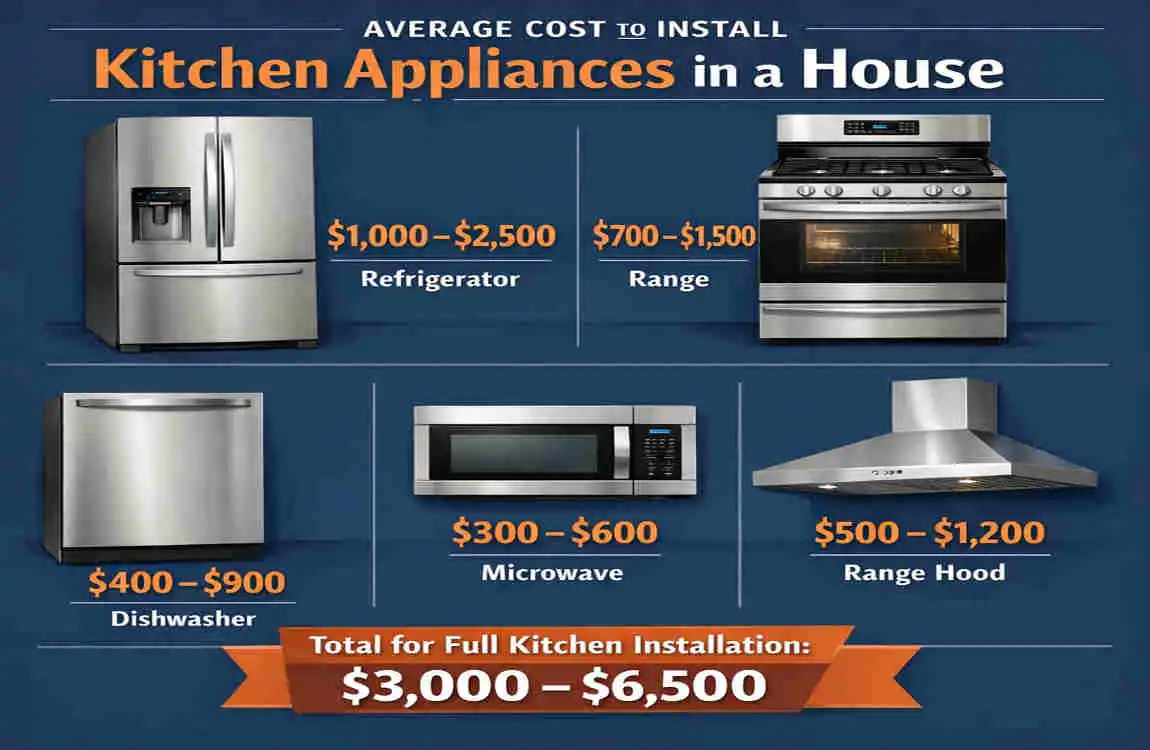
Now, let us get straight to the numbers. You want to know exactly how much does it cost to install kitchen appliances in a house. To give you the most accurate answer, we need to look at each machine individually. We have gathered real-world 2026 averages from local contractors and global databases to build this ultimate kitchen appliance installation cost breakdown.
Refrigerator Installation Costs
The refrigerator is the absolute heart of your kitchen. Without it, you simply cannot feed your family. But the average cost to install fridge in kitchen spaces depends heavily on the style you choose.
If you purchase a basic, freestanding refrigerator without an ice maker, you are in luck. The installation cost is usually just between $100 and $300. In many cases, if you buy from a big-box retailer, they will simply slide it into place and plug it into the wall for a small delivery fee.
However, things get expensive when you upgrade. If you want a fridge with an automatic ice maker and a chilled water dispenser, a plumber must run a dedicated copper or plastic water line from your kitchen sink over to the fridge. This plumbing work usually adds an extra $150 to your bill.
If you are going for the ultimate luxury look with a “built-in” refrigerator that blends seamlessly with your cabinets, prepare your wallet. These massive units require precise carpentry, heavy lifting teams, and custom paneling. You can expect to pay anywhere from $400 to $1,000 for installation labor alone.
Oven and Range Installation Costs
In cooking appliances, safety becomes your top priority. You are dealing with intense heat, high voltage electricity, or highly combustible natural gas. Because of the danger involved, you should always hire a professional.
For a standard freestanding gas or electric range, you will typically pay between $150 and $500. If you are simply replacing an old electric stove with a new electric stove, the installer just plugs it into the heavy-duty 220-volt outlet.
But what if you are switching from electric to gas? This is a major project. A licensed gas fitter must run a brand new, leak-proof gas line through your walls or floors. They must also ensure your kitchen has the proper safety venting required by 2026 building codes. Adding a new gas line and proper venting will easily tack on an additional $200 to $600 to your final bill.
If you are installing a sleek, modern double-wall oven, the contractor has to lift an incredibly heavy machine into a cabinet cutout and hardwire it directly into your home’s electrical grid. This strenuous work generally costs between $300 and $800.
Dishwasher Installation Costs
Many homeowners assume dishwashers are easy to install because they just slide right under the counter. Unfortunately, dishwashers are among the most complex appliances in your kitchen because they require three connections: electricity, fresh water, and dirty water drainage.
For a standard dishwasher installation where the plumbing and wiring are already in place, you will pay between $100 and $250. The plumber will secure the water supply line, hook up the drain hose to your garbage disposal, and plug it in.
However, if you are installing a dishwasher in a kitchen that has never had one before, the costs rise sharply. The plumber has to drill holes through your cabinets to run new water lines, and an electrician must install a new dedicated power outlet. This extra prep work adds $100 to $300. Finally, if you want a custom wooden panel attached to the front of the dishwasher so it matches your other cabinet doors exactly, add $300 to $500 for specialized carpentry.
Microwave and Range Hood Costs
Microwaves and range hoods seem small, but they require a surprising amount of effort to mount safely.
If you are installing a simple “over-the-range” microwave, the technician must locate the wooden studs inside your wall, drill heavy-duty mounting brackets, and lift the heavy unit into place. This typically costs between $75 and $200.
Range hoods are a different story. A powerful downdraft hood or a massive stainless-steel canopy hood needs to pull smoke and grease out of your house. To do this, the contractor must literally cut a large hole through your roof or exterior wall to install the metal ductwork. Because of this structural cutting, exterior-vented hoods usually cost between $200 and $600 to install.
Cooktop, Sink, and Garbage Disposal Costs
Let us round out the kitchen with the final essential stations.
Modern induction cooktops are incredibly popular in 2026. They boil water in seconds and are perfectly flat. However, they draw a massive amount of electricity. You will often need to upgrade your electrical panel to handle the load, which can raise the installation cost to $200-$700.
In the wet zone, installing a heavy farmhouse sink usually costs between $150 and $400, depending on how much adjusting the countertops require. Finally, installing a heavy-duty garbage disposal under that sink will run you about $100 to $250 for plumbing labor.
Full Kitchen Appliance Suite Costs
So, what happens when you decide to remodel the entire room at once? When homeowners ask how much does it cost to install kitchen appliances in a house, they are usually looking at the big picture.
If you buy a basic, budget-friendly suite (a simple fridge, electric stove, and dishwasher) and your home is already perfectly wired, you will likely spend between $1,000 and $3,000 on total labor.
But if you are building a premium, chef-inspired luxury kitchen with built-in fridges, gas lines, custom cabinet panels, and exterior roof venting, your installation bill will easily range from $4,000 to $10,000 or more.
Take a look at this quick summary table to keep your budget in check:
Appliance TypeLow-End Cost (Basic Setup)High-End Cost (Custom/Luxury)Average Time Required
Refrigerator $100 $1,000 1 to 4 hours
Oven / Range $150 $800 1 to 5 hours
Dishwasher $100 $500 2 to 3 hours
Microwave / Hood $75 $600 1 to 4 hours
Full Kitchen Suite $1,000 $10,000+ 1 to 3 full days
Hidden Costs and Budget Busters in Kitchen Appliance Installation
Even when you map out every single appliance perfectly, sneaky hidden fees love to jump out and ruin your day. If you want to accurately calculate how much does it cost to install kitchen appliances in a house, you must anticipate these frustrating budget busters. Let us shine a light on the unexpected kitchen installation fees that catch most people off guard.
Mandatory Permits and City Inspections You cannot simply rip open your walls and start messing with gas lines or high-voltage electricity. In almost every modern city, the local government legally requires you to pull building permits for major utility work. These official permits, and the subsequent visits from city safety inspectors, usually cost between $50 and $300. If you skip this step, you could face massive fines or issues when trying to sell your house later.
Wiring and Plumbing Upgrades As we touched on earlier, 2026 smart appliances are power-hungry. If your older home does not have a dedicated 20-amp circuit for your new smart fridge, the electrician must run new copper wire from your kitchen to your basement breaker box. These necessary utility upgrades rarely cost less than $500.
Removal and Disposal of Old Units: What exactly are you going to do with your greasy, broken, 20-year-old oven? You cannot just leave it on the sidewalk. Professional installers charge specific haul-away fees to safely transport and recycle your old machines. Depending on unit size, disposal fees range from $100 to $400 for a full kitchen.
Delivery Fees and Stairs Never assume delivery is totally free. While some big-box stores offer free delivery to your front door, they will absolutely charge you extra if they have to carry a 400-pound refrigerator up three flights of narrow stairs. Difficult delivery access can easily add $50 to $150 to your bill.
The 2026 Inflation and Import Reality It is also crucial to acknowledge the current global economy. For example, if you are a homeowner in 2026, you are likely dealing with fluctuating import duties and inflation. Local rates for imported premium appliances and the specialized parts needed to install them have risen by roughly 10% this year alone. Always build a buffer into your budget.
Ways to Avoid Nasty Surprises:
- Always Measure Twice: Measure your doorways, hallways, and cabinet cutouts before you buy.
- Check Your Outlets: Look behind your stove to see if you have a gas valve or a 220V electric plug.
- Ask About Haul-Away: Get the disposal fee in writing before delivery day.
- Add a 20% Buffer: Always save 20% more cash than your contractor quoted you, just in case they find bad plumbing inside your walls.
- Demand a Written Estimate: Never accept a verbal guess from a plumber. Get an itemized contract.
DIY vs Professional Installation: Cost Comparison
When the installation quotes start piling up, a very common thought crosses every homeowner’s mind: “Can I just do this myself?” This brings us to the great debate: DIY vs. professional kitchen appliance installation costs.
Taking the Do-It-Yourself route looks incredibly attractive on paper. If you have some basic tools and a weekend of free time, you can easily save 50% to 70% on your total installation budget. For simple tasksโlike sliding a basic electric stove into place or mounting a lightweight microwaveโDIY is a fantastic, money-saving option.
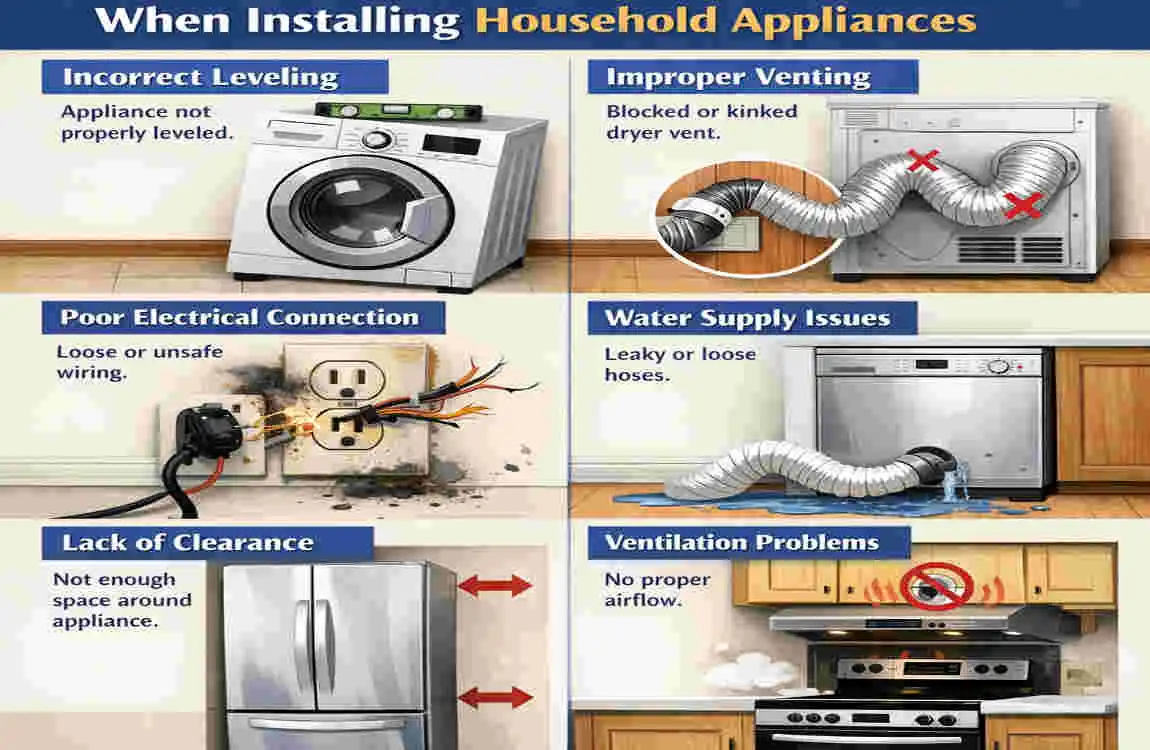
However, the DIY route is packed with severe risks. If you connect the water hose behind your dishwasher incorrectly, a slow, hidden leak will eventually rot your expensive kitchen floorboards. If you make a mistake wiring your oven, you could spark a devastating electrical fire.
Perhaps the biggest risk is your warranty. In 2026, almost all major appliance manufacturers include strict clauses in their contracts. If you cannot produce a receipt proving that a licensed professional installed your high-end smart fridge, the manufacturer will instantly void your warranty. If the compressor dies two months later, you are entirely out of luck.
Professional installers bring massive advantages. They carry heavy liability insurance, meaning if they drop your fridge and crack your floor tiles, their insurance pays for the repairs. They also have the exact expertise needed to handle hazardous substances such as natural gas and high-voltage equipment.
Here is a quick chart to help you weigh the financial differences:
Appliance JobEstimated DIY Cost (Parts Only)Average Pro Cost (Labor + Parts)Potential Savings %
Electric Stove $0 $150 100%
Dishwasher $25 (Hoses) $200 87%
Gas Range $50 (Pipes) $350 Not Recommended (Danger)
Built-in Fridge $100 (Wood framing) $800 Not Recommended (Too Heavy)
The Golden Rule: When should you absolutely hire a pro? Always hire a professional when the job involves running new natural gas lines, altering your home’s main plumbing pipes, or dealing with complex, heavy built-in units.
Regional Pricing: Costs vs Global Averages
As we answer the question of how much does it cost to install kitchen appliances in a house, we must remember that geography dictates your reality. What a homeowner pays in New York is drastically different from what a homeowner pays in South Asia. Let us personalize this and look at the bustling markets of and the broader Punjab region.
If you are renovating a kitchenย in 2026, your labor costs are significantly lower than the global Western average. A highly skilled local technician or plumber typically charges around PKR 5,000 to PKR 8,000 per day for their labor.
Because of these favorable local labor rates, installing a standard refrigerator might cost you only $150 to $500, depending on the plumbing required. If you are doing a massive, full-suite kitchen remodel in an upscale DHA home, your total installation labor will likely range between $2,000 and $6,000.
Compare this to the United Kingdom or the United States, where strict union laws and incredibly high costs of living push the same full-kitchen installation up to $8,000 or $12,000.
A Quick Tip for Local Homeowners: If you want to keep your costs strictly controlled , consider purchasing high-quality local brands. Not only are the units themselves more affordable, but finding local technicians who intimately understand the specific parts and wiring of these machines is much easier and cheaper than flying in specialized parts for imported luxury European brands.
How to Save Money on Kitchen Appliance Installation
We have talked a lot about spending money. Now, let us focus entirely on keeping your cash in your wallet! If you are feeling overwhelmed by the numbers in our kitchen appliance installation cost breakdown, do not worry. There are several brilliant, totally legal ways to slash your final bill.
Here is our ultimate checklist of 10 budget hacks to save money on your installation:
- Shop the Major Holiday Sales: Appliance stores offer massive discounts during Black Friday, New Year’s, and local holiday festivals.
- Ask for Free Delivery: Always negotiate with the sales manager. Tell them you will buy the premium fridge only if they throw in free delivery and haul-away.
- Bundle Your Installs: Plumbers charge a hefty fee just to drive their truck to your house. If you need a dishwasher and a sink installed, have them do both on the same day to save on travel fees.
- Hunt for Energy-Efficient Rebates: Local governments and utility companies frequently offer cash rebates if you install highly energy-efficient, eco-friendly models. These rebates can offset your labor costs!
- Do the Easy Demolition Yourself: Save the contractor’s time (and your money) by unboxing the new appliances, breaking down the cardboard, and moving the old units out of the kitchen before they arrive.
- Schedule in the Off-Season: Plumbers are incredibly busy in the early summer and right before winter. Book your remodel during a slow, quiet month, and contractors will often give you a 15% discount just to keep their crews working.
- Keep the Same Layout: If you put the new stove exactly where the old stove used to be, you don’t have to pay to move the electrical outlets.
- Buy “Scratch and Dent” Models: Sometimes a fridge has a tiny scratch on the side that will be completely hidden by your cabinets. Stores heavily discount these perfectly functional units.
- Clear the Walkways: Move your rugs, kids’ toys, and hallway furniture. If the delivery team has a clear, easy path, they work faster, saving you hourly labor charges.
- Get Multiple Quotes: Never, ever accept the very first estimate you receive. Always force contractors to compete for your business.
Step-by-Step Guide to Hiring Installers

Finding a guy with a wrench is easy. Finding a trustworthy, highly skilled professional is much harder. If you want to protect your home and ensure your appliances function flawlessly for the next decade, you must hire the right people. Follow this simple, step-by-step guide to hiring top-tier installers.
Get Three Written Quotes Invite at least three different contracting companies to your home to look at the project. Ask them to provide a detailed, itemized written quote. This allows you to compare their hourly rates and spot any inflated material costs.
Check Their Official Certifications Never let an amateur touch your natural gas lines. Always ask to see their current 2026 licenses in person. If they are working on your oven, they need to be certified as “Gas-Safe” or hold your local equivalent plumbing license.
Establish a Firm Timeline Get a written commitment on how long the project will take. Installing a single appliance should take 1 to 3 hours. A full kitchen suite should take 1 to 3 days maximum. You do not want a contractor leaving your kitchen torn apart for three weeks.
Lock Down the Contract Essentials Before anyone touches a tool, sign a basic contract. The contract must explicitly state who is responsible for hauling away the old appliances, who cleans up the dusty mess at the end of the day, and what kind of labor warranty they provide if something leaks next week.
FAQs: Kitchen Appliance Installation Costs
We know this is a massive topic to digest. To help you quickly find the exact information you need, we have compiled the most frequently asked homeowner questions.
How much does it cost to install kitchen appliances in a house on average? For a standard American or European home, installing a full kitchen appliance suite averages between $2,500 and $8,000. For single items, expect to pay around $150 to $300 per machine for basic labor.
Is the installation cost included in the appliance price? Usually, no. Big-box retailers often offer free drop-off delivery, but actual installation (hooking up water lines, gas pipes, and wiring for electricity) is almost always billed as a separate service.
Can a regular handyman install a gas range? We strongly advise against this. Gas ranges require specialized knowledge to prevent deadly leaks. You should always hire a licensed, certified gas fitter or a specialized plumber for any gas-related appliances.
Why does a built-in refrigerator cost so much more to install? Built-in fridges are incredibly heavy, easily tipping the scales at 500 pounds. They require teams of movers, precise leveling to prevent the doors from swinging open, and custom carpentry to attach wooden panels that match your cabinets.
Will doing it myself void my manufacturer warranty? In many cases, yes. Most luxury brands (like Sub-Zero, Wolf, or high-end Samsung models) explicitly state in their manuals that the warranty is only valid if a certified professional installs the unit.