
Power cuts have a habit of arriving at the worst possible moment. One minute you’re cooking dinner or joining a work call, and the next you’re fumbling around in the dark looking for a torch. This is exactly why more and more UK households are turning to backup power solutions to keep life running smoothly.
Having a generator at home gives you peace of mind during storms, grid failures, and unexpected outages. It keeps your lights on, your fridge cold, and your home warm when the mains supply lets you down. But here’s the thing — a generator is only helpful when you use it correctly and safely.
Why You May Need a Generator in the UK

The UK’s weather is famously unpredictable, and our power grid isn’t immune to the occasional hiccup. A reliable backup power source can turn a stressful blackout into a minor inconvenience.
Common Causes of Power Cuts
Power outages happen for all sorts of reasons, and understanding them helps you prepare. Here are the most common culprits across the country:
- Storms and severe weather: High winds, heavy rain, and lightning frequently damage overhead power lines, leaving entire neighborhoods without electricity.
- Grid failures: Sometimes the national or local grid becomes overloaded or suffers a technical fault, cutting supply without warning.
- Planned maintenance: Energy providers occasionally switch off power to carry out essential repairs or upgrades, and these can last several hours.
While most outages are short, some can last a full day or longer, especially in rural areas. That’s when a generator becomes a genuine lifesaver.
Benefits of Backup Power
So why bother investing in a generator? The advantages go well beyond simply keeping the lights on. A good backup system supports your daily routine and protects the things that matter.
Here’s what a house generator can do for you:
- Keeps lights on so your home stays safe and comfortable after dark.
- Powers heating systems, which is crucial during cold British winters when the heating suddenly fails.
- Protects food in refrigerators and freezers, saving you from throwing away hundreds of pounds of spoiled groceries.
- Supports home offices, keeping your laptop, router, and devices running so you never miss an important deadline.
When you think about it, backup power isn’t a luxury — it’s a smart investment in comfort and security.
Types of House Generators
Not all generators are created equal. Before you buy, it helps to understand the main types available and what each one does best.
Portable Generators
Portable generators are the most affordable and flexible option, which is why they’re so popular with UK homeowners.
Advantages: They’re relatively cheap, easy to move around, and perfect for powering a handful of essential appliances during short outages.
Limitations: They can be noisy, require manual starting, and require regular refueling. You’ll also have to set them up outside every time you need them.
Best use cases: Ideal for smaller homes, occasional outages, or households that only need to keep a fridge, some lights, and a router running.
Standby Generators
Standby generators are the premium choice for whole-house backup, and they work like a dream.
Automatic operation: These units kick in automatically the moment your mains power fails, so you barely notice the interruption.
Whole-house backup: They’re powerful enough to run your entire home, including heating, appliances, and multiple rooms at once.
Higher installation cost: The trade-off is price. Standby generators require professional installation and a bigger upfront investment, but many homeowners feel the convenience is well worth it.
Inverter Generators
Inverter generators are a clever, modern option that blends performance with practicality.
Quiet operation: They run far more quietly than traditional models, which your neighbors will appreciate.
Fuel efficiency: These units adjust their engine speed to match demand, so they burn less fuel and cost less to run.
Sensitive electronics: Because they produce clean, stable power, inverter generators are ideal for laptops, phones, and other delicate devices that don’t handle power surges well.
How to Use a Generator to Power Your House UK
Now for the part you’ve been waiting for. Learning how to properly use a generator to power your house in the UK is all about following a safe, sensible process. Let’s break it down step by step.
Choose the Right Generator Size
Before anything else, you need a generator that matches your needs. Buy one that’s too small, and it won’t cope; buy one that’s too big, and you’ll waste money and fuel.
Calculate wattage requirements: Add up the wattage of every appliance you want to run at the same time. Check the labels on your devices or their manuals to find these figures.
Essential appliances first: Focus on the must-haves — your fridge, heating, lighting, and internet. You don’t need to power the whole house if you only want to comfortably survive a short outage.
Install a Transfer Switch
This is one of the most important steps, and it’s not something you should skip.
Why it’s necessary: A transfer switch safely connects your generator to your home’s electrical system, letting you power your circuits directly through your wall sockets.
Prevents backfeeding: Without a transfer switch, electricity can flow back into the grid — a dangerous situation known as backfeeding that can seriously injure engineers working on the lines.
Professional installation: In the UK, a qualified electrician must install your transfer switch. This keeps you compliant with regulations and, more importantly, keeps everyone safe.
Connect the Generator Safely
Once your transfer switch is in place, connecting the generator is straightforward if you follow the rules.
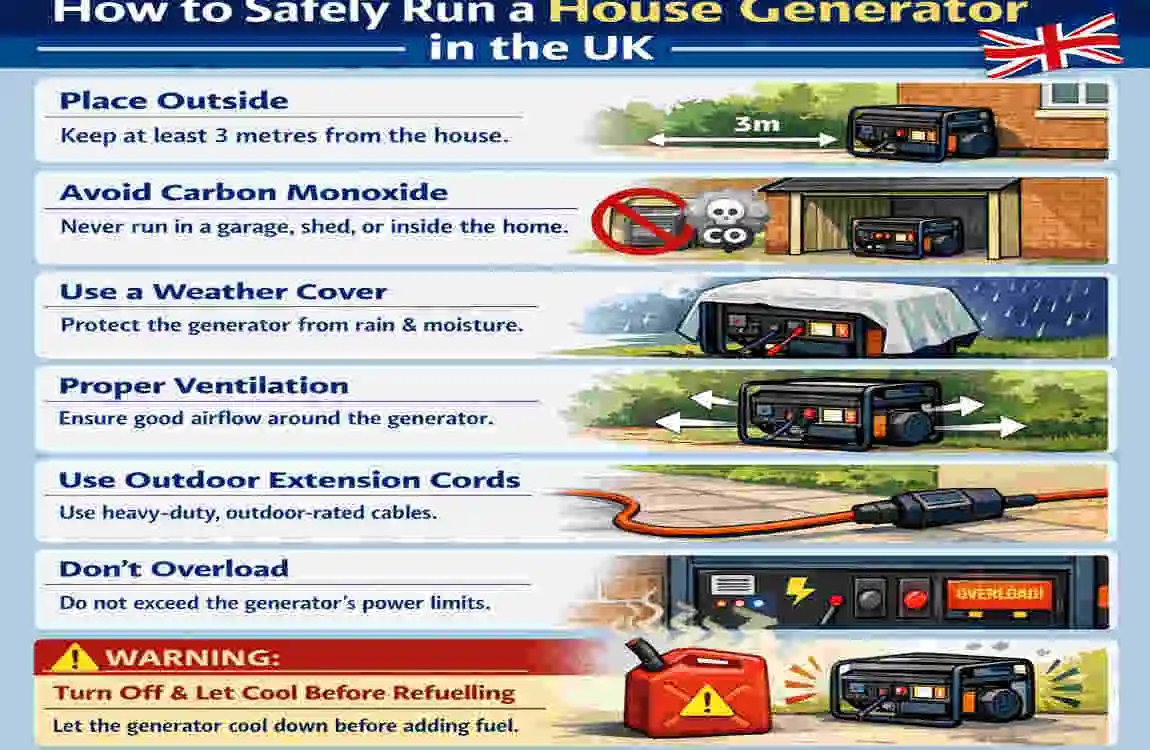
Outdoor placement: Always run your generator outside in a well-ventilated area, well away from your home. Never, ever run it indoors or in a garage.
Use heavy-duty cables: Cheap or thin cables can overheat. Invest in proper, weather-rated extension leads designed for the job.
Start generator correctly: Turn the generator on first and let it stabilize before switching over your transfer switch and connecting your load.
Power Essential Appliances
Once you’re up and running, be smart about what you power. Prioritize the essentials to avoid overloading the unit:
- Refrigerator to keep your food fresh and safe.
- Boiler so your heating and hot water keep flowing.
- Lighting to keep your home safe and comfortable.
- Internet router to keep you connected for work and communication.
Generator Size Guide
Choosing the right size can feel confusing, so here’s a handy table to point you in the right direction. Use it as a starting guide, then confirm your exact needs with a professional.
Home Size Recommended Generator Suitable For
Small Flat 2–3 kW Lights, Wi-Fi, fridge
Medium House 5–7 kW Heating, kitchen appliances
Large Home 8–12 kW Whole-home backup
Large Property 12–20+ kW Full household systems
As a general rule, it’s better to have a little more capacity than you think you’ll need. This leaves room for extra appliances and stops you from overloading the unit.
Essential Safety Tips
Generators are brilliant tools, but they can be dangerous when misused. Follow these safety rules religiously to protect yourself and your family.
Never Operate Indoors
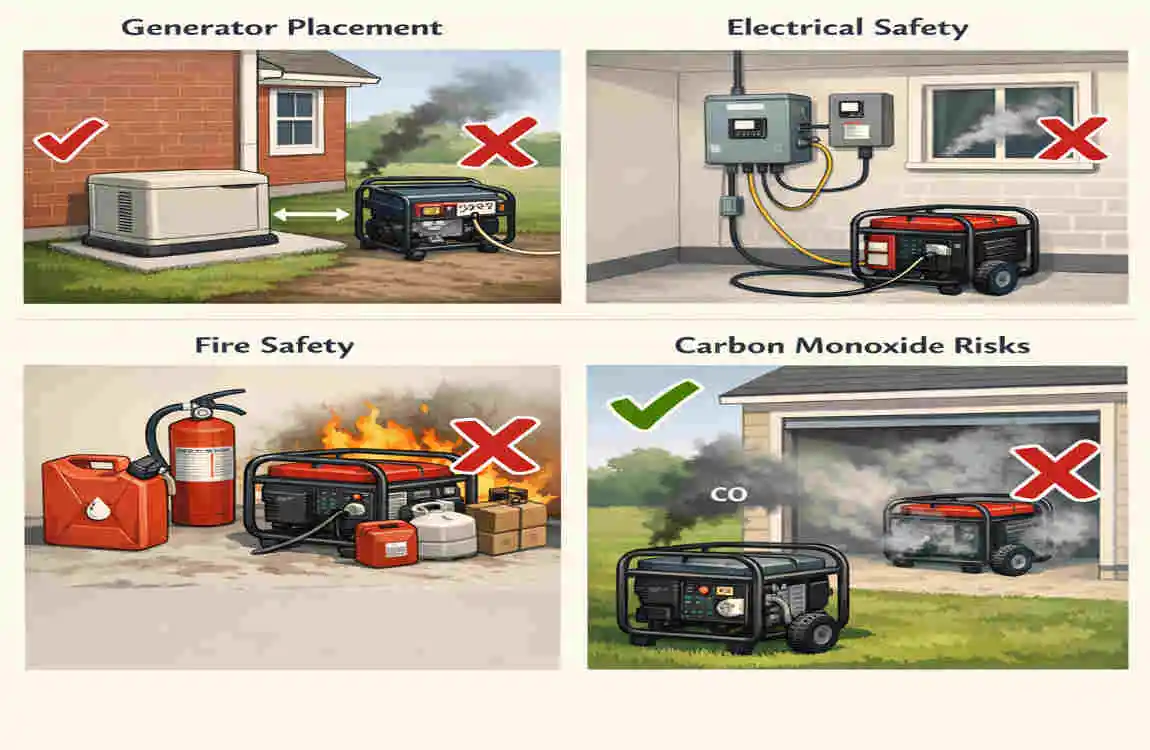
This is the golden rule. Generators produce carbon monoxide, a colorless, odorless gas that can kill within minutes in an enclosed space. Always run your generator outdoors, no exceptions.
Keep Away from Doors and Windows
Even outside, exhaust fumes can drift back into your home. Position your generator well away from open doors, windows, and air vents to stop dangerous gases from creeping inside.
Use Approved Extension Leads
Only use heavy-duty, outdoor-rated cables that can handle your generator’s output. Damaged or underrated leads are a fire and shock hazard.
Never Backfeed the Grid
Plugging a generator directly into a wall socket to power your home is extremely dangerous and illegal. Always use a properly installed transfer switch instead.
Keep Generator Dry
Water and electricity don’t mix. Shelter your generator from rain using a proper generator cover or canopy, but make sure it still has plenty of ventilation.
Store Fuel Properly
Keep petrol or diesel in approved containers, stored well away from your home and any heat sources. Never store large amounts of fuel indoors.
UK Generator Regulations
Using a generator at home isn’t a free-for-all. There are rules in place to keep you and others safe, and it pays to know them.
Electrical Safety Requirements
Any permanent connection between a generator and your home’s wiring must meet UK electrical safety standards. This is why a professionally installed transfer switch is so important.
Building Regulations
If you’re installing a standby generator, you may need to comply with building regulations relating to installation, ventilation, and placement. Always check with your local authority before starting major work.
Fuel Storage Guidelines
The UK has clear rules on how much fuel you can store at home and how to keep it. Stick to approved containers and safe storage limits to avoid fire risks and legal trouble.
When to Hire a Qualified Electrician
If you’re connecting a generator to your home’s fixed wiring, you must use a qualified electrician. This isn’t just good practice — it’s a legal and safety requirement that protects everyone.
Common Mistakes to Avoid
Even experienced homeowners slip up with generators. Here are the most common mistakes so you can dodge them:
- Choosing an undersized generator that can’t handle your essential appliances.
- Overloading the generator by running too many devices at once.
- Ignoring maintenance, which leads to breakdowns when you need power most.
- Running indoors, which poses a risk of deadly carbon monoxide poisoning.
- Refueling while hot can cause fires or explosions.
- Skipping transfer switch installation and dangerously backfeeding the grid.
Avoid these pitfalls, and your generator will serve you reliably for years.
Generator Maintenance Tips
A generator is only useful if it starts when you need it. Regular maintenance keeps it in top condition and ready for action.
Regular Oil Changes
Just like a car, your generator needs fresh oil. Follow the manufacturer’s schedule to keep the engine running smoothly.
Battery Inspection
For electric-start and standby models, check the battery regularly. A dead battery means your generator won’t start when you need it most.
Fuel Quality
Old, stale fuel can clog the system and cause starting problems. Use fresh fuel and add a stabilizer if you plan to store the generator for long periods.
Monthly Test Runs
Fire up your generator once a month for a short run. This keeps the engine lubricated, charges the battery, and confirms everything is working.
Air Filter Cleaning
A clogged air filter reduces performance and efficiency. Clean or replace it regularly to keep your generator breathing easily.
Pros and Cons of Using a House Generator
Like any investment, a house generator comes with upsides and downsides. Here’s an honest look at both.
Pros
- Reliable emergency power whenever the mains fails.
- Protects essential appliances like fridges, freezers, and boilers.
- Increased home comfort during long outages.
- Supports remote working, so you never lose income during a blackout.
Cons
- Fuel costs add up, especially during extended use.
- Noise can be a nuisance, though inverter models are quieter.
- Maintenance requirements demand regular attention.
- Initial installation expense, particularly for standby systems.
Is a House Generator Worth It in the UK?
So, should you actually buy one? It really depends on your circumstances.
When you weigh the cost versus the benefits, a generator often pays for itself in peace of mind alone. The money saved on spoiled food, the avoidance of disruption, and uninterrupted work can quickly add up.
The best households for backup generators are those in rural areas prone to outages, families with medical equipment that needs constant power, and anyone who works from home. If a blackout would seriously disrupt your life, a generator is a wise choice.
In terms of long-term reliability, a well-maintained generator can last many years and prove invaluable during emergencies. For many UK homeowners, that reliability is priceless.
Frequently Asked Questions (FAQs)
How do you use a generator to power your house safely in the UK?
Place the generator outdoors in a ventilated area, connect it through a professionally installed transfer switch, and power only your essential appliances. Never run it indoors or plug it directly into a wall socket.
Can I plug a generator directly into my house?
No. Plugging a generator directly into a wall socket is dangerous and illegal in the UK. Always use a transfer switch installed by a qualified electrician.
Do I need a transfer switch in the UK?
Yes, if you want to power your home’s circuits safely. A transfer switch prevents backfeeding and keeps both you and utility workers safe.
What size generator do I need for my home?
It depends on your needs. A small flat may only need 2–3 kW, while a large home might require 8–12 kW or more. Add up your essential appliance wattages to decide.
Can a portable generator power an entire house?
Usually not fully. Portable generators are best for essentials like a fridge, lights, and a router. For whole-house backup, a standby generator is the better choice.
Is it legal to use a generator during a power outage in the UK?
Yes, it’s legal, as long as you follow safety regulations, use a proper transfer switch, and comply with fuel storage and electrical rules.
How far should a generator be from the house?
Keep it as far away as practical, ideally several meters, and away from doors, windows, and vents to prevent carbon monoxide from entering your home.
| Topic | Information |
|---|---|
| Purpose | Provides backup electricity during power outages. |
| Best Generator Type | Inverter generators or standby generators are recommended for home use. |
| Correct Connection | Use a professionally installed transfer switch—never plug a generator directly into a wall socket. |
| Placement | Operate outdoors only, at least 6–10 meters (20–30 feet) away from doors, windows, and vents. |
| Fuel Safety | Store petrol or diesel in approved containers away from heat sources. |
| Ventilation | Never run a generator in a garage, shed, basement, or enclosed space due to carbon monoxide risk. |
| Electrical Safety | Keep the generator dry and use weatherproof extension leads if needed. |
| Power Management | Run only essential appliances and avoid overloading the generator. |
| Maintenance | Check engine oil, air filter, fuel level, and test the generator regularly. |
| UK Regulations | Follow the manufacturer’s instructions and comply with UK electrical safety standards. |
| Common Mistake | Backfeeding the home’s wiring without a transfer switch, which can endanger utility workers and damage equipment. |
| Safety Tip | Install carbon monoxide alarms inside your home and test them regularly. |
