Wondering how much a kit home costs in 2026? You are certainly not alone. With housing markets around the world feeling tighter than ever, and traditional construction costs climbing year over year, many future homeowners are looking for a smarter, more innovative way to build their dream sanctuary.
Imagine bypassing years of saving for a traditional brick-and-mortar build and instead building a high-quality, modern home for a fraction of the cost. That is the promise of the kit home. These aren’t the flimsy structures of the past; today’s kit homes are architectural marvels, offering energy efficiency, stunning designs, and construction speed that traditional builders just can’t match.
What Is a Kit Home?

Before we get into the nitty-gritty of how much a kit home costs, it is essential to understand exactly what you are paying for. There is often a lot of confusion in the construction industry regarding terminology, so let’s clear that up first.
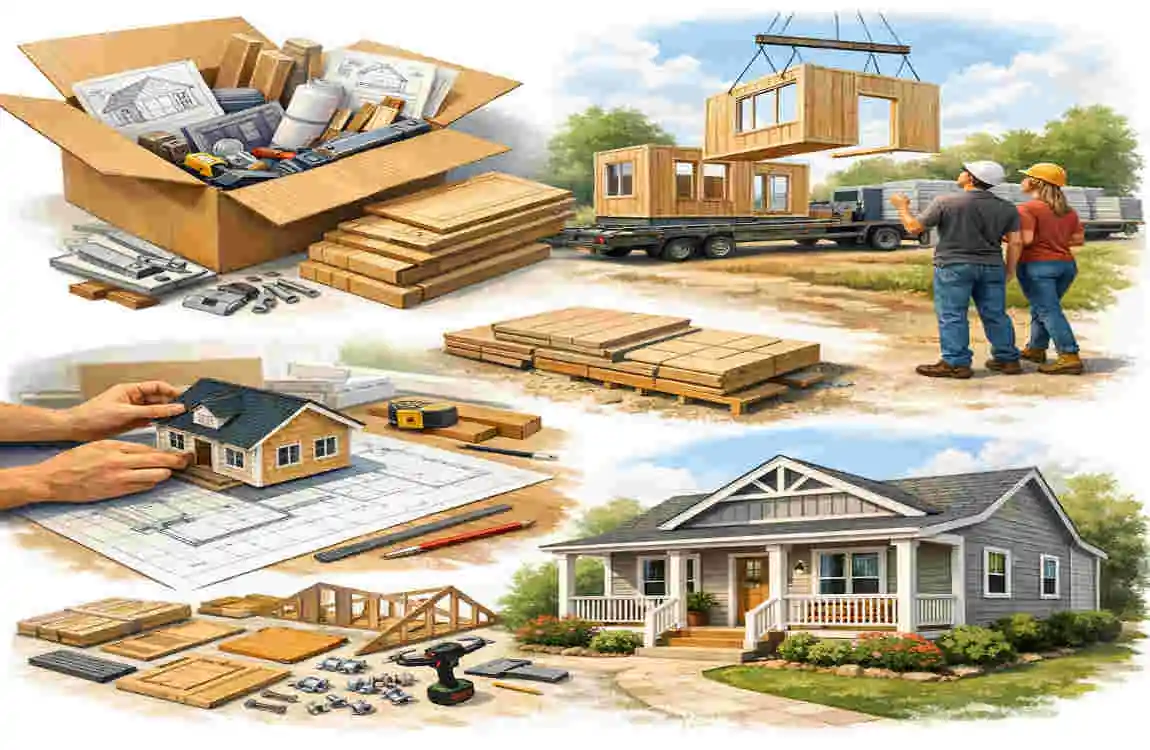
A kit home is essentially a house that is manufactured in a factory in parts. Think of it a bit like a giant, very sophisticated piece of IKEA furniture. You select a design, the manufacturer produces all the necessary components—frames, trusses, wall panels, and sometimes even windows and doors—and ships them directly to your block of land.
Prefab vs. Modular vs. Traditional
It is easy to mix these up, but here is the simple difference:
- Traditional Build: Everything is built on-site, brick by brick, timber by timber. It is slow and weather-dependent.
- Modular Homes: These are built almost entirely in a factory as complete “box” sections (modules) and craned onto your land. They are 90% finished when they arrive.
- Kit Homes: These arrive flat-packed. They require assembly on-site. This is where the magic of cost savings happens: you (or a local builder) assemble it rather than pay for factory assembly lines.
Key Benefits
Why are people flocking to this method in 2026?
- Speed: Because the parts are pre-cut and pre-drilled, the structural frame can go up in a matter of days, not months.
- Cost Savings: You are not paying for the waste that happens on a normal building site. Plus, you can take on some of the labor yourself.
- Customization: Contrary to popular belief, you aren’t stuck with a boring box. Most kit providers allow you to move walls, change layouts, and choose your finishes.
Understanding the definition of a kit home helps demystify its cost. You aren’t just buying a house; you are buying a package of materials and a streamlined process.
Factors Affecting Kit Home Costs
Asking “how much is a house?” is a bit like asking “how long is a piece of string?” The answer depends heavily on what you want to achieve. In 2026, several key variables will swing your budget up or down.
To give you a clearer picture, let’s look at the primary factors that influence the final price tag.
The Breakdown of Variables
FactorImpact on CostExample Range
Size (sqm): Larger footprint = higher material and labor costs. 80-200 sqm: £80k – £200k
Design/Quality Basic box designs vs. architectural complexity. Basic: £20k (kit only); Upgraded: £160k+
Location: Remote sites increase delivery costs; cities have higher labor rates. Urban builds: +20%; Remote: High delivery fees.
Materials: Steel framing vs. traditional timber. Timber finishes: Avg £1,300/sqm
Inclusions: “Lock-up” vs. “Turnkey” packages. Lock-up is cheaper; Turnkey includes everything.
Size Matters
It goes without saying that a sprawling 5-bedroom mansion will cost more than a cozy 2-bedroom granny flat. However, the cost per square meter often decreases slightly as the house gets larger, because fixed costs (such as site establishment and permits) are spread over a larger area. Conversely, tiny homes have a higher cost per square meter but a lower overall price.
Design Complexity
Are you looking for a simple rectangular design with a standard gable roof? That is the most budget-friendly option. If you want vaulted ceilings, complex rooflines, floor-to-ceiling glass, or an L-shaped layout, the manufacturing and engineering costs rise significantly.
Location and Site Prep
This is the “invisible” cost if your land is flat and stable, great! But if you are building on a slope, or if the soil is rocky (or too soft), your foundation costs can skyrocket. Additionally, in 2026, we are seeing urban permits costing about 20% more than rural permits due to density regulations.
Inflation
We must address the elephant in the room. Construction costs in 2026 are estimated to be 5-10% higher than in 2025. This is due to global supply chain adjustments and rising energy costs for steel and timber manufacturing. When budgeting, always add a contingency fund to cover these fluctuations.
Average Kit Home Prices
Now, let’s get to the numbers you are looking for. We have analyzed the market trends for 2026 to answer the core question: How much does a kit home cost?
It is crucial to distinguish between the Kit Cost (just the materials delivered to your door) and the Total Build Cost (including the concrete slab, plumbing, electrical, and labor to put it together).
Price Breakdown Table
Kit TypeKit Cost (Materials Only)Total Build (incl. Labor & Finish)
1-2 Bed Basic £20,000 – £45,000 £80,000 – £150,000
3-Bed Family £50,000 – £90,000 £160,000 – £250,000
Luxury / Custom £100,000 – £200,000+ £300,000 – £500,000+
Bedroom / Granny Flats
These are incredibly popular for first-time buyers or those looking to add value to an existing property. You can purchase the “shell” for as little as £20,000. However, once you add the foundation, kitchen, bathroom, and labor, you are looking at a realistic starting point of roughly £80,000 to move in.
Bedroom Family Homes
This is the sweet spot for most families. A standard 3-bedroom kit home offers ample living space without the massive price tag of a bespoke build. In 2026, a high-quality kit for a family home averages around £70,000. When fully built with mid-range finishes, the total project usually comes in at around £200,000.
Luxury and Custom Designs
If you have a higher budget, the sky is the limit. Luxury kits include Premium cladding (like cedar or architectural steel), triple-glazed windows, and high-spec insulation. While the kit might cost £150,000, the finishing costs (expensive tiles, smart home systems, landscaping) will push the total project well over £300,000.
Regional Variations
- United Kingdom: The prices listed above reflect the current UK market.
- Australia: Expect to pay roughly $219,000+ AUD for a completed 3-bedroom kit home.
- United States: The market is vast, but average costs hover around $150 – $200 per sq. ft. for a finished build.
- Pakistan (Lahore/Local Context): If you are reading this from our local hub in Lahore, the metrics shift. Labor is significantly cheaper, so the “Total Build” cost is lower than the material cost. A steel-frame kit home in Pakistan might cost PKR 5,000-8,000 per sq. ft., depending on luxury finishes.
Cost Breakdown: Kit vs. Full Build
One of the biggest mistakes new buyers make is looking at the “Kit Price” on a brochure and thinking that is the final price. That price is just for the ingredients; you still have to cook the meal!
To truly understand how much a kit home costs, we need to dissect its components. Let’s look at a detailed breakdown of a standard 100-square-meter home.
The Real Costs Detailed
ComponentCost per Sqm (Est.)Total Example (100sqm)
Kit Materials £1,300 – £2,500 £130,000 – £250,000
Foundations £100 – £150 £10,000 – £15,000
Labor (Assembly) £500 – £800 £50,000 – £80,000
Site Prep / Utilities Varies widely £20,000 – £50,000
Kit Materials
This usually includes the wall frames, roof trusses, roofing iron/tiles, external cladding, gutters, windows, and external doors. Some “lock-up” kits also include internal wall lining (plasterboard) and internal doors.
Foundations
You cannot build a house on grass. You need a concrete slab or a sub-floor system (stumps/piles). This is often contracted out to a local concreter. The price depends heavily on your soil report. If your soil is reactive (moves when wet), you need more concrete and steel, which costs more.
Labor
This is the biggest variable. If you are an “Owner-Builder,” you can manage the project yourself and save roughly 20-30%. If you hire a licensed builder to assemble the kit for you, you are paying for their expertise, insurance, and time. For a 100 sq m home, expect to pay at least £50,000 in labor costs for the various trades (carpenters, plumbers, sparks).
Site Prep and Utilities
Do not forget the boring stuff!
- Excavation: Leveling the ground.
- Connections: Getting water, sewage, and electricity from the street to the house. If you are rural, you might need a septic tank (approx. £10k) and solar power.
- Permits: Council fees and surveyor costs.
Comparison to Traditional Homes
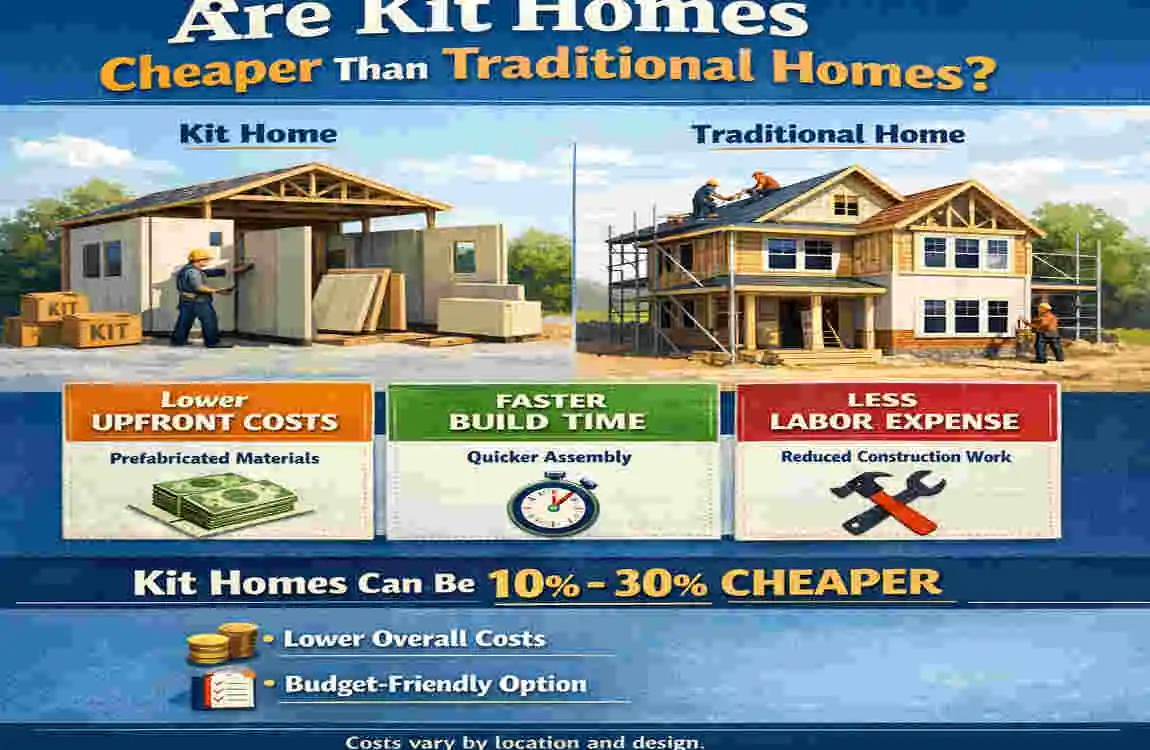
When you add it all up, is it cheaper? Yes. Traditional homes currently average around £ 300 per square foot (roughly £3,000 per sqm) for a custom build. Kit homes are generally 20-30% cheaper overall because on-site labor time is drastically reduced.
Hidden Costs and Savings Tips
When researching how much a kit home costs, watch out for the “hidden” expenses that brochures rarely mention. However, because you have more control over the build, there are also massive opportunities to save money.
The “Gotchas” (Hidden Costs)
- Delivery Fees: Kit homes are heavy. They are delivered on semi-trailers. If your site is hard to access (narrow lanes, steep driveways), you might need to pay for “double handling” (moving items to smaller trucks) or even crane hire to lift packs onto the site.
- Storage: If the kit arrives before your foundation is ready, store it in a dry, secure place. Renting containers or tarps costs money.
- Tool Hire: If you are DIY-ing, you will need scaffolding, nail guns, and specialized tools.
- Waste Removal: Construction creates trash. You will need to hire skips (dumpsters) to clear the site.
How to Save Big The “Hacks”
This is the fun part. Since you are the project manager, you can slash costs:
- Be an Owner-Builder: Taking on the legal role of the builder (check your local regulations) allows you to cut out the builder’s margin, which is usually 15-20% of the total cost.
- Sweat Equity: You don’t need to be a carpenter to help. You can do the painting, landscaping, insulation installation, and site cleanup. Painting it yourself can save you £3,000-£5,000.
- Source Your Own Fittings: The kit provider might offer a “kitchen package,” but you might find a cheaper, stylish kitchen at a local hardware store or IKEA.
- Bulk Buying: Wait for sales to buy your bathroom tiles, taps, and lights.
- Build Off-Peak: If possible, try to schedule trades during their quieter months (often winter) to negotiate better labor rates.
Kit Home vs. Alternatives
Is a kit home definitely the right choice for you? It is smart to compare it against the other main contenders in the housing market. Let’s look at how the kit home stacks up against Modular homes and Traditional builds.
Comparison Table
OptionAvg Starting CostProsCons
Kit Home £80k+ (Completed) Most affordable; High flexibility; DIY potential. Requires project management; Assembly required on-site.
Modular £150k+ (Completed) Fastest construction; Turnkey (arrive finished). Less design customization, expensive transport, and difficult access to remote sites.
Traditional £250k+ Fully custom design; widely accepted by banks. Slowest build time (6-12 months); Most expensive; Weather delays.
The Verdict?
- Choose a Kit Home if: You are budget-conscious, want to be involved in the build process, have a tricky block of land (kits are easier to transport in pieces), or want to save money through DIY.
- Choose Modular if: You want a house now and have the budget to pay for convenience.
- Choose Traditional if: You want a highly complex, one-of-a-kind architectural masterpiece and money is not the primary concern.
Real-World Examples

To bring these numbers to life, let’s look at two realistic scenarios based on our clients’ experiences in 2025-2026.
The First-Time Buyers
The Project: Sarah and Mark, a young couple, wanted to escape the rental trap. They bought a modest plot of land on the outskirts of the city.
- The Kit: They chose a standard 2-bedroom “cabin style” kit.
- The Cost: The kit materials cost £35,000.
- The Build: Mark did the painting and landscaping himself. They hired a builder only to get the frame up and weather-tight (lock-up stage), then hired individual trades for plumbing and electrics.
- Total Spend: £120,000.
- Result: They own a home for half the price of the average house in their area.
The Family Upgrade
The Project: The Ahmed family in Lahore needed a larger home for their growing family.
- The Kit: A custom-designed, 4-bedroom steel frame kit.
- The Cost: The kit materials cost roughly £90,000 (converted equivalent).
- The Build: They utilized local labor, which was cost-effective, but splurged on high-end marble flooring and imported kitchen fixtures.
- Total Spend: £250,000.
- Result: A luxury home that looks like it cost double that amount, completed in just 5 months.
FAQs
Here are some of the most common questions we get about how much a kit home costs.
How much does a kit home cost for 3 bedrooms? In 2026, for a fully completed build (materials + labor), you should budget between £160,000 and £250,000. The kit materials alone will likely cost between £50,000 and £90,000.
Are kit homes cheaper long-term? Generally, yes. Modern kit homes are designed with energy efficiency in mind. They often use SIPS (Structural Insulated Panels) or high-grade insulation, which drastically reduces heating and cooling bills compared to older traditional homes.
Can I get a mortgage for a kit home? Yes, but it can be trickier than a standard home. You usually need a “construction loan.” Lenders may require you to hire a licensed builder rather than doing it all DIY. Always speak to a specialist broker.
Do kit home prices include the land? No. The prices listed in this article are for the structure and assembly only. You must purchase the land separately.
How long do they last? Just as long as a traditional home! A steel-frame kit home is impervious to termites and rot. With proper maintenance, they will easily last 50+ years.