
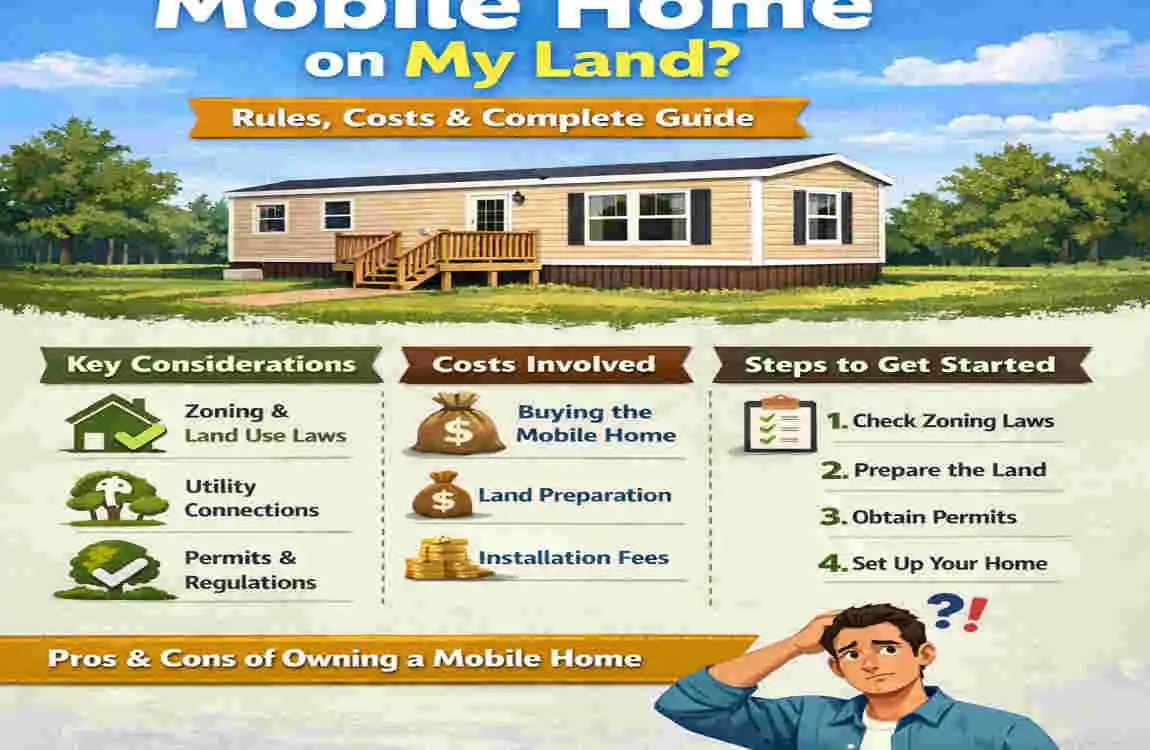
If you are asking “Can I build a mobile home on my land?”, the short answer is yes; in many cases, you can. But it is not always simple.
Whether you can place a mobile home on your property depends on zoning laws, permits, land conditions, utility access, and local rules. Some areas allow it easily, while others have strict limits.
Can I Build a Mobile Home on My Land?
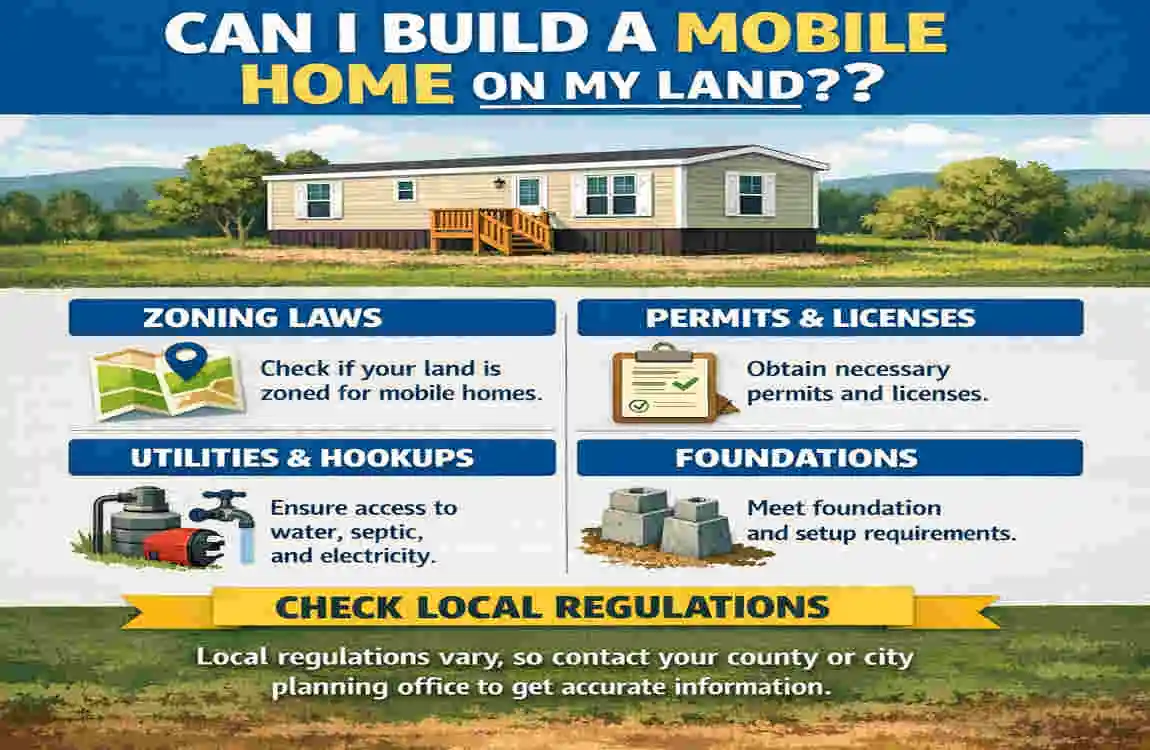
Yes, you often can place a mobile home on land you own. But approval depends on local rules.
Some counties and cities welcome manufactured homes. Others limit them to certain zones only. That means the land must be legally suitable before you spend money on the home.
You also need to consider utility access, permits, foundation requirements, and potential HOA restrictions. These details can change the answer even if the land is already yours.
Understanding Mobile Home vs Manufactured Home
A traditional mobile home usually refers to older units built before modern standards were introduced.
A manufactured home is built in a factory under HUD safety standards, which means it meets updated quality and safety requirements. This matters because local officials, lenders, and inspectors often treat these homes differently.
In simple terms, the classification affects:
- Permits
- Financing
- Placement rules
- Long-term value
Questions to Ask Before Placing a Mobile Home
Before moving forward, ask these key questions:
- Is my land zoned for manufactured homes?
- Do I need a permit?
- Are there minimum size rules?
- Can I connect water, power, and sewer?
- Does an HOA limit mobile homes?
These answers will tell you if your project is realistic or if you need to adjust your plan.
Rules and Regulations for Building a Mobile Home on Your Land
Rules vary by location, so the first step is always to check with your local zoning office or building department.
Zoning Laws and Land Use Requirements
Zoning laws decide how land can be used. Some land is set aside for residential homes, while other land may be for farming, business, or mixed use.
Your land may need to meet requirements such as:
- Residential zoning approval
- Minimum acreage
- Road access
- Setback rules
- Restrictions on manufactured housing
If your land is agricultural or rural, you may still be allowed to place a mobile home there. But that is not guaranteed.
Required Permits for Mobile Homes
Most places require several permits before installation.
Common permits include:
- Building permit
- Placement permit
- Electrical permit
- Plumbing permit
- Septic permit
- Driveway or access permit
Without the correct permits, you may face delays, fines, or forced removal.
Foundation and Installation Requirements
Many mobile homes must be set on a proper foundation or an approved support system. Some areas require a permanent foundation if you want the home treated more like real property.
You may also need:
- Anchoring
- Site grading
- Inspection approval
These steps help keep the home stable and safe.
HOA and Neighborhood Restrictions
If your land is part of a neighborhood with a homeowner association, there may be extra rules.
An HOA may restrict:
- Home appearance
- Minimum size
- Exterior materials
- Placement location
Always check these rules early. They can stop a project even if the city allows it.
Cost to Build a Mobile Home on Your Land
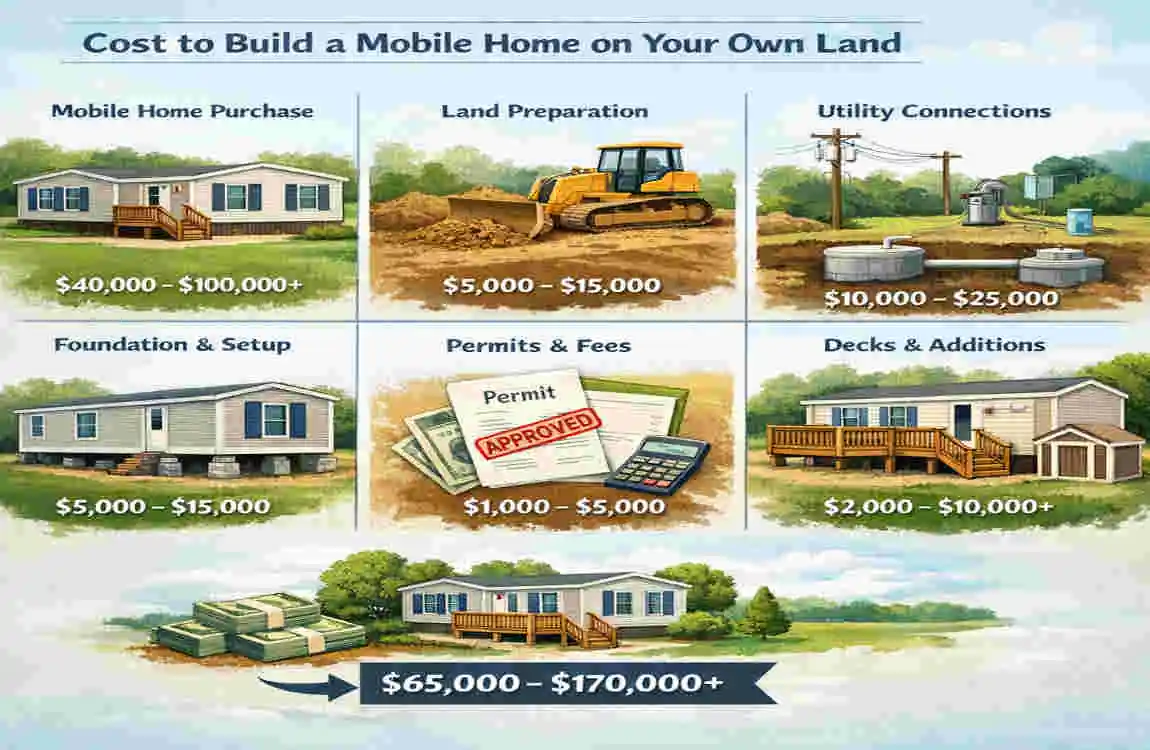
The total cost can vary a lot. It depends on your land, the size of the home, and how much work the site needs.
Estimated Cost Breakdown
Expense Average Cost Range
Mobile home purchase $60,000 – $160,000+
Land preparation $3,000 – $15,000
Foundation installation $5,000 – $20,000
Utility connections $5,000 – $30,000
Permits and inspections $500 – $5,000
Transportation and setup $3,000 – $15,000
Factors That Affect Mobile Home Costs
Your final cost may change based on:
- Home size
- Location
- Utility distance
- Soil condition
- Labor costs
- Custom features
A simple home on ready land costs much less than a larger home on raw land with no utilities.
Is It Cheaper to Buy Land and Put a Mobile Home on It?
Often, yes, it can be cheaper than building a traditional house.
You may save money because:
- Construction is faster
- Home prices are usually lower
- Labor costs are reduced
But do not forget the added costs of:
- Buying the land
- Installing utilities
- Preparing the site
- Paying taxes and maintenance
So yes, it can be affordable, but only if you plan carefully.
How to Prepare Your Land for a Mobile Home
Good site preparation is very important. If the land is not ready, installation becomes harder and more expensive.
Land Inspection and Survey
Before buying or setting the home, check:
- Property boundaries
- Soil quality
- Flood risk
- Drainage issues
A bad site can cause foundation problems later.
Clearing and Leveling the Property
The land often needs:
- Tree removal
- Debris cleanup
- Grading
- Level ground for the foundation
A stable, even site helps the home sit safely.
Installing Utilities
You may need to connect:
- Electricity
- Water
- Sewer or septic
- Gas
Utility work can take time, so plan this early.
Step-by-Step Process to Put a Mobile Home on Your Land
Check Local Requirements
Start with your zoning office. Confirm that the land allows manufactured homes.
Purchase Suitable Land
Choose land with:
- Good access
- Safe soil
- Nearby utilities
- Proper zoning
Choose a Mobile Home Design
Pick the type that fits your budget and space:
- Single-wide
- Double-wide
- Modular style
- Custom manufactured home
Apply for Permits
Submit the needed forms before any work begins.
Prepare the Site
This includes foundation work, utility setup, and driveway access.
Deliver and Install the Home
A professional crew will transport the home, place it, and complete final inspections.
Benefits of Building a Mobile Home on Your Own Land
There are many reasons people choose this option.
Affordable Homeownership
A mobile home usually costs less than a traditional house, making homeownership more attainable.
Property Ownership Benefits
When you own the land, you may gain:
- More privacy
- More control
- Possible land value growth
Faster Construction Timeline
A manufactured home can be ready much faster than a site-built house.
Challenges of Putting a Mobile Home on Your Land
There are also a few common problems to watch for.
Local Restrictions
Some places do not allow manufactured homes in certain areas.
Financing Difficulties
Loans for land and mobile homes can be harder to get. You may need a larger down payment.
Maintenance and Depreciation Concerns
Like any home, a mobile home needs care. Resale value can also depend on how well it is maintained.
Tips for Successfully Building a Mobile Home on Your Land
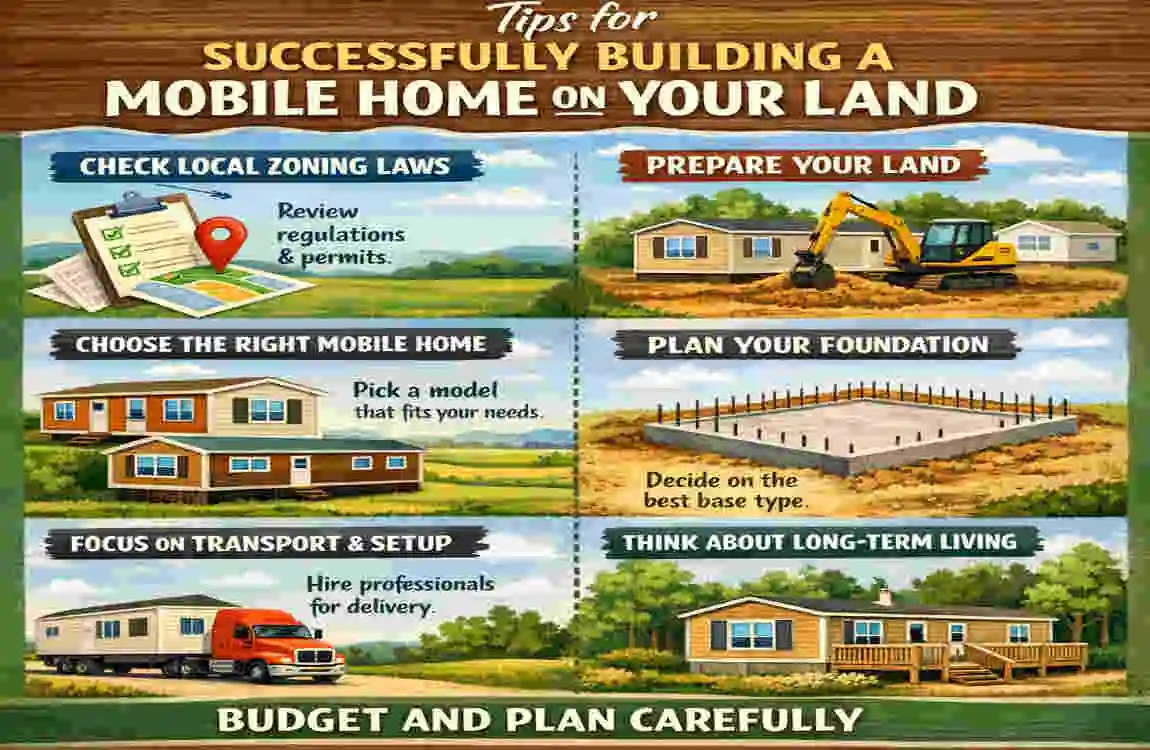
Use these simple tips to avoid costly mistakes:
- Check local laws first
- Inspect the land before buying
- Budget for surprise costs
- Choose an experienced installer
- Plan utility connections early
- Use a strong foundation
A little planning now can save a lot of stress later.
Frequently Asked Questions
Can I build a mobile home on my land without a permit?
No. Most areas require permits before installation.
How much does it cost to put a mobile home on land?
It can range from about $75,000 to over $200,000, depending on land and setup costs.
Do I need special land for a mobile home?
Yes. The land must meet zoning rules and support utilities or septic systems.
Can I put a mobile home on land I already own?
Yes, if local rules allow manufactured housing on that property.
Is a mobile home considered real property?
It can be, if it is permanently attached to the land and meets local requirements.
| Topic | Information |
|---|---|
| Can You Build a Mobile Home on Your Land? | Yes, you can place a mobile home on your own land if local zoning laws, permits, and land-use rules allow it. |
| Zoning Requirements | Check county or city zoning regulations to confirm mobile homes are permitted in your area. |
| Land Preparation Cost | Site preparation, grading, leveling, and clearing may cost around $2,000–$10,000+ depending on the land condition. |
| Mobile Home Cost | A new mobile home can typically cost about $60,000–$160,000+, depending on size, features, and manufacturer. |
| Foundation Requirements | Many areas require a permanent foundation, tie-down systems, or approved installation methods for safety. |
| Permits Needed | Common permits include building permits, installation permits, electrical, plumbing, and utility approvals. |
| Utility Connections | Connecting water, sewer, electricity, and gas can add $5,000–$30,000+ depending on location. |
