
A clean water pipeline helps keep your home water safe, fresh, and pleasant to use. Over time, dirt, rust, minerals, and even bacteria can collect inside the pipes. This can change the taste of water, slow the flow, and create small plumbing problems that grow bigger later.
That is why learning how to clean a water pipeline at home is useful for every homeowner. With the right steps, you can improve water quality, reduce buildup, and support your home plumbing maintenance without making the job too complicated.
Why Should You Clean Your Home Water Pipeline?
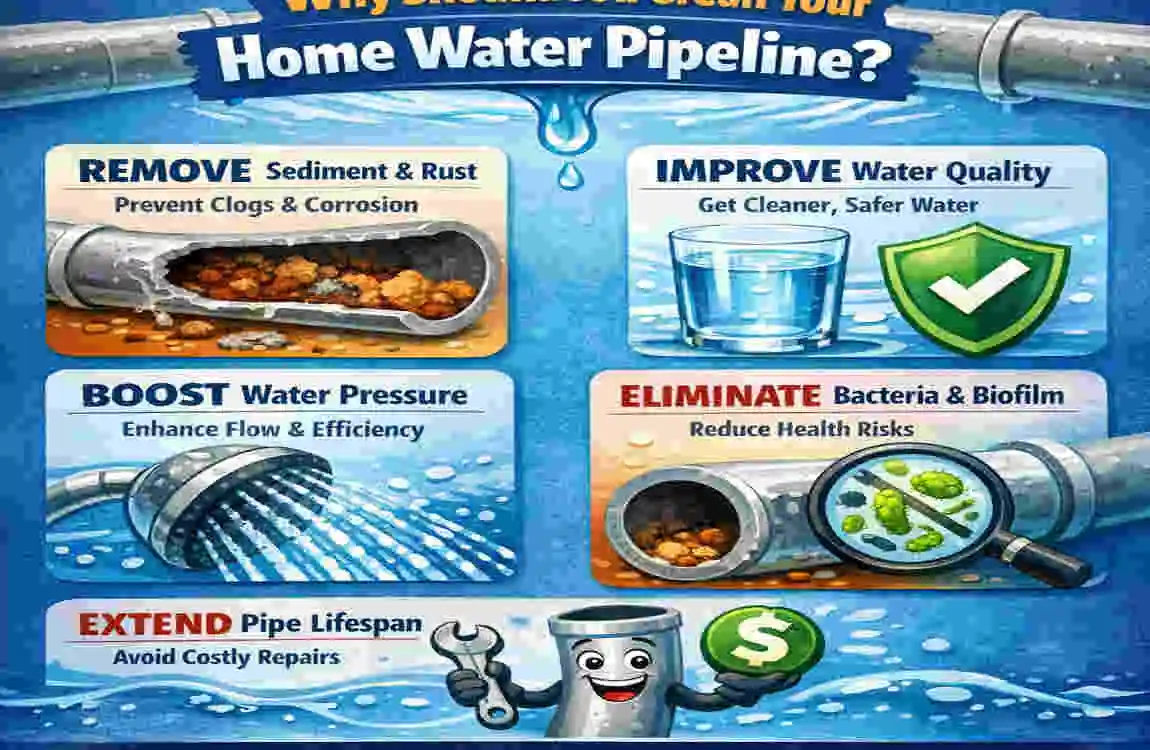
Cleaning your water pipes is not just about making the water look better. It also helps protect the whole plumbing system.
Prevent Dirt and Mineral Buildup
Inside pipes, small particles can slowly collect. These include sediment, calcium, and rust. If your area has hard water, buildup can happen even faster.
When this happens, water may not move as smoothly through the pipes. That can lead to weak flow, blocked lines, and more stress on your plumbing.
Improve Water Quality
Dirty pipes can affect the way water looks, smells, and tastes. You may notice cloudy water, odd smells, or a metallic taste.
If your water does not seem fresh, the pipes may be part of the problem. Cleaning them can often help improve water quality.
Increase the Lifespan of Plumbing Systems
Regular cleaning can reduce wear on the pipes. It helps limit corrosion and keeps small issues from turning into expensive repairs.
A little attention now can save you trouble later.
Signs Your Water Pipeline Needs Cleaning
You do not always need to see inside the pipes to know something is wrong. Your water often gives you clues.
Discoloured or Cloudy Water
If the water looks brown, yellow, or cloudy, it may mean rust or sediment is moving through the system.
This is one of the most common signs that your pipes need attention.
Low Water Pressure
When pipes get partially blocked, water cannot move freely. That can make faucets and shower heads feel weak.
If the pressure drops in more than one area of the home, the pipes may need to be flushed or cleaned.
Unpleasant Smell or Taste
A strange smell or bad taste can come from buildup inside the pipes. In some cases, it may also point to bacterial growth or old deposits.
Noisy Pipes
Banging, whistling, or gurgling sounds can mean water is struggling to move through the line.
These sounds are not always serious, but they should not be ignored.
Tools and Materials Needed to Clean a Water Pipeline at Home
Before you begin, gather the basic tools. This makes the process smoother and safer.
Tool/MaterialPurpose
Clean water supply Flushing the pipes
Bucket Collecting dirty water
Pipe cleaner solution Removing buildup
Wrench Opening pipe connections
Gloves Safety protection
Water filter Improving future water quality
A few of these items may already be in your home. If not, they are easy to find and usually affordable.
How to Clean Water Pipeline at Home: Step-by-Step Guide
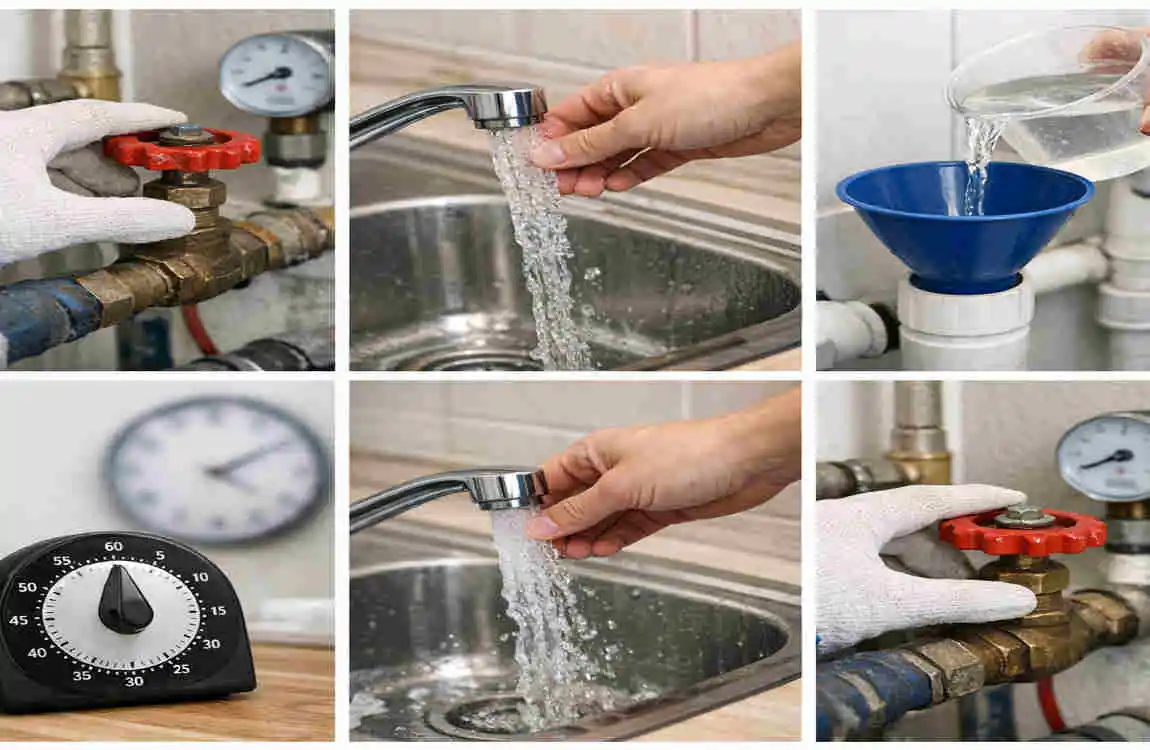
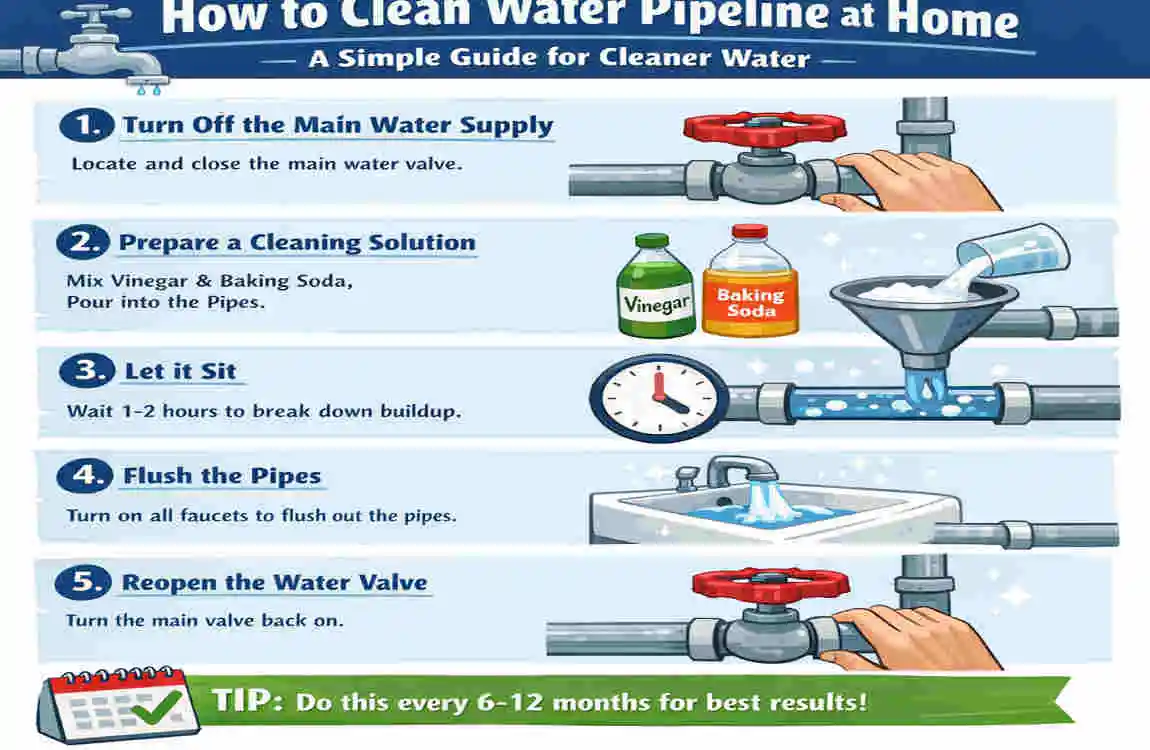
Turn Off the Main Water Supply
Start by shutting off the main water valve. This keeps water from flowing while you work.
It is important to turn off all water sources so the pipes can drain safely. If you are not sure where the main valve is, check near the meter or where water enters the home.
Drain Remaining Water From Pipes
Open faucets in the house and let the remaining water run out.
This helps clear loose debris and reduces pressure in the lines. It also gives you a better starting point before cleaning.
Inspect the Water Pipeline System
Look at any visible pipes for signs of:
- Rust
- Leaks
- Damage
- Mineral deposits
If you see heavy corrosion or leaks, cleaning alone may not be enough. In that case, the pipes may need repair.
Flush the Pipes With Clean Water
Once the system is ready, turn the main water supply back on and let clean water move through the lines.
Open several faucets and let the water run until it starts to look clearer. This simple flushing step can remove loose particles and improve flow.
Use a Safe Cleaning Solution
If buildup is still present, you can use a safe cleaning method appropriate for your pipe material. Many homeowners use mild household solutions, depending on the situation.
Avoid harsh chemicals unless a professional tells you to use them. Strong products can damage pipes or leave behind unwanted residue.
Flush Again After Cleaning
After using any cleaning solution, flush the pipes again.
This step matters because you want to remove any leftover cleaner and loosened dirt. Keep running the water until it looks clear and normal again.
Check Water Quality
Once the cleaning is done, check the water for:
- Color
- Smell
- Taste
- Flow strength
If the water still looks dirty or smells strange, a deeper problem may be present. That is when professional testing can help.
Different Methods for Cleaning Home Water Pipes
There is more than one way to clean pipes. The best method depends on how dirty they are and what type of plumbing you have.
Water Flushing Method
This is the easiest method. It simply uses clean running water to push out loose dirt and sediment.
It works best for routine maintenance and light buildup. If you want a basic way to freshen your system, this is often the first step.
Vinegar Cleaning Method
Vinegar can help break down some mineral deposits. It may be useful in certain situations where hard water leaves behind scale.
Still, you should use it carefully and only where it is safe for your plumbing. Not every pipe type reacts the same way, so be cautious.
Professional Pipe Cleaning
Sometimes the best choice is to call an expert. A plumber can handle severe blockage, old plumbing, or signs of contamination.
If your water problems keep coming back, professional help may save time and prevent bigger damage.
How Often Should You Clean Your Water Pipeline?
How often you clean pipes depends on your home, your water source, and the age of your plumbing.
Home Type Recommended Cleaning Frequency
New home Every few years or as needed
Older plumbing system More frequently
Hard water areas Regular maintenance
Homes with poor water quality Professional inspection recommended
If you are unsure, start by checking your water quality and looking for signs of buildup.
Common Mistakes to Avoid When Cleaning Water Pipes
A few simple mistakes can make the job harder or less safe.
Using Strong Chemicals
Strong cleaners can damage pipes and affect water quality. They may also pose safety risks if used incorrectly.
Ignoring Old or Damaged Pipes
Cleaning does not fix broken plumbing. If the pipes are severely corroded, cracked, or leaking, they may need to be replaced.
Not Flushing Pipes Properly
If you leave debris or cleaning solution behind, the water may still taste or smell bad. Always flush well after cleaning.
Skipping Safety Precautions
Wear gloves and follow product instructions. Even simple cleaning jobs deserve care.
Tips to Keep Water Pipelines Cleaner Longer
Once your pipes are clean, a few habits can help them stay that way.
Install a Water Filter
A filter can reduce sediment before it enters the plumbing system. That means less buildup over time.
Maintain Proper Water Pressure
Very high pressure can stress pipes. Balanced pressure helps protect the system and keeps it working smoothly.
Check Pipes Regularly
Look for leaks, stains, or changes in water quality. Small checks can catch problems early.
Avoid Throwing Harmful Substances Into Drains
Grease, chemicals, and heavy waste can affect the plumbing over time. Treat your drains with care.
Benefits of Regular Water Pipeline Cleaning
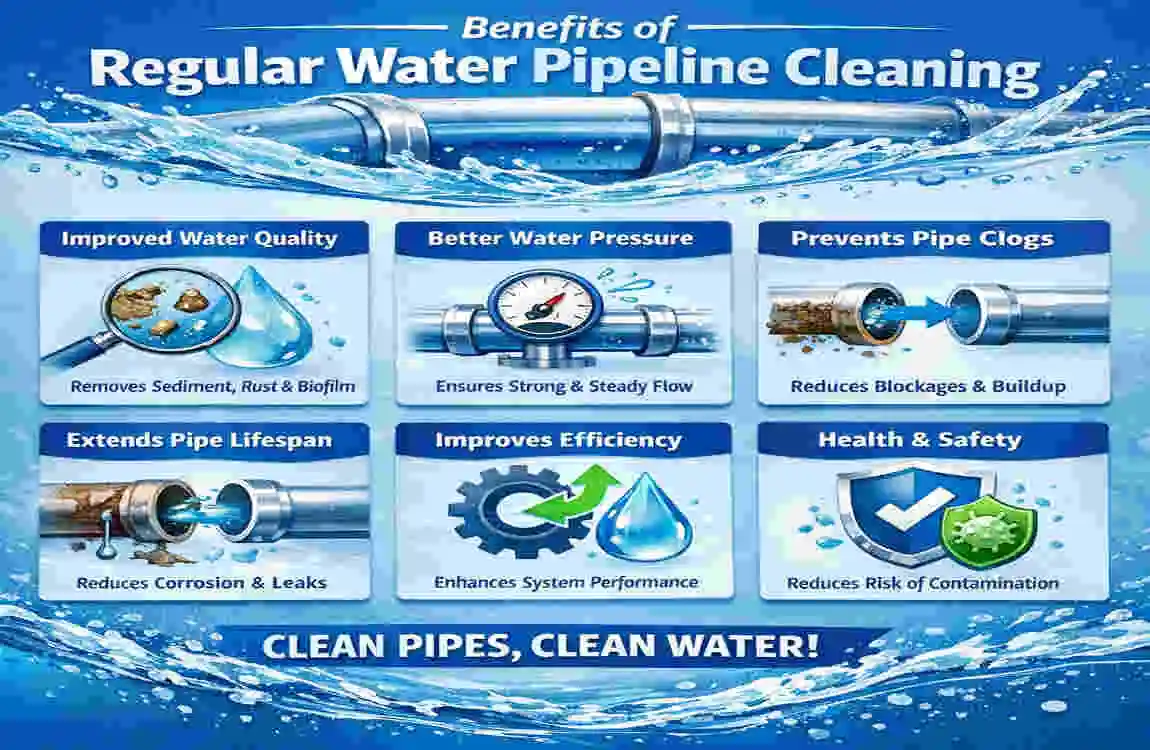
Regular cleaning brings real benefits to your home:
- Cleaner drinking water
- Better water flow
- Reduced plumbing problems
- Fewer unpleasant odours
- Longer-lasting pipes
- Lower maintenance costs
These benefits make regular care worth the effort.
When Should You Call a Professional Plumber?
Sometimes DIY cleaning is not enough. Call a plumber if you notice:
- Severe pipe blockage
- Continuous dirty water
- Pipe leaks
- Old plumbing systems
- Suspected bacterial contamination
- Major pressure problems
If the issue keeps returning, a deeper inspection may be needed.
DIY Water Pipeline Cleaning vs Professional Cleaning
DIY Cleaning Professional Cleaning
Affordable Higher cost
Good for basic maintenance Better for serious issues
Suitable for homeowners Requires expert tools
Takes less time More detailed inspection
DIY works well for light upkeep. Professional cleaning is better when the problem is bigger or less clear.
Frequently Asked Questions
How do I naturally clean a water pipe at home?
You can start by flushing the pipes with clean water. In some cases, vinegar may help remove mineral buildup where it is safe to use.
How often should home water pipes be cleaned?
It depends on water quality, pipe age, and local conditions. Homes with hard water or older plumbing may need more regular care.
Can dirty water pipes make you sick?
Dirty pipes can affect water quality. If you think the water may be contaminated, professional testing is the safest next step.
What is the easiest way to clean water pipes?
Flushing the system is the easiest routine method. It helps remove loose dirt and improves water flow.
Should I use bleach to clean water pipes?
Only use chemical cleaners with proper guidance. If used wrongly, they can cause damage or leave harmful residue.
How can I prevent water pipes from getting dirty?
Use a filter, check your pipes often, and keep up with simple residential plumbing care.
| Step | Cleaning Method | Details |
|---|---|---|
| Turn Off Water Supply | Shut off the main water valve | Prevents water flow and allows safe pipeline cleaning. |
| Drain the Pipes | Open taps and flush water out | Removes old, stagnant water from the system. |
| Prepare Cleaning Solution | Use safe pipe-cleaning agents | Choose solutions recommended for household water systems. |
| Flush the Pipeline | Run clean water through pipes | Helps remove dirt, sediment, and cleaning residue. |
| Clean Faucet Filters | Remove and wash aerators | Removes trapped particles and improves water flow. |
| Check for Rust or Leaks | Inspect visible pipes | Repair damaged sections to maintain water quality. |
| Repeat Regularly | Schedule routine maintenance | Regular cleaning keeps water fresher and pipelines healthier. |
