Close Menu

    Subscribe to Updates

    Get the latest creative news from FooBar about art, design and business.

    What's Hot

    Inside Meg Ryan’s San Francisco House: Victorian Renovation Tour

    March 5, 2026

    Florida Pool Addition House Costs: Complete Price Guide

    March 5, 2026

    Eddie Redmayne’s £4M Dream House: Bat Controversy Halts Luxe Renovation!

    March 4, 2026
    Facebook X (Twitter) Instagram
    Facebook X (Twitter) Instagram
    Crazzy Homes
    Button
    • HOME
    • HOME IMPROVEMENT
      • HOME DECOR
      • ARCHITECTURE
      • FURNITURE
      • FLOORING
      • CLEANING
      • INTERIOR
        • BEDROOM
        • BATHROOM
        • DOORS
        • WINDOW
      • EXTERIOR
        • GARDENING
    • CELEBRITY HOME

      Inside Meg Ryan’s San Francisco House: Victorian Renovation Tour

      March 5, 2026

      Eddie Redmayne’s £4M Dream House: Bat Controversy Halts Luxe Renovation!

      March 4, 2026

      Naomi Judd’s House: Inside the Iconic Leiper’s Fork Estate

      March 3, 2026

      Raven-Symoné’s Luxurious East Hollywood Townhouse: Inside Her $940K Gem Update

      March 3, 2026

      Inside Carmen Electra’s Luxe LA Pad: Tara Leigh Patrick House Tour

      March 2, 2026
    • Real Estate
    • PLUMBING
    • KITCHEN
      • APPLIANCES
    • LIFE STYLE
    Crazzy Homes
    Home » How to Design Living Room Furniture for Your Dream House Trending Layouts & Ideas
    FURNITURE

    How to Design Living Room Furniture for Your Dream House Trending Layouts & Ideas

    Stella VictoriaBy Stella VictoriaFebruary 7, 2026No Comments13 Mins Read
    Facebook Twitter Pinterest LinkedIn Tumblr Email
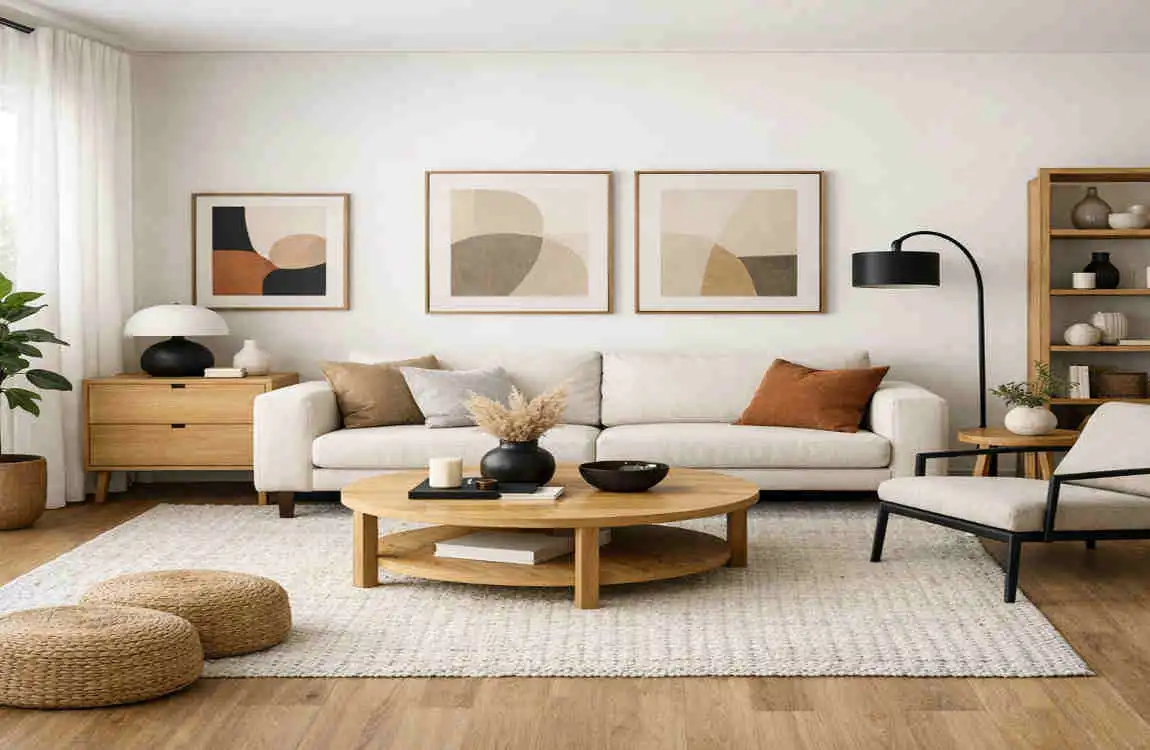
    How to Design Living Room Furniture
    Share
    Facebook Twitter LinkedIn Pinterest Email

    Imagine walking through your front door after a long, exhausting day. You drop your keys, kick off your shoes, and head straight for the living room. Does that space embrace you like a warm hug, or does it feel cluttered, chaotic, and just a little bit “off”?

    For most of us, the living room is the beating heart of the home. It’s where Friday movie nights happen, where serious family discussions take place, and where you curl up with a book on a rainy Sunday. But creating that perfect atmosphere doesn’t happen by accident. If you are wondering how to design furniture in living room spaces that wow your guests and comfort your family, you are definitely in the right place.

    Table of Contents

    Toggle
    • Why Smart Living Room Furniture Design Matters
    • Step-by-Step Guide: How to Design Furniture in the Living Room
      • Assess Your Space
      • Define Your Style & Needs
      •  Choose Core Furniture Pieces
      • plan Layouts for Flow
      • Select Fabrics & Finishes
    • Trending Living Room Furniture Layouts 
      • The Open-Plan Layout
      • The Symmetrical Layout
      • The Asymmetrical Layout
      • The Multifunctional Layout
      • The Biophilic Layout
    • Top Living Room Furniture Design Ideas for Dream Houses
      • Budget-Friendly Ideas
      • Luxury Dream Home Ideas
      • Small Space Hacks
      • Family-Friendly Ideas
    • Common Mistakes to Avoid When Designing Living Room Furniture
    • Essential Tools & Resources for Living Room Design
      • Frequently Asked Questions (FAQs)

    Why Smart Living Room Furniture Design Matters

    How to Design Living Room Furniture

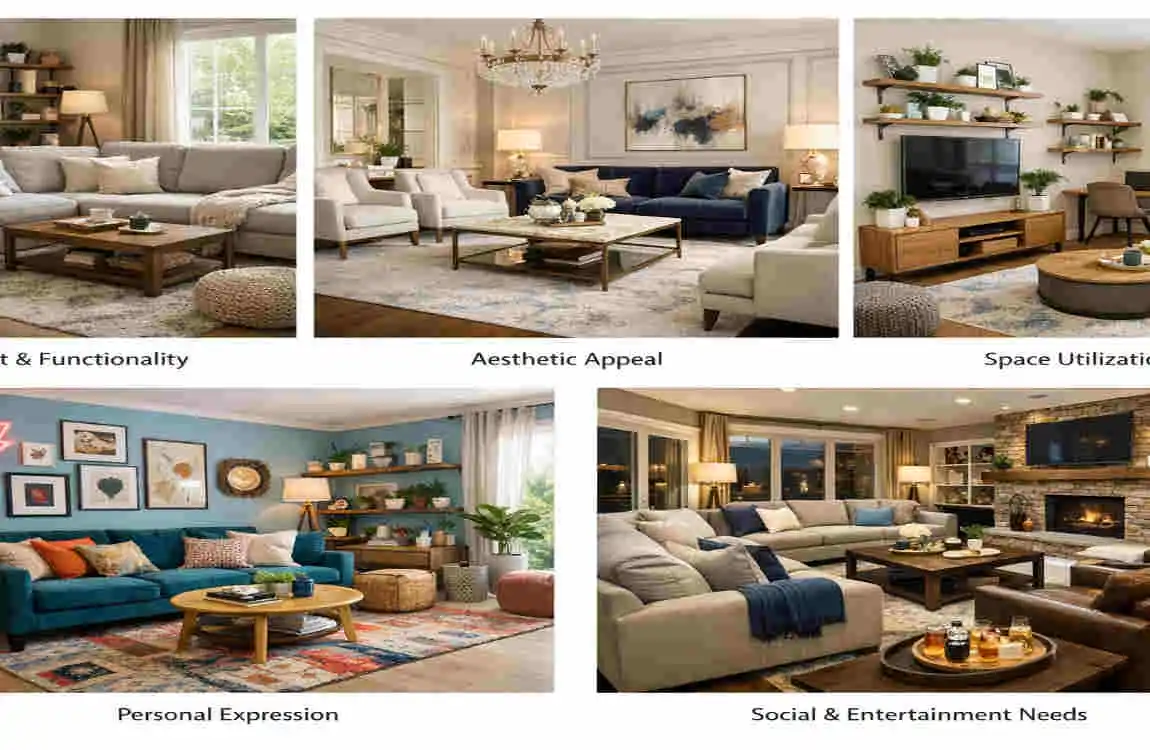
    You might be thinking, “Can’t I just buy a couch and a TV stand and call it a day?” You could, but you’d miss out on the massive potential of your home. Understanding how to design furniture for living room layouts properly goes far beyond aesthetics; it affects your daily psychology and your wallet.

    First, let’s talk about value. According to recent housing reports leading into 2025 and 2026, nearly 70% of homeowners cite the living room as the priority space when renovating or buying. A well-designed living area allows potential buyers to visualize themselves living there. Experts suggest that a cohesive, well-staged living room design can increase a home’s resale value by 10-15%.

    But beyond the money, there is the “feel-good” factor.

    • Enhanced Flow and Functionality: Have you ever had to shimmy sideways to get past a coffee table awkwardly? That’s bad design. Clever furniture placement creates invisible “highways” in your home, allowing traffic to flow smoothly without bottlenecks.
    • Mood Boosting: Ergonomics aren’t just for office chairs. The right sofa height, the distance to the TV, and the angle of conversation chairs all contribute to physical comfort, which directly influences your mood.
    • Lifestyle Support: Your furniture should serve you, not the other way around. If you love hosting game nights, your design should reflect that. If you need a quiet corner to work, the layout must accommodate it.

    Mastering how to design furniture in living room setups starts with a deep understanding of the canvas you are working with—your actual space.

    Step-by-Step Guide: How to Design Furniture in the Living Room

    This is where we roll up our sleeves. Designing a room can feel overwhelming, but if we break it down into bite-sized pieces, it becomes a fun puzzle. Follow these steps to home build your foundation.

    Assess Your Space

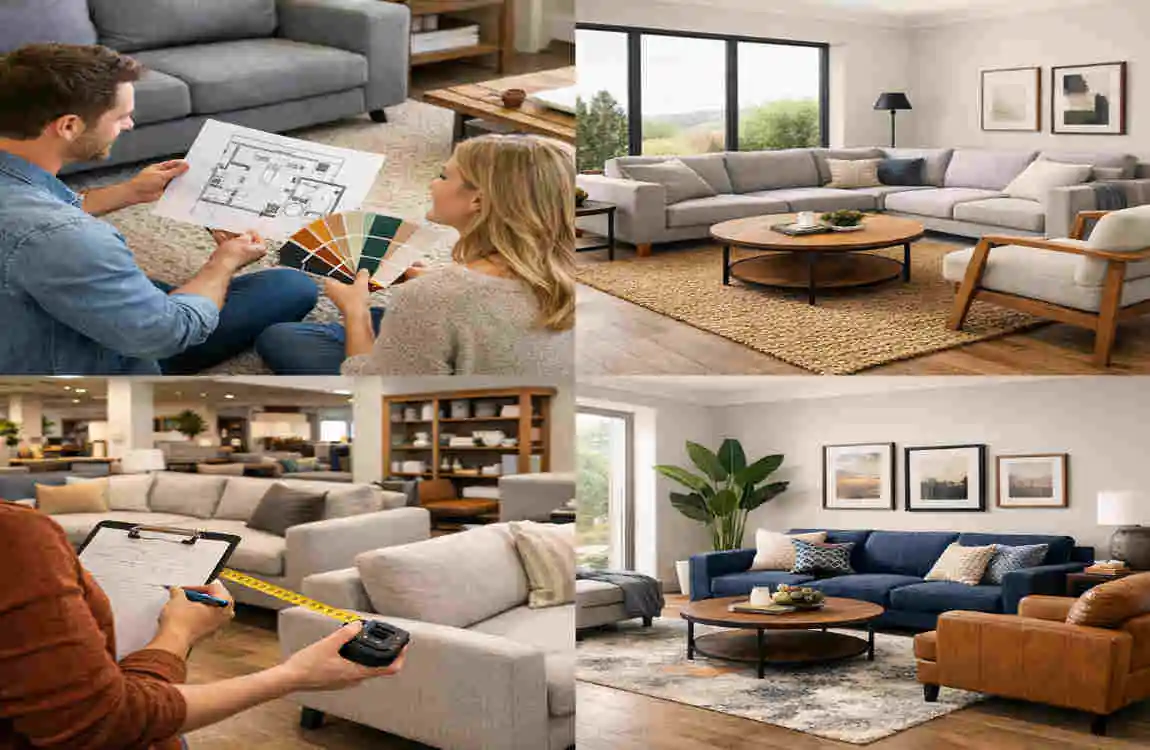
    Before you buy a single pillow, you need to know precisely what you are working with. The biggest mistake people make is “eyeballing” it. Furniture always looks smaller in a massive showroom than it does in your living room.

    Grab a tape measure and sketch out your room. You don’t need to be an artist; a rough square or rectangle will do. Measure the length and width of the walls. Crucially, measure the location of outlets, windows, and doors. Note which way the doors swing. You don’t want to buy a beautiful armchair only to realize it blocks the kitchen entrance.

    Consider the natural light. Where does the sun hit in the morning versus the afternoon? This will dictate where you place your TV (to avoid glare) and where you might want a reading nook. If you prefer digital help, try free room-planning apps like RoomSketcher or Planner 5D to visualize the dimensions without moving orheavy objects.

    Define Your Style & Needs

    Now for the fun part: the vibe check. How do you want the room to feel? Are you drawn to the clean, sharp lines of Modern Minimalist design? Do you prefer the eclectic, layered textures of Boho Chic? Or perhaps the cozy, rustic warmth of a Farmhouse style?

    If you aren’t sure, take a weekend to browse Pinterest or Instagram. Save every image that makes you stop and say, “I like that.” After you have 10-15 photos, look for the common thread. Are they all white and bright? Do they all have dark wood? That is your style.

    Next, be honest about your needs.

    • Family Size: Do you need seating for two or eight?
    • Pets: Do you have a cat that scratches or a dog that sheds? (This dictates fabric choice.
    • Usage: Is this a formal sitting room or a “eat pizza while watching Netflix” room?

     Choose Core Furniture Pieces

    Once you know your space and style, select your anchor pieces. These are the big-ticket items that define the room. In 2026, the trend is shifting toward pieces that work harder for you.

    Here is a quick guide to choosing the essentials:

    PieceTrending 2026 Pick: Why It Works

    Sofa / Sectional Modular L-shaped. It is the ultimate chameleon. You can break it apart for parties or push it together for movie nights. It maximizes corner space.

    Coffee Table Lift-top Multifunctional. It offers hidden storage for remotes and blankets, and the top lifts to become a desk or dining table.

    TV Unit Wall-mounted Floating. It frees up floor space, making the room look bigger and easier to clean (hello, robot vacuums).

    Accent Chairs, Swivel Barrel Chairs. These allow you to turn toward the TV or swivel to join a conversation in the kitchen.

    plan Layouts for Flow

    This is the secret sauce for designing furniture in living room layouts. You need a focal point. In most modern homes, this is the TV or a fireplace. If you have a great view, the window might be the focal point.

    Once you have the focal point, arrange your seating around it.

    • The Conversation Circle: Ensure chairs and sofas are close enough that you don’t have to shout. A distance of 4 to 8 feet between people is ideal.
    • The Traffic Lanes: Leave at least 30 inches (about 2.5 feet) of walking space between furniture pieces. You should be able to walk through the room without having to turn sideways.
    • The Rug Rule: A standard error is choosing a rug that is too small. Your rug should be large enough that at least the front legs of all your seating pieces sit on it. This “anchors” the furniture and stops it from feeling like it is floating in space.

    Select Fabrics & Finishes

    The final step in the planning phase is the skin of your room furniture. This is where practicality meets beauty.

    If you have kids or pets, performance fabrics are non-negotiable. Look for crypton or microfiber blends that resist stains and can be wiped clean. Leather is also a great option as it ages well and is easy to clean, though cats can scratch it.

    For 2026, we are seeing a massive surge in sustainable materials. Recycled velvet (made from plastic bottles) offers a luxurious feel while reducing its carbon footprint. Bamboo and reclaimed wood are popular for tables, adding a natural, biophilic texture to the room. Don’t be afraid to mix textures—pair a smooth leather sofa with a chunky knit throw and a wooden table to create depth.

    Trending Living Room Furniture Layouts 

    Now that we have the basics, let’s look at specific arrangements. Trends in 2026 are all about flexibility and breaking the rigid rules of the past. Here is how to design furniture in living room layouts using the latest concepts.

    The Open-Plan Layout

    This is the standard for most “dream houses” being built today. The challenge with open-plan living is that you don’t have walls to define where the living room ends and the dining room begins.

    How to do it: You must use your furniture to create “zones.” Face the back of your sofa toward the dining area to create a clear visual divider. Use a large area rug to define the “living zone.”

    The Symmetrical Layout

    If you love order and calm, this is for you. Symmetry is pleasing to the human eye and creates a sense of formal balance.

    How to do it: Imagine a line down the center of your focal point (like the fireplace). Place two identical sofas facing each other, or one sofa facing two identical armchairs: place matching end tables and lamps on either side.

    • Best for: Formal sitting rooms or spaces used primarily for conversation rather than TV watching.

    The Asymmetrical Layout

    This is the modern, casual twist. It feels more dynamic and less “staged” than the symmetrical look.

    How to do it: Balance the visual weight rather than matching items perfectly. If you have a large L-shaped sectional on one side, balance it with two visually heavy armchairs or a large bookshelf on the other side.

    • Best for: Casual family rooms and apartments that require flexibility.

    The Multifunctional Layout

    With more people working from home, the living room often doubles as a workspace. This layout is essential for smaller houses or apartments.

    How to do it: Use a console table behind the sofa that can double as a desk. incorporate ottomans that serve as coffee tables, extra seating, and storage units. A “Sleeper Sofa” is the hero here, turning your living room into a guest room instantly.

    The Biophilic Layout

    This is a massive trend for 2026. It focuses on blurring the line between inside and outside to reduce stress and improve well-being.

    How to do it: It’s not just about adding a potted plant. It’s about orienting furniture to face the windows. It involves using furniture made of raw, natural materials (live-edge wood, rattan, stone). Integrate plant stands as actual furniture pieces, perhaps using a tall shelving unit as a “green wall” room divider.

    Top Living Room Furniture Design Ideas for Dream Houses

    You have the layout, now let’s fill it with inspiration. Whether you are on a shoestring budget or looking to splash out on luxury, here are some actionable ideas.

    Budget-Friendly Ideas

    Designing a dream room doesn’t require a nightmare budget.

    • The DIY Pallet Hack: Wooden pallets are often free. With some sanding, staining, and the addition of caster wheels, you can create a trendy, industrial-style coffee table.
    • IKEA Mods: Buy basic, affordable furniture and upgrade it. Replace the legs on a generic sofa with stylish brass legs. Paint a plain bookshelf a bold color. There are entire companies dedicated to selling custom covers for IKEA sofas, making them look like designer pieces for a fraction of the cost.
    • Thrift and Upcycle: Old furniture often has better “bones” (solid wood frames) than new, cheap furniture. A vintage chair with ugly fabric can be reupholstered to become the star of your room.

    Luxury Dream Home Ideas

    If budget isn’t an issue, focus on customization and technology.

    • Custom Millwork: Nothing says “luxury” like built-in shelving. Have a carpenter build a unit that fits your wall perfectly to dream house your TV, books, and art.
    • Brilliant Furniture: Look for side tables with built-in wireless chargers and cooling drawers for beverages. Voice-activated lighting integrated into the furniture is also a growing trend.
    • Statement Art: Instead of many small pictures, invest in one massive, oversized piece of art. It creates a gallery feel that instantly elevates the furniture around it.

    Small Space Hacks

    When you are tight on square footage, every inch counts.

    • Go Vertical: Don’t let your walls go to waste. Install floating shelves all the way to the ceiling to draw the eye up and create storage without using floor space.
    • Leggy Furniture: Choose sofas and chairs raised on legs rather than blocky pieces that sit on the floor. Seeing the floor underneath the furniture tricks the brain into thinking the room is larger.
    • The Murphy Concept: Modern Murphy beds can disguise themselves as sleek cabinets or desks, allowing your living room to transform completely at night.

    Family-Friendly Ideas

    You can have nice things and kids.

    • Round it Out: Choose coffee tables and side tables with round or oval shapes. No sharp corners means fewer bumps and bruises for toddlers.
    • Storage Ottomans: These are lifesavers. They are soft (safe for kids), provide extra seating, and you can throw all the toys inside them in 30 seconds when guests arrive.
    • Washable Rugs: Brands like Ruggable have changed the game. If juice spills, peel off the top layer of the rug and throw it in the washing machine.

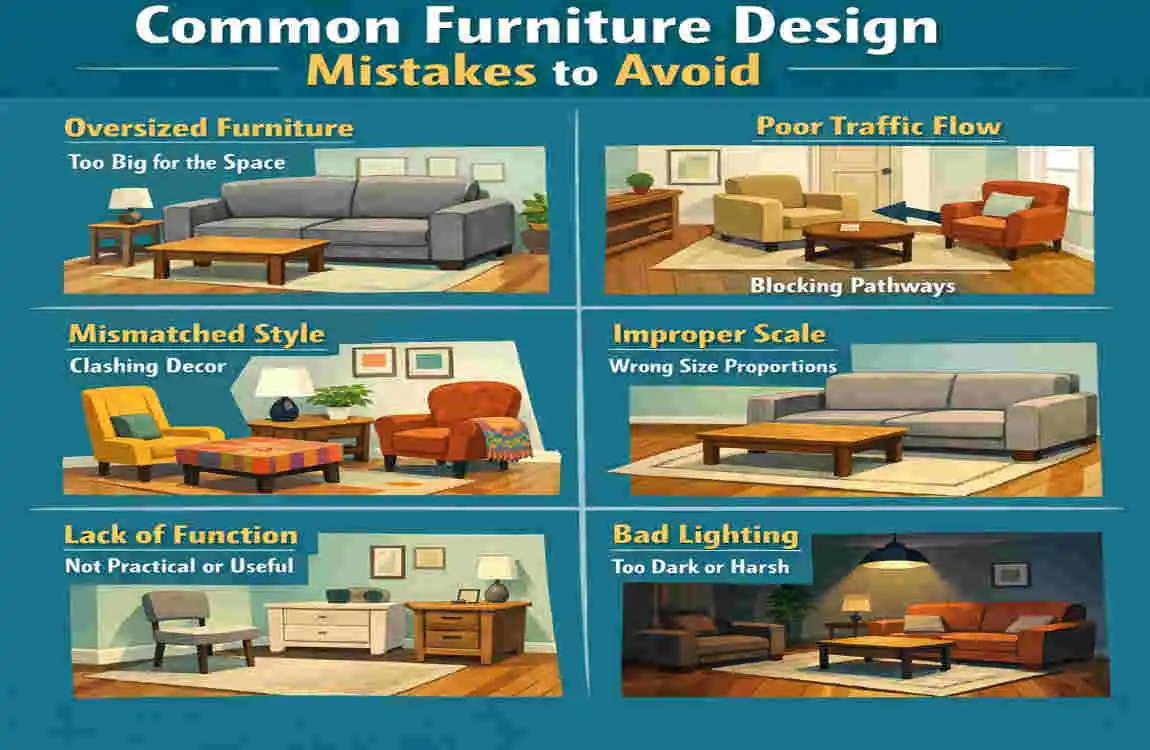
    Common Mistakes to Avoid When Designing Living Room Furniture

    Even with the best intentions, it is easy to trip up. Here are the pitfalls to watch out for when learning to design furniture for living room spaces.

     Overcrowding the Room We all want plenty of seating, but too much furniture makes a room feel claustrophobic.

     Ignoring Scale and Proportion A tiny loveseat in a massive room looks like a dollhouse toy. A huge sectional in a small room looks like a beached whale.

    • The Fix: Use painter’s tape to outline the size of the furniture on your floor before you buy it. This helps you physically see how much room it takes up.

     Neglecting Lighting Integration. You can have the best furniture in the world, but if the lighting is bad, it will look terrible.

    • The Fix: Don’t rely on just the overhead light (“the big light”). Layer your lighting. You need floor lamps near reading chairs, table lamps for ambiance, and perhaps LED strips behind the TV. Ensure your furniture placement allows for these lamps to be plugged in without tripping hazards.

    Pushing Everything Against the Walls This is the “waiting room” effect. It leaves a weird, empty dance floor in the middle of the room, making conversation difficult.

    • The Fix: Pull the furniture off the walls. Even just 3 or 4 inches of breathing room makes a difference. Floating the sofa in the middle of the room often creates a much cozier, more sophisticated vibe.

    Trend-Chasing Without Personalization: Buying a boucle chair because it’s trendy in 2026 is fine, but not if you hate the texture.

    Essential Tools & Resources for Living Room Design

    How to Design Living Room Furniture

    You don’t have to do this alone. Here are some tools to help you master how to design furniture in living room layouts.

    • Digital Planners:
      • RoomSketcher: Great for creating 2D and 3D floor plans.
      • Planner 5D: Allows you to play with interior design in a realistic Mode.
      • Magicplan: Lets you scan your room with your phone camera to create a floor plan instantly.
    • Shopping Resources:
      • Wayfair & AllModern: Excellent for filtering by style and size.
      • Etsy: The best place for unique, handmade home decor and custom furniture legs or covers.
      • Pinterest: The ultimate mood board creator.

    Frequently Asked Questions (FAQs)

     How to design furniture in a living room for small spaces? For small spaces, think multifunctional and vertical. Use a sofa with slim arms to maximize seating width. Utilize mirrors to reflect light and create the illusion of depth. Choose furniture with exposed legs to keep the floor visible, and consider wall-mounted shelving to keep the floor clear. Nesting tables are also a great space-saving hack.

     What are the best trending layouts for 2026? The top trends for 2026 focus on social connection and nature. The Biophilic Layout, which integrates plants and faces natural light sources, is enormous. The Modular/Flexible Layout is also trending, using sectional pieces that can be rearranged for different activities (work vs. relaxation). Finally, “Zoning” in open-plan spaces with rugs and console tables remains a dominant design strategy.

     How do I mix different furniture styles? The key to mixing styles (like Modern and Vintage) is to find a common unifier. This could be a color palette, a wood tone, or a mood. For example, you can mix a modern velvet sofa with a vintage wooden coffee table if they share a similar color family or if the wood tone matches the couch’s legs. Adhere to the 80/20 rule: let 80% of the room be one style, and 20% be the accent style.

    Share. Facebook Twitter Pinterest LinkedIn Tumblr Email
    Stella Victoria

    Related Posts

    Celebrity House Furniture Trends : Luxe Styles from A-List Homes Revealed

    January 30, 2026

    Room by Room Furniture Guide: Transform Your House into a Dream Home Haven

    January 23, 2026

    Rustic Charm: Best Farmhouse Outdoor Furniture Ideas for Modern Homes

    December 15, 2025
    Leave A Reply Cancel Reply

    Top Posts

    Blueface House costs how much?

    May 24, 2024

    Inside Meg Ryan’s San Francisco House: Victorian Renovation Tour

    March 5, 2026

    Unveiling the Secret of Luke Combs House in Nashville

    June 16, 2024
    Stay In Touch
    • Facebook
    • YouTube
    • TikTok
    • WhatsApp
    • Twitter
    • Instagram
    Latest Reviews

    Stay Connected

    Fill the form below and get early updates.

    Most Popular

    Blueface House costs how much?

    May 24, 2024

    Inside Meg Ryan’s San Francisco House: Victorian Renovation Tour

    March 5, 2026

    Unveiling the Secret of Luke Combs House in Nashville

    June 16, 2024
    Latest Posts

    Inside Meg Ryan’s San Francisco House: Victorian Renovation Tour

    March 5, 2026

    Florida Pool Addition House Costs: Complete Price Guide

    March 5, 2026

    Eddie Redmayne’s £4M Dream House: Bat Controversy Halts Luxe Renovation!

    March 4, 2026

    Did we make a mistake?

    Submit a correction suggestion and help us fix it!

    Facebook X (Twitter) Instagram Pinterest
    • About us
    • Contact us
    • Privacy Policy
    • Disclaimer
    • Terms And Conditions
    © 2026 ThemeSphere. Designed by ThemeSphere.

    Type above and press Enter to search. Press Esc to cancel.