
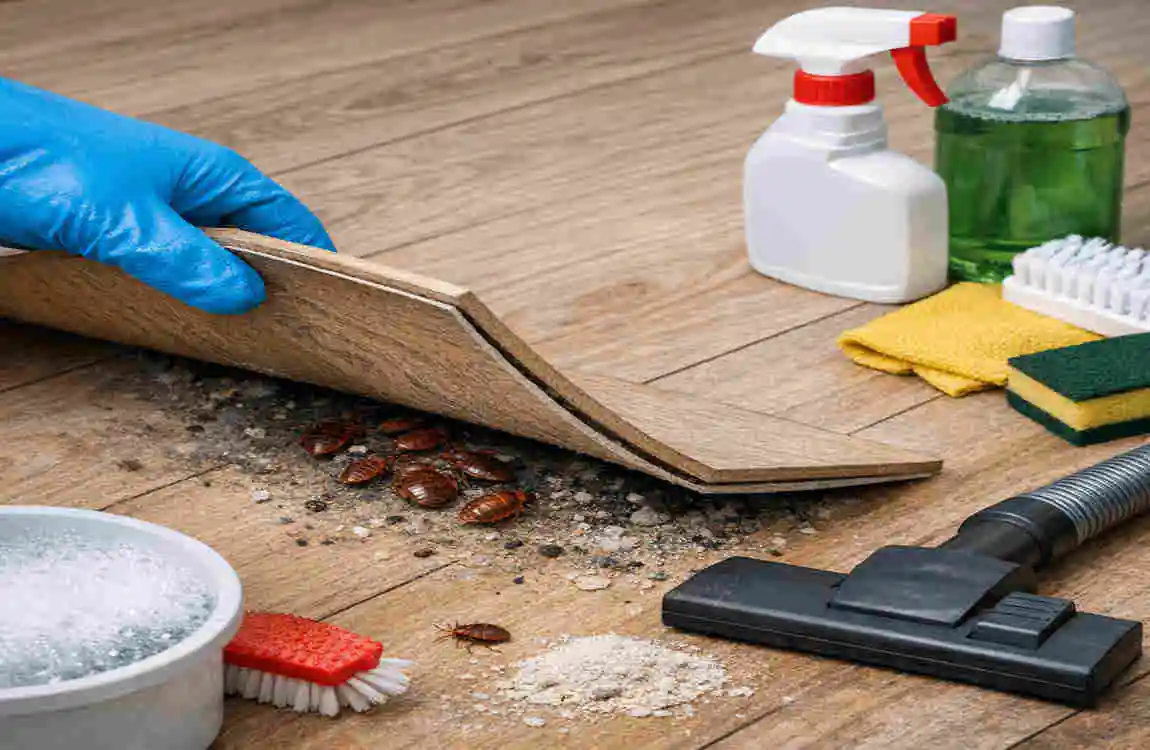
Many homeowners worry about bed bugs showing up in places they do not expect. One common question is whether laminate flooring can hide them. This concern makes sense because bed bugs are very small, hard to spot, and good at hiding in tight spaces.
The truth is simple: bed bugs do not live inside laminate floorboards themselves, but they can hide around them. Cracks, gaps, loose edges, baseboards, and nearby furniture can all give them places to stay.
Can Bed Bugs Live in Laminate Flooring?
Understanding Bed Bug Behavior
Bed bugs survive by feeding on blood, usually while people are sleeping. They like dark, quiet, and hidden places where they will not often be disturbed.
They do not build nests like ants or live in wood like termites. Instead, they hide close to where people rest. That is why they are often found near beds, sofas, and the edges of floors.
If your room has easy hiding spots near the floor, bed bugs may settle there and wait until night to feed.
Do Bed Bugs Live Inside Laminate Floor Planks?
Laminate flooring is not a natural home for bed bugs. The boards are hard and smooth, so bugs cannot live deep inside the material as some people imagine.
Still, they may hide in nearby places such as:
- Along floor edges
- Under baseboards
- Inside small cracks
- Around damaged or loose laminate sections
So while the floor itself is not their home, the area around it can still support an infestation.
Why Laminate Floors Can Still Be a Concern
Laminate flooring can still create problems if it has small openings. Even tiny gaps can become useful hiding spots for bed bugs.
Loose planks, gaps near walls, and worn trim may shelter them. Dust and clutter near the floor can also make it harder to spot early warning signs.
That is why regular cleaning and inspection are so important.
Signs of Bed Bugs Around Laminate Flooring
Small Dark Spots on Floors and Edges
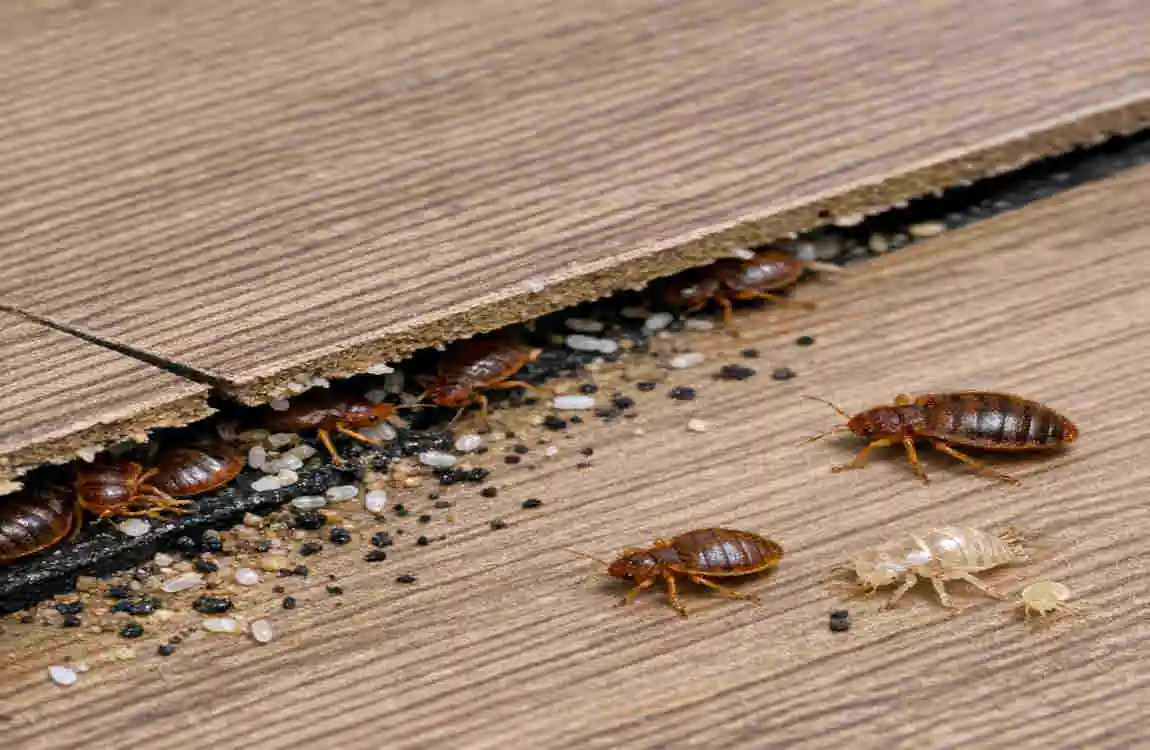
One of the first signs of bed bugs is tiny dark spots. These are often bed bug droppings.
You may see them near:
- Floor edges
- Baseboards
- Furniture legs
- Cracks near the wall
These spots can look like small ink marks or dark smudges.
Shed Skins and Egg Shells
Bed bugs shed their skins as they grow. These skins are light brown and thin. Their eggs are tiny and pale, so they can be hard to notice.
You may find them in hidden places around the room, especially where the floor meets furniture or walls.
Musty Odor in Infested Rooms
A strong infestation can sometimes create a musty, unpleasant smell. Not every room with bed bugs will smell, but a heavy problem may have a noticeable odor.
If you smell something odd and also see other signs, do a closer inspection right away.
Finding Live Bed Bugs
Adult bed bugs are small, reddish-brown, flat, and oval-shaped. They are often about the size of an apple seed.
They hide during the day, so you may need a flashlight to find them near floor edges, furniture seams, and cracks.
Common Places Bed Bugs Hide Near Laminate Flooring
Baseboards and Wall Gaps
Baseboards are one of the most common hiding places. Bed bugs like the narrow space where the wall meets the floor.
Check corners, trim, and any small openings along the wall.
Under Furniture Near Laminate Floors
Furniture gives bed bugs a safe place to stay near a food source. Be sure to inspect:
- Beds
- Sofas
- Nightstands
- Cabinets
If furniture sits directly on laminate flooring, the space beneath it may also harbor bugs.
Cracks and Damaged Flooring Areas
Damaged laminate can create a bigger problem. Chips, lifted boards, and broken edges can all become hiding spots.
Even small gaps may be enough for bed bugs to stay out of sight.
Floor Transition Areas
Transition strips and doorway edges can also trap pests. These are the places where one floor type meets another, such as carpet to laminate.
These spots often go unnoticed during normal cleaning.
How to Clean Laminate Flooring During a Bed Bug Problem
Inspect the Entire Room
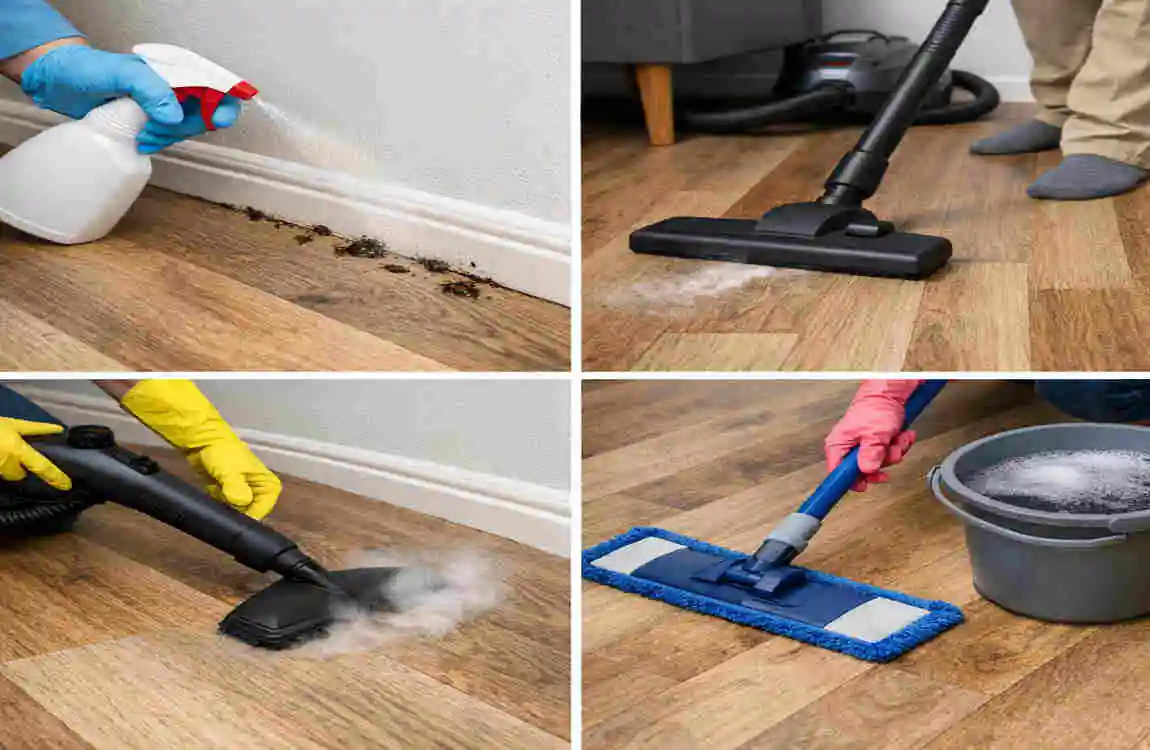
Start with a careful inspection. Move furniture slowly and check all floor edges, corners, and hidden areas.
A flashlight helps a lot because bed bugs are small and easy to miss in dim light.
Vacuum Laminate Floors Thoroughly
Vacuum the entire floor, paying attention to:
- Edges
- Baseboards
- Cracks
- Under furniture
- Around transition strips
After vacuuming, seal the vacuum contents in a plastic bag and throw them away outside. This helps stop bugs from crawling back out.
Clean Floors Safely
Laminate flooring does not like too much water. Use light, safe cleaning methods and avoid soaking the floor.
Choose laminate-safe cleaning products and use only a small amount of moisture. Too much water can damage the boards.
Wash and Treat Nearby Items
Bed bugs often spread beyond the floor. Clean or treat nearby soft items such as:
- Bedding
- Curtains
- Clothing
- Fabric covers
Heat can help with washable fabrics, while careful inspection is needed for items that cannot be washed.
Effective Ways to Remove Bed Bugs Near Laminate Flooring
Heat Treatment
Bed bugs cannot survive high heat for long. This is why heat treatment is one of the most effective solutions.
Professional heat treatment can reach hidden areas that regular cleaning cannot.
Steam Cleaning
Steam can help kill bed bugs in floor edges, baseboards, and furniture seams. It works well in tight spaces where bugs may hide.
Be careful not to use too much water on laminate. Use steam in a controlled way.
Bed Bug Sprays and Treatments
Some products are made to help control bed bugs, but they must be used exactly as directed. Always follow the label instructions.
Do not spray random chemicals on laminate floors without checking whether they are safe for the surface.
Professional Pest Control Services
If the infestation is large or keeps coming back, call a pest control professional.
Experts can inspect hidden areas, apply proper treatment, and help prevent the problem from spreading further.
Can Regular House Cleaning Prevent Bed Bugs?
Importance of Routine Vacuuming
Vacuuming often helps reduce hiding spots and makes it easier to spot early signs. It will not always remove a full infestation, but it is still very useful.
Keeping Floors and Rooms Clutter-Free
Clutter gives bed bugs more places to hide. Try to keep the area around beds, walls, and floor edges open and easy to inspect.
Regular Inspection Habits
Check important areas often, especially:
- Mattresses
- Furniture seams
- Floor edges
- Baseboards
The earlier you spot a problem, the easier it is to manage.
Laminate Flooring Maintenance Tips for a Cleaner Home
Seal Gaps and Cracks
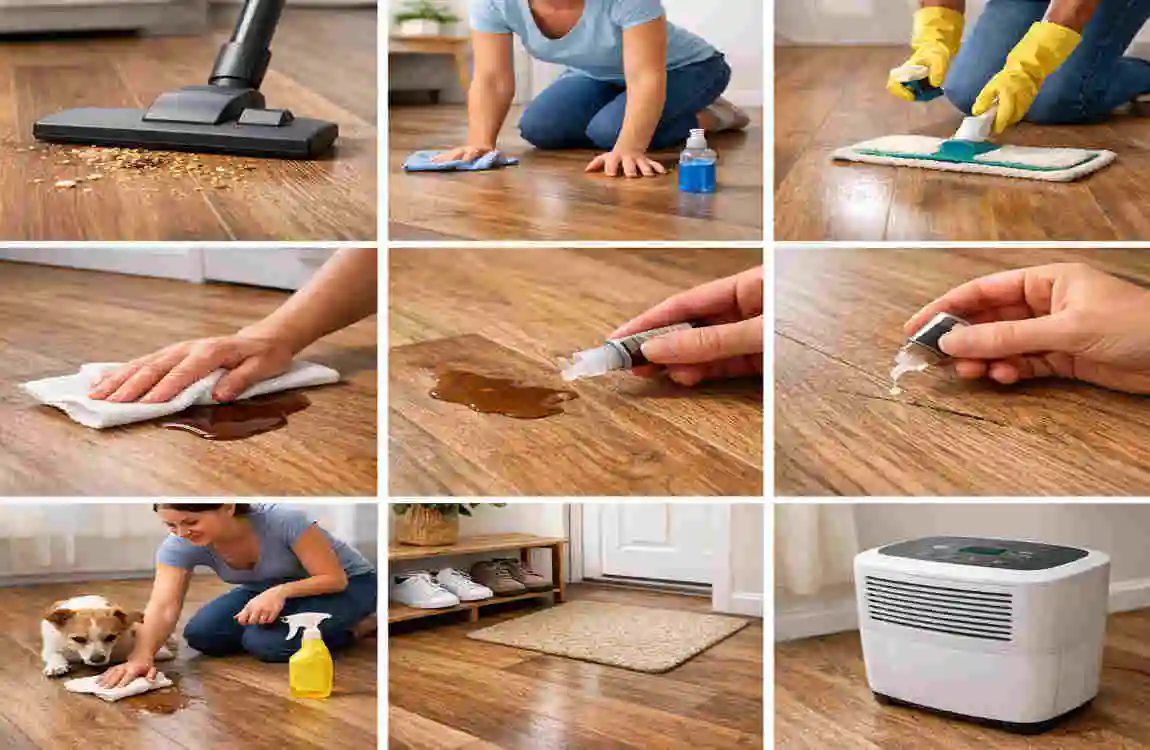
If you notice gaps near the floor or trim, seal them when possible. This removes hiding places and makes it harder for bed bugs to settle in.
Avoid Moisture Damage
Use cleaning methods that protect laminate. A damp cloth is usually better than heavy water use.
This keeps your floor in good shape while still helping you clean properly.
Keep Furniture Clean and Elevated
When furniture is clean and slightly raised, it becomes easier to inspect underneath. This also reduces the number of hidden spaces where pests may stay.
Common Mistakes Homeowners Make When Treating Bed Bugs
Only Cleaning the Floor
Many people focus only on the floor, but bed bugs usually hide in several places at once. You need to check furniture, walls, and fabrics too.
Using Too Many Chemicals
More chemical products do not always mean better results. It can also create safety problems and may damage your flooring.
Ignoring Nearby Furniture
Bed bugs often stay close to beds and sofas. If you skip furniture, the problem may return.
Waiting Too Long for Treatment
Bed bugs spread fast. Waiting gives them more time to move into other rooms, making them harder to remove.
Difference Between Bed Bugs and Other Floor Pests
Pest Common Hiding Areas Main Difference
Bed Bugs Beds, furniture, floor gaps Feed on blood
Carpet Beetles Carpets, fabrics Damage materials
Fleas Floors, pets, carpets Often linked to animals
Ants Cracks and flooring gaps Seek food sources
This table can help you tell bed bugs apart from other pests if you notice movement near your flooring.
Frequently Asked Questions
Can bed bugs live under laminate flooring?
Answer: Bed bugs usually do not live inside laminate flooring, but they may hide under the edges, in gaps, or near baseboards.
How do I know if my laminate floor has bed bugs?
Answer: Look for dark spots, shed skins, eggs, or live bugs around floor edges, furniture, and walls.
Can vacuuming laminate floors remove bed bugs?
Answer: Vacuuming can remove some bugs and eggs, but it usually does not end a full infestation.
What kills bed bugs hiding near laminate floors?
Answer: Heat, steam, approved pest treatments, and professional pest control are often the most effective methods.
Should I replace laminate flooring after a bed bug infestation?
Answer: Usually no. Replacement is only needed if the floor is badly damaged or cannot be properly treated.
| Topic | Information |
|---|---|
| Can laminate flooring hide bed bugs? | Yes, bed bugs can hide around laminate flooring edges, cracks, gaps, baseboards, and underneath floor transitions, but they usually do not live inside the laminate material itself. |
| Common hiding places near laminate floors | Floor gaps, expansion joints, cracks, carpet edges, wall corners, furniture joints, and areas under cabinets or beds. |
| Why bed bugs choose laminate areas | Laminate floors provide dark, protected spaces close to sleeping areas where bed bugs can easily access humans for feeding. |
| Signs of bed bugs on laminate floors | Small dark stains, shed skins, tiny white eggs, a musty odor, or seeing live bugs near cracks and furniture. |
| How to clean laminate floors for bed bugs | Vacuum cracks and edges thoroughly, clean floors with suitable products, remove clutter, and wash nearby fabrics using hot water and high heat drying. |
| Can mopping kill bed bugs? | Regular mopping usually does not eliminate bed bugs because they hide in protected areas. Steam treatment and targeted pest control are more effective. |
