
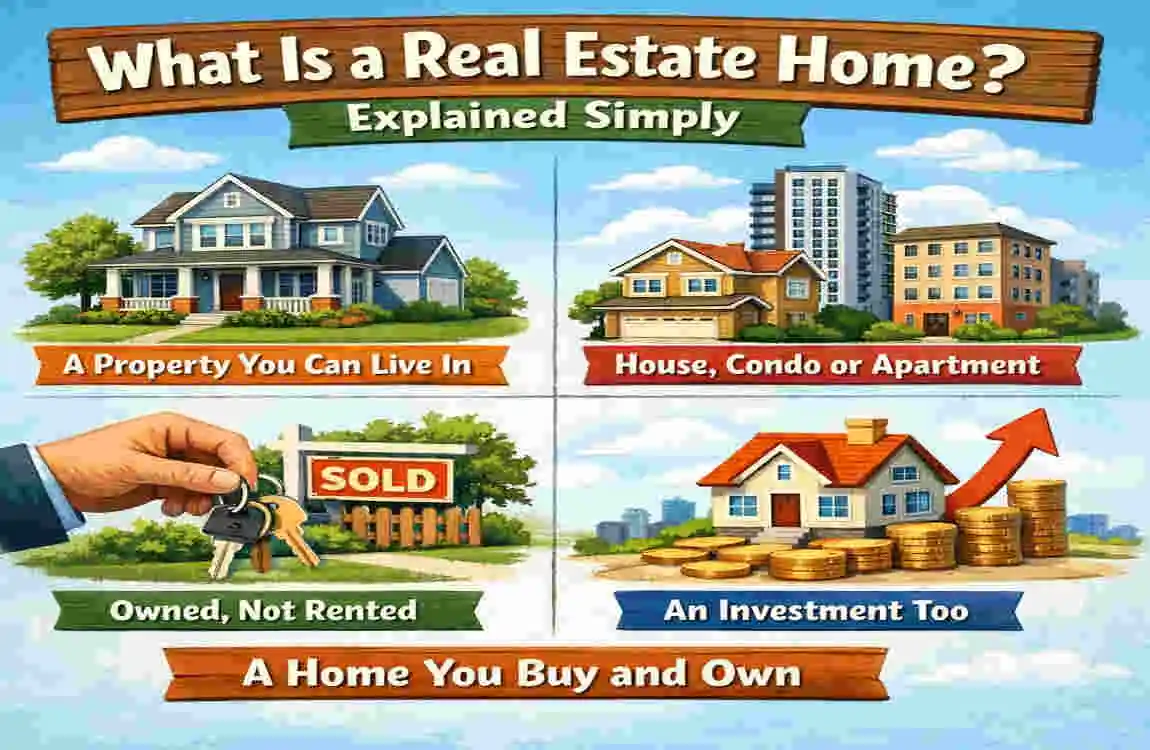
A real estate home is simply a property in the real estate market. In easy words, it is a place where people live that can also be bought, sold, rented, or used as an investment.
If you are asking what a real estate home is, you are probably trying to understand how a house fits into property ownership. That is a smart question, especially if you are a first-time buyer, renter, or investor.
What Is a Real Estate Home?
Simple Definition of a Real Estate Home
A real estate home is a residential property that belongs to the real estate market. That means it is not only a building. It is also tied to the land and the legal rights that come with ownership.
Examples include:
- Single-family houses
- Townhouses
- Condos
- Duplexes
- Some manufactured homes, depending on how they are owned and classified
So when people talk about a home, they usually mean a property with value that can be part of a sale, purchase, or rental agreement.
What Does “Real Estate” Mean?
Real estate means land and the permanent structures on it. In simple terms, it is property that cannot be easily moved.
There are four main types of real estate:
- Residential — homes and places where people live
- Commercial — buildings used for business
- Industrial — buildings for manufacturing or storage
- Land — undeveloped property or vacant lots
A home is a piece of real estate.
Is Every Home Real Estate?
Not always in the same way. Most houses are considered real estate because they are attached to land and owned as property.
But some homes, such as certain mobile or manufactured homes, may be treated differently depending on whether the land is owned, rented, or otherwise legally classified. This is why property rules matter.
How Does a Real Estate Home Work?
Buying a Home
Buying a real estate home usually follows a simple path:
- You find a property
- You make an offer
- The home is inspected and appraised
- You arrange financing
- You complete the closing
Once that is done, the home becomes yours, along with the rights and responsibilities that come with ownership.
Selling a Home
Selling works in the opposite direction. A homeowner lists the property, sets a price, and waits for offers. Buyers may negotiate, request inspections, or ask for repairs.
If both sides agree, the sale moves to closing, and the property changes hands.
Renting a Real Estate Home
Renting is different from owning. In a rental, the landlord owns the home, and the tenant pays to live there.
The tenant usually follows the lease, while the landlord handles major ownership responsibilities such as taxes, insurance, and major repairs. Renters still live in a home, but they do not own it.
Types of Real Estate Homes
Single-Family Homes
A single-family home is a detached house meant for one household. It usually offers more privacy and more control over the property.
Pros: more space, privacy, and flexibility
Cons: more maintenance and higher upkeep responsibility
Condominiums
A condo is a home inside a larger building or complex. You own your unit, but shared spaces like hallways, pools, or parking areas are managed together.
Condos often come with homeowners association fees, which help pay for common area maintenance.
Townhouses
A townhouse is a home that shares one or two walls with nearby units. It usually has multiple levels and looks like a narrow house in a row.
Townhouses often give you a good balance between privacy and lower maintenance than a detached house.
Duplexes and Multi-Family Homes
A duplex has two living units. A multi-family home may have three or more.
These properties are popular with investors because a single building can generate rental income. They can also work well for owners who live in one unit and rent out the others.
Manufactured and Mobile Homes
These homes can be part of real estate, but their legal treatment depends on ownership and location. If the home sits on owned land and meets certain legal standards, it may be classified as real property.
If it sits on rented land, the situation may be different. This is why it is important to check local rules.
Real Estate Home vs. Regular House
People often use these terms as if they mean the same thing. In everyday conversation, that is usually fine.
But there is a small difference.
A house usually means the building itself. A real estate home includes the building, the land, and the ownership interest attached to it.
Feature Real Estate Home Regular House
Meaning Property considered part of real estate Physical residential building.
Includes land? Often yes May be discussed separately
Can be bought/sold? Yes Yes
Can be rented? Yes Yes
Investment potential Yes Depends on the property
So, a house is the structure, while real estate refers to the broader property concept.
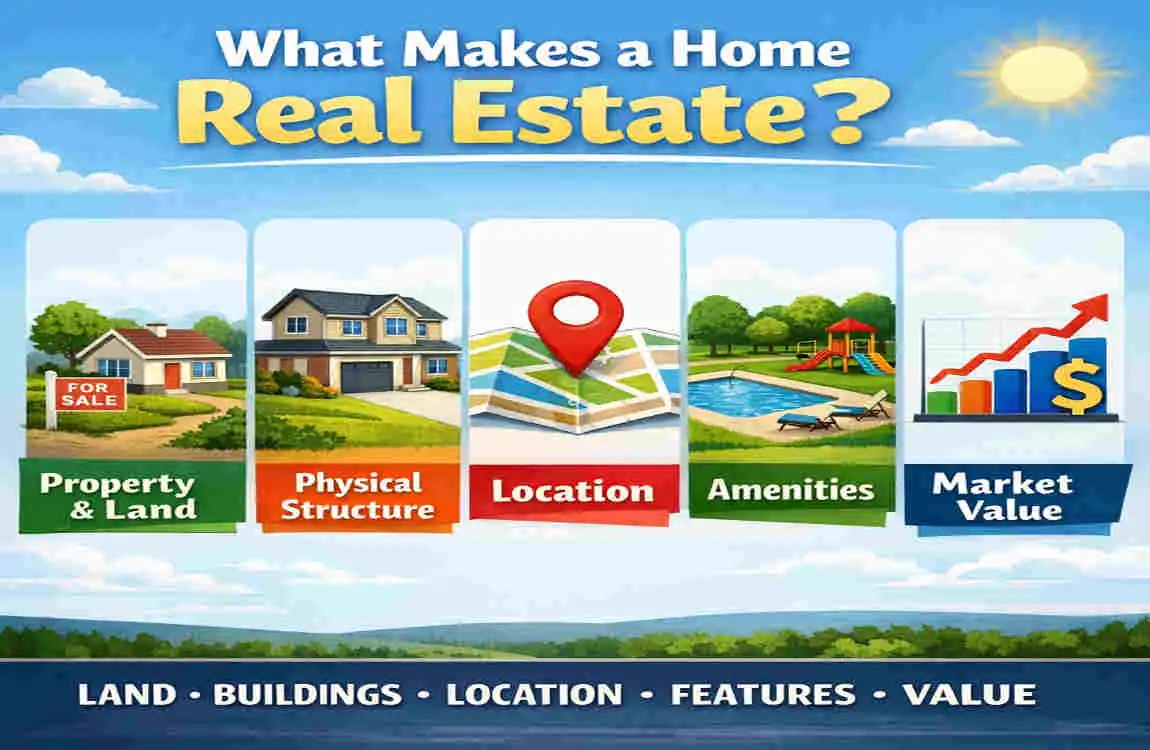
What Makes a Home Real Estate?
Land and Permanent Structures
The land is a big part of why a home becomes real estate. The structure is usually fixed to that land, which makes it part of the property.
A house, garage, shed, or other permanent feature can all be included in the real estate value.
Ownership Rights
When you own a real estate home, you usually own the property title or a legal interest in it. That gives you rights to live there, sell it, rent it, or improve it within the law.
These rights are a major part of what makes property valuable.
Location
Location matters a lot in real estate. A home in a good neighborhood may be worth more because of nearby schools, transportation, shops, jobs, and community features.
In real estate, people often say, “location is everything” for a reason.
Legal Classification
Property laws decide how a home is classified. That is why unusual properties, such as some manufactured homes, may require closer review.
If you are unsure, it is always wise to check the local rules before making a purchase.
Why Do People Buy Real Estate Homes?
A Place to Live
The most common reason is simple: people need a home.
A home provides families and individuals with a stable place to live, grow, and plan for the future.
Building Wealth
Owning a home can help build long-term wealth. Over time, the home may increase in value, and you may build equity as you pay down your mortgage.
That does not mean every home will grow in value, but many buyers see ownership as a financial step forward.
Rental Income
Some people buy homes as real estate to rent them out. This can generate monthly income, but it also entails costs such as repairs, taxes, and vacancies.
If you want to invest this way, you need to look at the numbers carefully.
Long-Term Investment
Real estate homes can also be used as part of a bigger investment plan. People buy homes not just to live in them, but to benefit from appreciation, rental income, or resale value.
How Much Is a Real Estate Home Worth?
Factors That Affect Home Value
Many things affect value, including:
- Location
- Property size
- Number of bedrooms and bathrooms
- Condition
- Age of the home
- Lot size
- Local market conditions
- Recent comparable sales
- Renovations and upgrades
A clean, updated home in a strong neighborhood often sells for more than a similar home in poor condition.
Market Value vs. Asking Price
The asking price is the number the seller chooses. The market value is what buyers are likely willing to pay.
These two numbers are not always the same. A home may be listed at a high or low price based on the seller’s goals and market conditions.
How Appraisals Help Determine Value
An appraisal gives a professional estimate of value. Lenders often require one during the mortgage process.
This helps make sure the home is worth about what the buyer is paying.
Costs Associated With Owning a Real Estate Home
Buying a home is not just about the sale price. There are other costs too.
Upfront Costs
These may include:
- Down payment
- Closing costs
- Inspection
- Appraisal
- Moving expenses
Ongoing Costs
After you buy, you still have regular costs like:
- Mortgage payment
- Property taxes
- Homeowners insurance
- Utilities
- Maintenance
- HOA fees, if applicable
Unexpected Homeownership Costs
Homes need repairs. Some costs are predictable, but others show up suddenly.
Examples include roof repairs, plumbing issues, HVAC problems, and appliance replacement. That is why many owners keep an emergency fund.
How to Buy a Real Estate Home
Determine Your Budget
Look at your income, savings, debts, and monthly spending. Try not to focus only on the mortgage payment. The full cost matters.
Get Financing
Most buyers use a mortgage. This is a loan that helps you buy the home over time.
Getting preapproval can help you know what price range is realistic.
Choose the Right Location
Think about:
- Commute
- Schools
- Safety
- Services
- Future development
The right location can make the home a better long-term choice.
Search for Properties
Compare different home types and sizes. Think about your current needs and what you may need in a few years.
Inspect the Home
A home inspection can reveal problems you might not see right away. This can include roof issues, water damage, or electrical concerns.
Make an Offer
Your offer price should reflect the home’s value and market conditions. You may also include contingencies, which are conditions that protect you during the sale.
Complete the Closing
Closing is the final step. You sign papers, pay the final costs, and receive the keys.
Benefits and Drawbacks of Owning a Real Estate Home
Benefits
- More control over the property
- Potential value growth
- Equity building
- Personalization
- Possible rental income
Drawbacks
- High upfront cost
- Ongoing maintenance
- Taxes and insurance
- Less flexibility than renting
- Property value can go down
Owning a home can be rewarding, but it also comes with responsibility.
Is a Real Estate Home a Good Investment?
A real estate home can be a good investment, but it is not a guaranteed one.
If you buy wisely, a home may build equity and appreciate over time. Rental properties may also bring cash flow. Still, there are risks, including market changes, repairs, and vacancies.
The best results usually come from good location, smart pricing, and long-term planning.
Common Mistakes When Buying a Real Estate Home

Avoid these common mistakes:
- Buying more house than you can afford
- Skipping the home inspection
- Ignoring maintenance costs
- Choosing only based on appearance
- Not researching the neighborhood
- Forgetting closing and moving costs
- Failing to compare financing options
- Making an emotional decision without thinking long term
A careful approach helps you make a better choice.
Real Estate Home vs. Other Property Types
Property TypeMain PurposeTypical Ownership
Residential home Living Individual/family
Commercial property Business Individual/company
Industrial property Manufacturing/storage Investor/company
Vacant land Future development/investment Individual/company
Rental property Income generation Investor/landlord
Understanding these differences helps you see where a home fits in the larger property market.
Frequently Asked Questions About Real Estate Homes
What’s a real estate home?
It usually refers to a residential property that can be owned, bought, sold, or rented in the real estate market.
Is a house considered real estate?
Yes. A house is generally considered residential real estate, especially when it is tied to land and ownership rights.
What is the difference between a home and real estate?
A home is where people live. Real estate refers to the land, building, and ownership interest connected to the property.
Can a real estate home be an investment?
Yes. It can be a primary home, a rental property, or a long-term investment.
What are the main types of real estate homes?
Common types include single-family homes, condos, townhouses, duplexes, and some manufactured homes.
Does real estate always include land?
Usually, yes. Traditional real property includes land and permanent structures, though some property types may be classified differently.
Is buying a home better than renting?
It depends on your budget, lifestyle, long-term plans, and local market conditions.
| Aspect | Simple Explanation |
|---|---|
| Definition | A real estate home is a residential property that includes the house and the land it sits on. |
| What It Includes | It may include the building, yard, garage, driveway, and other permanent structures. |
| Ownership | The owner generally has legal rights to use, sell, rent, or transfer the property. |
| Types | Common examples include single-family homes, townhouses, condos, and duplexes. |
| Buying a Home | Buyers usually purchase the property through cash or a mortgage loan. |
| Selling a Home | Owners can sell the property to another buyer, usually with help from real estate professionals. |
| Why It Matters | A home can provide a place to live and may also become a long-term investment. |
