
We have all been there. You step out of a refreshing shower, reach for your towel, and—ugh. It feels slightly damp, smells a bit like a basement, and has that stiff, unpleasant texture. It is a frustrating cycle. You wash your towels, use them once, and within a day, they feel “off.”
The culprit isn’t usually your washing machine or your soap. Most of the time, the problem is simply how to hang wet towels in bathroom spaces. If you aren’t hanging them correctly, you are essentially creating a five-star resort for bacteria and mould.
Why Proper Towel Hanging Matters in Your Bathroom
You might think that hanging a towel is a “set it and forget it” task. However, the stakes are higher than you might realise. A wet towel is more than just a minor inconvenience; it is a biological playground.
The Hidden Dangers of Wet Towels Left Piled Up
When you leave a towel in a heap on the floor or bunched up on a hook, you trap moisture in the fabric’s layers. Bathrooms are naturally humid, and without proper airflow, that moisture has nowhere to go. This is where the trouble starts.
The Growth of Mould and Bacteria: Microscopic spores love damp, dark environments. According to environmental experts, mould can begin to grow on a wet surface within 24 to 48 hours. If your towel stays damp for a full day, it is likely already hosting colonies of bacteria. This is what causes that “musty” smell. That smell isn’t just “old water”—it is the byproduct of microbial growth.
Health Risks You Should Know About. It isn’t just about the smell. Using a towel that hasn’t dried properly can lead to skin irritation, breakouts, and even fungal infections like athlete’s foot if you use the same towel for your body and feet. For those with allergies or asthma, breathing in mould spores from a damp towel hanging near the shower can trigger respiratory issues. Keeping your towels dry is a fundamental part of home hygiene.
Benefits of Mastering How to Hang Wet Towels in the Bathroom
Mastering a few simple hanging techniques offers more than just a dry towel. It actually changes the entire dynamic of your bathroom maintenance.
Faster Drying Times: When you hang a towel correctly—fully spread out with plenty of air contact—it can dry in as little as 4 hours. Compare that to a bunched-up towel that might still be damp 24 hours later. By speeding up the process, you ensure the fabric stays fresh between uses.
Extended Towel Life and Energy Savings. Think about your laundry habits. If your towels smell bad after one use, you end up washing them constantly. This extra friction in the washing machine and the high heat in the dryer wear down the cotton fibres, making your towels thin and scratchy. By keeping them dry and fresh, you can safely use a towel 3 or 4 times before washing, saving water, electricity, and money.
Here are 5 key benefits of proper towel hanging:
- Reduces Laundry Loads: You’ll cut your towel laundry by 50% because they won’t get “stinky” as fast.
- Prevents Mildew Stains: No more black spots on your expensive white towels.
- Improves Air Quality: A dry bathroom smells better and has fewer airborne spores.
- Saves Time: No more hunting for a dry spot on a damp towel during your morning rush.
- Better Skin Health: Using a clean, dry fabric reduces the risk of transferring bacteria back to your pores.
Common Mistakes When Hanging Wet Towels (and How to Fix Them)
Before we get into the “how-to,” we need to address the “what-not-to-do.” Many of us have developed habits that are actually working against us.
Top 5 Errors Sabotaging Your Towel Drying
Are you guilty of any of these? Don’t worry; most people are. Let’s look at why these habits fail and how they ruin your towels.
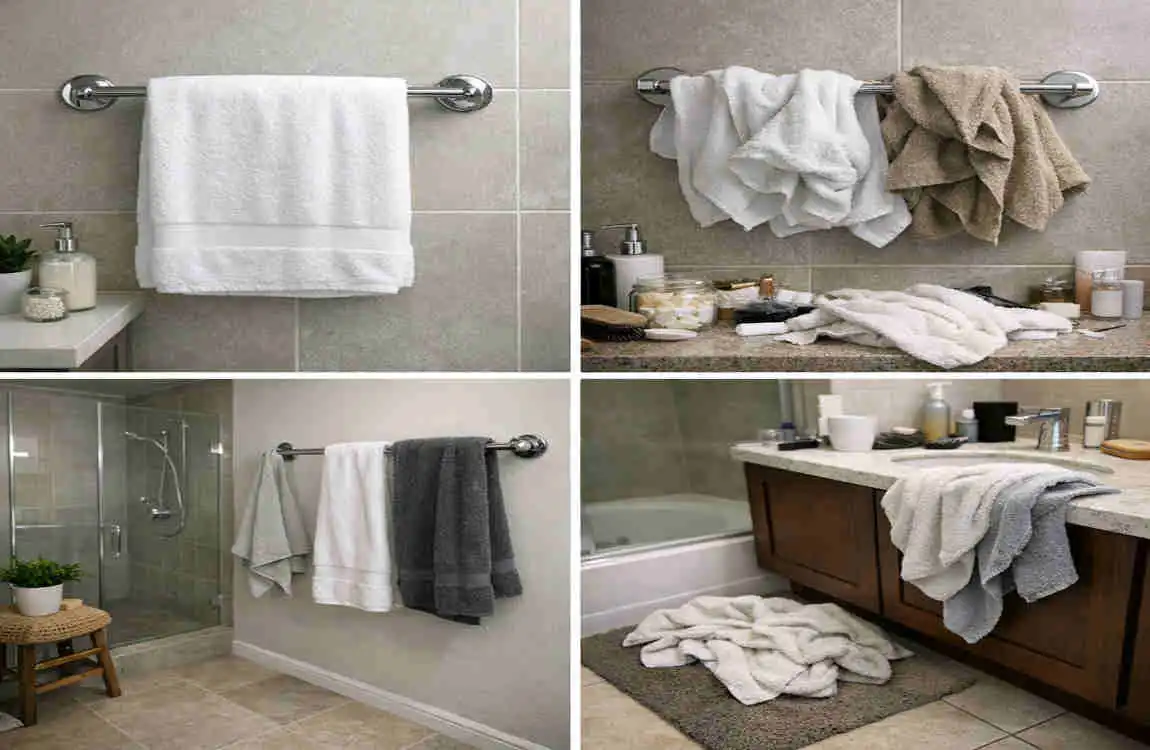
Folding Wet Towels Over the Bar. This is the most common mistake. You take a wet towel, fold it in half vertically, and then drape it over the bar. While this looks neat, you have just doubled the thickness of the fabric that the air has to penetrate. The middle layers stay wet for hours, creating a “moisture sandwich.”
Overloading the Towel Bar If you have two or three people sharing one bathroom, the temptation is to squeeze all the towels onto one bar. When towels touch, air cannot circulate. This creates “dead zones” where moisture gets trapped, leading to that dreaded mildew smell.
The Infamous “Floor Pile” We’ve all done it—dropped the towel on the floor after a long day. The floor is the worst place for a towel. There is zero airflow, and if the floor is tile or stone, it might even be cold, further slowing evaporation.
Using Excessive Fabric Softener. Wait, isn’t softener supposed to make towels better? Not exactly. Fabric softeners and dryer sheets leave a waxy coating on the fibres. This coating makes the towel feel soft but also hydrophobic (water-repellent). A towel coated in wax can’t breathe, meaning it stays wet much longer than a “naked” cotton towel.
Ignoring the Humidity in the Room. If your bathroom feels like a steam room long after your shower is over, your towels will never dry. If the air is already saturated with water vapour, it can’t “pick up” moisture from your towel.
Quick Fixes to Start Drying Towels Faster Today
You don’t need a total bathroom remodel to fix these issues. You can start making changes right now with what you have.
The “Shake and Spread” Method. Instead of just tossing the towel over the bar, give it a good snap or shake first. This “fluffs” the fibres and exposes them to the air. Then, ensure the towel is spread across the entire width of the bar. No folds, no bunches.
The One-Towel Rule: If possible, limit each bar to one towel. If you have a small bathroom, consider adding a second bar or using a different room for some of the towels. Giving each towel its own dedicated airspace is the single most effective way to prevent mould.
Step-by-Step Guide: How to Hang Wet Towels in the Bathroom for Quick Drying
Now, let’s get into the nitty-gritty. If you want to master the art of the dry towel, follow these steps every single time you step out of the shower.
Prep Your Wet Towels Before Hanging
The drying process actually starts before the towel ever touches the rack.
Wring It Out: If you like to wrap your hair in a towel, or if your towel is dripping wet, give it a gentle wring over the tub. You want to remove the “heavy” water so the air only has to deal with the dampness held within the fibres.
The Power of the Shake: Before you hang it, hold the towel by its two corners and give it a vigorous snap. This helps realign the cotton loops. When the loops are standing up rather than matted down, the surface area increases, which leads to much faster evaporation.
Choose the Best Spot in Your Bathroom
Location is everything. If you hang a towel in a dark, cramped corner, it will stay wet.
Follow the Airflow. Look at your bathroom. Where is the window? Where is the exhaust fan? You want to hang your towels in the path of moving air. If you can hang your towel bar directly across from a door or near a vent, you are winning.
Avoid the “Splash Zones” Don’t hang your drying towels directly next to the toilet or right against the shower curtain. These areas are prone to high bacteria counts and extra splashes of water, which keep the towel damp and dirty.
Master the Hanging Techniques
Depending on your bathroom setup, you might use different methods. Here are the three most effective ways to hang a towel for maximum dryness.
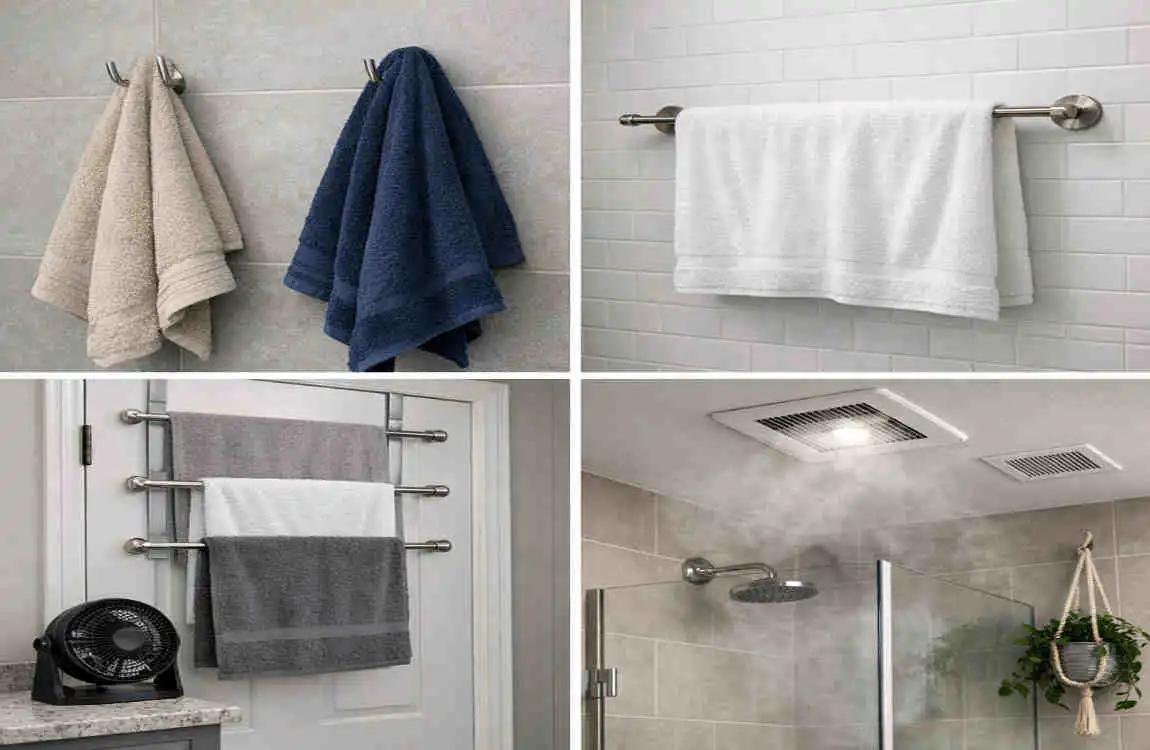
The Classic Towel Bar Spread. This is the gold standard. Drape the towel over the bar so that both sides hang down equally. Make sure there are no wrinkles or folds. If the bar is long enough, don’t let the towel bunch up at the ends.
The Over-the-Door Hook Strategy. If you must use hooks, don’t just hang the towel by its middle. Use a “loop” if the towel has one, or try spreading the top across two hooks. This creates a “tent” shape that allows air to get inside the towel rather than just hitting the outside.
The Tension Rod Hack. In tiny bathrooms, you can install a second shower curtain rod (a tension rod) further back in the shower or over the tub. This gives you a massive amount of “hanging real estate” where towels can hang completely flat without taking up wall space.
Optimise for Speed – Unfold, Space, and Rotate
To get that 2-3x faster dry time, you need to be proactive.
The 12-Inch Rule: Try to maintain at least 12 inches of bar space per towel. If your bar is 24 inches long, it can comfortably dry two hand towels or one large bath towel. Anything more than that is crowding.
The Mid-Day Rotate. If you live in a particularly humid climate, give your towel a quick flip or rotation a few hours after your shower. By moving the part that was touching the bar to the outside, you ensure every inch of the fabric gets its turn in the breeze.
Essential Tools and Hacks for Faster-Drying, Mould-Free Towels
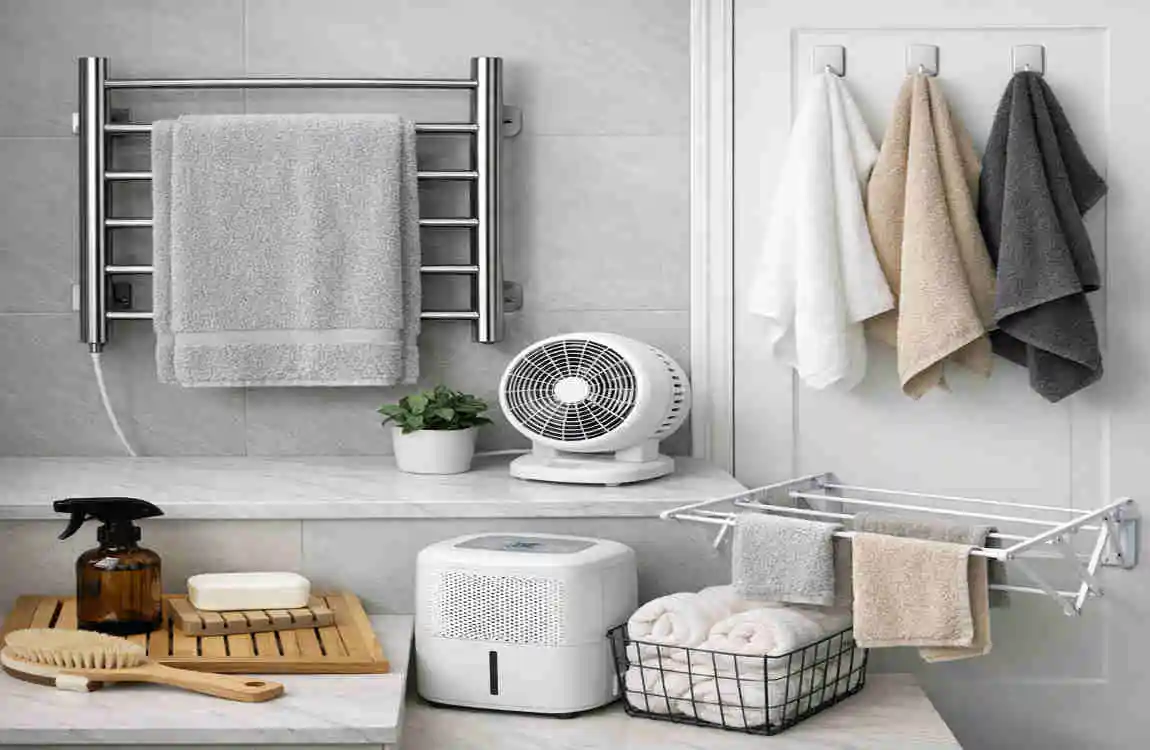
Sometimes, the standard towel bar isn’t enough. If you are struggling with a damp bathroom, these tools and “house hacks” can be total game-changers.
Must-Have Towel Hanging Tools Under $20
You don’t need to spend a fortune to upgrade your towel game. Here are some affordable solutions that make a massive difference.
The Multi-Bar Swivel Rack. These are incredible for small spaces. They feature 3 to 5 arms that swing out independently. You can hang multiple towels and fan them out so they don’t touch each other. When the towels are dry, you can swing the arms back against the wall.
Adhesive Hooks for Renters. If you can’t drill into your walls, high-quality adhesive hooks are your best friend. Instead of one big bar, you can place several hooks around the bathroom to spread the towel load.
Comparison of Drying Tools:
Tool Type: Drying Speed: Space Efficiency: Best For
Standard Towel Bar High Medium Large Bathrooms
Swivel Bar Rack Very High Excellent Small Bathrooms
Tension Rod High Good Shared Apartments
Single Hooks Medium Excellent Hand Towels
Heated Towel Rail Extreme Medium Luxury/Humid Climates
Genius House Hacks to Supercharge Drying
Want to go the extra mile? Professional cleaners use these “insider” tricks to keep spaces fresh.
The “Fan Trick”: If your bathroom doesn’t have a built-in exhaust fan, use a small desk fan. Point it toward your hanging towels for 30 minutes after your shower. This forced convection will dry a towel in record time.
The Vinegar Pre-Soak: Once a month, wash your towels with 1 cup of white vinegar and no detergent. This strips away the built-up oils and fabric softener residues that trap moisture. Your towels will come out more absorbent and will dry much faster on the rack.
Switch to Microfiber or Bamboo . If you live in a very humid area, traditional heavy cotton towels might be your enemy. Microfiber or bamboo towels are designed to release water much more quickly than cotton towels. They are thinner, but they can hold a lot of water and dry in a fraction of the time.
Prevent Mould and Keep Towels Fresh Long-Term
Hanging the towel is only half the battle. You also need to manage the environment where that towel lives.
Humidity Control Secrets for Mould-Free Bathrooms
If the air in your bathroom is wet, your towels will stay wet. It is that simple.
The 20-Minute Rule : Always run your exhaust fan during your shower and for at least 20 minutes after you finish. Most people turn the fan off as soon as they leave the room, but the steam is still there! Giving it an extra 20 minutes ensures the room is dry enough for your towels to begin evaporating.
Moisture Absorbers : If you don’t have a fan, consider using silica gel packs or a small dehumidifier. Even certain houseplants, like Spider Plants or Peace Lilies, can help absorb excess humidity in the air.
Towel Care Routine Beyond Hanging
To keep your towels in top shape, you need a solid maintenance routine.
- The Three-Use Rule: Even with perfect hanging, you should wash your towels after every three uses. This prevents the buildup of dead skin cells and body oils.
- Wash in Hot Water: Every few washes, use the hottest water setting allowed for the fabric. This kills any lingering bacteria that might be hiding in the fibres.
- Dry Thoroughly in the Machine: When you do laundry, make sure the towels are 100% dry before folding and putting them in a closet. A slightly damp towel in a dark closet is a recipe for a mould disaster.
