
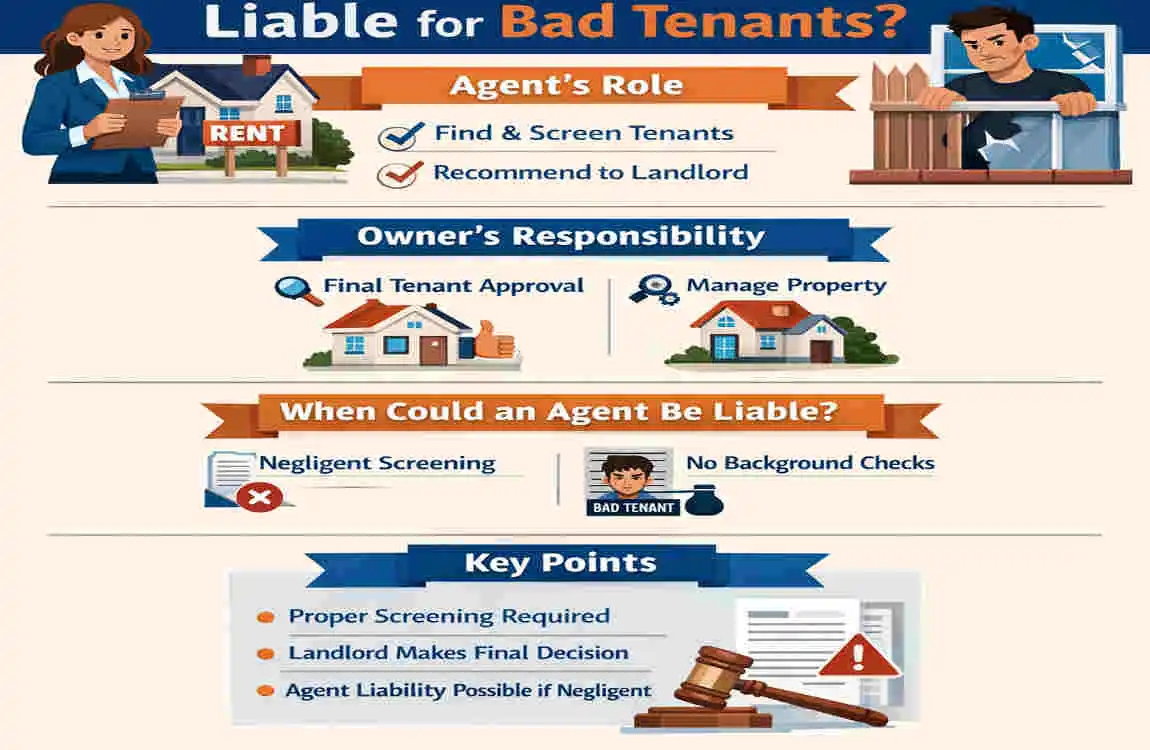
A bad tenant can mean many things. Maybe they pay rent late. Maybe they damage the property. Maybe they break the lease or disturb neighbours. But even when a tenant causes trouble, the real estate agent is not automatically responsible.
Usually, liability depends on what the agent was hired to do, what they promised, how they handled the tenant screening, and what local landlord-tenant laws say.
Are Real Estate Agents Liable for Bad Tenants?
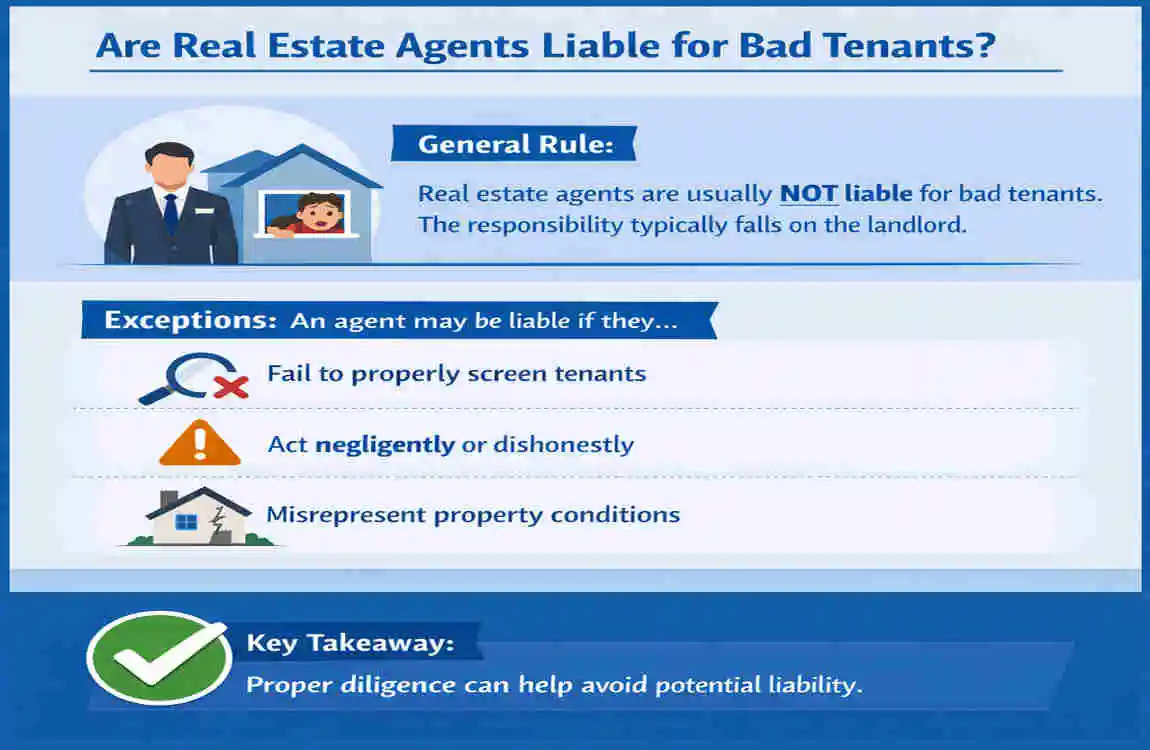
A real estate agent may be involved in a bad-tenant situation, but that does not mean they are always legally responsible.
What Counts as a “Bad Tenant”?
A “bad tenant” is not a legal term, but people usually use it to describe a renter who creates problems such as:
- Late or missed rent
- Property damage
- Lease violations
- Noise or disruptive behaviour
- Unauthorised pets or occupants
- Refusing to move out after lease end
These problems can be frustrating, but the key question is: who was responsible for screening, approving, and managing that tenant?
Real Estate Agent vs Leasing Agent vs Property Manager
These roles are often confused, but they are not always the same.
RoleMain JobUsual Responsibility
Real estate agent: Helps buy, sell, or sometimes find tenants; May locate tenants or help with rental paperwork.
Leasing agent: Focuses on renting units; often shows properties and assists with tenant placement.
Property manager: Manages the rental on an ongoing basis; May collect rent, handle repairs, and enforce lease terms.
This matters because a person who only finds a tenant is usually not doing the same job as a property manager, who oversees the entire rental process.
Why the Contract Matters
The agency agreement or management contract is very important.
It should explain:
- What the agent was hired to do
- Whether the agent only found tenants or also screened them
- Who approved the tenant
- Who manages rent, repairs, and lease enforcement
If the agreement is clear, it is much easier to decide whether the agent may be responsible later.
When Can a Real Estate Agent Be Responsible for a Tenant?
A real estate agent may be held responsible in certain situations, but usually only when there is a clear mistake, a broken promise, or a wrongful act.
Negligence
Negligence means the agent failed to act with reasonable care.
For example, if the agent was supposed to screen tenants but skipped basic checks they were contractually required to do, that could become a problem.
Negligence may matter if the agent:
- Ignored important warning signs
- Failed to follow agreed screening steps
- Approved a tenant without doing what was promised
- Handled documents carelessly
Misrepresentation
Misrepresentation happens when someone gives false information that causes harm.
If an agent knowingly says a tenant has high income or good rental history when that is not true, the landlord may have a claim if they relied on that false statement.
This is more serious than a simple mistake. The issue is whether the agent knew, should have known, or failed to verify what they said.
Failure to Follow Agreed Procedures
Sometimes the problem is not fraud or dishonesty. It is simply that the agent did not follow the process they had agreed to.
For example:
- They skipped background checks that were promised
- They ignored rental history
- They failed to document screening results
- They placed a tenant without landlord approval when approval was required
If the agent broke the contract, that may create a dispute.
Proper Documentation Matters
Good records help show what happened.
That includes:
- The tenant application
- Screening reports, if allowed
- Emails and messages
- Lease documents
- Approval records
- Notes about warnings or concerns
Without records, it becomes much harder to prove who was responsible for what.
What Is the Landlord Usually Responsible For?
In most rental situations, the landlord retains primary responsibility for the property and the tenant-landlord relationship.
The Landlord’s Core Duties
Even if an agent helps, the landlord usually remains the person with the final legal and financial stake.
Common landlord duties include:
- Choosing the rental strategy
- Approving the tenant
- Collecting rent, unless delegated
- Enforcing the lease
- Handling repairs and maintenance
- Starting eviction procedures when needed
Hiring an Agent Does Not Remove All Responsibility
This is where many owners get confused.
Hiring an agent does not automatically transfer all duties from the landlord. The landlord still usually has the final responsibility unless the contract and local laws clearly say otherwise.
That means if a tenant becomes a problem, the landlord may still need to deal with:
- Nonpayment
- Notices
- Lease enforcement
- Legal action
- Property repair issues
Why the Management Contract Matters
The contract should state who does what.
If the agent is only there to advertise the unit and collect applications, their role is limited. If the agent is managing the full rental, their responsibility may be broader.
That is why you should never assume all real estate professionals carry the same legal duties.
Tenant Screening and Real Estate Agent Responsibilities
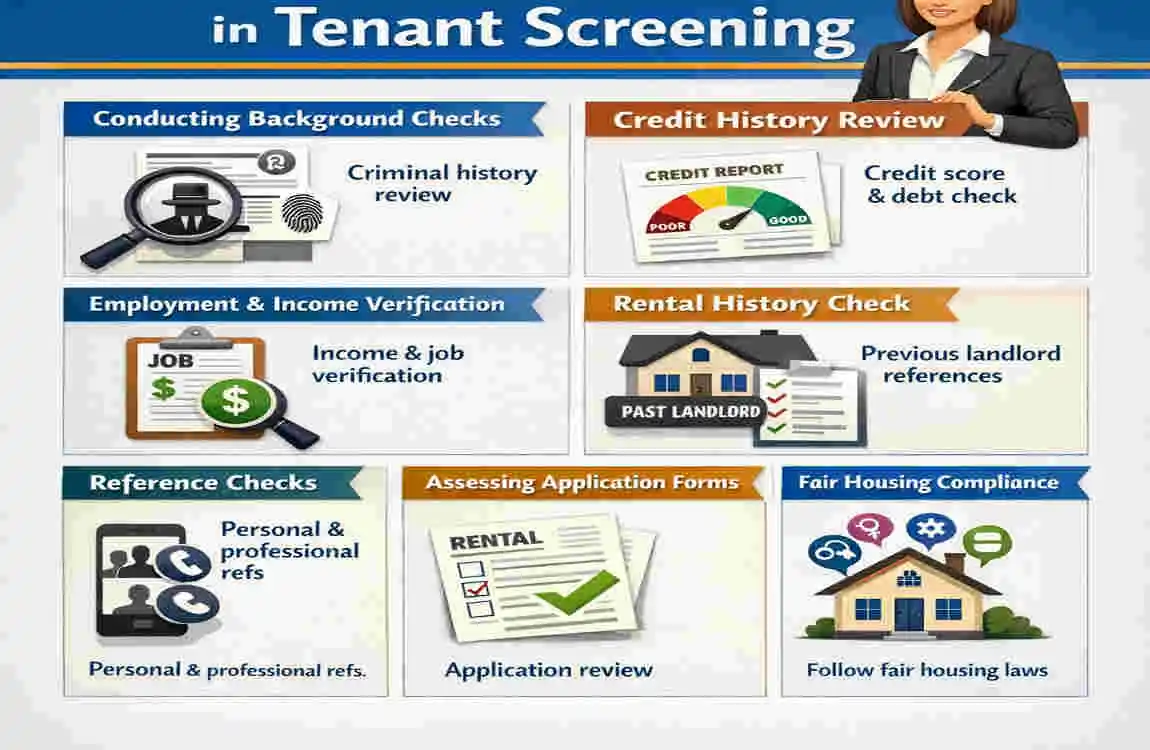
Tenant screening is one of the biggest parts of avoiding rental problems.
Common Tenant-Screening Steps
A careful screening process may include:
- Rental application
- Income verification
- Employment information
- Rental history
- Credit checks, where legally allowed
- Background checks, where legally allowed
These steps help the landlord or agent make a better decision.
Fair Housing Rules Matter
Screening must be done carefully and fairly.
You cannot treat applicants differently based on protected characteristics under local fair housing or anti-discrimination laws. The exact rules vary by location, but the big idea is the same: screen consistently and legally.
That means:
- Use the same standards for similar applicants
- Ask the same basic questions
- Apply the same approval process
- Avoid unfair bias
Why Consistency Helps
When screening is done the same way each time, there is less room for disputes.
Consistency helps show that the decision was based on facts such as:
- Income
- Credit history
- Rental references
- Application completeness
Not on personal opinion or guesswork.
Written Records Can Prevent Disputes
If a tenant becomes a problem later, good records can protect everyone involved.
Keep copies of:
- Applications
- Approval emails
- Screening notes
- Lease agreements
- Rent payment history
- Maintenance requests
- Warning notices
This documentation can be very useful if anyone later asks who approved the tenant and why.
What Should You Do If an Agent Finds You a Bad Tenant?
If you end up with a difficult tenant, do not panic. First, check the facts.
Review the Agreement
Start with the listing agreement or property management agreement.
Look for answers to questions like:
- Was the agent responsible for screening?
- Did the landlord make the final decision?
- Was the agent only helping to locate tenants?
- Were background checks promised?
- Were certain procedures required?
Gather Your Records
Pull together all related documents, including:
- Rental applications
- Screening reports
- Emails and text messages
- Lease documents
- Approval notes
- Payment history
This will help you see whether the agent acted properly.
Ask the Agent for an Explanation
Sometimes the issue is a misunderstanding.
Contact the agent and ask:
- What screening was done?
- What information was reviewed?
- Who approved the tenant?
- Were there any red flags?
Clear communication can sometimes solve the issue faster than a legal dispute.
Decide Whether the Agent Actually Had Responsibility
This is important.
If the agent only introduced the tenant, they may not be responsible for the tenant’s later behaviour. But if they were hired to manage screening and failed to do it properly, the situation may be different.
Get Legal Advice if Needed
If there is evidence of:
- Negligence
- Fraud
- Breach of contract
- Serious misconduct
then legal advice may be worth considering. Every case depends on the facts and local law.
How to Avoid Problems With Bad Tenants in the Future
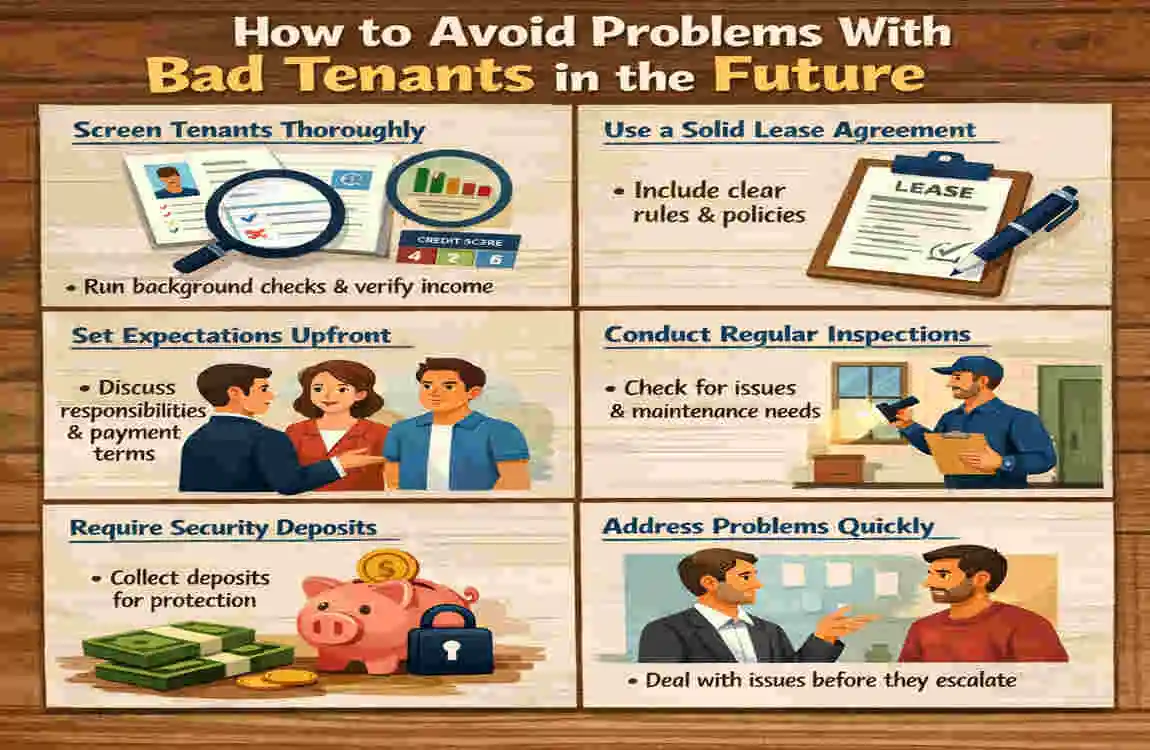
The best way to avoid disputes is to plan.
Use Clear Written Screening Rules
Write down exactly how tenants will be screened.
That may include:
- Minimum income requirements
- Rental history standards
- Credit criteria
- Reference checks
- Approval steps
When the rules are clear, decisions are easier to defend.
Define the Agent’s Role in Writing
This is one of the most important steps.
Make sure the agreement says whether the agent:
- Only advertises the property
- Screens applicants
- Recommends tenants
- Has final approval power
- Manages the lease after signing
The clearer the contract, the fewer surprises later.
Keep Good Records
Always save records of:
- Applications
- Messages
- Payment receipts
- Inspection notes
- Repair requests
- Lease changes
Good records help protect both landlords and agents.
Follow Local Rules
Evictions, screening, notices, and tenant rights are all affected by local law.
A rule that works in one place may not work in another. That is why it is smart to understand the landlord-tenant law in the property’s jurisdiction.
Stay Consistent and Fair
Do not change screening standards based on personal preference. Use the same process for each applicant unless the law says otherwise.
FAQ: Real Estate Agents and Bad Tenants
Can I sue a real estate agent for a bad tenant?
Not automatically. A bad tenant alone usually does not create a legal claim. Liability may depend on negligence, fraud, breach of contract, or local law.
Is a landlord responsible for a tenant’s actions?
Often, yes, at least for managing the lease and property issues. But the exact responsibility depends on the lease, the agreement with the agent, and the law in your area.
Are property managers responsible for bad tenants?
Property managers often have broader duties than agents who only find tenants. If they handled screening, rent, repairs, and enforcement, their responsibility may be greater.
What if the real estate agent failed to screen the tenant?
That depends on what the contract required. If screening was part of the agent’s job and they failed to do it properly, there may be a problem.
Can a real estate agent guarantee a good tenant?
No. No honest screening process can guarantee a tenant will never miss rent or break the lease. Screening lowers risk, but it does not eliminate it.
What is the main difference between an agent and a property manager?
A real estate agent may help find a tenant, while a property manager usually handles ongoing rental tasks like rent collection, maintenance, and lease enforcement.
| Situation | Agent Usually Responsible? | Key Point |
|---|---|---|
| Tenant damages property | Usually No | Tenant may be responsible for damage. |
| Agent skips required screening | Possibly | Liability may arise from negligence or breach of duty. |
| Agent provides false tenant information | Potentially | Misrepresentation can create legal responsibility. |
| Tenant stops paying rent | Usually No | The lease generally places payment obligations on the tenant. |
| Agent violates fair housing laws | Yes | Discriminatory screening or treatment can create liability. |
| Agent follows proper screening procedures | Usually No | Proper documentation can help reduce the owner’s risk. |
| Property owner makes the final tenant decision | Usually No | The owner generally remains responsible for the final choice. |
