
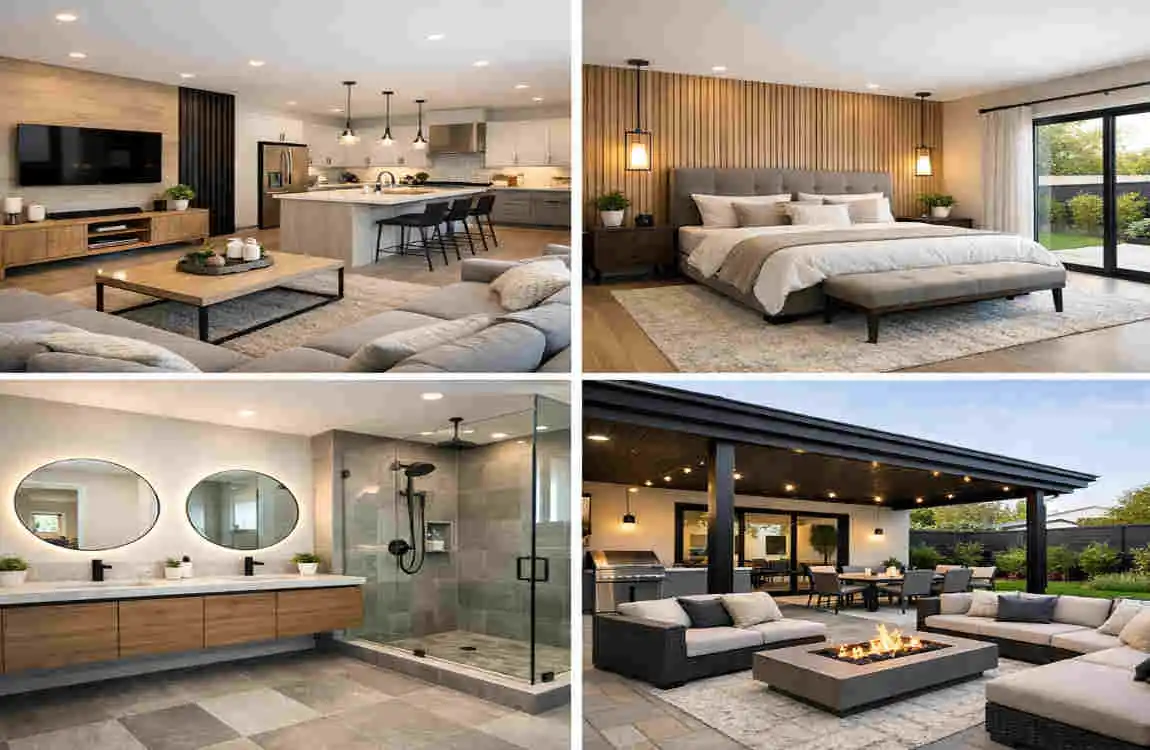
A 3-bedroom, 2-bath home is one of the most popular layouts for modern families. It offers a nice balance between comfort, privacy, and affordability. You get enough space for daily living without the stress of maintaining a much larger house.
Today, many homeowners want a home that feels open, bright, and practical. That is why modern designs often focus on smart storage, energy efficiency, flexible rooms, and simple style. These features help the house work better for real life, not just look good on paper.
What Is a 3 Bedroom 2 Bath Home?
Basic Layout of a 3 Bedroom 2 Bath Home
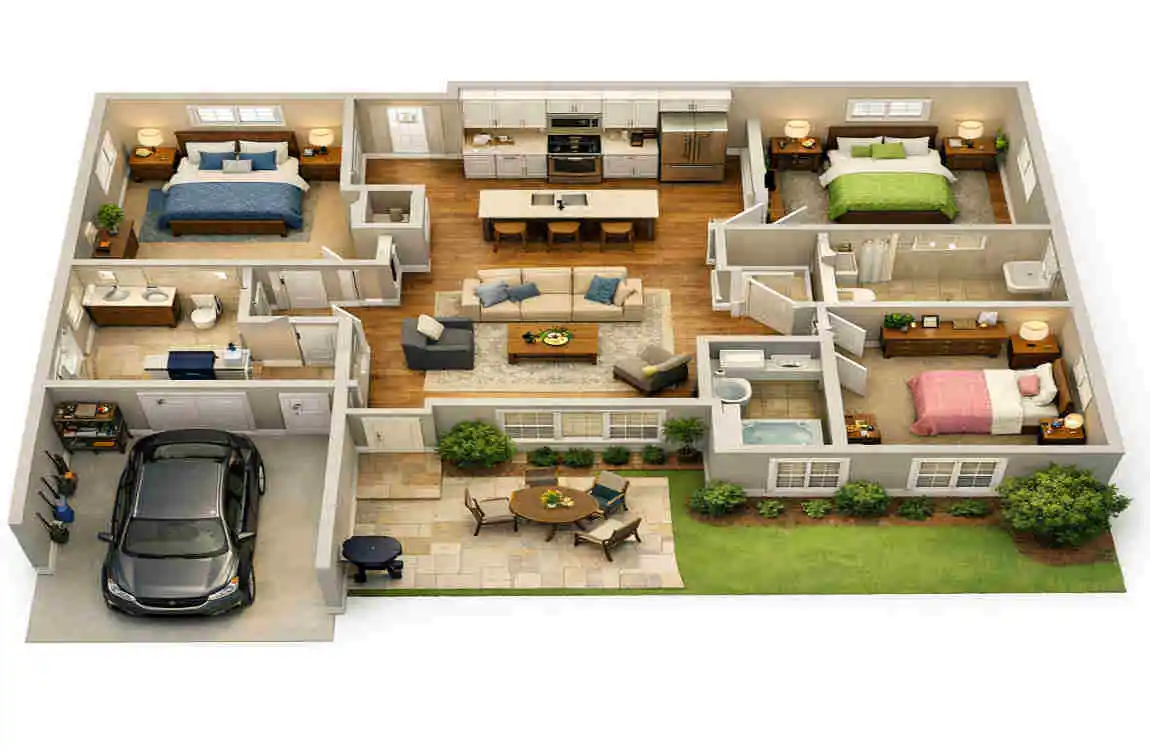
A 3-bedroom, 2-bath home usually includes three separate bedrooms and two full bathrooms. This setup works well for families, couples, guests, or even people who need a home office.
The shared spaces often include a living room, kitchen, dining area, and laundry space. Some homes also add a small entryway, pantry, or bonus room depending on the floor plan.
This layout is simple but also very flexible. You can use the rooms in different ways as your needs change over time.
Why Choose a 3 Bedroom 2 Bath Home?
Many people choose this layout because it is practical. It gives enough room for daily life without feeling too large or too expensive.
It is a great fit for small to medium-sized families. It also works well if you want a guest room or a separate workspace. Another big benefit is resale value. Homes with this layout are often in high demand because they appeal to many buyers.
Maintenance is also easier compared to larger homes. That means less cleaning, lower upkeep, and a simpler lifestyle.
Popular Modern Design Ideas for a 3 Bedroom 2 Bath Home
Open Concept Living Spaces
One of the best modern ideas is an open-concept layout. This means the kitchen, dining area, and living room flow together rather than being split into separate, closed-off rooms.
This design makes the home feel bigger and brighter. It also helps family members stay connected, even when they are doing different things. You can cook, talk, watch the kids, or entertain guests all in one shared space.
Natural light also flows more freely in open layouts, making the home feel fresh and welcoming.
Modern Kitchen Designs
The kitchen is often the heart of a 3-bedroom 2-bath home. A modern kitchen should look clean and work well at the same time.
Popular features include large kitchen islands, quartz countertops, minimal cabinet styles, and energy-efficient appliances. Hidden storage is also very useful because it keeps the room tidy.
If you want the kitchen to feel open, use light colors and simple finishes. A kitchen that feels uncluttered will always look more modern and comfortable.
Main Bedroom With Private Bathroom
The main bedroom should feel calm and restful. A private bathroom adds comfort and makes daily routines easier.
A modern main bedroom often includes a walk-in closet, soft neutral colors, and good lighting. In the bathroom, a glass shower enclosure and a clean vanity design can make the space feel more polished.
This part of the home should feel like a quiet retreat. You want it to be simple, stylish, and easy to relax in.
Multi-Functional Third Bedroom
The third bedroom is one of the most useful parts of the home. It does not always need to be a bedroom in the usual sense.
You can turn it into a home office, guest room, hobby room, or study area. This gives you more flexibility, especially if your family changes or your work style changes.
A room that serves multiple purposes adds significant value to your home.
Best Floor Plans for a 3 Bedroom 2 Bath Home
Single-Story 3 Bedroom 2 Bath Layout
A single-story layout is easy to move through and works well for many families. Since everything is on one level, it is often more comfortable for children, older adults, and people who want simple access.
This layout also makes daily life easier because the rooms are close together. It is a smart choice if you want convenience and family-friendly design.
Split Bedroom Floor Plan
In a split-bedroom layout, the main bedroom is placed away from the other bedrooms. This gives more privacy and creates a quieter space for the main suite.
This plan is especially good for families with children or for people who often host guests. It helps separate the private spaces from the shared areas.
Modern Ranch Style Home Layout
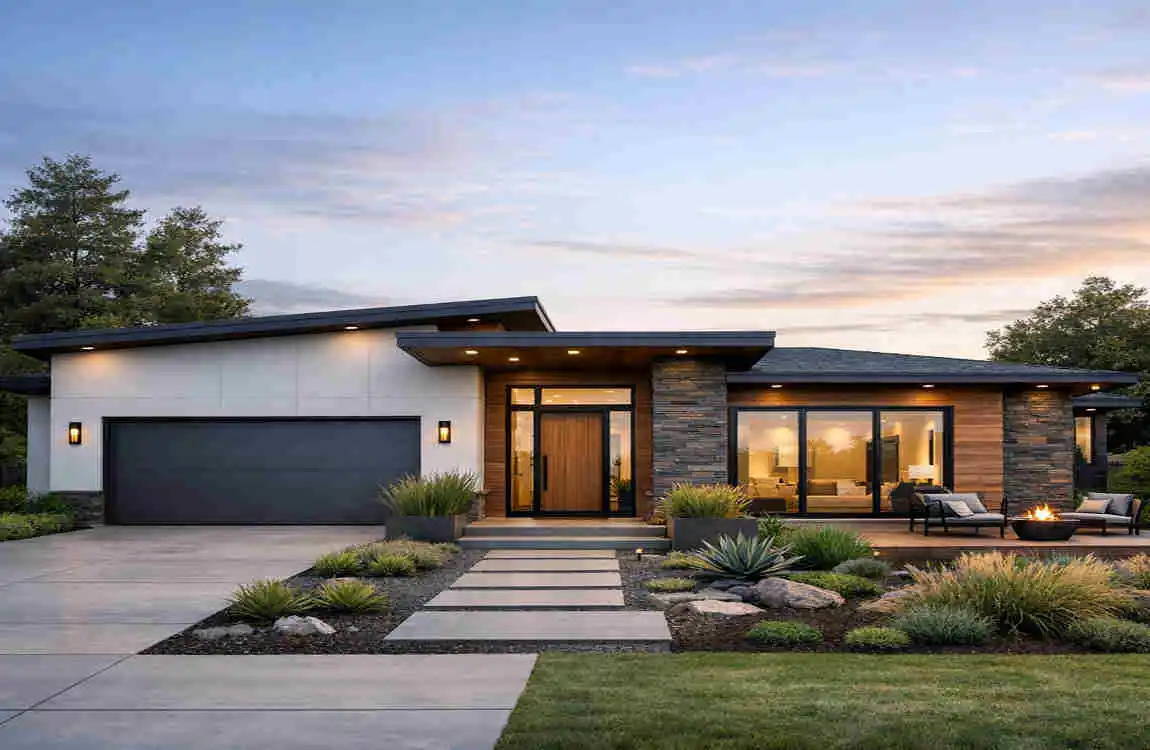
A ranch-style home often has a wide, low profile and a relaxed feel. It usually includes large windows, simple room flow, and a strong indoor-outdoor connection.
This style works very well for a 3-bedroom, 2-bath home because it feels open and comfortable. It is also easy to decorate and maintain.
Exterior Design Ideas for a Modern 3 Bedroom 2 Bath Home
Contemporary Exterior Features
The exterior of the home should reflect the clean, simple look of modern design. Popular features include straight lines, mixed materials, large windows, and stylish front doors.
Outdoor lighting also matters. It improves safety and makes the house look more attractive at night.
Landscaping Ideas
Landscaping does not need to be complicated. Simple garden beds, neat pathways, and a few well-placed plants can make a big difference.
Low-maintenance plants are a smart choice if you want beauty without too much work. You can also create a small seating area in the front or back yard to make outdoor spaces more usable.
Garage and Outdoor Spaces
Many modern homes include an attached garage for convenience. It adds storage and makes daily life easier.
Covered patios and backyard entertainment areas are also helpful. These spaces give you room to relax, host friends, or enjoy family time outdoors.
Interior Design Trends for a 3 Bedroom 2 Bath Home
Modern Color Schemes
Simple color choices work best in modern homes. Popular options include white-and-gray combinations, warm neutral tones, and natural wood shades.
These colors help rooms feel clean, calm, and larger than they really are. They also make it easier to decorate with furniture and accessories later.
Smart Home Features
Smart features can make your home more comfortable and efficient. They are not just trendy; they are genuinely useful.
Some common options include:
- Smart lighting
- Security systems
- Smart thermostats
- Automated appliances
These features help save time and energy while making the home easier to manage.
Space-Saving Storage Ideas
Storage is very important in a 3-bedroom 2-bath home. When storage is planned well, the house feels less crowded.
Useful ideas include built-in cabinets, closet organizers, hidden shelves, and under-stair storage. These solutions help you keep everyday items out of sight while still easy to reach.
How Much Space Do You Need for a 3 Bedroom 2 Bath Home?
Typical Home Sizes
Here is a simple guide to common home sizes:
Home Type Approximate Size
Small 3 Bedroom 2 Bath Home 1,200–1,500 sq ft
Medium 3 Bedroom 2 Bath Home 1,500–2,000 sq ft
Large Modern Home 2,000+ sq ft
What Affects the Size?
The right size depends on your budget, family needs, location, and lifestyle. A smaller home may work well if you want lower costs and easier upkeep. A larger version may be better if you need more storage or wider living spaces.
Think about how you live every day before choosing the final square footage.
Benefits of Building a 3 Bedroom 2 Bath Home
Main Advantages
This home style offers many practical benefits. It is often more affordable to build than a larger house, and it uses space efficiently.
It also works well for family living, which makes it a strong choice for long-term comfort. Maintenance is usually easier, and the layout has strong market demand if you ever decide to sell.
For many people, this is the sweet spot between size, cost, and function.
Tips for Designing Your Dream 3 Bedroom 2 Bath Home
Consider Your Lifestyle
Before choosing a layout, think about your daily routine. Do you need a quiet office? Do you entertain often? Do your children need space to play?
When you design around real life, the home feels much more comfortable.
Maximize Natural Light
Natural light can make a home feel bigger and more cheerful. Large windows, open layouts, and even skylights can help brighten the space.
Light-filled rooms usually feel more modern and inviting.
Focus on Long-Term Value
Choose durable materials, timeless colors, and energy-efficient features. These choices may seem simple, but they can save money and stress over time.
A well-planned home should still feel good many years from now.
Common Mistakes to Avoid in a 3 Bedroom 2 Bath Home Design
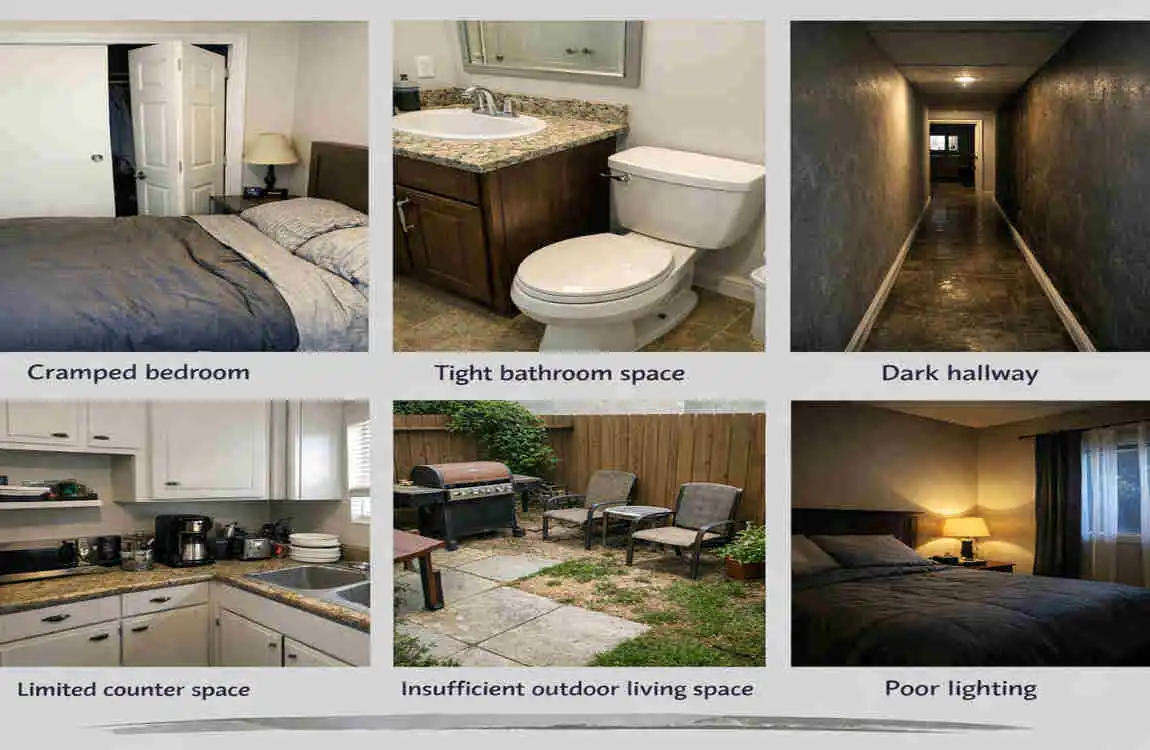
Try to avoid poor room placement, because it can make the house feel awkward to use. Also, do not ignore storage. A beautiful home can still feel frustrating if there is nowhere to put things.
Small bathrooms can also become problematic if not planned well. And while trends can be fun, always prioritize functionality. Your home should support your life, not fight against it.
FAQ
What is the average size of a 3 bedroom 2 bath home?
A typical 3-bedroom, 2-bath home ranges from about 1,200 to 2,000 square feet, depending on the layout and design.
Is a 3 bedroom 2 bath home good for a family?
Yes, it is a great choice for many families because it offers enough bedrooms and bathrooms without too much upkeep.
What are the best modern features for a 3 bedroom 2 bath home?
Popular features include open layouts, smart home technology, energy-efficient appliances, and modern bathrooms.
Can a 3-bedroom, 2-bath home have a home office?
Yes. The third bedroom can easily become a home office, guest room, or flexible multipurpose room.
What is the best layout for a 3-bedroom, 2-bath home?
Open-concept and split-bedroom layouts are two of the most popular choices because they improve privacy and functionality.
| Feature | Modern Design Ideas |
|---|---|
| Home Layout | Open-concept floor plan with connected living, dining, and kitchen areas |
| Bedrooms | Three comfortable bedrooms with built-in storage and natural lighting |
| Bathrooms | Two modern bathrooms with walk-in showers, stylish tiles, and smart fixtures |
| Kitchen Design | Sleek cabinets, quartz countertops, kitchen islands, and energy-efficient appliances |
| Living Room | Minimalist furniture, large windows, and a cozy entertainment wall |
| Exterior Style | Modern farmhouse, contemporary, or minimalist exterior designs |
| Lighting | LED lighting, pendant lights, and smart home lighting systems |
| Storage Solutions | Walk-in closets, hidden storage, and built-in shelving |
| Outdoor Space | Patio, garden area, or backyard entertainment space |
| Energy Efficiency | Solar panels, insulated windows, and eco-friendly materials |
| Color Scheme | Neutral shades like white, gray, beige, with natural wood accents |
| Smart Features | Smart thermostats, security systems, and automated home controls |
