
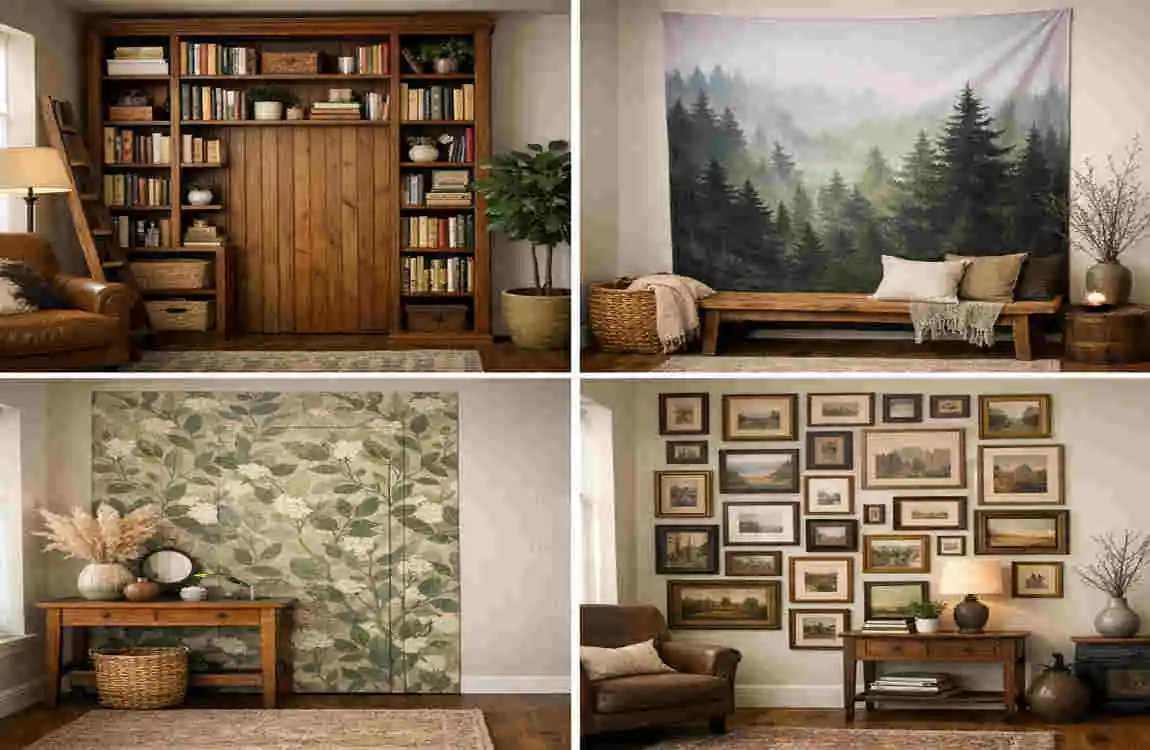
An unused door can make a room feel awkward, unfinished, or just a little cluttered. Maybe it opens to a space you no longer use. Maybe it interrupts a clean wall and makes furniture placement harder. Or maybe you want the room to look calmer and more polished.
If you are looking for how to hide an unused door, the good news is that you do not always need to remove it. In many homes, you can hide it with simple changes like curtains, paint, wallpaper, furniture, or wall panels. Some solutions are temporary, while others can feel almost permanent.
Decide Whether You Should Hide, Remove, or Keep the Door
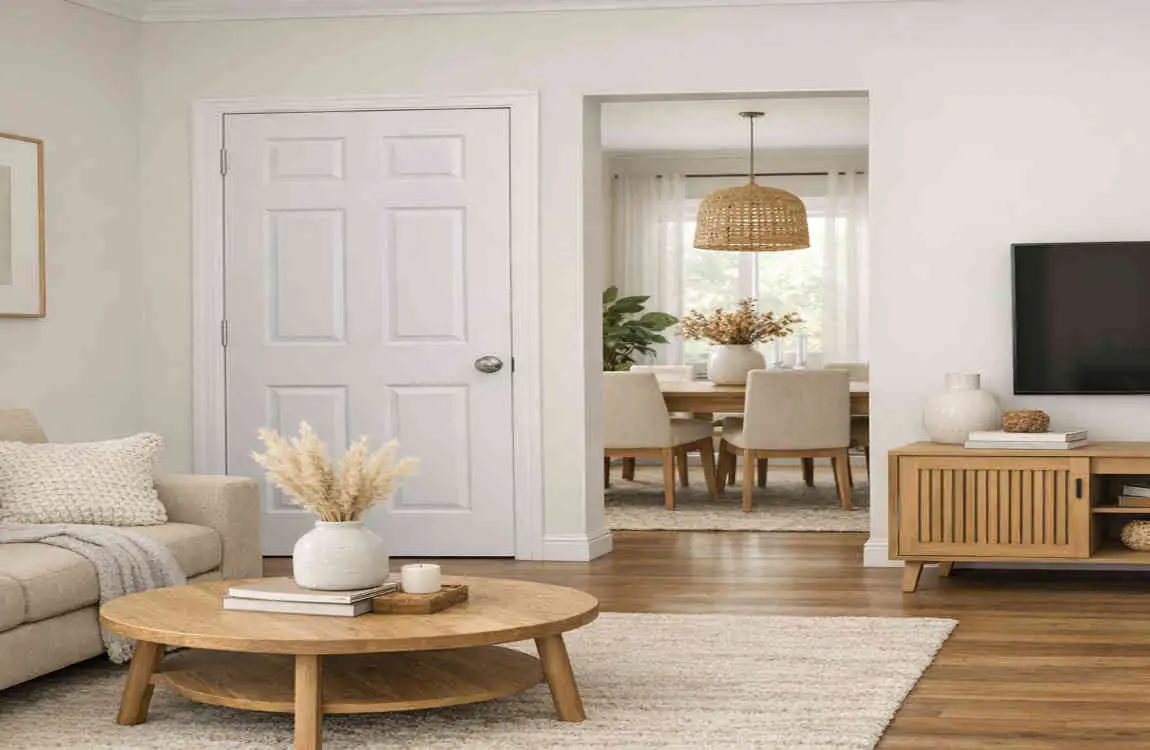
First, think about why the door is unused.
Before you cover anything, ask yourself why the door is there. Is it an old doorway that no longer leads anywhere useful? Is it a storage room you rarely open? Or is it just in a strange spot that makes decorating harder?
This matters because the answer changes what you should do next. A door you never use may be easy to hide completely. A door you might still need later is better left accessible.
Check whether the door still has a purpose.
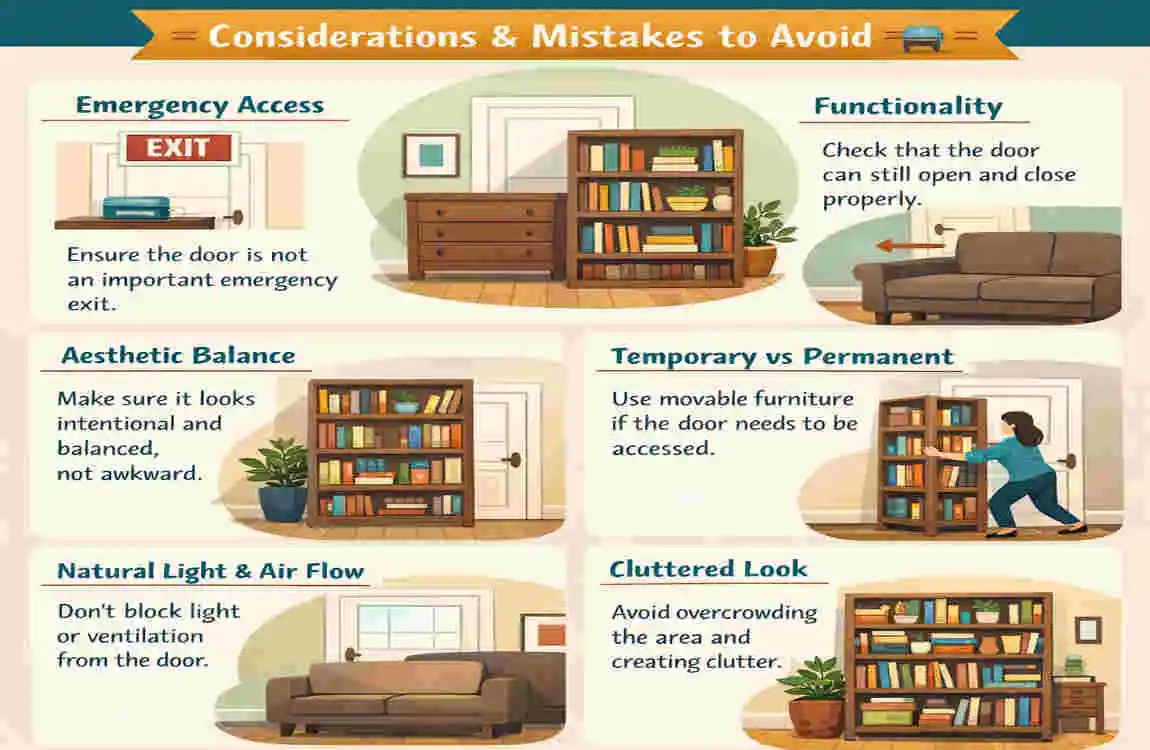
Some doors still matter for ventilation, safety, or future access. In some homes, a doorway may also be important for code or layout reasons.
So before you block it visually, think ahead. If you plan to use it again later, a temporary cover is usually the better choice.
Choose a temporary or permanent solution.
If you rent, or if you may want the doorway back later, choose something flexible. Curtains, paint, and furniture work well for that.
If you own the home and know the door will never be used, you can consider a more permanent fix. That might include a false wall, built-in storage, or full removal.
Use Curtains to Hide an Unused Door
Why curtains are such an easy fix
Curtains are one of the simplest ways to cover an unwanted door. They are affordable, easy to install, and easy to change later.
They also work well when you still want occasional access. You can slide them open when needed.
Pick the right curtain style.
A floor-length curtain usually gives the best result because it hides the entire doorway. A neutral fabric blends in quietly, while a patterned curtain can become part of the room’s style.
If you want more privacy, blackout curtains can also work well. They make the door feel less noticeable and help the wall look more complete.
Make the curtain look built-in.
To make the cover look cleaner, hang the rod a little wider than the door frame. That gives the curtain more visual space and makes the wall feel balanced.
You can also match the curtain color with nearby walls, furniture, or rugs. This helps the door disappear into the room rather than stand out.
Hide the Door With Paint, Wallpaper, or Wall Panels
Paint the door to match the wall.
One of the easiest ways to hide a door is to paint it the same color as the wall. When the color matches closely, the door blends in much better.
If the trim also matches the shade, the effect becomes even smoother. This is a smart choice if you want the room to feel more open and calm.
Use wallpaper to disguise the outline.
Wallpaper can do a great job of softening the door’s shape. If the wallpaper continues across the door and the surrounding wall, the doorway becomes much less obvious.
Patterns can help too. Busy prints often distract the eye, which makes the door fade into the background.
Add decorative wall panels.
Wall panels are another strong option. Wood slats, MDF molding, wainscoting, or textured panels can all help the door blend in.
This works especially well if you want the wall to look designed instead of just covered. A paneled surface can turn a plain doorway into part of a stylish feature wall.
Place Furniture or a Bookshelf in Front of the Door
Use a large bookcase.
A tall bookshelf can hide an unused doorway while providing extra storage. This is one of the most practical solutions if the space can handle the size.
Just make sure the bookcase is stable and does not scratch the wall or floor. You want it to look intentional, not awkward.
Try a freestanding cabinet.
A cabinet works well in bedrooms, offices, and living rooms. It hides the door and provides space for books, decor, or everyday items.
This is a nice choice if you want the doorway to disappear without making the room feel empty.
Use smaller furniture carefully.
A console table or tall narrow piece can cover part of the door, but not always all of it. This works best when you want a softer visual block rather than complete concealment.
Leave enough room for walking and make sure the furniture does not make the space feel cramped.
Safety matters
Do not place heavy furniture in front of a door that may be needed for exit or emergency use. Also, avoid unstable pieces that could tip over.
If the door still opens, check the clearance first. You do not want a simple decor change to become a daily annoyance.
Turn the Unused Door Into a Decorative Feature
Build a gallery wall around it.
A gallery wall is a clever way to pull attention away from the door. When artwork, photos, and frames are arranged well, the doorway becomes part of the background.
Use a balanced layout so the wall feels intentional. That way, the eye goes to the display instead of the door.
Add a mirror
A large mirror can help the room feel brighter and bigger. It also serves as a focal point, making the door less visually important.
This trick is especially useful in smaller rooms or darker hallways.
Use art, tapestries, or shelves.
Big wall art can cover a lot of visual space. A tapestry gives a softer look, while floating shelves let you add books, plants, or small decor pieces.
These choices are great if you want to hide the door without making the wall look heavy.
Consider More Permanent Ways to Conceal the Door
Build a false wall
If the door is truly no longer needed, a false wall can fully hide it. This creates a smooth surface and completely conceals the doorway.
This is a bigger project, though. It usually takes more planning and may need professional help.
Install built-in storage
Built-ins are one of the smartest permanent solutions. You can turn the doorway area into shelving, a closet, or cabinet storage.
That way, the space becomes useful instead of wasted.
Remove the door and frame.
If you want a full change, you can remove the door, frame, and hardware, then repair the opening. After that, the wall can be finished to match the rest of the room.
This works best when you know for sure that the doorway will not be needed again.
Create a hidden or flush door.
Sometimes the door still needs to stay functional. In that case, a flush-style or concealed door can work well.
When the finish matches the wall, the door becomes much harder to notice. This is a clean, modern option for minimalist spaces.
Best Ways to Hide an Unused Door by Room
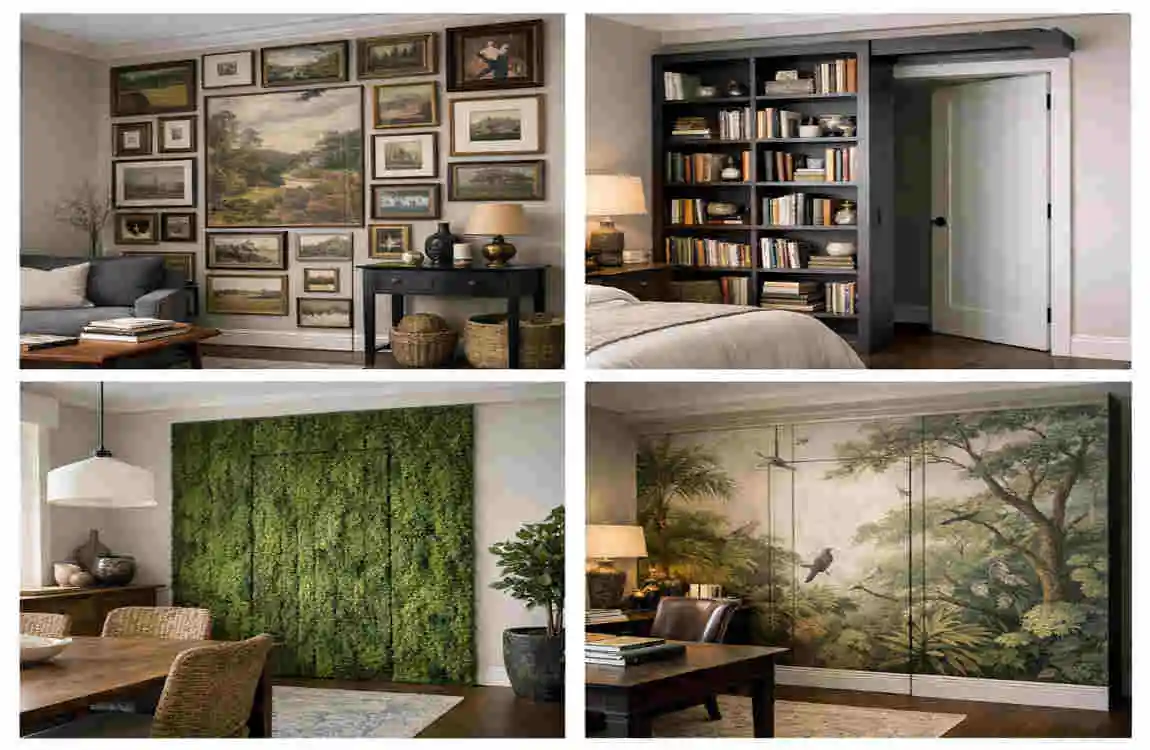
Living room
In living rooms, curtains, bookcases, and gallery walls usually work best. These rooms often have enough space for larger design choices.
Bedroom
Bedrooms do well with full-length curtains, matching wallpaper, or a wardrobe placed near the doorway. These options feel soft and private.
Home office
A bookcase or built-in shelving makes sense in an office. It hides the door and adds storage.
Hallway
Hallways often benefit from mirrors, artwork, or decorative molding. These ideas help the space feel bigger and more polished.
Small rooms
In small spaces, choose slim solutions. Paint, wallpaper, or visual camouflage usually works better than bulky furniture.
FAQ: How to Hide an Unused Door
Can I completely cover an unused door?
Yes, but only if you do not need access to it later. If the door still matters for safety or future use, a removable option is better.
What is the easiest way to hide an unused door?
Curtains, paint, wallpaper, and lightweight decor are usually the easiest choices. They are simple, affordable, and flexible.
Can I put furniture in front of an unused door?
Yes, if the door is not needed. Just make sure the furniture is stable and does not block an important exit.
How can I hide an unused door without removing it?
You can use curtains, paint, wallpaper, wall panels, shelves, or artwork. These methods are all practical and low-stress.
Can I paint an unused door the same color as the wall?
Yes, and this is one of the best ways to make it blend in. Matching color reduces contrast and makes the door less obvious.
How do I hide an unused door in a small room?
Use simple options like paint, wallpaper, mirrors, or slim furniture. In small rooms, less bulky is usually better.
Is it better to remove an unused door or hide it?
If you are sure you will never need it again, removal can create a cleaner finish. If you want flexibility, hiding it is often the safer choice.
| Method | Best For | Main Benefit |
|---|---|---|
| Curtains | Bedrooms & living rooms | Easy and affordable |
| Bookshelf | Living rooms & offices | Adds storage and hides the door |
| Wall Art | Modern interiors | Creates a decorative focal point |
| Large Mirror | Small rooms | Hides the door and makes the room feel larger |
| Wallpaper | Seamless wall look | Helps the door blend into the wall |
| Sliding Barn Door | Rustic & modern homes | Stylish and functional |
