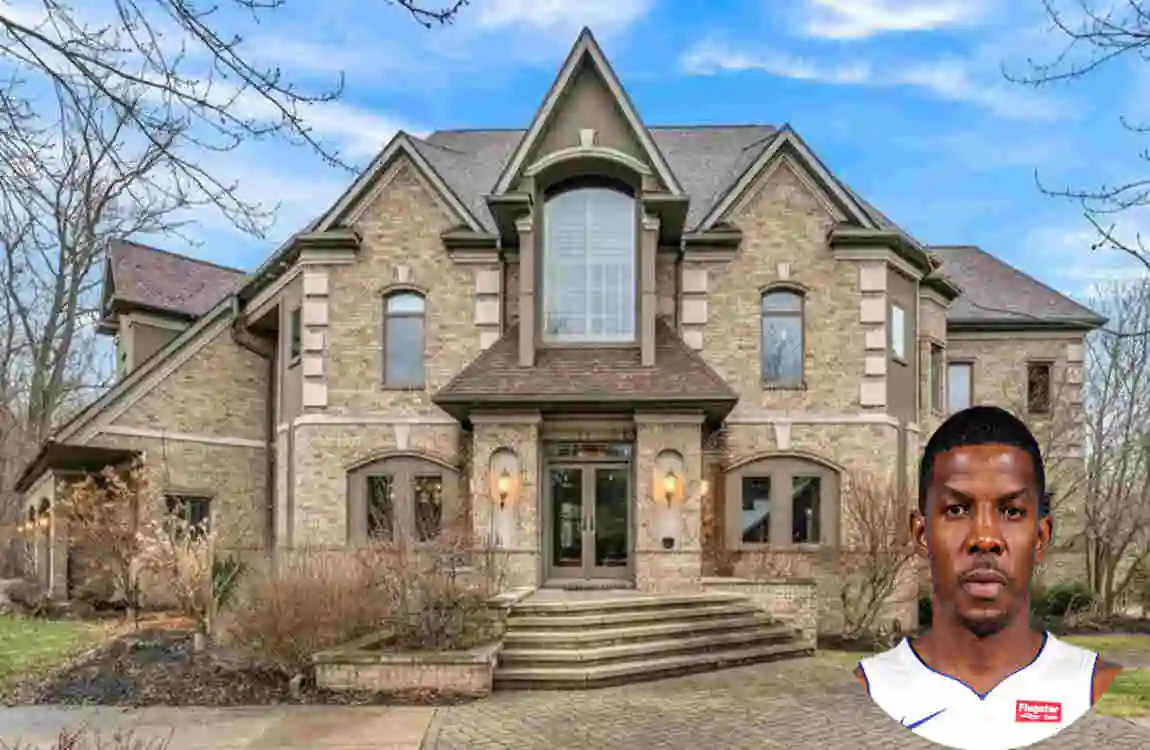
Picture a home where walls vanish, and the line between indoors and outdoors fades away. This is the magic of the Joe Johnson House—a transparent modernist masterpiece nestled in the scenic hills of New Canaan, Connecticut. Known affectionately as “Joe” in architectural circles, this house was designed by Philip Johnson, a pioneering figure in 20th-century architecture.
Completed in 1949, the Joe Johnson House stands as a landmark of the International Style, showcasing sleek steel frames and expansive glass walls. It attracts over 50,000 visitors annually, all eager to experience its unique blend of art, architecture, and nature.
History and Background
Origins of Joe Johnson House
The Joe Johnson House was born from Philip Johnson’s admiration for Ludwig Mies van der Rohe’s Farnsworth House. Inspired by this glass-encased retreat, Johnson purchased a 47-acre plot in New Canaan, Connecticut, in 1945. This land became the perfect setting for his own architectural experiment.
Before building the house, Johnson was a curator and critic, deeply involved in promoting modernism. The Joe Johnson House marked his bold transition from observer to creator. Finished in 1949, it captured the post-World War II optimism and the era’s fascination with sleek, functional design.
Key Milestones and Ownership
The house underwent a major restoration in the 1980s to preserve its delicate structure. By the 1990s, it opened to the public through the National Trust for Historic Preservation, allowing visitors to experience its transparent beauty firsthand.
Philip Johnson passed away in 2005, leaving the house as a lasting legacy. Since then, caretakers have faced challenges, including flooding, due to the house’s proximity to wetlands. Despite these hurdles, the Joe Johnson House remains a well-preserved icon, drawing architecture lovers from around the world.
Cultural Significance
More than just a building, the Joe Johnson House symbolizes transparency—not only in its materials but also in its expression. It reflects Johnson’s courage as an openly gay man in a conservative era, influencing the daring openness of his design.
Designated a National Historic Landmark, the house represents a turning point in architectural history where personal identity and modernist principles fused into a revolutionary statement of style and freedom.
Architecture Breakdown
Core Design Principles
The Joe Johnson House perfectly embodies the International Style. It features a steel frame painted black that supports floor-to-ceiling glass walls, creating an almost invisible exterior. This transparency invites nature inside, blurring the boundaries between environment and living space.
The house rests on a low brick platform, elevating it just enough to protect it from flooding while creating a sense of lightness. At its center stands a cylindrical brick chimney, serving as the house’s only opaque element. This contrasts with the symmetrical layout, offering a sense of balance and refinement, unlike Mies van der Rohe’s asymmetrical Farnsworth House.
Structural Features Table
FeatureDescriptionMaterials/Function
Exterior Walls, Floor-to-ceiling glass panels, and transparent elements promote openness.
Frame: Black-painted steel I-beams. Supports a minimal structure
Roof Flat, floating appearance , Asphalt over steel, weatherproof
Floor Brick platform Anchors house to landscape
Interior Divider Brick cylinder Houses bathroom and stairs
Innovative Engineering
Johnson’s vision went beyond aesthetics. Utilities like wiring and plumbing are cleverly hidden beneath the floor, maintaining the house’s clean lines and open feel. Over the years, climate control systems were discreetly added to manage temperature in the glass environment, ensuring year-round comfort.
The house’s engineering also considers natural forces. Although built in a floodplain, its elevated foundation shields it from water damage. Moreover, seismic reinforcement was added later to protect against earthquakes, reflecting a thoughtful blend of beauty and resilience.
Johnson famously said, “I wanted a house like a pavilion.” This idea shines through the airy, open design that invites light and air while offering a serene retreat.
Site Integration
The Joe Johnson House sits on a sprawling 47-acre estate, surrounded by carefully curated sculptures and additional structures like the Guest House and Pavilion. It acts as the heart of this landscape, seamlessly merging with nature.
The estate’s design encourages visitors to experience the house from multiple vantage points, enhancing the dynamic relationship between architecture and environment.
Aesthetic Analysis
Minimalist Philosophy
At the heart of the Joe Johnson House’s appeal is the minimalist mantra: less is more. The palette is simple—black steel beams, white brick, and clear glass—allowing the environment and furnishings to take center stage.
This radical transparency means that every piece of furniture, every object inside, becomes part of the architectural statement. It’s a sharp contrast to traditional homes with thick walls and heavy curtains. Instead, the house invites nature’s rhythms to play with light and shadow inside.
Visual and Spatial Impact
The house’s glass walls create a mesmerizing play of light throughout the day. During daylight, the interior glows with natural illumination and reflections of surrounding trees and sky. At night, the house transforms into a glowing lantern, visible from afar.
This voyeuristic quality connects visitors intimately with the landscape and the house’s classical influences—especially Johnson’s nod to heavy classical corners that ground the transparent structure.
Furniture and Art Curation
Johnson’s artful eye extended inside, where he curated iconic pieces that complement the minimalist space. Inside, you’ll find a bear-skin rug and classical columns used as artworks themselves, blending antique and modern elements.
His collection included works by Picasso and Helen Frankenthaler, which enhanced the house’s evolving aesthetic after 1949. The interior curation turns the home into a living gallery, where architecture and art coexist.
Where to Find and Visit Joe Johnson’s House
Location Details
Nestled in New Canaan, Connecticut, the Joe Johnson House occupies a quiet 47-acre estate off Route 123. The exact GPS coordinates are 41.166° N, 73.414° W, making it easy for visitors to locate.
The nearest airports are Westchester County Airport and New York city’s JFK Airport, both approximately 1.5 hours away, offering convenient access for travelers.
Visiting Guide
Tours are the only way to experience the Joe Johnson House’s interiors; no self-guided visits are allowed. Tickets range from $25 to $90, depending on the tour type. The house is open Wednesday through Sunday during certain seasons, with the fall foliage period being particularly beautiful.
Booking is essential and can be done through the official website. Group and private tours are available, ideal for architecture groups or special occasions.
Practical Tips Table
AspectDetails
Access Guided tours only; 90-minute walks
Cost : Adult tickets $25; includes shuttle
Amenities : Gift shop, picnic areas
Restrictions : No photography inside; weather-dependent
Nearby Attractions
Visitors can combine their trip with visits to nearby cultural sites, such as Dia: Beacon and Storm King Art Center. For those interested in regional architecture, a visit to other Connecticut modernist sites is highly recommended.
Comparisons and Lasting Impact
Vs. Similar Icons
HouseArchitectKey DifferenceLocation
Joe Johnson House Philip Johnson Symmetrical, brick anchor, Connecticut
Farnsworth House , Mies van der Rohe, Asymmetrical, flood-prone , Illinois
Eames House , Charles & Ray Eames, Colorful, modular California
The Joe Johnson House stands out for its balanced symmetry and grounding brick base, contrasting with the more organic Farnsworth and colorful, modular Eames Houses.
Modern Influence
The house’s minimalist, transparent design has inspired many contemporary spaces—from Apple’s sleek retail stores to luxury homes that emphasize openness and simplicity.
Its lessons on sustainability, such as embracing natural light and blending indoor and outdoor spaces, remain relevant today, influencing architects aiming to create eco-friendly, glass-heavy structures.
FAQ
- What is Joe Johnson House?
- It’s Philip Johnson’s 1949 Glass House in New Canaan, Connecticut, a modernist icon known for its transparent design.
- Can you stay overnight?
- No, visiting is by guided tour only.
- Where is the best photo spot?
- The hilltop overlook offers stunning views of the glass facade.
Where Does Joe Johnson Currently Live?
Philip Johnson, the architect behind the iconic Glass House (often referred to as the Joe Johnson House in casual or SEO contexts from our prior discussion), passed away on January 25, 2005, in New Canaan, Connecticut. He no longer lives anywhere, as he has been deceased for over 20 years. The Glass House estate he designed remains a public historic site there, preserved by the National Trust for Historic Preservation.
Joe Johnson house photo