
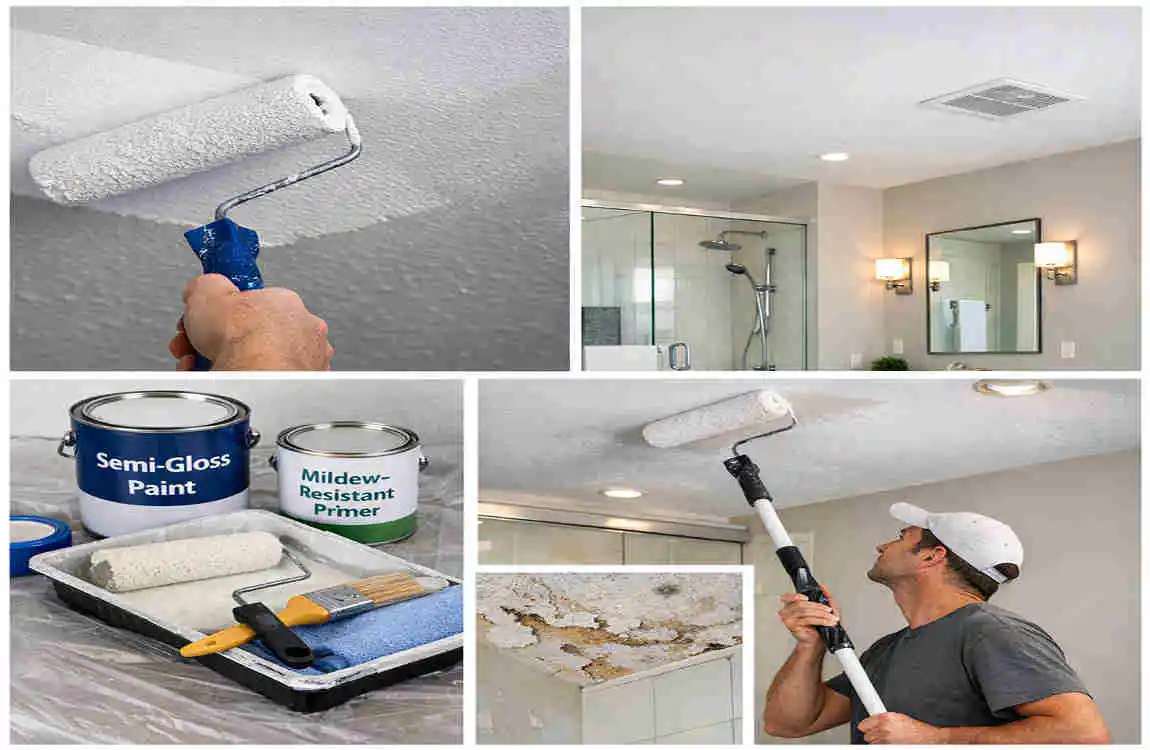
Choosing the right paint for a bathroom ceiling matters more than many people think. Bathrooms deal with steam, moisture, stains, mold, and peeling paint far more than other rooms in the home. If you use the wrong paint, the ceiling can start looking old and damaged very quickly.
That is why many homeowners ask: what type of paint for bathroom ceiling works best? The short answer is simple: you want moisture-resistant paint that can handle humidity and still look clean over time.
Why Choosing the Right Bathroom Ceiling Paint Is Important
Bathrooms Have High Humidity Levels
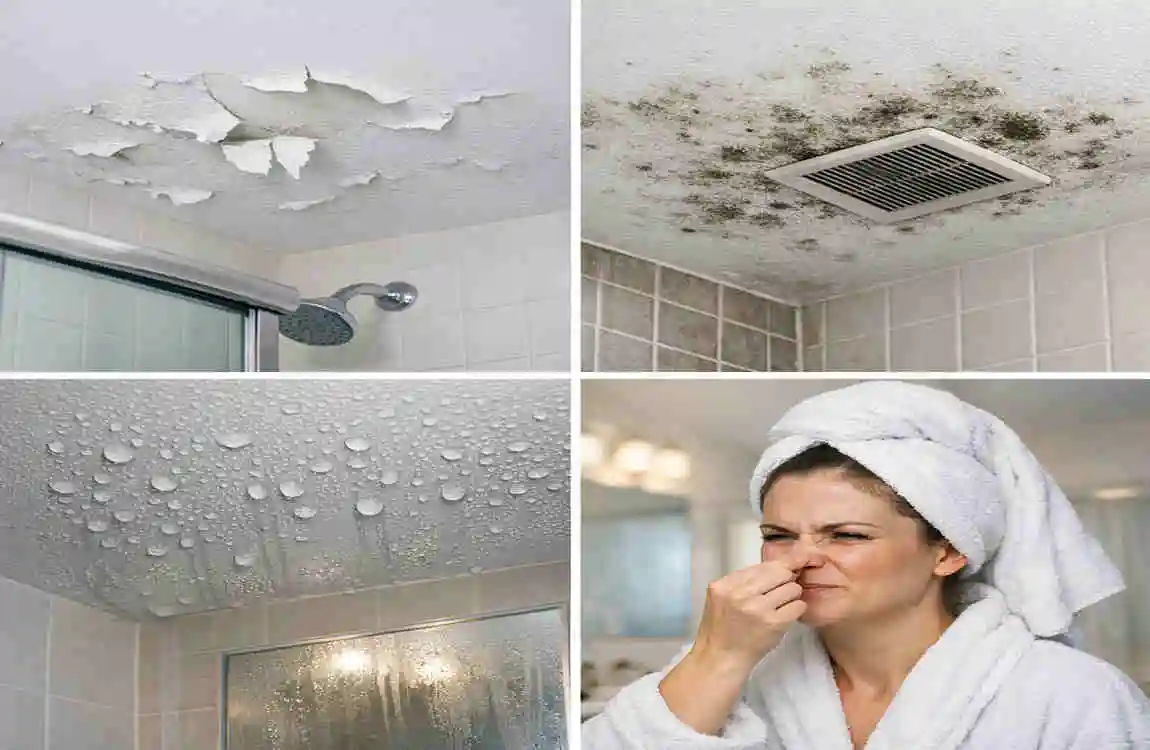
Bathrooms produce a lot of steam, especially after showers and baths. That moisture rises and settles on the ceiling. Over time, this can cause paint to soften, bubble, or peel.
Regular wall paint often cannot handle this kind of damp environment. That is why bathroom ceilings need stronger protection than a normal room ceiling.
Preventing Mold and Mildew Growth
Moisture can lead to mold and mildew, and that is a big problem in bathrooms. The wrong paint can trap moisture and make it easier for growth to spread.
A good bathroom ceiling paint often includes mildew-resistant additives. These help protect the surface and keep it looking cleaner for longer.
Improving Bathroom Appearance and Value
A fresh ceiling makes the whole bathroom look better. Even a small bathroom feels brighter and cleaner when the ceiling is properly painted.
It also helps with home maintenance and resale value. Buyers notice signs of moisture damage, so a well-painted ceiling creates a better first impression.
What Type of Paint for Bathroom Ceiling Works Best?
Mold and Mildew Resistant Paint
This is usually the best overall choice. It is made to handle damp conditions and help prevent fungal growth.
It works well in small bathrooms, guest bathrooms, and rooms with weaker ventilation. If your bathroom often stays humid, this is a smart option.
Semi-Gloss Paint
Semi-gloss paint gives strong moisture protection. It is also easy to wipe clean, which helps in bathrooms where steam and splashes are common.
It reflects more light than flat paint, so it can make the room feel brighter. That makes it a good choice for bathrooms that need a little visual lift.
Satin Finish Paint
Satin paint is a balanced choice. It has a slight shine, resists moisture fairly well, and is easier to clean than flat paint.
If you want something that looks smooth but not too shiny, satin is a very practical option.
Acrylic Latex Paint
Acrylic latex paint is a popular pick because it dries quickly, has low odor, and resists cracking. It is flexible, which helps it withstand changes in temperature and humidity.
For many homeowners, this is one of the easiest and safest choices for bathroom ceilings.
Bathroom-Specific Ceiling Paint
Some paints are made especially for bathrooms. These usually include moisture resistance, anti-microbial protection, and stronger durability.
If you want extra peace of mind, this type is worth looking at.
Best Paint Finish for a Bathroom Ceiling
Paint Finish Moisture Resistance Cleaning Ease Best Use
Flat/Matte Low Difficult Low-humidity bathrooms
Eggshell Medium Moderate Guest bathrooms
Satin High Easy Most bathrooms
Semi-Gloss Very High Very Easy Humid bathrooms
High-Gloss Highest Easy Small areas
For most homes, satin or semi-gloss gives the best mix of protection and appearance.
Paint Types to Avoid on Bathroom Ceilings
Flat Paint Without Moisture Protection
Flat paint may look smooth, but it absorbs moisture easily. That can lead to stains, peeling, and a ceiling that starts looking worn out too soon.
Cheap Interior Paint
Low-cost paint may save money at first, but it often does not last in a bathroom. It may not resist steam well and can need repainting much sooner.
Oil-Based Paint
Oil-based paint has some disadvantages in bathrooms. It usually has a stronger smell, takes longer to dry, and may yellow over time.
For most people, water-based bathroom paint is the better choice.
How to Prepare a Bathroom Ceiling Before Painting
Clean the Ceiling Surface
Before painting, remove dust, grease, and any mold spots. A clean surface helps the new paint stick better.
Repair Cracks and Damage
Fill in small holes and cracks. Smooth uneven areas so the paint goes on evenly.
Apply Mold-Resistant Primer
Primer helps the paint bond well and gives extra protection. A mold-resistant primer is especially useful if the ceiling has old stains or moisture damage.
Improve Bathroom Ventilation
Good airflow is just as important as good paint. Use an exhaust fan if possible, and keep the room ventilated after showers.
Step-by-Step Guide to Painting a Bathroom Ceiling
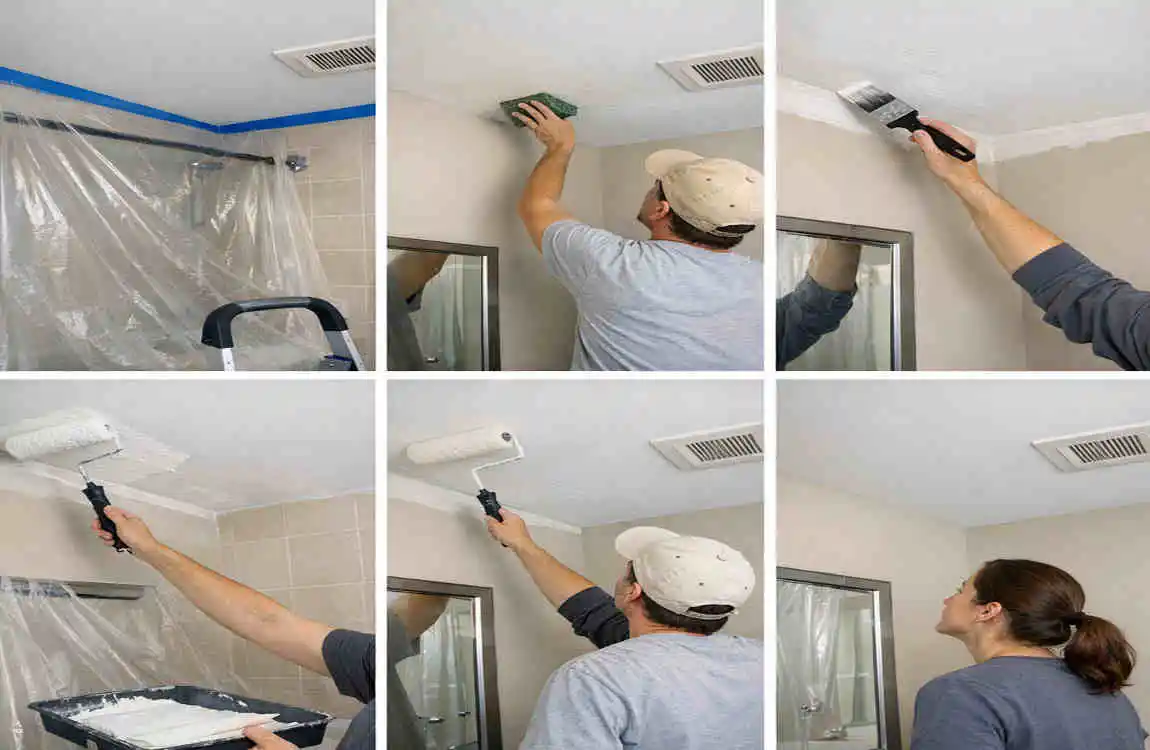
Gather Necessary Tools
You will usually need:
- Paint roller
- Paint brush
- Painter’s tape
- Primer
- Bathroom ceiling paint
- Drop cloth
Apply Primer First
Roll on a smooth primer coat and let it dry fully. This helps the top paint layer last longer.
Paint the Ceiling Properly
Use thin coats instead of thick ones. Thick paint can drip and dry unevenly. Let each coat dry before adding the next one.
Add a Second Coat if Needed
Most bathroom ceilings look best with one primer coat and two paint coats. This gives better coverage and a stronger finish.
Best Bathroom Ceiling Paint Colors
White Ceiling Paint
White is the most common choice because it looks clean and makes the room feel larger.
Light Neutral Colors
Soft colors like beige, cream, and light gray also work well. They create a calm, simple look.
Bold Ceiling Colors
A bold ceiling color can work in some bathrooms, especially if you want a strong design style. Just make sure the color fits the rest of the room.
How Long Does Bathroom Ceiling Paint Last?
Bathroom ceiling paint can last 5 to 10 years if you choose good quality paint and take care of the room.
Several things affect how long it lasts:
- Paint quality
- Bathroom ventilation
- Moisture levels
- Cleaning habits
- Surface preparation
If the bathroom stays dry and well ventilated, the ceiling paint will usually last longer.
Common Mistakes When Painting a Bathroom Ceiling
- Using regular wall paint
- Skipping primer
- Painting over mold
- Ignoring ventilation problems
- Applying thick coats
- Choosing the wrong finish
These mistakes can lead to peeling, bubbling, and early damage. A little preparation makes a big difference.
How Much Does It Cost to Paint a Bathroom Ceiling?
DIY Cost
If you do it yourself, you mainly pay for paint, primer, and supplies. This is usually the cheapest option, but it takes your time and careful prep.
Professional Painting Cost
Hiring a professional costs more because you pay for labor. The price depends on:
- Bathroom size
- Ceiling condition
- Paint type
If the ceiling has damage or mold issues, the cost can go up.
Maintenance Tips for a Painted Bathroom Ceiling
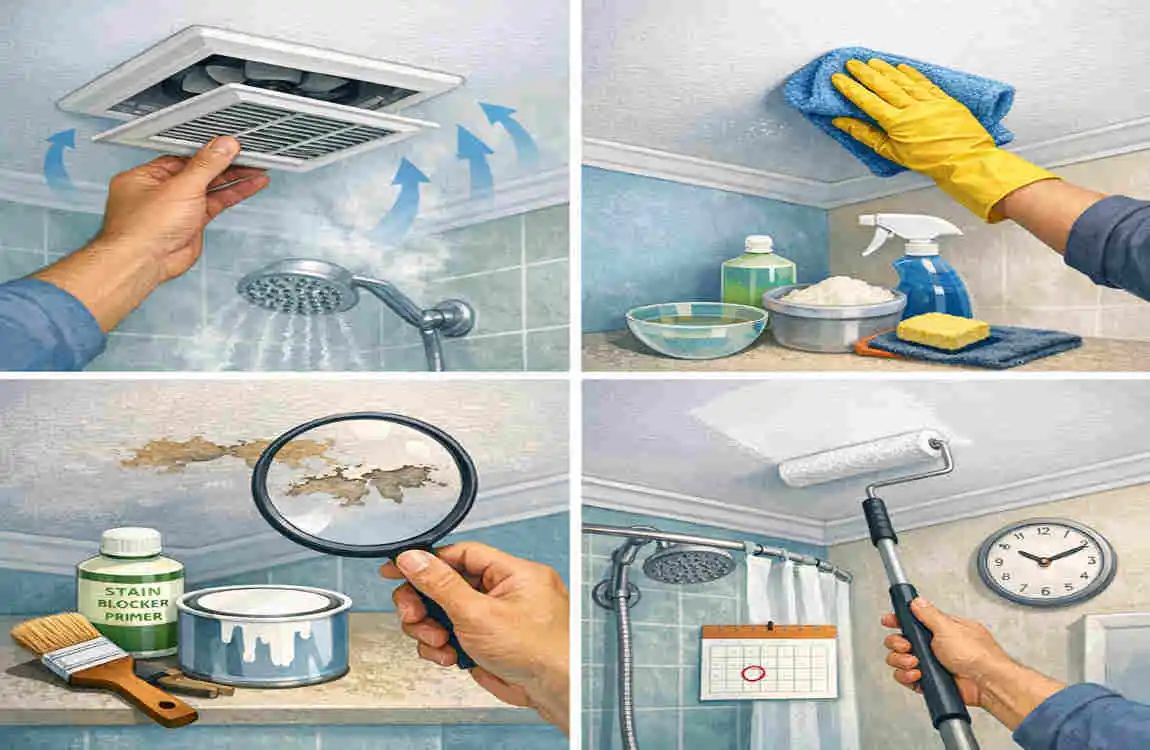
Control Moisture
Turn on the exhaust fan during and after showers. Good airflow helps prevent moisture damage.
Clean Regularly
Wipe away dust and stains gently. Avoid harsh cleaners that can damage the paint.
Check for Damage
Watch for:
- Bubbling paint
- Dark spots
- Peeling areas
If you catch problems early, repairs are much easier.
Frequently Asked Questions
What type of paint is best for a bathroom ceiling?
Moisture-resistant acrylic latex paint with a satin or semi-gloss finish is usually the best choice because it handles humidity well and helps prevent mold growth.
Is flat paint okay for a bathroom ceiling?
Flat paint is not a good choice for humid bathrooms because it absorbs moisture and can peel or stain more easily.
Should bathroom ceilings be painted with semi-gloss paint?
Yes, semi-gloss paint works well because it resists moisture and is easy to clean.
Do I need a special primer before painting a bathroom ceiling?
A mold-resistant primer is a smart choice, especially if the ceiling has old stains or moisture damage.
How many coats of paint does a bathroom ceiling need?
Most bathroom ceilings need one primer coat and two paint coats for the best result.
Can I use regular ceiling paint in a bathroom?
You can, but it may not last well in high humidity. Bathroom-specific paint is usually the better option.
| Paint Type | Best For | Benefits | Considerations |
|---|---|---|---|
| Mold & Mildew Resistant Paint | Most bathrooms | Prevents mold growth, handles moisture well | Best choice for humid areas |
| Satin Finish Paint | Bathrooms with regular moisture | Easy to clean, durable, reflects light | Slightly more shine than flat paint |
| Semi-Gloss Paint | High-humidity bathrooms | Highly moisture-resistant and washable | May highlight ceiling imperfections |
| Bathroom Ceiling Paint | Designed specifically for ceilings | Contains mildew protection and moisture resistance | Usually costs more than standard paint |
| Acrylic Latex Paint | General bathroom use | Fast drying, low odor, long-lasting | Choose a moisture-resistant formula |
